How We Work
Every job starts on the ground, not on paper. We walk the property, look at how water moves across it, and test the site before we talk about a slab, a driveway or a patio. Rion soil, which drains well, is the dominant type in Fulton County, and the ground is gently rolling, but both change from one block to the next, so we don't assume anything. What we find decides the base depth, the reinforcement and where the grade needs to fall.
From there the work runs in a set order. We handle the permit, then grade, compact the base and set forms. Rebar or mesh goes in where the slab will carry load, and we check it before any concrete arrives. The pour, the finish and any stamped or decorative surface happen in one push while the mix is still workable. Then the joints get cut and the new surface cures. With about 50 inches of rain a year, we plan pour days around the forecast rather than hoping.
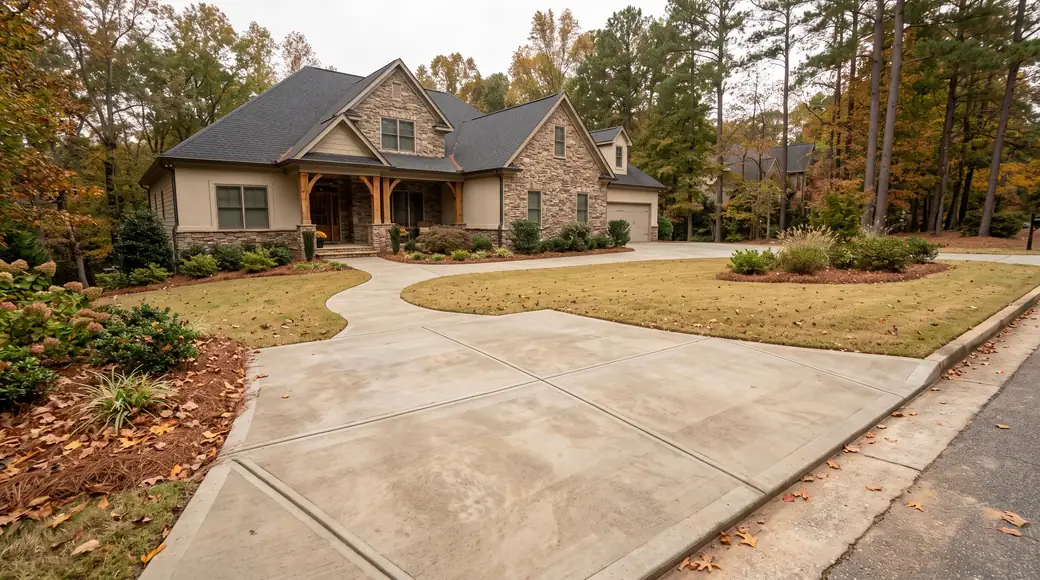
Most concrete that fails early fails underneath. A soft spot in the base, a thin edge, or water sitting against a foundation will crack a good-looking surface in time. So the plain steps get our closest attention: compaction, drainage, reinforcement, joint spacing. The median home here was built in 1988, and replacing an original driveway on a house that age usually means pulling the old slab and correcting what sat under it first. We would rather find that before the pour than explain a crack after it. Call for a free estimate.
Proudly Based in Sandy Springs
Sandy Springs is a city of 107,087 people on the northern edge of metro Atlanta, and it is where we work from. Much of the housing here went up around 1988, the median build year, so plenty of driveways, patios and walkways have had decades to settle, crack and lift at the joints. Around the neighborhoods sits a busy city: the office towers of Perimeter Center, the retail and mixed-use stretch of Roswell Road, and the downtown built at City Springs. All of it stands on concrete. Most of it will need work at some point.
Fulton County ground is gently rolling, with about 135 feet of relief within a few miles, and the dominant Rion soil drains well. Neither holds true on every lot. We grade and test each site on its own before any reinforcement goes down, because the conditions two streets over tell us nothing certain about yours. The area sees about 50 inches of rain a year, so we build slope and drainage into every residential driveway and commercial slab. Water should leave the surface, not sit on it. A stamped patio gets the same preparation underneath as a plain broom finish.