+1 470-740-7099
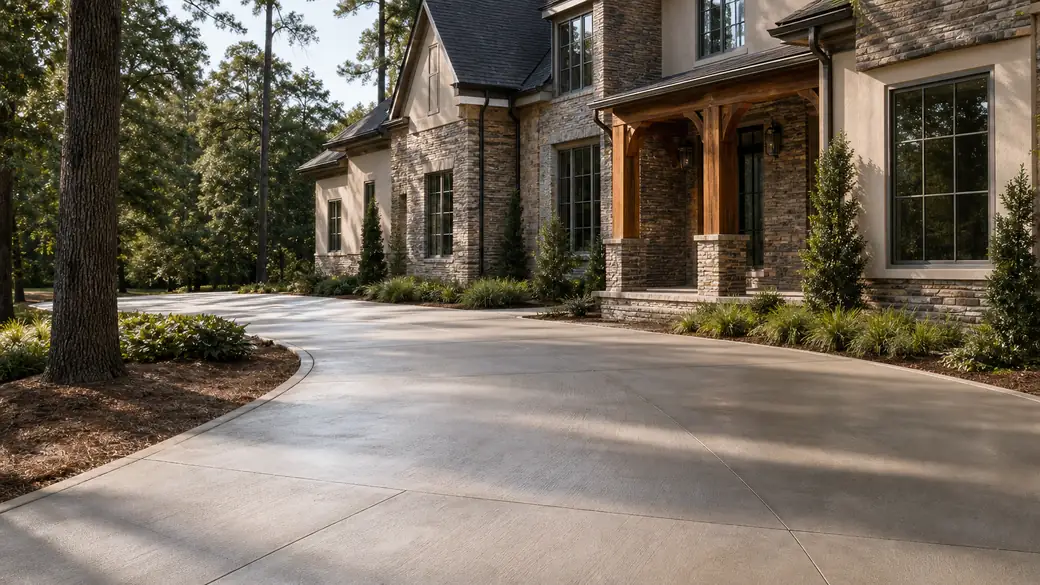
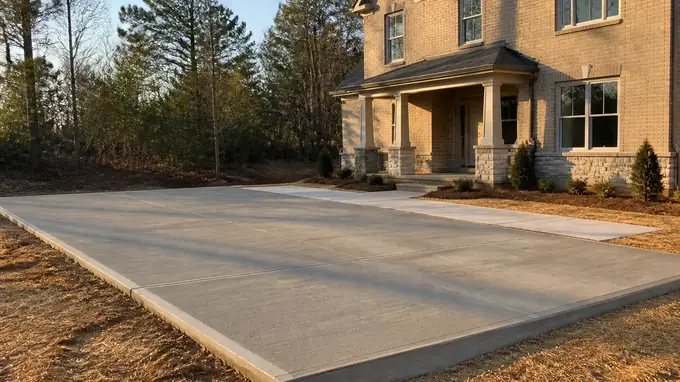
concrete slab repair completed by a local contractor at a stacked-stone and stucco home in Sandy Springs, GA, in raking morning side light.

Concrete Slab Repair in Sandy Springs, GA

A cracked, sunken or heaving slab is usually telling you something about what sits underneath it. Concrete slab repair means finding that cause first, then fixing the surface so the same problem does not come straight back. We repair garage floors, patios, walkways, basement slabs and the rest of the flat concrete around a property, on residential and commercial jobs alike. The median home in Sandy Springs was built in 1988, so many of the slabs we see have carried cars, furniture and daily foot traffic for decades. Most of them are worth saving.

Water is the usual cause. This area gets about 50 inches of rain a year, and when gutters, downspouts or grading send that water toward a slab instead of away from it, the base underneath can soften or wash out. The slab then settles, cracks along its weakest line, or tilts back toward the house. Rion soil, the dominant type here, drains well, but it is not the same on every lot, and the ground is gently rolling rather than flat. So we test and check the grade on every site before deciding what the repair should be.

Getting it right is mostly a matter of matching the fix to the fault. A crack that is stable and dry may only need cleaning, filling and sealing. A section that has dropped may need the void beneath it filled and the concrete brought back to level. A slab that has broken through, or sits on a failed base, needs that section cut out, the base rebuilt, new reinforcement tied in and fresh concrete placed flush with the slab around it. Most slabs need less than their owners fear. Some need more than a patch can give. Call for a free estimate.

Call +1 470-740-7099

Get FREE Estimates

Our Concrete Slab Repair Work in Sandy Springs

concrete slab installation completed by a local contractor at a brick-and-siding two-story home in Sandy Springs, GA, in late afternoon light.

Concrete Slab Installation Cost

We price a slab the way we build it: footprint, thickness, base, then steel. A 4-inch patio slab on compacted gravel is one job. A 6-inch pad for a vehicle or a hot tub, with rebar tied on a grid instead of wire mesh, is another. Grade matters too, because a yard that falls away from the house needs more excavation and taller forms. Call for an estimate measured on your property.


concrete driveway installation completed by a local contractor at a buff-brick ranch home in Sandy Springs, GA, under a hazy afternoon sky.

Concrete Driveway Installation

A driveway carries the heaviest loads on a residential property, so we pour it at 5 inches over a compacted stone base. Rebar is tied on a grid and set on chairs, so it sits mid-slab instead of lying in the dirt. Control joints are cut early, before the concrete can crack on a line of its own choosing. Finishes run from a plain broom texture to stamped borders and aprons.

concrete flooring installation completed by a local contractor at a painted-white-brick two-story home in Sandy Springs, GA, under low winter sun.

Concrete Flooring Installation

Interior floors in basements, garages and additions start below the concrete, with a vapor barrier over the base so ground moisture stays out of the finished room. Then we pour and trowel to suit the space. A garage or shop gets a hard steel-trowel surface. A living area can be left ready for grinding, polishing or a sealed decorative stain. Saw-cut joints go where cracks would otherwise pick their own path.

Concrete Slab Repair

The median home in Sandy Springs was built in 1988, so plenty of slabs here have had decades to settle, crack and lift at the joints. Repair starts with finding why: a washed-out base, a tree root, a downspout emptying against the edge. Hairline shrinkage cracks get routed and sealed. Sunken sections can be raised and the voids filled. Where the base has failed, we cut the section out and pour it back, doweled into the old slab.

Why Sandy Springs Chooses Sandy Springs Concrete Pros

The median home in Sandy Springs was built in 1988, which means many of the slabs we see have been carrying cars, furniture and foot traffic for decades. We treat that age as the starting point. A cracked garage floor or a settled patio from that era can often be repaired well, and sometimes it cannot. We tell you which it is, and why, before any materials show up on your property.

Fulton County is gently rolling, with about 135 feet of local relief within a few miles, and it changes from one block to the next. Rion soil is the common type here. It drains well, but it is not the same on every lot. So we test each site on its own. We also plan around roughly 50 inches of rain a year: slope, runoff and where water goes after it leaves your slab all get checked. Repairs that ignore water tend to come back.

Quick repairs fail for predictable reasons. A patch that never bonds. Reinforcement left out. A surface finished before the base was ready. We would rather take the extra step than return to fix our own work. Residential and commercial jobs get the same attention, whether it is a driveway in Dunwoody or a walkway off Roswell Road. We handle the permit where one is needed and explain every decision in plain terms. Call for a free estimate.

How a Concrete Slab Repair Job Runs in Sandy Springs

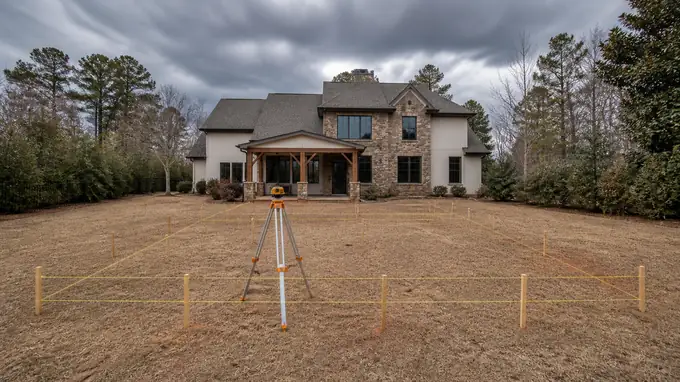
A contractor checks slope and drainage before work begins. at a stacked-stone and stucco home in Sandy Springs, GA, under a darkening storm sky.

Step 1: Site Assessment

We start by finding out why the slab failed, because patching a crack without knowing its cause just moves the crack somewhere else. We sound the surface for hollow spots, check where water sheds and pools, and see how the slab meets the foundation. With the median home here built in 1988, we look closely at how the original base has held up. Rion soil, which drains well, is Fulton County's most common type, but it varies, so we test every site on its own.

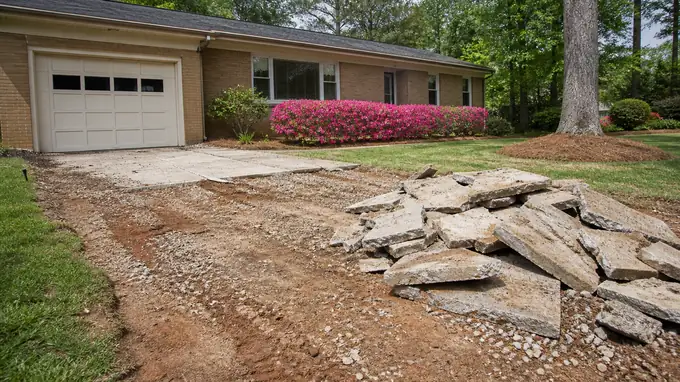
An old patio slab is broken up and hauled away. at a buff-brick ranch home in Sandy Springs, GA, in full afternoon sun.

Step 2: Site Preparation

Saw cuts come first, along straight lines, so new concrete meets sound concrete instead of a ragged edge. The broken slab comes out, along with any base that has washed out or gone soft. Fresh gravel goes in, compacted in lifts and graded so water runs away from the structure. Ground here rolls gently and changes block to block, so that grading gets as much care as the pour. We handle the permit when one is needed.

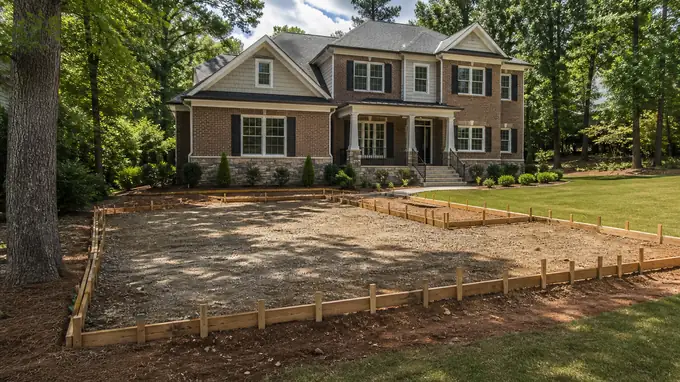
Wooden forms outline a patio slab before the pour. at a brick-and-siding two-story home in Sandy Springs, GA, under broken cloud.

Step 3: Forming & Reinforcement

Forms go in straight and braced so they hold their line under the weight of wet concrete. Where the repair meets existing slab, we drill and epoxy steel dowels into the old edge, which ties old and new together and keeps one side from dropping below the other. Inside the pour, rebar sits on chairs at mid-depth rather than lying in the gravel, where it does nothing. Along edges that carry vehicle loads, we thicken the slab.

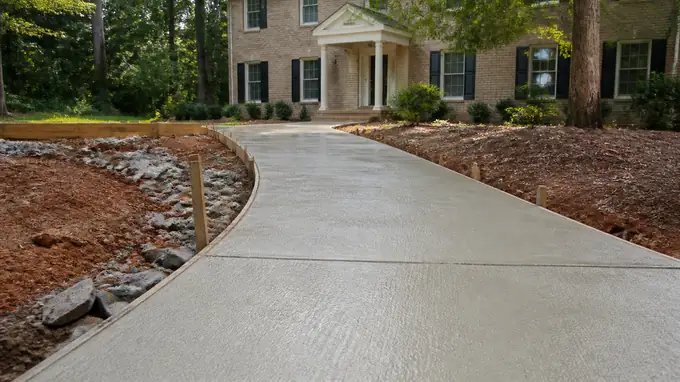
A bull float smooths a residential walkway surface after screeding. at a tan-brick colonial in Sandy Springs, GA, under bright midday cloud.

Step 4: Pouring

Concrete arrives mixed for the load it will carry, whether that is a car, a grill, or foot traffic. We dampen the base first so dry gravel does not pull water out of the mix. Then we place it steadily, work it into corners and around the dowels, and vibrate it to drive out air pockets. Adding water on site makes concrete easier to spread and weaker once it sets, so we don't do it.

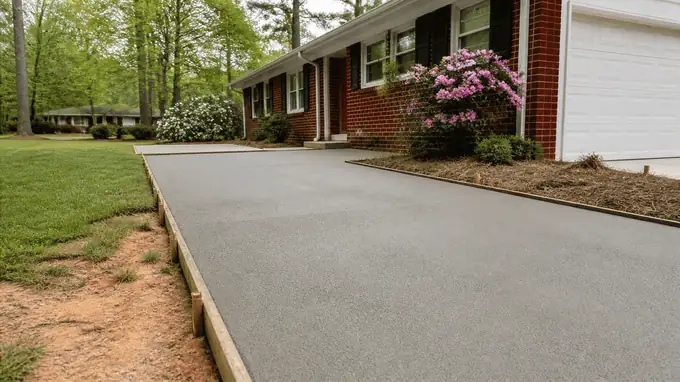
A hand trowel smooths a small patio surface to a hard finish. at a red-brick ranch home in Sandy Springs, GA, under a hazy afternoon sky.

Step 5: Finishing

Timing decides the finish. We screed the surface flat, float it once the bleed water is gone, and cut control joints so cracks form where we choose, not across the middle. For driveways and walks, a broom finish gives grip in the rain. On a patio, we can match stamped or decorative work already on the property, though new concrete never matches weathered concrete perfectly in color. We say so before we pour.

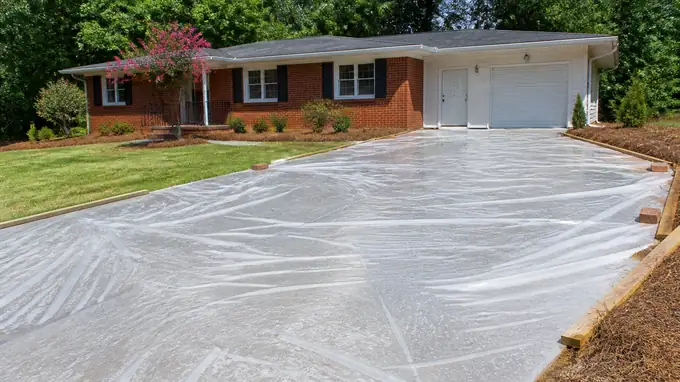
Plastic sheeting covers a curing driveway slab. at a red-brick ranch home in Sandy Springs, GA, in full afternoon sun.

Step 6: Curing

Concrete gains strength by holding onto its water, not by drying out. Once finishing is done, we keep the surface damp or cover it with a curing compound so the top does not dry faster than the slab beneath it, which is how surfaces end up dusty and crazed. Sandy Springs averages daily highs around 72°F and about 50 inches of rain a year, so we plan the pour around the forecast. Foot traffic comes first; vehicles wait longer.

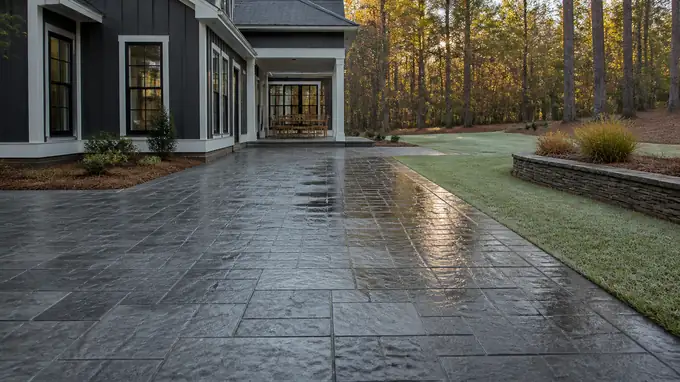
A roller applies sealer to a stamped patio surface. at a charcoal farmhouse-modern home in Sandy Springs, GA, in early morning light.

Step 7: Sealing

Once the slab has cured, we apply a penetrating or film-forming sealer to keep water, oil and leaf tannin from soaking in. Sealer also slows the staining that makes a repaired section stand out from the slab around it, and it deepens color on stamped concrete. We roll it on a dry day in thin coats, because heavy coats trap moisture and turn cloudy. When water stops beading on the surface, it is time to reseal.

What Decides the Price of Concrete Slab Repair

A slab repair bid is mostly a record of what sits under and around the concrete you already have. Two slabs of the same size can land far apart once access, the base and the load are accounted for. The median home here was built in 1988, so plenty of slabs are old enough to have a history. Nearly everything below is something you can walk out and check yourself.

What changes the priceWhich wayWhy
Old concrete that has to be broken outCosts moreDemolition, loading and hauling are labor before any new pour starts.
Truck can't back up to the slabCosts moreFences, tight side yards or steep lawns mean a pump or wheelbarrows.
Thicker slab neededCosts moreA slab that carries vehicles needs more depth than a walkway or patio.
Rebar or wire mesh requiredCosts moreSteel has to be bought, cut, placed and tied before the pour.
Settled or washed-out baseCosts moreThe subgrade gets dug out and recompacted, or the new slab sinks the same way.
Downspouts or grade sending water at the slabCosts moreWith about 60" of rain a year, water has to be rerouted before the repair will last.
Stamped or decorative finish to matchCosts moreMatching pattern and color takes extra materials and a slower finish.
Hairline cracks with no movementCosts lessThese can often be routed and sealed instead of replaced.

To compare bids, line them up on the same points: slab thickness, reinforcement type and spacing, how deep the base prep goes, and whether break-out and hauling are included. Ask each contractor what caused the failure and how their repair addresses it. A lower number that skips the base usually means paying for the same slab twice.

Get a Free Estimate

Get FREE Estimates

Tap to call +1 470-740-7099