+1 470-740-7099
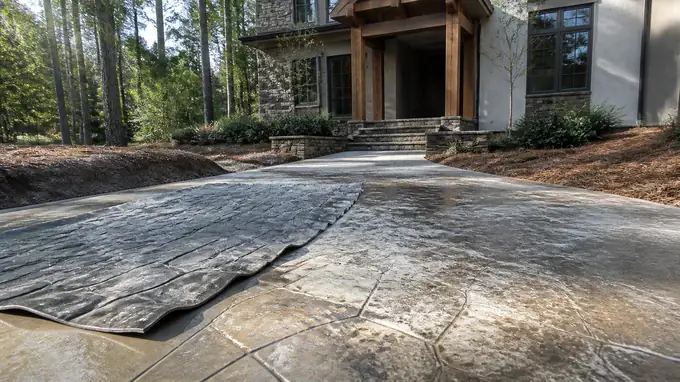
concrete sidewalk installation completed by a local contractor at a brick-and-siding two-story home in Sandy Springs, GA, in early morning light.

Concrete Sidewalk Installation in East Point, Georgia

A concrete sidewalk looks like a simple thing, and it is easy to get wrong. We install residential and commercial walks in East Point: the path from the driveway to the front door, the run along a property line, the connecting walk between a building and its parking. Each one is a slab poured on a prepared base, with control joints cut where the concrete would want to crack anyway. Done right, it stays flat and sheds water.

The work runs in a set order. We lay out the line and set the grade first, because a walk that holds water is a walk that fails early. After that we dig out, compact the base and set the forms. Reinforcement goes in where the conditions call for it. Soil changes from one lot to the next, so we test every site before work starts instead of guessing what sits underneath. The pour, the finish and the cure come last, and none of them gets rushed.

Most sidewalk failures start below the surface. A thin or soft base settles unevenly. A slab without enough slope sends water toward the house instead of away from it, and with about 50 inches of rain a year, drainage is not a small detail. Getting it right means more digging and more base material up front. That is the part that keeps a walk from sinking or cracking at the joints. If you have a walk to replace or a new one planned, call for a free estimate.

Call +1 470-740-7099

Get FREE Estimates

Concrete Services in East Point

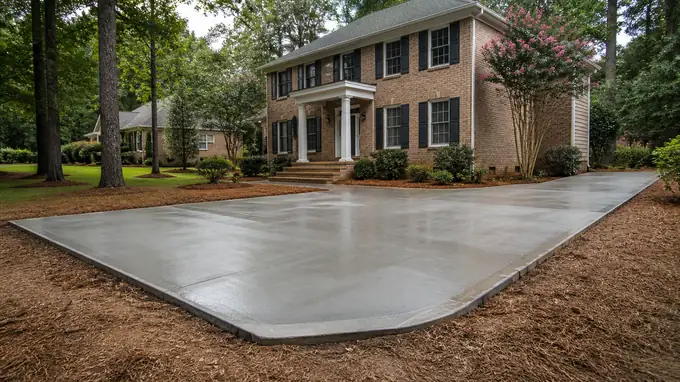
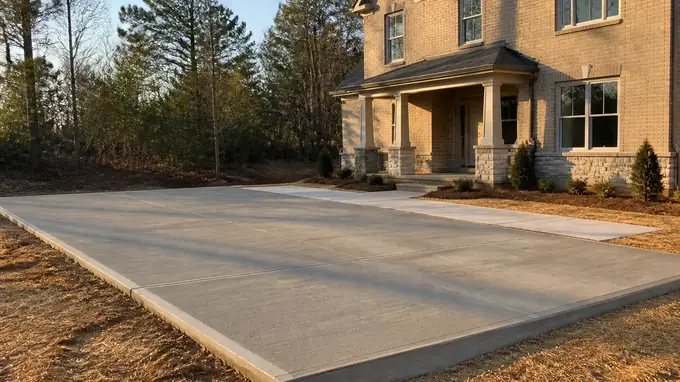
concrete slab installation completed by a local contractor at a brick-and-siding two-story home in Sandy Springs, GA, in late afternoon light.

Concrete Slab Installation Cost

The number on a slab quote comes from what sits under it and inside it. Base preparation, slab thickness, reinforcement and how close the truck can get to the pour all move it. A shed pad on open ground and a garage slab behind a fenced yard are different jobs. Soil varies across Fulton County, so we test every site before work starts, and the quote reflects what that test shows.


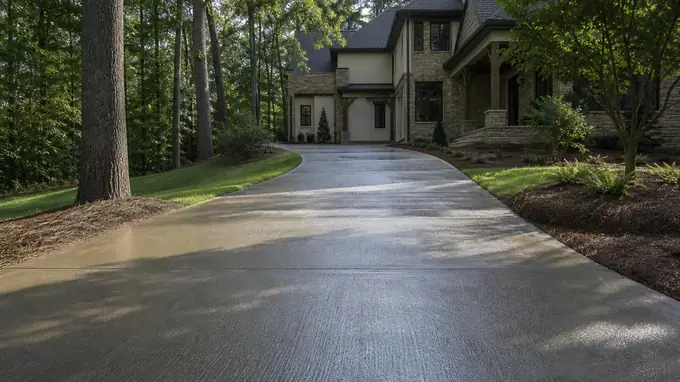
concrete driveway installation completed by a local contractor at a buff-brick ranch home in Sandy Springs, GA, under a hazy afternoon sky.

Concrete Driveway Installation

A driveway fails from the bottom up. Most cracked and sunken drives we see were poured on a thin, loosely compacted base, or had no reinforcement where the tires actually load it. We excavate, compact a crushed stone base, set rebar or wire mesh on chairs so it sits mid-slab, and cut control joints so the concrete cracks where we choose. Broom finish for grip, or stamped and decorative if you want it.

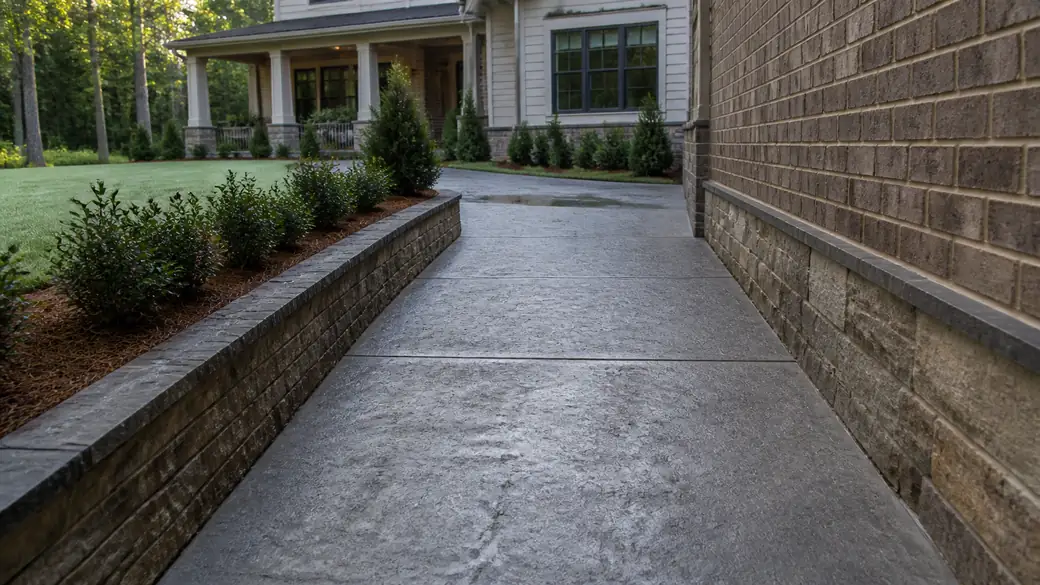
concrete flooring installation completed by a local contractor at a painted-white-brick two-story home in Sandy Springs, GA, under low winter sun.

Concrete Flooring Installation

Basements, garages, workshops and commercial spaces all start as a slab, but the finish decides how the floor lives. Interior slabs get a vapor barrier underneath so moisture does not wick up into flooring or storage. Then we trowel to the surface the room needs: a hard steel finish for a garage, a smoother one ready for polish or sealer, or a slab flat enough for tile without a thick leveling layer.

concrete slab repair completed by a local contractor at a stacked-stone and stucco home in Sandy Springs, GA, in raking morning side light.

Concrete Slab Repair

Not every cracked slab needs to come out. Hairline shrinkage cracks are cosmetic, and we rout and seal them. A slab that has settled or broken into pieces at different heights is another story: the base underneath has moved, usually because of water. With about 50 inches of rain a year here, drainage is often the real cause. We find out why it failed before recommending a patch, a partial replacement or a full tear-out.

Concrete Sidewalk Installation

Sidewalks look simple and punish shortcuts. We set forms to a steady cross slope so water sheds off the walk instead of pooling or running toward the house. Joints go in at regular spacing, and we isolate the walk where it meets a driveway, step or foundation so each piece can move without cracking the next. Whether it runs along an East Point street or out to a backyard patio, it gets a broom finish for traction in the wet.

Why Choose Sandy Springs Concrete Pros

A sidewalk is the plainest piece of concrete on a property, and that is exactly why we take it seriously. People walk it every day, carry groceries over it, push strollers and roll bins down it. If a slab heaves or a joint opens up, somebody trips. We build residential walks and commercial sidewalks in East Point the same way: a sound base, the right reinforcement, and a finish that stays safe underfoot when it is wet.

Our work starts below the surface. Fulton County's dominant soil is Rion, which drains well, but it changes from one lot to the next, so we test every site before a single form goes down. That test tells us how much base to bring in and how hard to compact it. From there we set forms to a true line, place reinforcement where the walk will carry load, and cut control joints at a spacing matched to the slab.

Water is what ruins most sidewalks. This area sees about 50 inches of rain a year, and a walk that holds puddles or sends runoff toward the house will show it. We pitch every walk so it sheds water off the edge, tie it cleanly into driveways and patios, and give the surface a broom texture that grips in the rain. Those details take a little more care during construction. Skipping them means tearing the walk out later.

What to Expect on a East Point Concrete Job

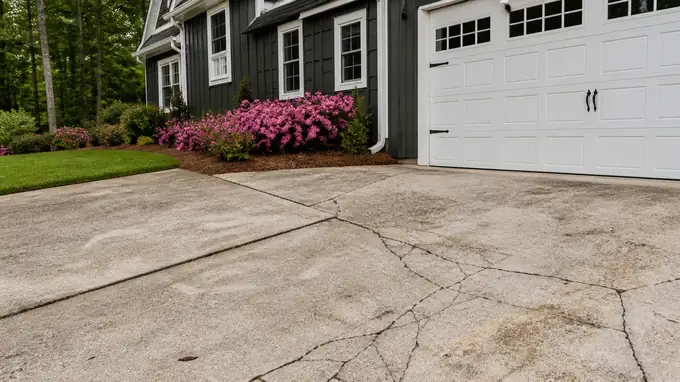
A worker examines an old driveway before replacement. at a charcoal farmhouse-modern home in Sandy Springs, GA, in full afternoon sun.

Step 1: Site Assessment

We start by walking the route: where the walk begins and ends, how it meets the driveway or the street, where water sheets off the yard, and which tree roots sit close enough to matter. Rion soil, which drains well, is the dominant type across the county, but it varies from lot to lot, so every site is tested individually before work starts. We also have utilities marked and check how the new surface ties into existing concrete.

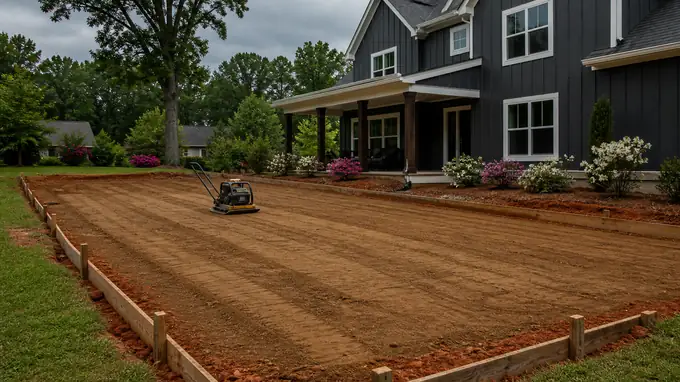
A plate compactor tamps down soil in a small excavated area. at a charcoal farmhouse-modern home in Sandy Springs, GA, under a darkening storm sky.

Step 2: Site Preparation

Most sidewalk failures start below the slab. We strip sod, topsoil and anything organic down to firm ground, then place a gravel base and compact it in lifts with a plate compactor. Soft spots get dug out and replaced, not bridged. With about 50 inches of rain a year, grade matters. We set a gentle cross-slope so water runs off the walk instead of pooling against the house or washing out the edges.

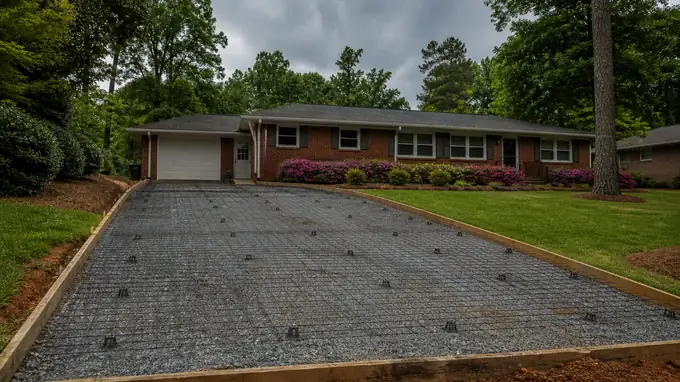
Wire mesh is unrolled across a driveway base before pouring. at a red-brick ranch home in Sandy Springs, GA, under a darkening storm sky.

Step 3: Forming & Reinforcement

Forms are straight lumber or steel, staked tight and checked against a string line so the edges run true and the slope holds. Curves get bendable forms. For reinforcement we use rebar on chairs or welded wire mesh, held up in the middle of the slab where it does its work, not lying in the dirt. Where the walk meets a driveway, steps or older concrete, expansion joint material lets each slab move on its own.

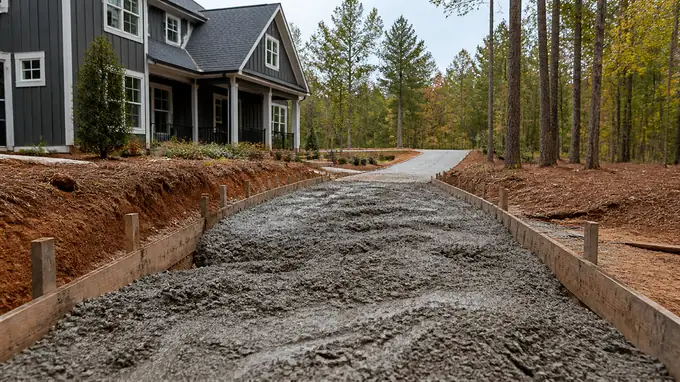
A ready-mix truck discharges concrete into a driveway form. at a charcoal farmhouse-modern home in Sandy Springs, GA, under a hazy afternoon sky.

Step 4: Pouring

Ready-mix designed for exterior flatwork arrives on the truck, and we check it before it goes in. Extra water makes concrete easier to place and weaker for its whole life, so we don't add water to speed the job along. The crew places it, rakes it close to grade, and screeds it off the forms. Pour days are planned around the forecast, because a hard rain on fresh concrete can wash out the surface.

Stamping mats are pressed into a patio surface to imprint a pattern. at a stacked-stone and stucco home in Sandy Springs, GA, under low winter sun.

Step 5: Finishing

A bull float closes the surface and settles the aggregate. Once the bleed water is gone, we edge the sides and tool control joints, so any cracking follows lines we chose instead of wandering across the walk. A broom finish is standard on sidewalks because it grips when wet. Stamped and decorative finishes work on a walk too, kept textured enough to stay safe underfoot. Troweling too early traps water and causes flaking later.

A hand sprayer applies curing compound to a finished patio. at a tan-brick colonial in Sandy Springs, GA, under an overcast sky.

Step 6: Curing

Hard to the touch is not the same as strong. Concrete keeps gaining strength for weeks, and the early stretch decides a lot. We keep the new walk damp or apply a curing compound so the top doesn't dry faster than the slab below it, which is how shrinkage cracks and a dusty, weak surface form. People can walk on it well before it's ready for a loaded wheelbarrow, a mower or anything heavier.

A sprayer applies sealer across a driveway. at a stacked-stone and stucco home in Sandy Springs, GA, under low winter sun.

Step 7: Sealing

Sealing comes last, after the slab has cured long enough to take it. A penetrating sealer soaks in and leaves the broom texture as it is. An acrylic sealer adds a slight sheen and is common on stamped or decorative work. Either one slows water, oil and stains from getting into the surface. It isn't a one-time job: sealers wear, and resealing every few years keeps the walk looking the way it did when the forms came off.

What Decides the Price of Concrete in East Point

A sidewalk looks simple from the street, but most of what sets its price can be seen from your own front steps. Here is what moves the cost of an East Point walk, and which way it pushes it.

What changes the priceWhich wayWhy
Old concrete or pavers in the pathcosts moreIt all has to be broken out, loaded and hauled off before we can set forms for the new walk.
Tree roots under or beside the walkcosts moreRoots that lifted the old slab need cutting back or working around, or the new one heaves the same way.
Where a truck can parkcosts less when closeIf the chute reaches the forms, we pour straight in. A walk behind a fence or up a bank means a pump or wheelbarrows.
Slope along the runcosts more when steepA real grade change can call for steps, extra forming and more joints to keep the surface from cracking where it shouldn't.
Where water sits after raincosts more if it poolsWith about 50 inches of rain a year, a low spot needs regrading or a drain, not just fresh concrete poured into it.
Thickness and reinforcementcosts more at driveway crossingsA walk that only sees feet is built lighter than the stretch where cars roll over it. That section gets more depth and more steel.
Straight runs or curvescosts more for curvesCurved forms take longer to bend, stake and finish than straight boards.
Broom finish or stampedcosts more for stampedA broom finish is quick and grips well underfoot. Stamped and decorative work adds materials and hours on the slab.

When you line up bids, check that each one covers the same work: tear-out and haul-off, base preparation, thickness, reinforcement and finish. Ask whether the ground gets tested first. We test every site before work starts. A lower figure that leaves out removal or base work is not a better price for the same sidewalk.

East Point Questions

Should a damaged East Point patio be repaired or replaced?

That depends on what is happening under the surface. Hairline cracks, a worn finish or one low corner can usually be repaired, and a resurface buys the patio more years. When the slab has broken into pieces, heaved, or tips water back toward the house, the base underneath has failed, and patching only hides it for a season. We check the drainage and the subgrade before recommending either, because that is where the real answer sits.

Are you fully licensed, insured, and bonded for commercial work in Southern East Point?

Ask for the paperwork rather than the answer. Before any commercial job is scheduled, in Southern East Point or anywhere else, the license, the certificate of insurance and any bond the project requires should be in your hands in writing. Then check them yourself with whoever issued them. A property manager should expect that from us and from anyone else bidding the work. A verbal yes over the phone is worth very little once a slab is poured.

What areas beyond East Point do you serve?

We work across metro Atlanta, on residential and commercial property alike, and every town on our list is served on the same terms. A driveway in College Park gets the same crew, the same materials and the same care as a patio anywhere else we go. The full list of towns appears elsewhere on this page. If your address sits near one of them and you are not sure, call and ask.

Is Sandy Springs Concrete Pros licensed, insured, and bonded?

Whoever pours your concrete, see the documents before the first form goes down. That means a current license where one is required, a certificate of insurance showing the coverage, and a bond if your project calls for one. Hold us to exactly the standard you would hold any other contractor. Keep copies with your project records. If someone hesitates to put those papers in front of you, that hesitation tells you what you need to know.

Does Sandy Springs Concrete Pros build retaining walls for hillside properties?

Yes. A retaining wall on a slope is mostly about the parts nobody sees once it is finished: the footing, the steel reinforcement, and the drainage behind the wall that keeps water from pushing against it. Rion soil drains well and is common here, but it is not the only soil in the ground, so every site is tested before work starts. Taller walls, or walls holding up a driveway, get engineered plans.

How much does it cost to install a 4-foot concrete retaining wall in East Point?

No two walls come out the same, so we price each one after seeing the site. Length is the first thing we measure. Then come access for the truck, how deep the footing has to go, how much drainage the slope needs, and whether the face stays plain or gets a decorative finish. What the soil test shows shapes the footing as well. Call for a free estimate; a figure built from your own wall beats any number quoted blind.

Get a Free Estimate

Get FREE Estimates

Tap to call +1 470-740-7099