+1 470-740-7099
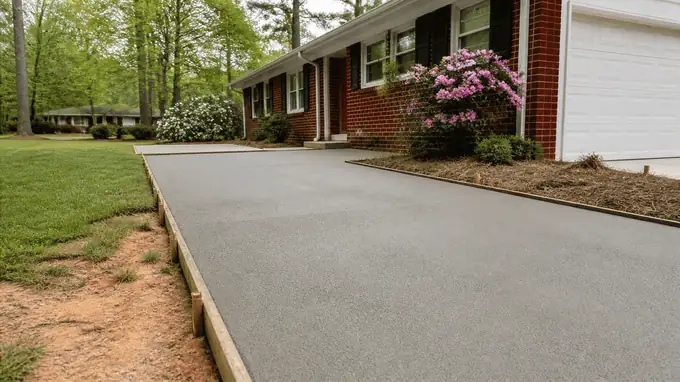
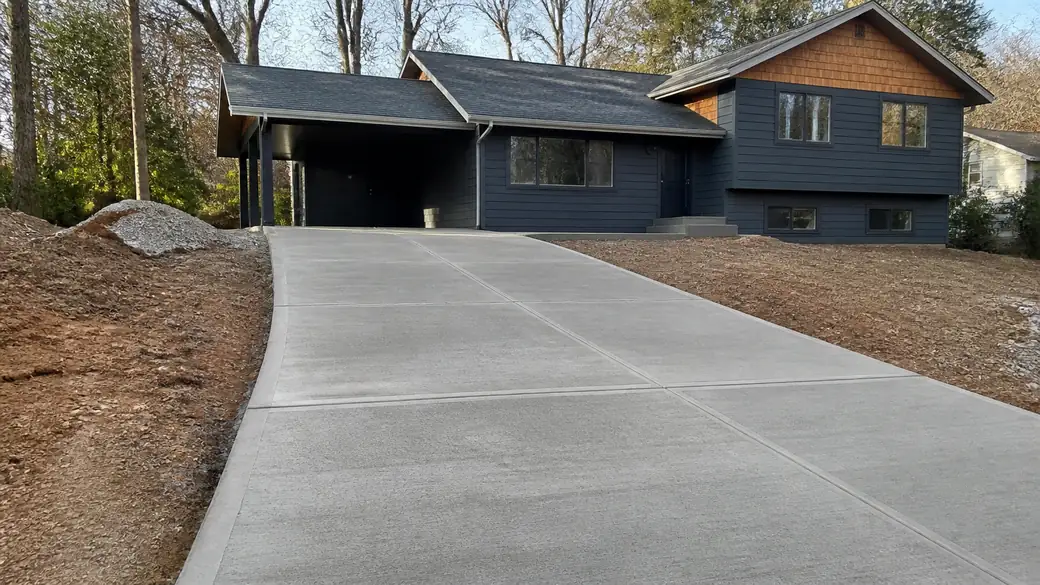
concrete installation completed by a local contractor at a grey split-level home in Sandy Springs, GA, in open shade.

Concrete Installation in Sandy Springs, GA

We pour and finish concrete for homes and businesses across Sandy Springs. That means driveways, patios, walkways, garage slabs and stamped decorative surfaces on the residential side, and sidewalks, pads and structural slabs for commercial property along Roswell Road and around Perimeter Center. The median home here was built in 1988, so a good share of the concrete we see has been carrying cars, foot traffic and weather for decades. Some of it just needs replacing. Some of it failed early because the base under it was never right. Either way, we treat the job as new construction: the old slab comes out, and the ground gets looked at before anything goes back.

Most of what goes wrong with concrete starts underneath it. Fulton County's dominant soil is Rion, which drains well, but it changes from one part of the county to the next, and the ground here rolls enough that two lots on the same street can grade very differently. So we test and grade every site on its own. The area also sees about 50 inches of rain a year, and water that has nowhere to go will find the edge of a slab and work under it. We set slope, base depth and reinforcement for the property in front of us, and we handle the permit. Call for a free estimate.

Call +1 470-740-7099

Get FREE Estimates

Our Concrete Installation Work in Sandy Springs

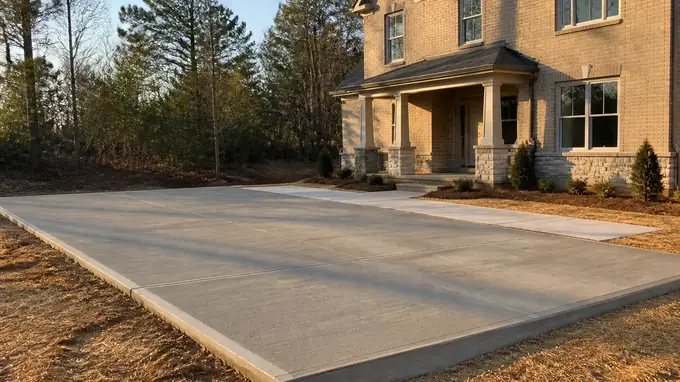
concrete slab installation completed by a local contractor at a brick-and-siding two-story home in Sandy Springs, GA, in late afternoon light.

Concrete Slab Installation Cost

The number on a slab quote comes from what sits under and inside it. We price the excavation, the compacted gravel base, the forms, the rebar or wire mesh, the concrete mix and the finish, each as its own line. Thickness follows use: a shed pad and a garage floor are not poured the same. Lots here roll gently, so grading often moves the figure more than the concrete does. Call for a free estimate.


concrete driveway installation completed by a local contractor at a buff-brick ranch home in Sandy Springs, GA, under a hazy afternoon sky.

Concrete Driveway Installation

Driveways fail from the bottom up. We dig out soft fill, compact a gravel base in lifts, and set rebar on chairs so it sits mid-slab. Edges get thickened where tires roll off. Control joints go in the same day, spaced so the cracks that will come land in straight lines. With about 50 inches of rain a year, we pitch every surface away from the garage. Finishes run from plain broom to stamped and colored.

concrete flooring installation completed by a local contractor at a painted-white-brick two-story home in Sandy Springs, GA, under low winter sun.

Concrete Flooring Installation

Basements, garages, workshops and additions get a polyethylene vapor barrier over the gravel base before any concrete goes down. Moisture wicking up through a bare slab ruins whatever flooring is laid on top later. We float and trowel to the finish the room needs: a hard-troweled surface for a garage, a flatter, smoother one for tile or polished concrete. Half the homes here were built before 1988, so where new flooring meets an old slab, we check that slab first.

concrete slab repair completed by a local contractor at a stacked-stone and stucco home in Sandy Springs, GA, in raking morning side light.

Concrete Slab Repair

Not every crack means replacement. Hairline shrinkage cracks are normal and can be routed and sealed. A slab that has sunk, heaved or split with one side higher than the other points to a base problem, often washed-out fill or roots, and patching the top will not hold. We cut out the failed section, rebuild the base and dowel the new concrete into the old. Where most of the slab has gone, we say so and quote the replacement.

Why Sandy Springs Chooses Sandy Springs Concrete Pros

A slab is only as good as the ground under it, so we start there. Fulton County's dominant soil is Rion, which drains well, but it varies across the county, and we test every site before a single form goes in. The land here rolls gently, with about 135 feet of local relief within a few miles, so grade matters on driveways and patios more than most people expect. We shape the base to move water off the surface instead of letting it sit, because this area sees about 50 inches of rain a year.

The median home in Sandy Springs was built in 1988, which means a lot of the concrete around these houses has already put in decades of work. Replacing it properly means breaking out the old slab, correcting the base, and placing reinforcement where the loads actually fall. We do not skip those steps to save a day. Stamped and decorative finishes get the same groundwork as a plain broom finish, since the pattern on top only lasts as long as what sits beneath it. That is the whole approach. Call for a free estimate.

How a Concrete Installation Job Runs in Sandy Springs

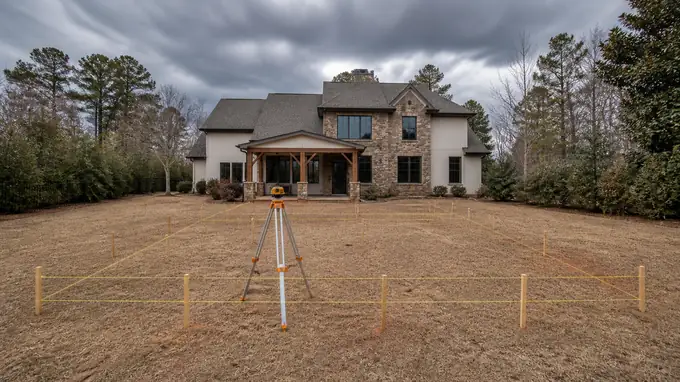
A contractor checks slope and drainage before work begins. at a stacked-stone and stucco home in Sandy Springs, GA, under a darkening storm sky.

Step 1: Site Assessment

We start on foot. We walk the property, note where water runs after a storm, check what the old slab is doing if there is one, and figure out where a truck can reach. Fulton County is gently rolling, but grade changes from block to block, so we shoot elevations on every site. Rion soil is common here and drains well. We still test yours rather than assume it. If the work needs a permit, we handle the permit.

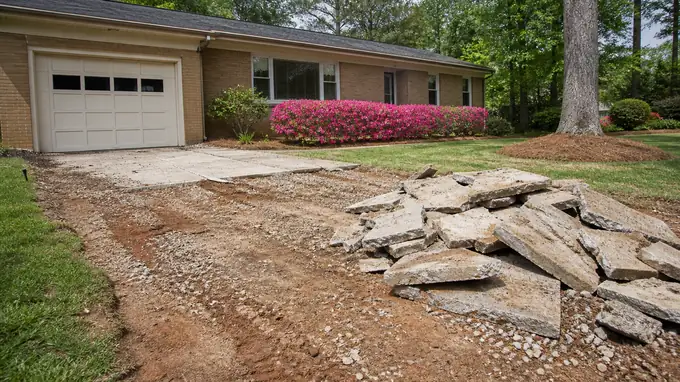
An old patio slab is broken up and hauled away. at a buff-brick ranch home in Sandy Springs, GA, in full afternoon sun.

Step 2: Site Preparation

Most concrete failures start underneath it. We dig out sod, roots and any soft soil down to firm ground, then set the grade so the finished surface sheds water away from the house. With about 50 inches of rain a year, that pitch matters. A gravel base goes in next and gets compacted in lifts with a plate compactor, not just raked flat. Where the subgrade stays soft after testing, we dig deeper and replace it.

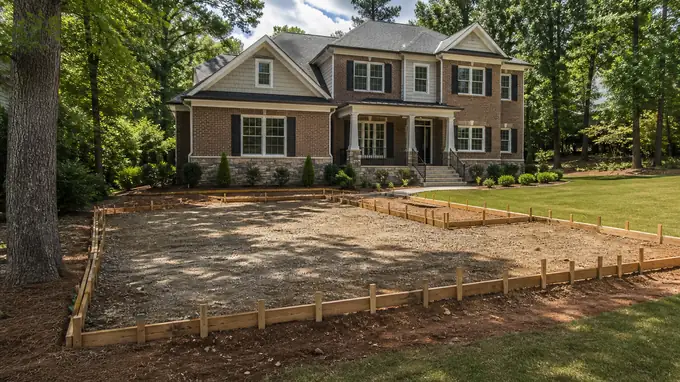
Wooden forms outline a patio slab before the pour. at a brick-and-siding two-story home in Sandy Springs, GA, under broken cloud.

Step 3: Forming & Reinforcement

Forms are straight lumber staked on the outside and checked with a string line, since whatever shape they hold is the shape you live with. Inside them goes the reinforcement: rebar on chairs for driveways and anything carrying a vehicle, wire mesh or fiber for lighter patios and walks. The steel has to sit in the middle of the slab. Mesh left lying on the gravel does nothing, and it is one of the most common shortcuts we see.

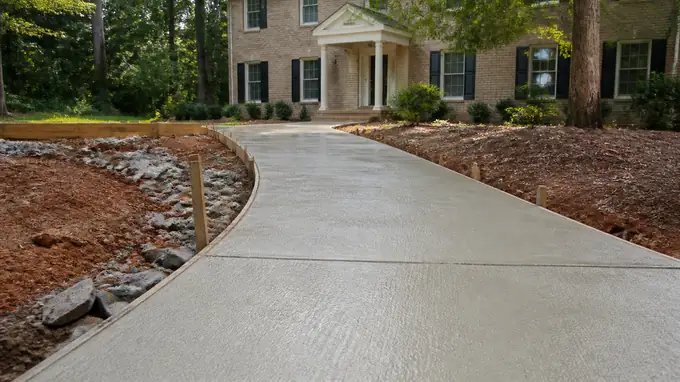
A bull float smooths a residential walkway surface after screeding. at a tan-brick colonial in Sandy Springs, GA, under bright midday cloud.

Step 4: Pouring

Pour day moves fast and cannot be paused. The truck backs in or a pump reaches over the house, and the crew places concrete from the far end toward the exit. We order the mix for the job, with a stronger mix for a driveway and the right slump for how it has to be placed. What we refuse is extra water added at the chute to make it spread easier. It pours nicely and cures weak, dusty and prone to cracking.

A hand trowel smooths a small patio surface to a hard finish. at a red-brick ranch home in Sandy Springs, GA, under a hazy afternoon sky.

Step 5: Finishing

Timing decides the finish more than tools do. After screeding the surface level, we float it and wait for the bleed water to leave before touching it again. Work it too early and the top scales off later. A broom finish gives grip on driveways and steps. Stamped and decorative surfaces get color and pattern pressed in while the slab is still soft. Control joints are cut or tooled in so cracks land where we choose.

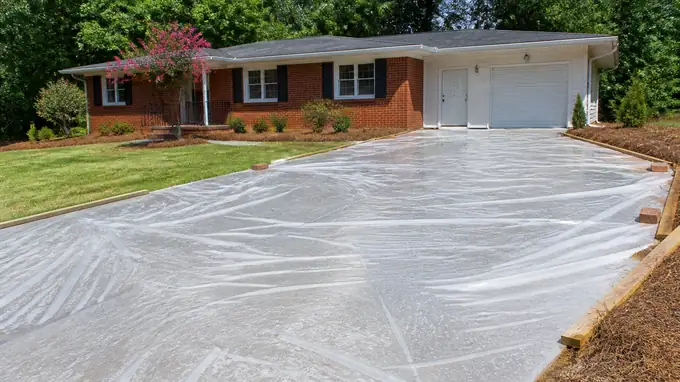
Plastic sheeting covers a curing driveway slab. at a red-brick ranch home in Sandy Springs, GA, in full afternoon sun.

Step 6: Curing

Concrete keeps gaining strength for weeks after it looks done. Fresh slabs need moisture held in, so we spray a curing compound or cover the surface, depending on the day. Foot traffic comes first, cars much later. Average daily highs here run around 72°F, which is kind to a slab, but a hot, windy afternoon still dries the top too fast. That is where surface cracking and a weak, chalky finish come from.

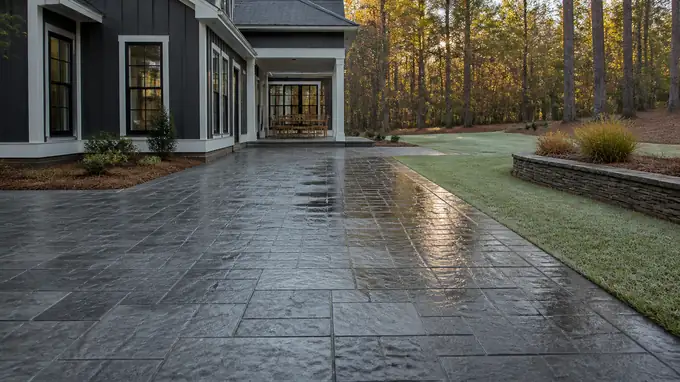
A roller applies sealer to a stamped patio surface. at a charcoal farmhouse-modern home in Sandy Springs, GA, in early morning light.

Step 7: Sealing

Sealer is the last coat and the one most people skip. Once the slab has cured, we apply a penetrating or film-forming sealer, depending on the surface. Stamped and colored work benefits most, since sealer deepens the color and keeps stains from soaking in. Plain broom finishes get a penetrating product that does not turn slick when wet. Resealing every few years keeps it working. Water that stops beading on the surface is the sign it is time.

What Decides the Price of Concrete Installation

Two slabs of the same size can land far apart on price, and most of the reasons are sitting right there on the property. The cost is largely decided before any concrete is poured: what has to come out, how the truck gets in, and what the ground needs under the slab. You can check most of these yourself before anyone comes out to measure.

What changes the priceWhich wayWhy
Old concrete or asphalt to tear outcosts moreBreaking it up, loading it and hauling it off is labor and dump fees before new work starts.
Tree roots or stumps under the pour areacosts moreRoots get cut back and the hole filled and compacted, or the slab cracks over them later.
Mixer truck can't reach the formscosts moreConcrete then goes in by pump or wheelbarrow, which adds equipment and hands.
Ground that slopes across the sitecosts moreA falling grade needs more fill, taller forms, and sometimes steps or a retaining edge.
Thicker slab and heavier reinforcementcosts moreA driveway carrying trucks needs more depth and rebar than a walkway for foot traffic.
Water that pools where the slab will sitcosts moreStanding water means regrading, extra base stone or a drain so the slab isn't sitting wet.
Stamped or colored decorative finishcosts morePattern mats, color, release and sealer take more material and a crew working fast before the surface sets.
Flat, open lot with a plain broom finishcosts lessStraight forms, a clear path for the truck and a standard finish make the simplest pour there is.

Comparing bids, look past the bottom line. Each one should state the slab thickness, the reinforcement, how deep the base stone goes, and whether tear-out, haul-off and the permit are included. A lower number that leaves out base prep or rebar is quoting a different job.

Frequently Asked Questions About Concrete Installation in Sandy Springs

How much does concrete floor installation cost per square foot?

There is no honest per-square-foot figure we can give without seeing the floor. The number moves with slab thickness, the reinforcement it needs, how much of the subgrade has to be dug out or built up, and whether the surface stays plain or gets a decorative finish. A basement floor in a house built around 1988 and a new garage slab are different jobs, so we measure the conditions and price that project.

How long does a typical general concrete construction and installation take from site prep to final cure in Sandy Springs?

Size decides most of it. A small patio and a full driveway tear-out run on separate schedules, and weather decides the rest. Sandy Springs gets about 50 inches of rain a year, so we plan pours around dry windows and cover fresh concrete when a shower is coming. Forming and pouring are the quick part. Curing is the slow part, and a slab is ready for foot traffic well before it is ready for a car.

Do I need permits for concrete slab installation in Sandy Springs?

Yes, many slab jobs need one, especially anything structural or attached to the house, such as a garage floor or a slab for an addition. Some flatwork may not. The line depends on scope, so we check it for each project before any materials are ordered. When a permit is required, we handle the permit and the inspections that go with it, and the paperwork is not something you have to carry.

Do I need a permit for retaining wall installation in Sandy Springs?

Yes, often. Height, what the wall holds back and how close it sits to a structure all bear on it. A low garden border and a wall holding a slope behind a driveway are treated very differently. Fulton County is gently rolling and the ground changes from block to block, so walls come up more than people expect. We look at the site, sort out what the wall needs, and handle the permit.

How long does concrete floor installation take?

Less time for the pour than most people expect, and more for the wait. Prep takes the most care: clearing, grading, compacting the base, setting forms and placing reinforcement. Once the base is right, the pour and finish go quickly. Then the slab has to cure, and it needs to be kept from drying out too fast while it does. Rushing that stage is how good concrete turns into cracked concrete, so we don't.

How much does concrete installation cost in Sandy Springs, GA?

It depends on the job in front of us, not the zip code. Two driveways of the same size, one in Sandy Springs and one in Dunwoody, can price differently because of slope, truck access and what has to come out first. Finish matters too: broom, exposed aggregate and stamped surfaces each take different work. Call for a free estimate. We measure, check the base, and price your property rather than an average.

Get a Free Estimate

Get FREE Estimates

Tap to call +1 470-740-7099