+1 470-740-7099
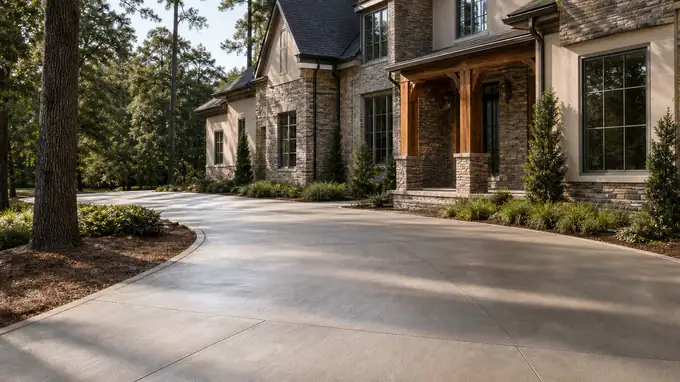
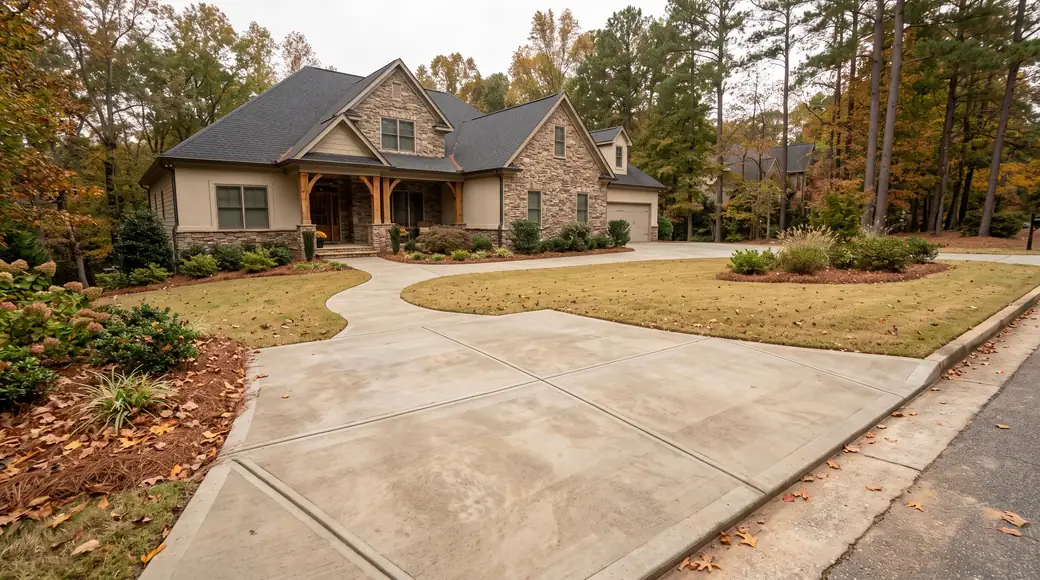
Wide view of finished concrete flatwork across the front of a home at a stacked-stone and stucco home in Sandy Springs, GA, under an overcast sky.

Repair, Leveling & Resurfacing in Dunwoody, Georgia

Most of the concrete around a Dunwoody house is older than the people living in it. Driveways and walks poured when these subdivisions went up in the 1950s, and through the early-1960s boom that followed the highways, have settled, cracked at the joints, or lifted where roots ran underneath. Some of that concrete can be brought back to level and left alone for years. Some of it is past that point, and the honest answer is a new slab. We look at what the slab is doing before we decide, not at how old it is.

Failure usually starts underneath rather than in the concrete itself. A driveway drops at one corner because the base beneath it moved, and the slab simply follows it down. Cracks that run straight across a panel mean something different from cracks that wander and open wide at the edges, and the two call for different repairs. A sidewalk section lifted at a joint is a trip hazard first and an eyesore second. Reading which problem you actually have is most of the job, because it decides whether we lift, patch, resurface or replace.

Almost everything that makes concrete last happens before any of it goes down: compacting the base, setting rebar or wire mesh where the load asks for it, pouring to a thickness that holds up under a vehicle, and finishing so water runs off instead of standing. Any concrete contractor can put a slab in the ground. The difference shows up years later. Where the existing slab is sound, resurfacing can carry a stamped concrete pattern or a plain broom finish, whichever suits the house better. Call for a free estimate and we will walk the property with you.

Call +1 470-740-7099

Licensed, Bonded, and Insured ยท A combined 15 years of experience

Get FREE Estimates

We warranty all of our work because we believe in what we do.

What We Do in Dunwoody

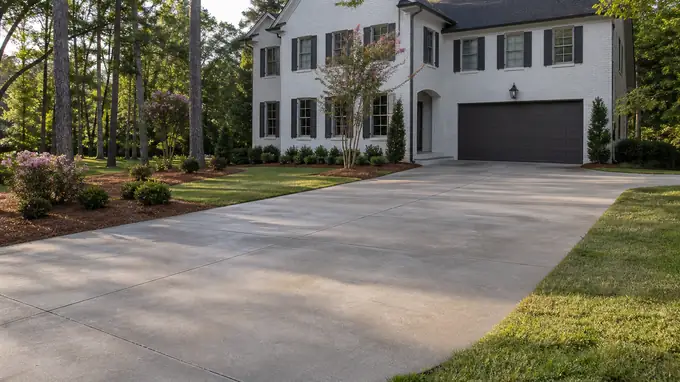
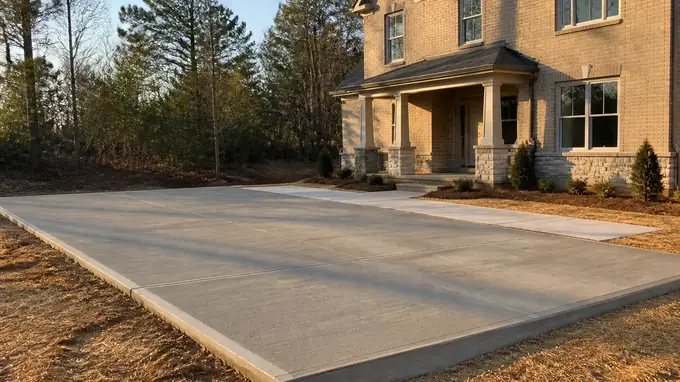
Replaced concrete driveway panel with clean saw-cut edges at a charcoal farmhouse-modern home in Sandy Springs, GA, in late afternoon light.

Repair, Leveling & Resurfacing

Slabs settle, crack and spall, and most of what we see has been in the ground for decades. We lift sunken sections back to grade, cut out failed panels, and resurface concrete that is sound underneath but rough on top. Hairline cracking gets routed and filled. Slabs broken clean through get replaced, because an overlay on a moving slab tears open again within a season or two.

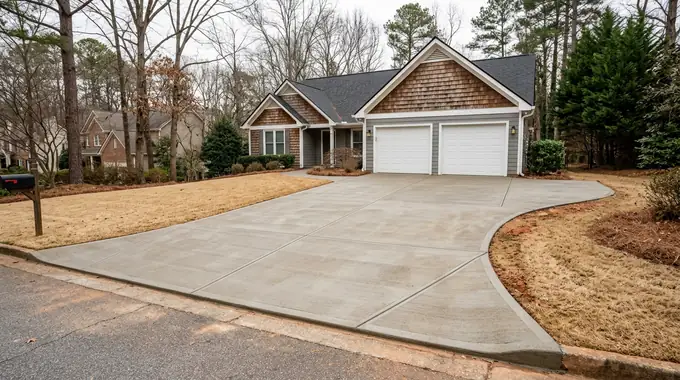
Broom-finished concrete driveway running up to a two-car garage at a grey split-level home in Sandy Springs, GA, under bright midday cloud.

Driveway Installation & Replacement

Replacing a concrete driveway means tearing out the old slab, regrading, and pouring back at four inches with rebar or wire mesh through the approach and any section that carries turning loads. As a concrete contractor working mostly on older houses, we widen tight drives and rebuild the apron where it meets the sidewalk. Broom finish is standard. Stamped or colored concrete is available.

Rectangular concrete patio with a low step up to the rear door at a buff-brick ranch home in Sandy Springs, GA, in late afternoon light.

Patio Construction & Outdoor Living

Patios go in over compacted base, four inches thick, with control joints cut so the slab cracks where we put the joints instead of down the middle. Exposed aggregate, stamped concrete and integral color all work here. We tie new pours into existing steps and walls, and we set slope away from the house so water leaves rather than pooling against the foundation.

Board-formed concrete retaining wall holding a raised lawn at a red-brick ranch home in Sandy Springs, GA, in early morning light.

Retaining Wall Construction

Rolling, wooded lots leave a lot of grade to hold back. We build walls with proper footings, drainage stone and pipe behind the face, and reinforcement sized to the height being retained. Drainage is the part that gets skipped and the part that fails first: water building up behind a wall pushes it out. We also rebuild leaning walls that were poured without a footing.

Square-edged concrete slab pad with a storage shed on it at a brick-and-siding two-story home in Sandy Springs, GA, under an overcast sky.

Concrete Slabs & Pads

Pads for garages, sheds, HVAC units, generators and dumpster enclosures. We handle the flatwork on commercial concrete jobs too, including loading areas and equipment pads that take real weight. Thickness and reinforcement follow the load, four inches with mesh for light use, thicker with rebar where trucks run. A concrete sidewalk or walkway pour ties the pad into the rest of the property.

Working in Dunwoody

Dunwoody sits on rolling, wooded ground, and that shows up in almost every driveway we look at. Slabs here rarely run flat and level from the street to the garage. They fall, they climb, they wrap around trees that were mature long before the concrete was poured. Grade drives water, and water drives most of what goes wrong underneath a slab. So we read the lot before we read the concrete: where the ground sheds, where it holds, and what a driveway is being asked to carry down a slope it never really wanted to sit on.

Most of what we pour is replacement, not new. The houses here went up through a long stretch of suburban building, and the flatwork attached to them has taken decades of weather, roots and traffic. A concrete driveway poured for one sedan and a light truck now gets parked on by something much heavier. Patios were added later, often by different hands, at different thicknesses. We spend a good share of our time taking out concrete that did its job honestly for years and simply reached the end of it.

Access shapes the schedule more than the pour does. Wooded lots mean tight approaches, low limbs, and a truck that cannot always get near where the concrete has to land. We plan that route before anything gets broken out: where the mixer sets up, how far the chute reaches, what we move by buggy or barrow. Roots get cut back only where the work demands it, and we protect what stays. On a steep drive we form and pour in sections, so nothing runs on us while it is still wet.

What goes wrong is usually underneath. Poor subgrade, washed fill along a low edge, a root that lifted one panel while the one beside it stayed put. Cracks follow, then the panels start moving independently. On a slope, a settled slab sends water back toward the house instead of past it, and a concrete problem quietly becomes a foundation problem. We find the cause before we price the fix. Sometimes the answer is leveling one section. Sometimes it is a tear-out, because good concrete over bad ground buys a few years at best.

Getting it right costs time in the parts nobody sees. Compacted subgrade, honest thickness, rebar or wire mesh held up off the dirt where it can actually do something, control joints cut where the slab wants to crack anyway. Stamped and colored work adds steps, and not one of them forgives a rushed base. Permitting on our Sandy Springs work runs through the City of Sandy Springs. Call for a free estimate on the driveway, patio or sidewalk you have been walking past and meaning to deal with.

How a Job Runs

Every job opens with a walk of the slab, tape in hand, looking at what actually failed. We measure thickness at the broken edges, check where water sits after a storm, and work out whether the base gave way or the concrete did. Then you get a written scope for the concrete installation: square footage, depth, reinforcement, finish, and how the old material leaves the property. Ask whatever you want at that stage. It is easier to change a plan on paper.

Demolition comes first, and it is loud for a day. We break out the old concrete driveway or walk, load it, and haul it off. The grade then gets cut, compacted, and brought back to line so the new slab sits on something solid. Forms go in, rebar or wire mesh gets tied and chaired up off the ground, and the pour follows. Finishing happens the same day, joints get cut soon after, and nobody drives on it that night.

Surprises live under old slabs, and old work hides its shortcuts well. Tree roots, soft fill, a buried downspout line, a section poured straight onto dirt with no base at all. Rolling, wooded lots put drainage into the conversation more often than people expect. Weather moves things too, since we will not pour into rain or rush a slab that is setting faster than it should. When the scope changes we stop, show you what turned up, and agree on it before going further.

Getting it right costs time more than anything else. Sidewalks take foot traffic sooner than driveways take a vehicle, and the wait on a fresh driveway is not something we shorten to be agreeable. Thickness at the apron, a base that was actually compacted, reinforcement held in the middle of the slab, control joints cut where the concrete wants to crack anyway: nobody sees those parts, and they are the whole reason the pour lasts. We would rather tell you to wait than come back to tire marks pressed into good work.

Scheduling turns on weather and on what the crew is finishing, and the same sequence runs whether the address sits here in Dunwoody or over in Sandy Springs. Before anything starts you will know where the truck parks, where the chute reaches, and which part of the yard takes the weight of it. Forms, broken concrete and wash water leave with us. What stays is a slab poured the way we described it at the kitchen table. Call for a free estimate.

Dunwoody Questions

Does Dunwoody require its own permit for this work?

Sometimes. A straight replacement in the same footprint often does not, while work that changes drainage, widens a driveway or touches the right of way usually does. We check the specifics against your property before anything is scheduled, and we pull what the job needs. You do not have to make that call yourself, and you do not have to figure out which category your driveway falls into.

Do you charge more to work in Dunwoody than in Sandy Springs?

No. Every town we cover is priced on the same basis: the size of the slab, the condition of what is under it, access for the truck, and the finish you want. Distance is not a line item. A concrete patio in Dunwoody and the same patio a few miles away come out the same. What moves a number is the work itself, not the address on the estimate.

How quickly can you get a crew to Dunwoody?

That depends on what we already have booked and on the weather, since concrete work is weather-bound. Tell us what you are looking at and we will tell you honestly where it falls in the schedule. Small repairs and leveling usually slot in more easily than a full driveway tear-out. We would rather give you a real answer than an optimistic one you plan around.

Is there a minimum job size for Dunwoody?

No, though very small jobs sometimes make more sense combined with other work. A single cracked sidewalk panel, a settled step, one lifted section by the garage apron: those are worth doing on their own, and we do them. If you have three small problems around the house, mention all of them. Mobilizing once for the set is simpler than three separate trips.

Can you match concrete you did not pour in Dunwoody?

Usually close, rarely exact. Older flatwork has weathered, and a fresh pour cures lighter before it settles toward the surrounding color over months. We can match broom direction, joint spacing, edge radius and aggregate exposure, which is what the eye actually reads. On stamped or colored concrete we bring samples out and show you the realistic range first.

Get a Free Estimate

Get FREE Estimates

We warranty all of our work because we believe in what we do.

Tap to call +1 470-740-7099