+1 470-740-7099
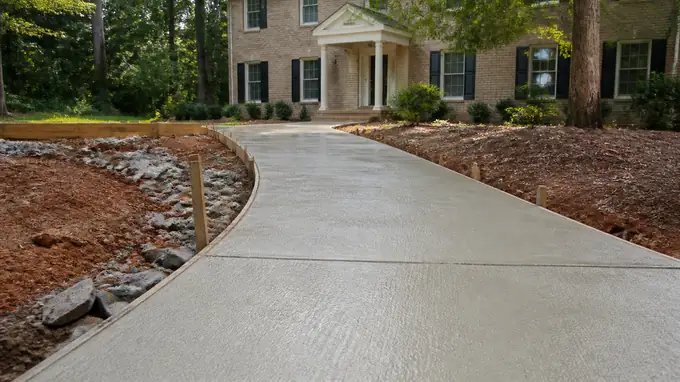
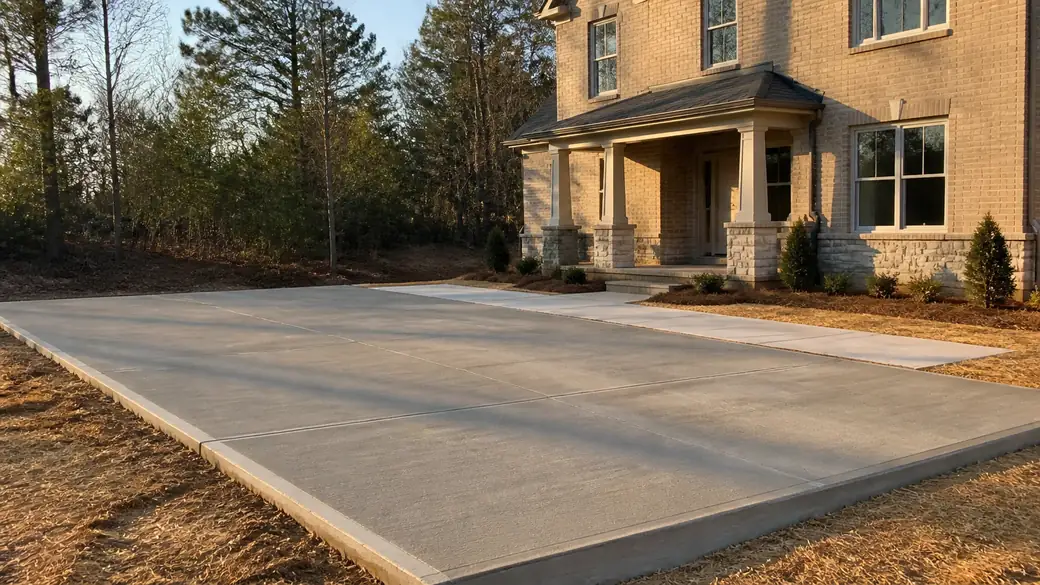
concrete slab installation completed by a local contractor at a brick-and-siding two-story home in Sandy Springs, GA, in late afternoon light.

Concrete Slab Installation in Tucker, Georgia

A slab is the flat, load-bearing surface everything else rests on: a garage floor, a patio, a shed pad, the base under an addition. We handle residential and light commercial slab installation across Tucker, and the approach holds whether the slab carries a car or a grill. Get the base, the thickness and the reinforcement right, and the concrete has what it needs to do its job. Get any one of them wrong, and no finish on top will make up for it.

Before any forms go up, we test the soil on your property. Every site is different, so we assume nothing from the lot next door. From there we cut to grade, compact a stone base, set the forms and place rebar or wire mesh at the right height within the pour, not lying flat on the ground. The concrete goes in, gets screeded, floated and finished. Control joints are cut where the slab would want to crack anyway.

Most slab failures start below the surface. A base that was never compacted settles, and the slab cracks along the soft spot. Reinforcement sitting in the dirt does nothing at all. Water is the other problem. This part of metro Atlanta sees about 50 inches of rain a year, so we slope every slab to shed it and keep runoff from pooling at the edges or working its way underneath. Adding water to the mix to make placement easier weakens it. We don't do it.

Getting it right costs time more than anything else. Proper curing means keeping the fresh slab damp and off-limits for days, not hours, and we build that into the schedule instead of skipping it. It also means the right thickness for the load, a base deep enough to carry it, and joints placed with some thought. None of that shows once the work is done. What shows is a flat, sound surface. Call us for a free estimate on your slab.

Call +1 470-740-7099

Get FREE Estimates

Concrete Services in Tucker

Concrete Slab Installation Cost

What a slab costs follows from what it has to carry. A patio slab, a shed pad and a garage floor under a loaded truck each get a different thickness, a different base and different reinforcement, and each of those moves the number. Access matters too: whether the truck can chute straight in or the pour needs a pump or wheelbarrows. Soil varies from one property to the next, so every site is tested before work starts. Call for a free estimate.

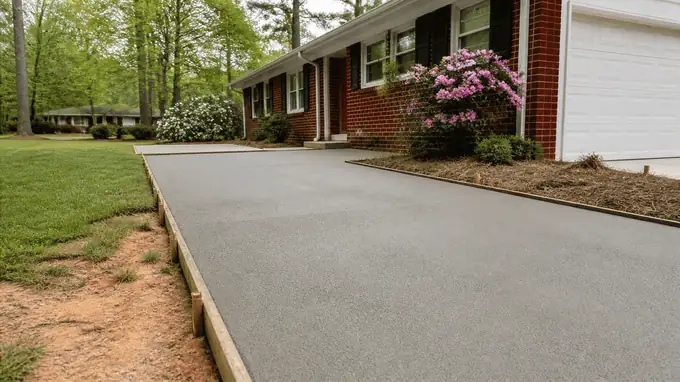
concrete driveway installation completed by a local contractor at a buff-brick ranch home in Sandy Springs, GA, under a hazy afternoon sky.

Concrete Driveway Installation

Driveways usually fail at the base and the edges, long before the surface wears out. We dig down to firm subgrade, compact a crushed stone base, and set rebar or wire mesh on chairs so the steel sits inside the slab instead of lying in the dirt. Control joints are cut to suit the width. With about 50 inches of rain a year here, we pitch every driveway so water runs off the surface and away from the garage.

concrete flooring installation completed by a local contractor at a painted-white-brick two-story home in Sandy Springs, GA, under low winter sun.

Concrete Flooring Installation

Garage floors, basements, workshops and commercial spaces all start the same way: a compacted base, a vapor barrier, then reinforcement. Skip the barrier and ground moisture works up through the slab, lifting tile, coatings and glued flooring later on. We power trowel the surface for a hard, dense finish, then leave it ready to polish, seal, or take whatever goes on top. Curing is done properly, because a floor that dries too fast curls at the edges.

concrete slab repair completed by a local contractor at a stacked-stone and stucco home in Sandy Springs, GA, in raking morning side light.

Concrete Slab Repair

Before we patch anything, we find out why it broke. A settled base, water getting under the slab, tree roots or missing joints each need a different fix. Hairline shrinkage cracks can be routed and sealed. A sunken or broken section is cut out and replaced, with dowels drilled into the existing slab so the new concrete stays level with the old. Spalled surfaces take a bonded resurfacing if the concrete below is sound. If it isn't, we say so.

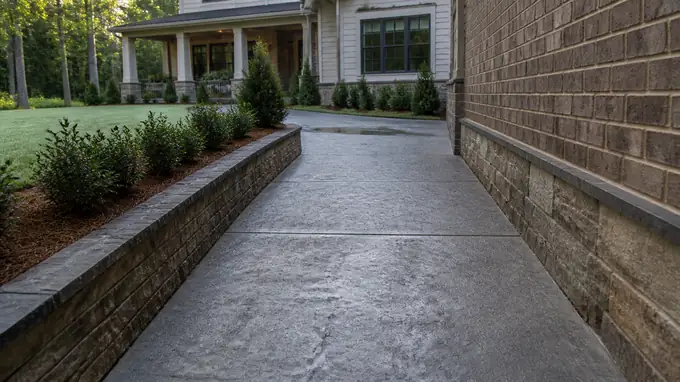
concrete sidewalk installation completed by a local contractor at a brick-and-siding two-story home in Sandy Springs, GA, in early morning light.

Concrete Sidewalk Installation

Walks look simple and still go wrong: a thin pour over loose fill, no joints, a low spot where rain sits. We compact the base, set forms to a steady cross slope so water sheds to one side, and tool control joints at regular spacing so any cracking happens where we planned it. A broom finish gives grip in the wet. Exposed aggregate or stamped borders are an option when the walk should match a patio or driveway.

Why Choose Sandy Springs Concrete Pros

A slab is only as good as what sits under it and what runs through it. We pour residential slabs for garages, patios, sheds and home additions, and we treat each one as a structural project, not a surface job. That means a compacted base, reinforcement matched to the load the slab will carry, and a finish suited to how it gets used. None of this is exotic. It is careful construction done in the right order, by a crew that would rather spend an extra hour than come back later.

Every site is tested individually before work starts, because ground can change from one lot to the next. Then we set forms, check grade and drainage, place the steel, and plan the pour around the weather. This part of metro Atlanta sees about 50 inches of rain a year, so timing is not a small detail. We would sooner move a pour by a day than place concrete on a wet subgrade and hope for the best. Short delays like that are cheap. Tearing out a slab is not.

Most slab failures come down to three things: a soft or poorly compacted base, water with nowhere to go, and reinforcement lying on the ground instead of sitting in the pour. Cracks follow, then settling, then a slab that pitches toward the house. Control joints cut too late or too shallow add random cracking of their own. None of it shows on the day the concrete goes in. It shows a year or two later, which is why we put our effort into the parts nobody sees.

Getting it right costs time more than anything else. Concrete needs days to cure properly, not hours, and a new slab should be left alone while it gains strength. The right thickness, sound materials and well-placed reinforcement add some cost up front, and they are the reason the surface stays flat and tight for years. If you are planning a slab in Tucker, call for a free estimate and tell us what it needs to carry.

What to Expect on a Tucker Concrete Job

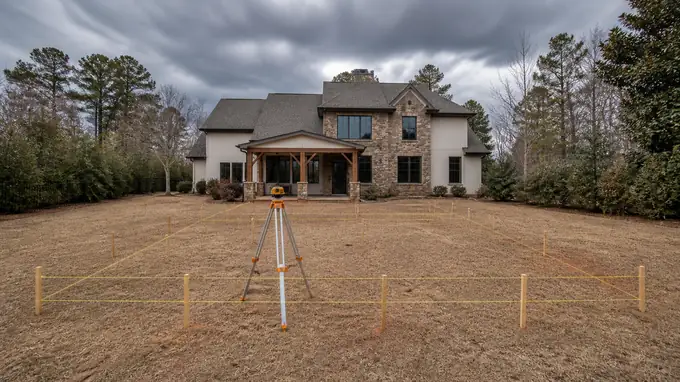
A contractor checks slope and drainage before work begins. at a stacked-stone and stucco home in Sandy Springs, GA, under a darkening storm sky.

Step 1: Site Assessment

Before anything is dug, we walk the property and look at where water goes now. We check the grade, the downspouts, tree roots, the condition of any old slab, and how a truck will reach the pour. Soil changes from one yard to the next, so every site is tested individually before work starts. That tells us how much base the slab needs, and whether the plan has to change before a single form goes in.

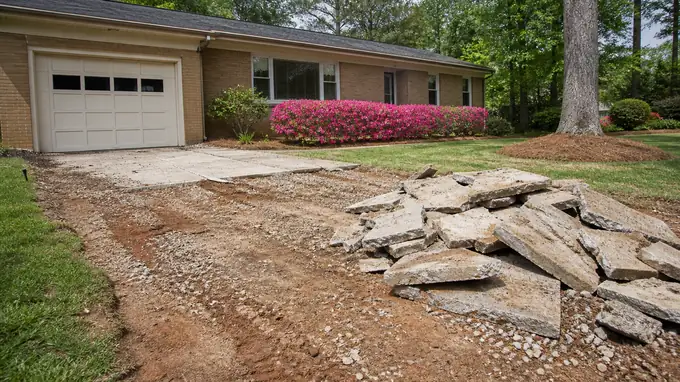
An old patio slab is broken up and hauled away. at a buff-brick ranch home in Sandy Springs, GA, in full afternoon sun.

Step 2: Site Preparation

Excavation comes next. We strip sod, topsoil and anything organic down to firm ground, then cut the subgrade so water runs away from the house. Soft spots get dug out and replaced, not covered over. Crushed stone goes down in lifts, and each lift is compacted with a plate compactor until it stops moving underfoot. Most of the cracked slabs we tear out failed here, on a base that settled, not in the concrete itself.

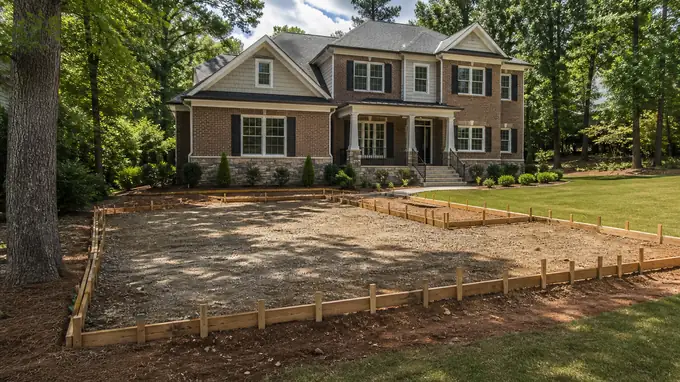
Wooden forms outline a patio slab before the pour. at a brick-and-siding two-story home in Sandy Springs, GA, under broken cloud.

Step 3: Forming & Reinforcement

Forms are straight lumber staked tight, set to finished height and pitched so the surface drains. A patio gets wire mesh or rebar on a grid. A driveway that carries vehicles gets heavier rebar and a thickened edge where tires roll on and off. We set the reinforcement on chairs so it ends up in the middle of the slab, where it actually does its job. Steel lying in the dirt under the pour does nothing.

A bull float smooths a residential walkway surface after screeding. at a tan-brick colonial in Sandy Springs, GA, under bright midday cloud.

Step 4: Pouring

Pour day is about timing. We order a mix suited to the work (air-entrained for exterior slabs, fiber added where it helps) and place it as close to its final spot as the chute or pump allows. Nobody adds water at the truck to make it flow easier, because that weakens the surface for good. The crew screeds to the forms, bull floats it level, and stays ahead of the setting concrete the whole way.

A hand trowel smooths a small patio surface to a hard finish. at a red-brick ranch home in Sandy Springs, GA, under a hazy afternoon sky.

Step 5: Finishing

Timing matters again here: finishing waits until the bleed water is gone. Work the surface too early and the top turns weak, dusty and prone to scaling. Edges are rounded with an edger. Control joints are tooled or saw-cut so the slab cracks where we choose, not wherever it likes. Driveways and walks usually get a broom finish for grip, while stamped and decorative work uses color, release agent and textured mats pressed in while the concrete is still workable.

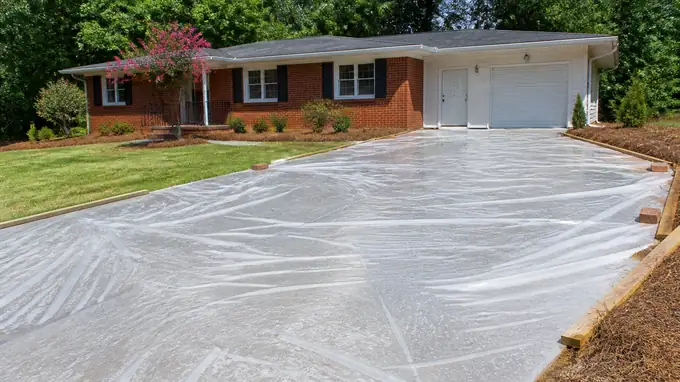
Plastic sheeting covers a curing driveway slab. at a red-brick ranch home in Sandy Springs, GA, in full afternoon sun.

Step 6: Curing

Concrete gains strength slowly, and it needs moisture to do it. Right after finishing, we apply a curing compound or cover the slab so the surface can't dry faster than the concrete beneath it. That uneven drying is how shrinkage cracks and a chalky top start. Hot, windy days get extra attention early on. Foot traffic comes first and cars much later, and before we leave, you know when each is safe on your slab.

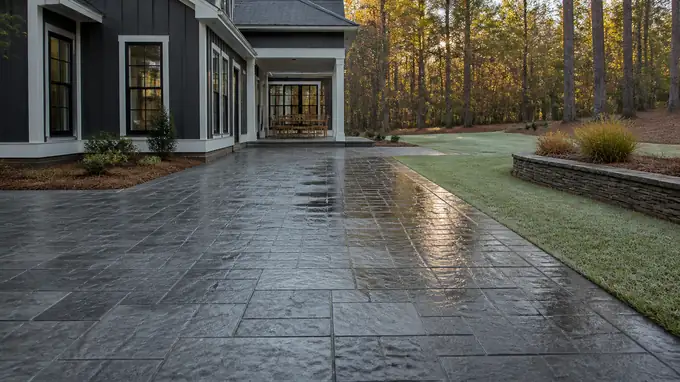
A roller applies sealer to a stamped patio surface. at a charcoal farmhouse-modern home in Sandy Springs, GA, in early morning light.

Step 7: Sealing

Once the slab has cured enough to take it, we seal it. With about 50 inches of rain a year here, a good sealer keeps water, oil and road grime from soaking into the surface. Stamped and colored concrete usually gets a film-forming sealer, which deepens the color and needs a fresh coat over time. Plain broom-finished slabs often do better with a penetrating sealer. It keeps the texture and won't turn slick underfoot when wet.

What Decides the Price of Concrete in Tucker

Two slabs of the same size can land far apart on an estimate. The difference is usually in the site: what is under it, what is on it, and how we get concrete to it. Most of these you can check yourself with a walk around the property.

What changes the priceWhich wayWhy
Old concrete, asphalt or pavers still in placecosts moreIt has to be broken up, loaded and hauled off before we can set a single form.
Tree roots, stumps or buried debriscosts moreRoots lift a slab over time, so they come out and the hole gets backfilled and compacted.
A mixer truck can't reach the pourcosts moreIf the truck backs up to the forms, we pour from the chute. A fence, a narrow side yard or a steep bank means a pump or wheelbarrows.
Slab thicknesscosts more when thickerA patio for foot traffic needs less depth than a driveway that carries vehicles. More depth is more concrete.
Rebar grid instead of wire mesh or fibercosts moreTied steel takes longer to place, and structural slabs call for it.
Soft or filled ground under the slabcosts moreWe test every site before work starts. Soft spots get dug out and replaced with compacted gravel.
Water that pools or runs toward the housecosts moreWith about 50 inches of rain a year, the slab has to shed water away. Regrading or adding a drain becomes part of the job.
Plain broom finishcosts lessStamped and decorative surfaces add color, texture mats and hours of finishing labor.

When two bids sit side by side, check that they describe the same slab. Look for thickness written in inches, the type of reinforcement, what base goes underneath, whether removal and haul-off are included, and which way the finished surface drains. A lower number that leaves one of those out is quoting a different job.

Get a Free Estimate

Get FREE Estimates

Tap to call +1 470-740-7099