+1 470-740-7099
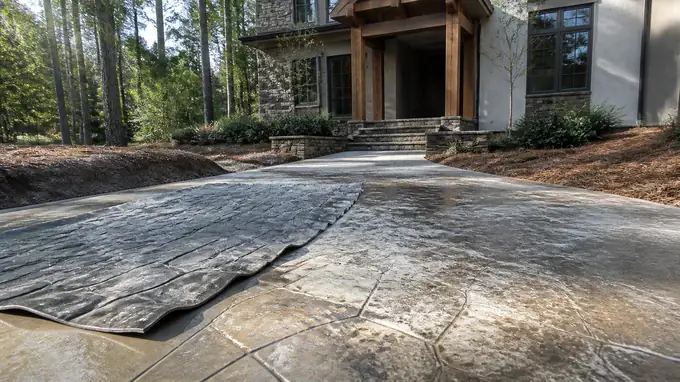
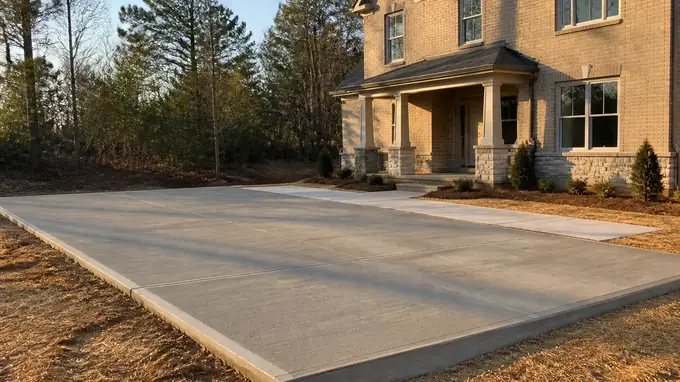
Wide view of finished concrete flatwork across the front of a home at a stacked-stone and stucco home in Sandy Springs, GA, under an overcast sky.

Concrete Parking Lot Construction in Sandy Springs, GA

A concrete parking lot carries cars all day, delivery trucks some days, and water every time it rains. We build them for commercial property across Sandy Springs: office lots near Perimeter Center, retail frontage along Roswell Road, church and school lots, and the shared surfaces behind mixed-use buildings. For most businesses, the lot is the first part of the property a customer or tenant actually touches. It should drain, hold its edges, and stay flat enough that nobody ever thinks about it. That is the job. Short of that, it gets noticed for the wrong reasons.

Most lot failures start below the slab, not on top of it. Sandy Springs sees about 50 inches of rain a year, and water that sits under concrete will find the weak spot in the base sooner or later. Fulton County is gently rolling, and the ground changes from block to block, so the fall across a lot has to be planned rather than guessed. Rion soil is common here and drains well, but it varies too. We test and grade every site on its own before any concrete arrives.

Getting it right is mostly a matter of order and discipline. The slab is sized for the heaviest traffic it will carry, not the average car. Reinforcement goes where loads concentrate: entrances, dumpster pads, loading areas. Control joints are cut where the concrete would otherwise crack on its own schedule. Drainage carries water off the surface instead of across it and toward a storefront door. We handle the permit. For a lot built around what your property actually sees, call for a free estimate.

Call +1 470-740-7099

Get FREE Estimates

Our Concrete Parking Lot Construction Work in Sandy Springs

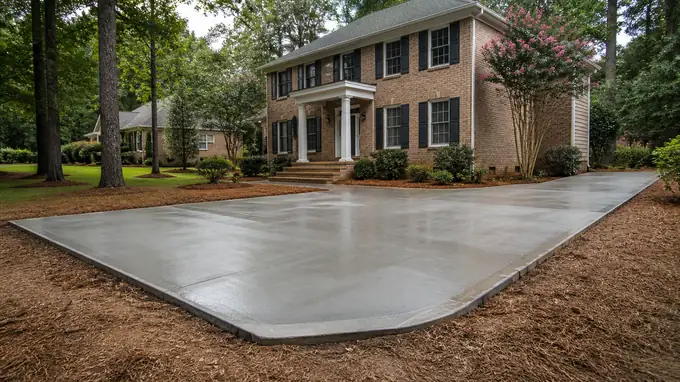
concrete slab installation completed by a local contractor at a brick-and-siding two-story home in Sandy Springs, GA, in late afternoon light.

Concrete Slab Installation Cost

What you pay for in a slab is mostly what disappears after the pour: compacted base, a vapor barrier where one belongs, and rebar set on chairs so it sits in the middle of the concrete instead of on the dirt. A slab that carries delivery trucks needs more depth and heavier reinforcement than a walkway or a dumpster pad. We build every layer to the load it will actually see. Call for a free estimate on your property.


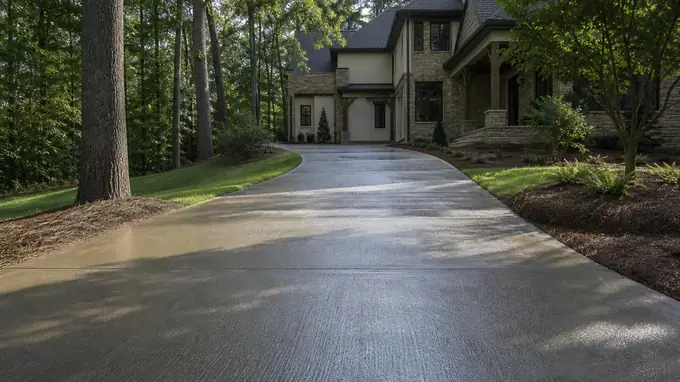
concrete driveway installation completed by a local contractor at a buff-brick ranch home in Sandy Springs, GA, under a hazy afternoon sky.

Concrete Driveway Installation

The median home in Sandy Springs was built in 1988, so plenty of driveways here are still on their original concrete. Old driveways fail in familiar ways: cracks at the apron, sections lifted by tree roots, low spots that hold water. We tear out, rebuild and compact the base, set reinforcement on chairs, and cut control joints at proper spacing. A broom finish is standard. Stamped or decorative borders are there when they suit the house.

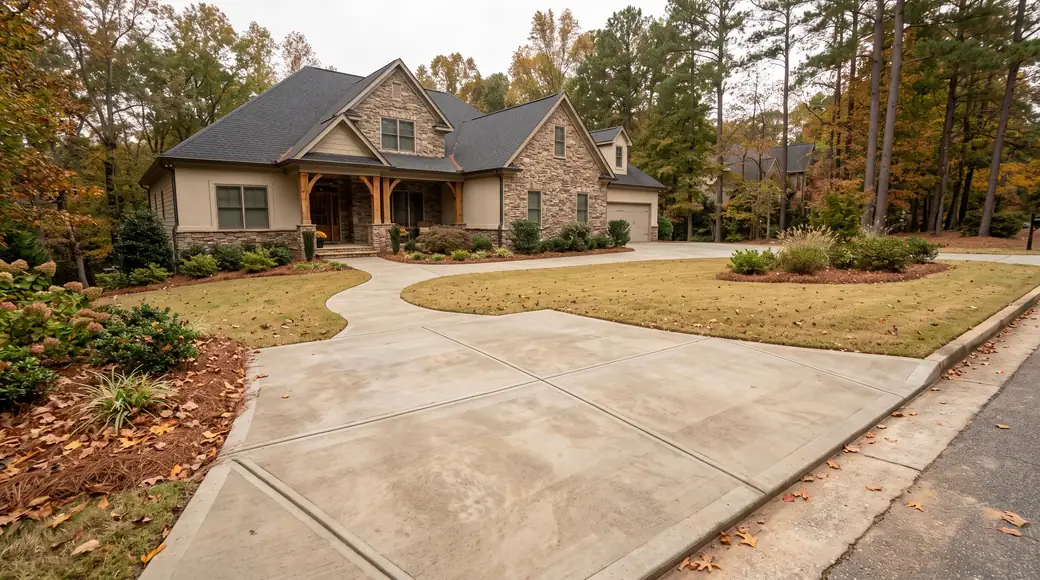
concrete flooring installation completed by a local contractor at a painted-white-brick two-story home in Sandy Springs, GA, under low winter sun.

Concrete Flooring Installation

Garage, shop and retail floors go down over compacted base and a vapor barrier, with reinforcement matched to the load and a power-trowel finish. We saw-cut control joints soon after the pour so the slab cracks where we choose, not across the middle of the room. From there the surface can stay plain, take a clear sealer, or be ground and polished. A polished floor only looks right on a slab poured flat enough to earn it.

concrete slab repair completed by a local contractor at a stacked-stone and stucco home in Sandy Springs, GA, in raking morning side light.

Concrete Slab Repair

Before we fix a slab, we find out why it broke. With about 50 inches of rain a year, water getting underneath is a common culprit: downspouts emptying at the edge, joints never sealed, base washing out until the concrete settles and cracks. Hairline cracks get routed and sealed. Broken or sunken panels are cut out at the joints and replaced with new concrete doweled into the old slab, so the patch moves with it.

Why Sandy Springs Chooses Sandy Springs Concrete Pros

A parking lot is the first surface a customer, tenant or patient touches when they arrive, and it takes more punishment than anything else on the property. Around Sandy Springs that means lots behind offices near Perimeter Center, shops along the Roswell Road corridor, clinics, churches and apartment buildings. We build them as structural slabs, not oversized driveways. Thickness, reinforcement and joint layout are set for the heaviest vehicle that will use the lot, and that includes the delivery truck and the garbage truck.

Most concrete lots that fail do it at the edges and in the low spots, where water sits. This area sees about 50 inches of rain a year, so drainage is the part we plan hardest. Fulton County is gently rolling, with 135 feet of local relief within a few miles, and no two sites fall the same way. We shoot grades, set the slope toward the drains, and test the soil on every site before any materials arrive.

The median home in Sandy Springs was built in 1988. A lot poured in that era has carried decades of traffic, but that does not mean all of it has to come out. We look at what is underneath before recommending anything. If failed sections can be cut out and repoured while the rest stays in service, we say so. Where a full replacement is the honest answer, we phase the work so a business can keep part of its lot open. Call for a free estimate.

How a Concrete Parking Lot Construction Job Runs in Sandy Springs

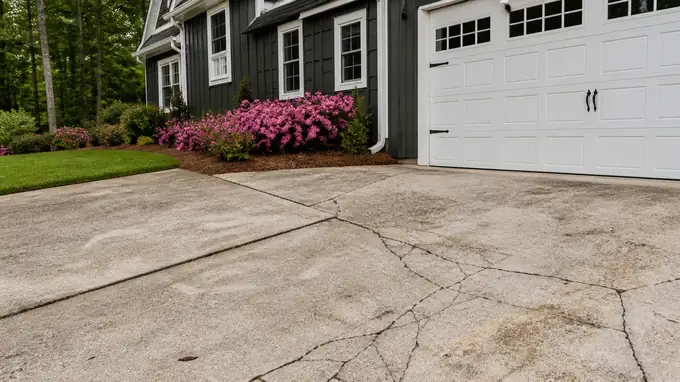
A worker examines an old driveway before replacement. at a charcoal farmhouse-modern home in Sandy Springs, GA, in full afternoon sun.

Step 1: Site Assessment

We walk the lot before anything gets drawn. We look at how cars and delivery trucks will move through it, where water sheds now, and what the existing surface is hiding. Fulton County's ground is mostly Rion soil, which drains well, but it changes from block to block, so we test this property on its own. We also shoot elevations, mark utilities, and handle the permit, so layout starts from real measurements instead of guesses.

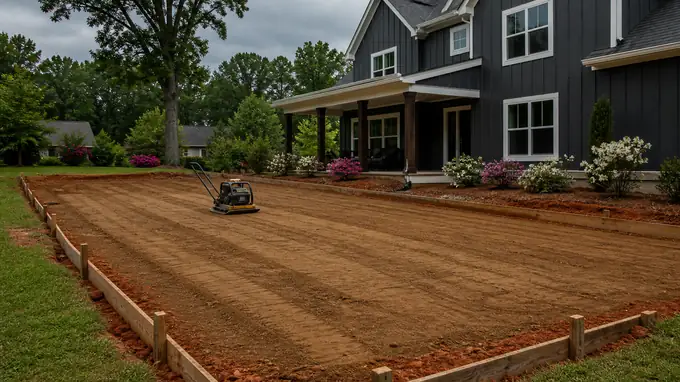
A plate compactor tamps down soil in a small excavated area. at a charcoal farmhouse-modern home in Sandy Springs, GA, under a darkening storm sky.

Step 2: Site Preparation

Grading is where a parking lot is won or lost. We strip topsoil and old asphalt, cut and fill to a slope that carries water to the drains, and proof-roll the subgrade with a loaded truck to find soft spots. Those get dug out and replaced. Then a compacted layer of graded aggregate base goes down. With about 50 inches of rain a year here, a lot that holds water in its low corners will fail there first.

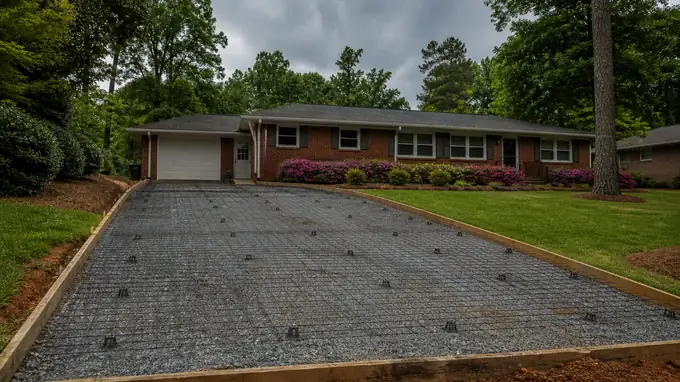
Wire mesh is unrolled across a driveway base before pouring. at a red-brick ranch home in Sandy Springs, GA, under a darkening storm sky.

Step 3: Forming & Reinforcement

Once the base passes compaction, we set forms along curbs, islands and the lot edge, pinned to grade with string lines. Reinforcement follows the load. Car stalls usually get welded wire mesh or fiber, while drive aisles, the dumpster pad and loading areas get rebar tied on chairs so it sits in the middle of the slab. Steel lying in the dirt does nothing. We also lay out joint locations and dowel new slab into existing concrete.

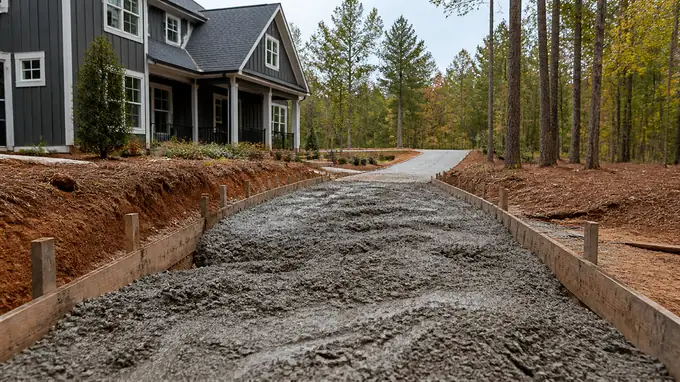
A ready-mix truck discharges concrete into a driveway form. at a charcoal farmhouse-modern home in Sandy Springs, GA, under a hazy afternoon sky.

Step 4: Pouring

Trucks arrive on a schedule we set with the plant, because a lot pours in sections and a cold joint in the wrong place is permanent. We order a commercial mix suited to the traffic, check slump at the chute, and pull test cylinders. The concrete gets vibrated along the forms so there are no voids at the edges, then screeded to the grade set during preparation. Rain in the forecast moves the pour. We don't gamble on it.

Stamping mats are pressed into a patio surface to imprint a pattern. at a stacked-stone and stucco home in Sandy Springs, GA, under low winter sun.

Step 5: Finishing

Parking lots want traction, not shine. After bull floating, we give the surface a broom finish across the direction of travel so tires and shoes grip when it is wet. Edges get tooled. Control joints are saw cut within hours of the pour, before the slab decides where to crack on its own. Where the plan calls for it, we add stamped or decorative concrete at entries and walkways. Striping waits until the surface has cured.

A hand sprayer applies curing compound to a finished patio. at a tan-brick colonial in Sandy Springs, GA, under an overcast sky.

Step 6: Curing

Concrete keeps gaining strength long after it looks dry, and how it is treated in those first days decides how the surface wears for years. We spray a curing compound or cover sections so the top does not dry faster than the slab beneath it, which is what causes dusting and fine surface cracks. Traffic stays off. Foot traffic comes back first, then cars, and delivery trucks last, once the concrete reaches the strength it was designed for.

A sprayer applies sealer across a driveway. at a stacked-stone and stucco home in Sandy Springs, GA, under low winter sun.

Step 7: Sealing

A penetrating silane or siloxane sealer is the last coat for most lots. It keeps water, oil and de-icing salt from soaking into the surface, and it does not change the broom texture or make the lot slick. We also fill the saw cuts with a flexible joint sealant so water stays out of the base underneath. After that the lot is striped, signage goes in, and the property is ready to open.

What Decides the Price of Concrete Parking Lot Construction

A parking lot's price is mostly settled before any concrete arrives. What sits in the ground now, how the trucks get in, and where the water goes all move the number, and most of it you can check yourself by walking the lot.

What changes the priceWhich wayWhy
Old asphalt or concrete already downcosts moreIt has to be broken up, loaded and hauled off before grading starts. Thick or reinforced slabs take longer to break.
Wide, clear access from the streetcosts lessA ready-mix truck that can back up to the forms pours straight off the chute. Tight entries or overhead lines can mean a pump truck.
Delivery trucks, dumpster service or fire lanescosts moreHeavier loads call for a thicker slab and more steel, so more concrete and more hours tying rebar.
Soft or rutted spots in the existing lotcosts moreGround that gives underfoot gets dug out and replaced with compacted stone so the slab sits on something even.
A lot that already sheds water to a draincosts lessWe set the forms to follow the grade you have. A flat or low lot may need regrading, new inlets or trench drains.
Curbs, islands, ramps and wheel stopscosts moreEach one is formed and finished by hand, separate from the main pour.
Mature trees along the edgescosts moreRoots in the way get cut back cleanly, and the base near them takes extra care to compact.

Lay competing bids side by side and check that they describe the same slab: the same thickness, the same reinforcement, the same base stone under it and the same joint spacing. Then look at what is written in and what is left out. Removal, haul-off, drainage work and the permit belong on the page. A lower number that skips one of them is a different job, not a cheaper one.

Get a Free Estimate

Get FREE Estimates

Tap to call +1 470-740-7099