+1 470-740-7099
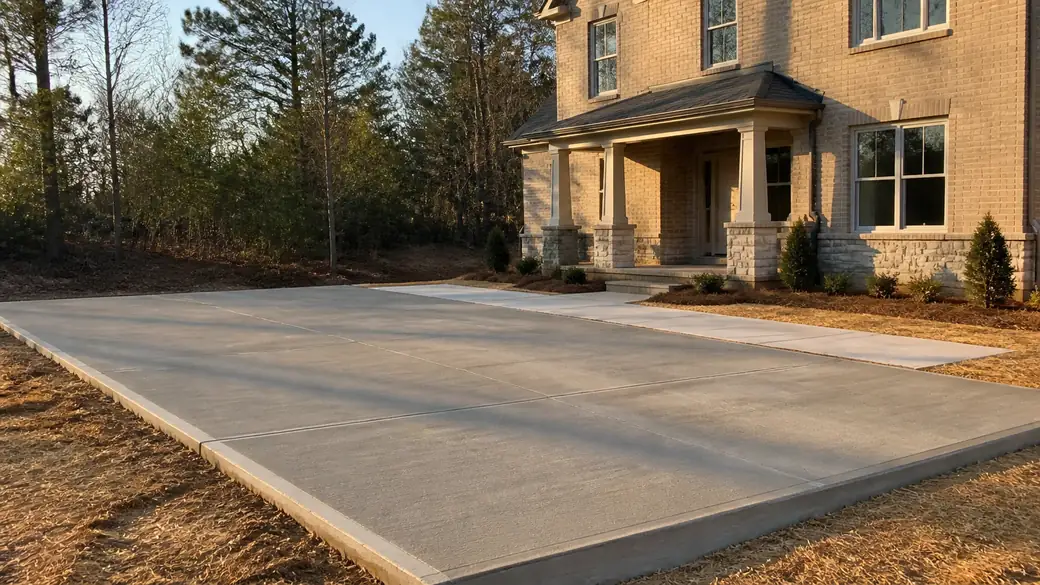
concrete slab installation completed by a local contractor at a brick-and-siding two-story home in Sandy Springs, GA, in late afternoon light.

Concrete Slab Installation Cost in Sandy Springs, GA

A concrete slab is the flat, reinforced surface everything else sits on: a garage floor, a patio, a shed pad, the base of an addition. What one costs in Sandy Springs depends on what is under it, how large it is, and what it has to carry. Half the homes here were built before 1988, so many of the slabs we are called to look at are original and have carried decades of cars, furniture and foot traffic. Some need to come out. Others only need a new section poured alongside.

Every job starts on the property itself. We measure, watch how water moves across the yard, and test the ground where the slab will sit, because Fulton County's land is gently rolling but changes from one block to the next. Then we grade and compact the base, set the forms, and place the reinforcement, rebar or wire mesh depending on the load. The pour is the short part. Finishing, cutting control joints and curing take longer, and they decide how the slab looks and holds up for years.

Most slab failures start below the surface. A base that was never properly compacted settles, and the concrete above it cracks along the weak line. Water is the other culprit. The area sees about 50 inches of rain a year, and a slab that is not pitched away from the house sends that runoff toward the foundation or holds it in shallow puddles. Joints cut too far apart, or too late, let the slab crack where it likes instead of where we planned. None of this shows on pour day. It shows a year or two on.

Doing it right puts most of the cost into preparation. Base work, reinforcement and drainage are where the budget goes, and they are the parts nobody sees once the surface is finished. We would rather price them in plainly than leave them out to reach a lower figure that fails later. That is why we do not quote a slab over the phone: the number only means something once the ground under it has been looked at. Call for a free estimate on your slab.

Call +1 470-740-7099

Get FREE Estimates

Our Concrete Slab Installation Cost Work in Sandy Springs

Concrete Slab Installation Cost

What you pay for is mostly what sits under the surface. A 4-inch slab for a patio or shed pad goes down on 4 inches of compacted gravel, with wire mesh or #3 rebar set on chairs so the steel lands mid-depth instead of on the dirt. Heavier loads get 6 inches and #4 bar. We test the ground, set the forms, handle the permit, and write every line out in the estimate. Call for a free estimate.

concrete driveway installation completed by a local contractor at a buff-brick ranch home in Sandy Springs, GA, under a hazy afternoon sky.

Concrete Driveway Installation

The median home in Sandy Springs was built in 1988, and plenty of driveways here are still the original pour. We replace them at 5 inches thick, 6 at the apron where the street edge takes the weight, with #4 rebar on a grid over compacted base. Around 50 inches of rain a year means pitch matters, so we slope the slab away from the garage and cut control joints every 10 feet. Finish is broom, exposed aggregate or stamped.

concrete flooring installation completed by a local contractor at a painted-white-brick two-story home in Sandy Springs, GA, under low winter sun.

Concrete Flooring Installation

Garage floors, basements, workshops and tenant spaces along the Roswell Road corridor all start the same way: a compacted base, a 15-mil vapor barrier, and a reinforced 4-inch slab. Moisture wicking up through concrete is what ruins finished floors, so the barrier is never optional. We power-trowel for a hard, flat surface, then leave it bare, seal it, or grind and polish it. Anything glued down waits until the slab passes a moisture test.

concrete slab repair completed by a local contractor at a stacked-stone and stucco home in Sandy Springs, GA, in raking morning side light.

Concrete Slab Repair

Cracks are a symptom. Before patching anything, we find out why the slab moved: a washed-out base, a downspout dumping beside it, tree roots, or a pour that never had control joints. Hairline shrinkage cracks get routed and sealed. Structural cracks get epoxy injection. A sunken section can often be lifted with polyurethane foam, and where the base has failed outright, we saw out that section, rebuild the gravel, dowel into the old slab, and pour new.

Why Sandy Springs Chooses Sandy Springs Concrete Pros

A slab is only as good as the ground and the prep beneath it, and that is where we put our attention. We are a concrete crew doing residential and light commercial work across Sandy Springs: driveways, patios, garage slabs, walkways and decorative stamped surfaces. The median home here was built in 1988, so plenty of our projects begin by breaking out an old slab that has cracked, settled or pulled away from the house. Before we pour the replacement, we work out why the old one failed. Fixing that cause is part of the job, not an add-on.

The work runs in a set order. We walk the property, grade the site and test the soil. Fulton County is mostly well-drained Rion soil, but it changes from one lot to the next, so we never assume. Next comes the base: compacted gravel at the depth the slab calls for, forms set to pitch water away from the house, and reinforcement sized to the load it will carry. A driveway that takes a loaded truck gets different steel than a patio that holds a grill. We handle the permit where one is needed. On pour day we place, finish and cut control joints, then let the surface cure properly before anyone drives on it.

Water is behind most slab failures. Sandy Springs sees about 50 inches of rain a year, and concrete poured dead flat, or over a base that holds moisture, will crack and settle. The land here is gently rolling, so drainage has to be worked out on each site rather than copied from the last one. We slope surfaces, put joints where the concrete would crack anyway, and keep materials consistent from truck to truck. None of that is visible the afternoon we pack up. It shows years later, when the driveway still sheds rain cleanly and the edges sit level. Call for a free estimate.

Concrete Systems and Materials for Sandy Springs

A slab is only as good as what sits under it and what runs through it. For most residential work in Sandy Springs we pour ready-mix concrete over a compacted gravel base, with reinforcement matched to the load: wire mesh or light rebar for a patio, a heavier rebar grid for a driveway that will carry cars and the occasional delivery truck. Fiber goes into the mix where it helps hold the surface together. Decorative finishes, stamped patterns and color included, sit on top of that same structural slab. They change how it looks, not how it holds.

Every project starts with the ground. Fulton County is gently rolling, and the grade can shift from one side of a lot to the other, so we set forms to a slope that moves water off the surface and away from the house. The dominant soil here drains well, but it varies across the county, so we test each site before ordering materials. Then the base goes down, compacted in lifts. Reinforcement goes on chairs so it sits in the middle of the slab, not the dirt. We pour, finish, cut control joints and let it cure properly.

Most slab failures come from water and the base, not the concrete itself. The area sees about 50 inches of rain a year, and a slab poured flat or pitched toward a foundation will hold that water and work against itself. Rebar left lying on the ground does nothing. Control joints cut too shallow or spaced too far apart let the slab choose its own crack lines. The median home here was built in 1988. If an existing slab from that era was poured thin over a loose base, patching it rarely holds, so we take it out and start again from the base.

Getting it right costs more in preparation than in concrete. Base depth, reinforcement, slab thickness and cure time are where the effort goes, and they are the parts nobody sees once the job is finished. Cutting any of them saves little on the day and shows up later as cracks, settling or standing water. We would rather walk the property, test the site and explain what the slab needs than guess at it. Call for a free estimate.

What Decides the Price of Concrete Slab Installation Cost

Two slabs of the same size can come in far apart on a bid, and the gap usually comes from the site rather than the concrete itself. Most of what moves the number is something you can walk outside and check before anyone quotes you. The median home here was built in 1988, so plenty of properties already have an older slab or walk sitting right where the new one needs to go.

What changes the priceWhich wayWhy
An old slab, patio or walk in the footprintcosts moreIt has to be broken out and hauled off, and the base under it checked before we pour.
A clear path for the truck to reach the formscosts lessChuting straight from the truck is faster than pumping or wheeling concrete around the house.
Slope across the pad areacosts moreFulton County is gently rolling, and a sloped site means more cut, fill and form work to get a level base.
Water that pools or runs toward the workcosts moreWith about 50 inches of rain a year, the base may need regrading, drains or extra gravel.
Thickness and reinforcement the slab calls forcosts moreA pad for a vehicle or a structure needs more depth and more steel than one for a grill and chairs.
Ground that tests softcosts moreRion soil drains well across much of the county but varies, so we test yours and replace soft spots.
A plain broom finishcosts lessStamped or decorative surfaces add labor and materials on pour day.

When you line up competing bids, check that each one names the same thickness, reinforcement and base depth. Look for whether removal, hauling and the permit are included. A lower number that leaves out demolition or drainage is a different job. Ask each contractor what they found on the walk-through. The answer tells you whether the price was built on your property or on a guess.

Get a Free Estimate

Get FREE Estimates

Tap to call +1 470-740-7099

