+1 470-740-7099
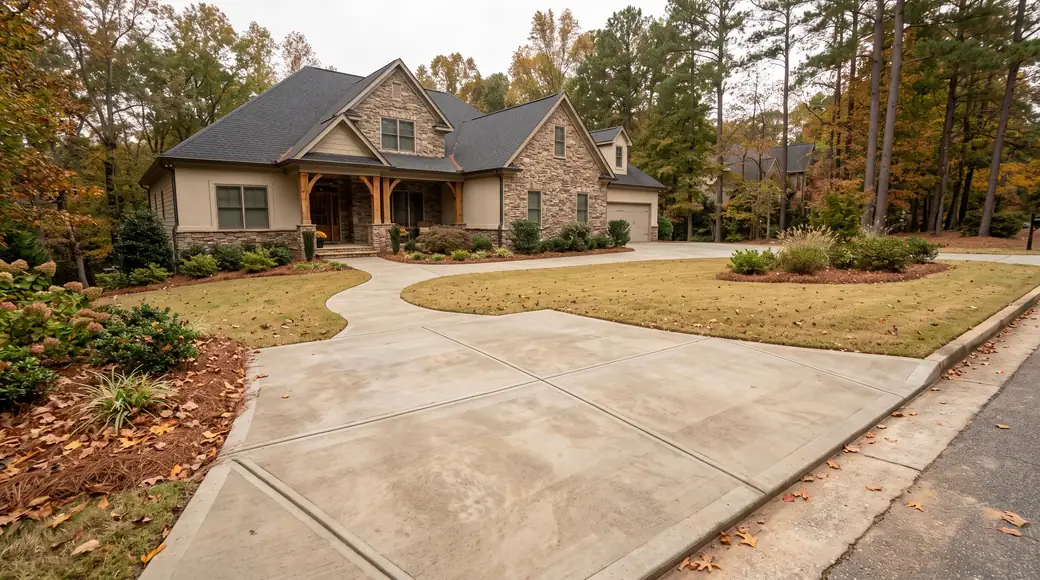
Wide view of finished concrete flatwork across the front of a home at a stacked-stone and stucco home in Sandy Springs, GA, under an overcast sky.

Colored Concrete in Sandy Springs, GA

We pour colored concrete in Sandy Springs, and most of what we do is replacement work. A driveway that came with the house has cracked through, or a back patio has gone gray and blotchy, and the owner wants the next one to look deliberate rather than repaired. Color is how that happens. Underneath it is ordinary flatwork: driveway, patio, steps, the sidewalk along the front, and as a concrete contractor working almost entirely on finished lots, we plan around mature trees, settled grades and whatever is already poured beside the new work.

Suburban development here began in the 1950s, accelerated through the early-1960s housing boom that followed highway construction, and kept filling in through the 1980s. Replacement is most of our calendar as a result, since the flatwork we take out is often original to the house, carrying cars and delivery trucks for decades longer than anyone planned. Old slabs settle, crack and lift. Once that starts, patching buys a season. We would rather tear the slab out, rebuild what sits under it, set rebar or wire mesh, and pour something that starts clean.

Color choices on houses this settled tend to be quiet ones. Owners are usually matching something that stays, the trim, the roof, a walkway at the side, so we bring samples out to the driveway and look at them in daylight against the actual house. Some jobs pair color with stamped concrete for texture, and plenty of others stay flat and plain and read better that way. Lots here run rolling and wooded, which decides more about where a pour sits than any color does. Call for a free estimate on the work you have in mind.
Call +1 470-740-7099

Licensed, Bonded, and Insured ยท A combined 15 years of experience

Get FREE Estimates

We warranty all of our work because we believe in what we do.

What Colored Concrete Involves

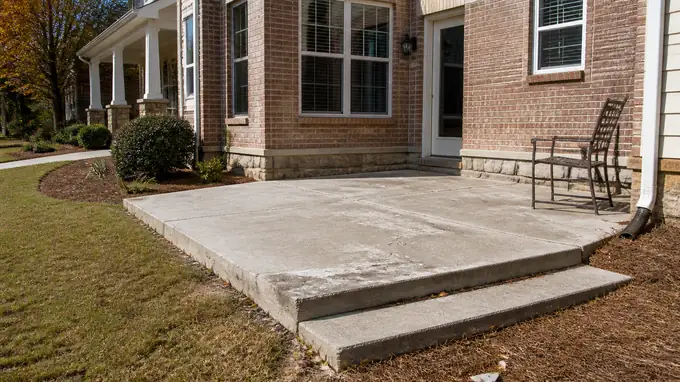
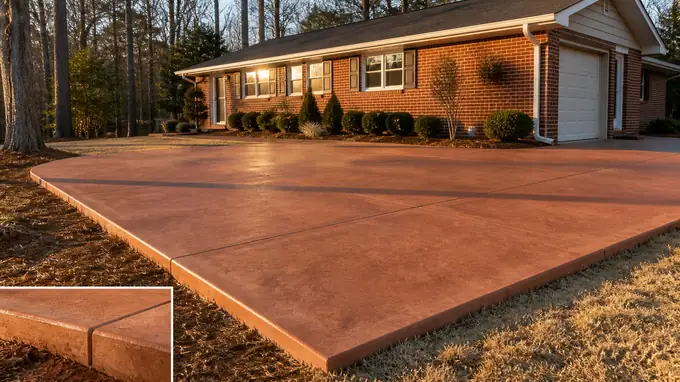
Concrete patio in terracotta integral colour running full depth at a red-brick ranch home in Sandy Springs, GA, in late afternoon light.

Integral color concrete

Pigment goes into the mix at the plant, so the color runs the full depth of the slab rather than sitting on the surface. A chipped edge or a saw cut on a sidewalk stays the shade it always was. Water is the thing to watch: a load thinned out on site cures lighter, and that shows up later as blotchy panels next to each other. Reinforcement does not change, rebar or wire mesh, concrete placed over compacted base.

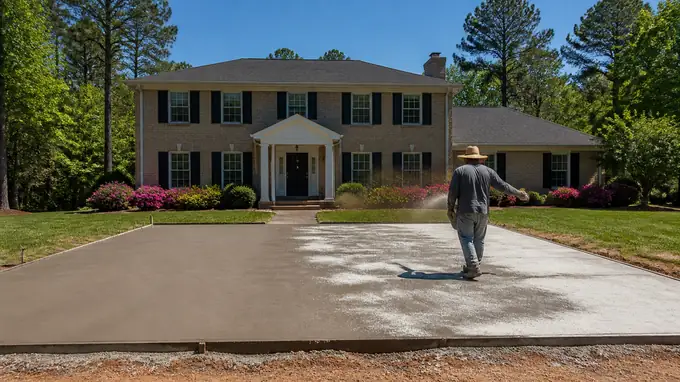
Dry-shake colour hardener being broadcast onto fresh concrete at a tan-brick colonial in Sandy Springs, GA, in clear late-morning sun.

Concrete color

Surface methods cover the rest: dry shake hardener broadcast into wet concrete, acid stain that reacts with the slab, and dye. Hardener is what most stamped concrete is finished with, and it wears differently than integral color on a concrete sidewalk carrying daily traffic. Sealer and cure decide how the shade finally reads, wet-look darker, matte closer to the raw tone. A concrete contractor pulls permits through the City of Sandy Springs, residential flatwork and commercial concrete alike.

Colored Concrete in metro Atlanta

Most of the colored concrete we pour around metro Atlanta goes where gray concrete already sat. Sandy Springs filled in through the 1950s, boomed in the early 1960s once the highways went through, and kept taking infill houses into the 1980s. The houses stayed. The flatwork did not. That leaves a lot of driveways and patios well past their service life, sitting on wooded lots with real grade to them. Color is what makes a replacement slab read as part of the house instead of a patch.

Work spreads across the whole metro, so we plan around access before anything else. A rolling, wooded lot narrows where a truck can sit, and integral color goes in at the plant, which makes the pour one continuous event from the first chute to the last pass of the float. Forms, rebar or wire mesh, and enough hands all get staged ahead of the delivery. A colored slab does not tolerate waiting.

Trouble almost always shows up as color that is not consistent. Water added on site lightens a load. Finishing one stretch wet and the next one dry leaves a shade line no amount of washing removes. Old slabs poured over roots or loose fill crack in the same places again if nobody corrects the base first. Stamped and exposed aggregate surfaces punish thin prep faster than plain flatwork, because every flaw stays out in the open where you walk.

Getting it right is mostly ordinary discipline: one mix, one crew finishing the entire placement, a cure nobody rushes, and a sealer the homeowner keeps up with over the years. Dunwoody holds the same era of housing and the same aging concrete driveways, and the job runs the same there as it does here. Commercial concrete along the Roswell Road corridor follows the same rules on a bigger slab. Call for a free estimate on a colored concrete driveway, patio, or sidewalk installation.

How the Work Runs

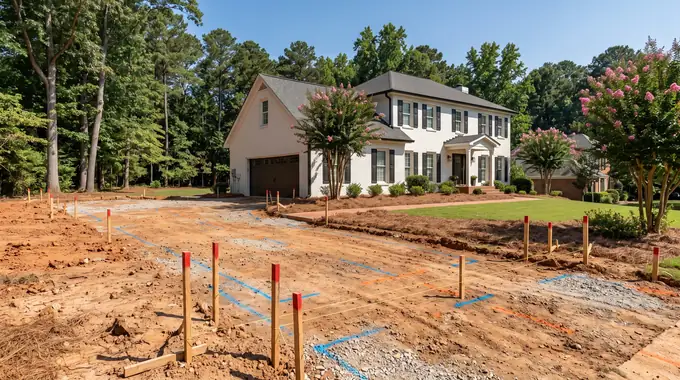
String lines and grade stakes laid out across a yard before a pour at a painted-white-brick two-story home in Sandy Springs, GA, in clear late-morning sun.

Step 1: Site Evaluation

We walk the area with you and look at what the old slab is telling us. Cracking that follows a straight line usually means a control joint issue. Cracking that maps the ground underneath means base failure. We check drainage, tree roots, how water leaves the house, and where vehicles turn. Color choice starts here too, since the concrete around it and the brick or siding set what will actually look right.

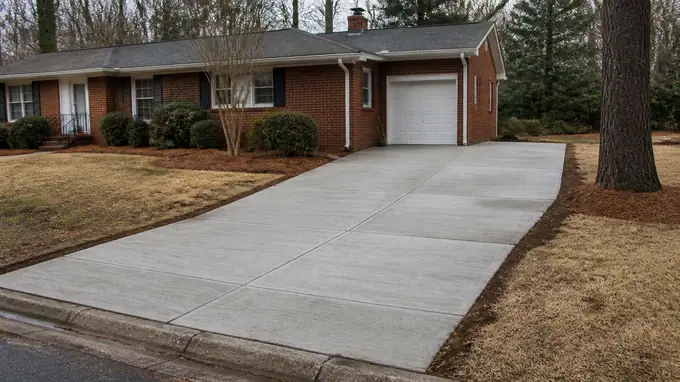
Concrete driveway and walk at a home, the kind of job an estimate covers at a stacked-stone and stucco home in Sandy Springs, GA, in early morning light.

Step 2: Written Estimate and Permits

You get the scope in writing: square footage, slab thickness, reinforcement, the color system and the release or sealer we plan to use. Integral color and dry-shake hardener are different products with different results, so the estimate names which one. If the job needs paperwork filed before we break ground, we handle that filing and schedule around it rather than pouring first.

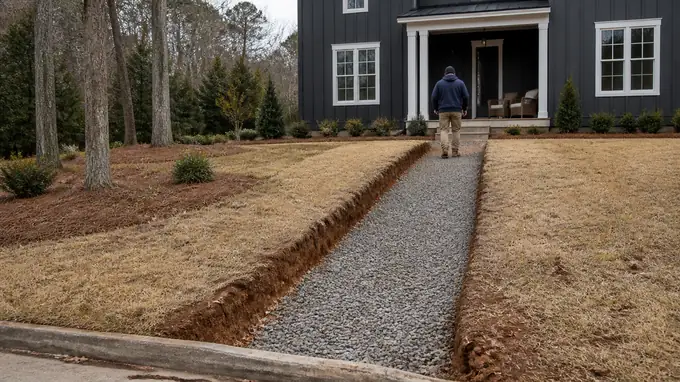
Broken-out concrete removed and the base rebuilt before a new pour at a charcoal farmhouse-modern home in Sandy Springs, GA, after a rain shower.

Step 3: Demolition and Base Prep

Old concrete comes out in full, not overlaid. Overlays on a failing slab crack again along the same lines within a few seasons. We haul the debris, then cut and compact the base in lifts, usually crushed stone graded to drain. Soft spots get dug out deeper. On a concrete driveway this step decides everything, because color hides nothing once the slab starts moving underneath.

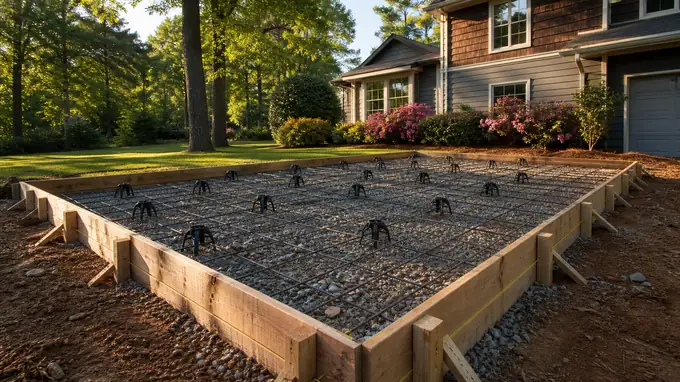
Wooden forms and rebar grid set and tied, ready for concrete at a brick-and-siding two-story home in Sandy Springs, GA, under an overcast sky.

Step 4: Forming, Steel and the Pour

Forms get set to the finished grade and staked tight, with the fall away from the house checked before any concrete arrives. Driveways get rebar on chairs; sidewalks and lighter flatwork often get wire mesh pulled up into the pour. Integral color is mixed at the plant so the load arrives consistent. We place from a known slump and keep the whole pour on the same batch where the color has to match.

Freshly finished concrete slab curing under a clean broom texture at a grey split-level home in Sandy Springs, GA, under bright midday cloud.

Step 5: Finishing, Curing and Final Walkthrough

Finishing is where color goes right or wrong. We time the float and the broom or trowel work to the slab, cut control joints at proper spacing, then apply a cure that will not blotch the surface. Concrete installation ends with a walkthrough: what to keep off it, how long, and when to reseal. Sidewalks and driveways take traffic on different schedules, so we tell you which is which.

What Decides the Price

Two colored concrete jobs covering the same square footage can land far apart, and the reasons are usually visible before anyone starts. Most of what moves a price is the condition of the site, not the color. Walk the property and look at these.

What changes the priceWhich wayWhy
Old slab still in the groundcosts moreIt gets broken out and hauled off before we form anything, and concrete poured over wire mesh comes up in heavier, more stubborn pieces.
Truck can back up to the formscosts lessA driveway poured straight off the chute skips the wheelbarrow relay or the pump line a fenced back patio needs.
Slab thickness and reinforcement the job calls forcosts moreFlatwork carrying vehicles takes a thicker slab with rebar on chairs. A walkway often needs only wire mesh.
Tree roots or soft fill under the padcosts moreRoots get cut back and the subgrade gets compacted, and neither one shows itself until the old concrete is off.
Ground already pitches away from the housecosts lessNo regrading, no drain line, no extra forming to build fall into the finished surface.
Curves, steps, and tight edgescosts moreEvery radius and riser is hand formed and hand finished, which is slower than running a straight screed.
Integral color plus a release color and stampingcosts moreLayered color and pattern work adds labor at the exact moment the concrete is setting, so it takes more hands on the pour.

Compare bids line by line instead of by the number at the bottom. Ask each concrete contractor what slab thickness and reinforcement they quoted, whether demolition and haul-off are included, how the subgrade gets prepped, how many coats of sealer, and where the control joints fall.

Questions About Colored Concrete

Can you match color to existing concrete on my Sandy Springs property?

Close, usually, but not exact. Existing concrete has weathered, picked up traffic film, and cured under conditions we cannot reproduce in a fresh slab. We mix samples, let them cure, and set them against your driveway or patio in daylight before pouring. Most homeowners find the result reads as intentional. If the match matters more than the savings, replacing the adjoining flatwork gives you one uniform color instead of two similar ones.

Is color mixed through or added on top in Sandy Springs work?

Both, depending on the job. Integral color goes into the mix at the truck, so the pigment runs the full depth of the slab. Chips and edge wear expose more of the same color rather than gray. Color hardener is broadcast onto the surface during finishing, which gives deeper, richer tones and a harder wearing surface, but the color lives in the top layer only.

How consistent is the color across a large Sandy Springs pour?

Consistent within a range, not uniform like paint. Concrete is a wet product, and water content, ambient temperature, subgrade moisture and finishing time all shift the final shade slightly. We order color from one manufacturer lot, keep the mix water the same load to load, and finish continuously rather than stopping between trucks. Variation still shows, and on stamped or exposed aggregate work it usually reads as depth.

Will colored concrete fade in Georgia sun?

Yes, somewhat. Pigments are UV stable, but the concrete around them changes: the surface wears, efflorescence brings salts up through the slab, and dirt settles into the texture. Integral color holds tone longer because there is more pigment below the wear layer. Sealer slows all of it. Plan on resealing periodically, and the slab will look much closer to year one than an unsealed one will.

Can colored concrete on a Sandy Springs property be recolored later?

Yes. Acid stains and water based dyes both take on cured concrete, and they work better on slabs that were never sealed heavily or have had the old sealer stripped. The catch is direction: going darker is straightforward, going lighter is not, since you are adding color rather than removing it. Existing color underneath will influence the result, so we test on an out of the way corner first.

Does colored concrete cost more per square foot around Sandy Springs?

Yes. Pigment, hardener and release agents are real material costs, and colored work takes longer to finish because timing matters more than it does on a plain gray slab. Integral color adds less than a full color hardener and antique release. Sealing adds to it as well, along with the periodic resealing afterward. Call us and we will walk your project and put a free estimate together.

Get a Free Estimate

Get FREE Estimates

We warranty all of our work because we believe in what we do.

Tap to call +1 470-740-7099