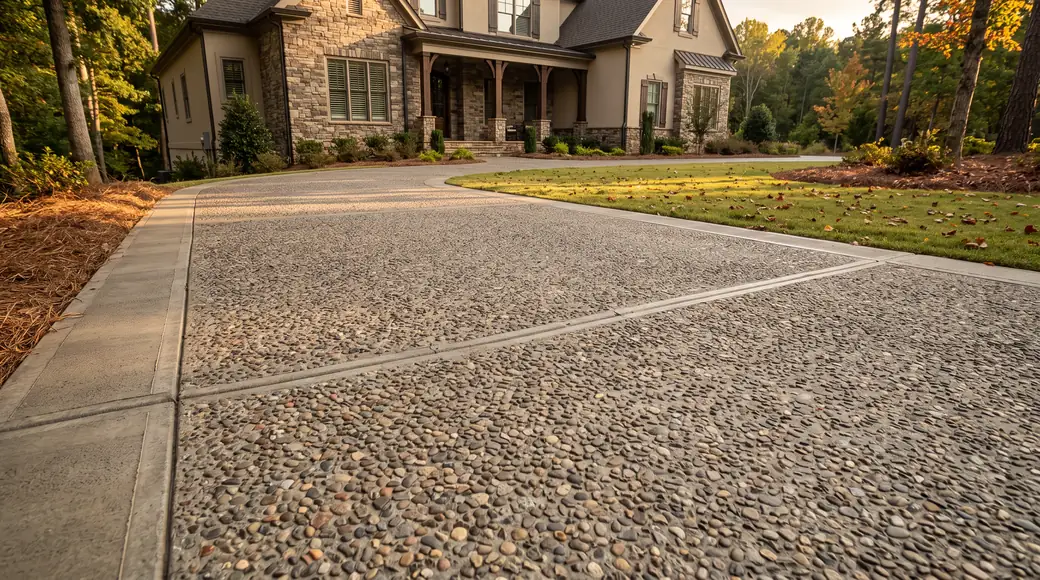
Most of the exposed aggregate we place in metro Atlanta goes down over something that already failed. Suburban development around Sandy Springs started in the 1950s, picked up hard in the early 1960s once the highways went in, and kept filling in through the 1980s. That leaves a lot of driveways, walks and patios that have had a full service life. Exposed aggregate is a finish, not a different material: the same slab, washed and brushed at the right hour so the stone in the mix stands slightly proud of the cement paste.
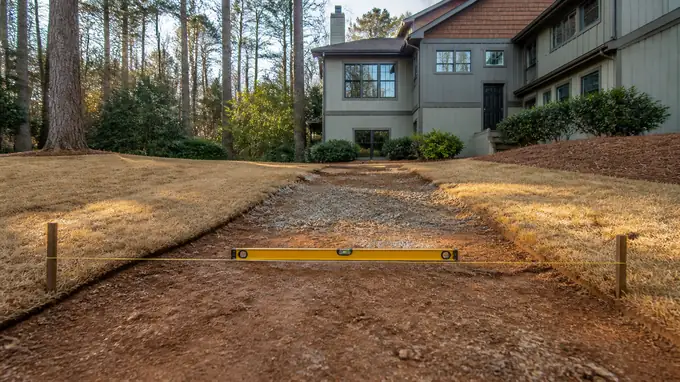
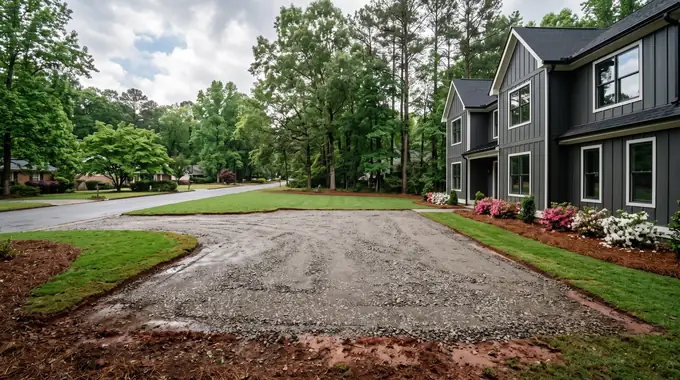
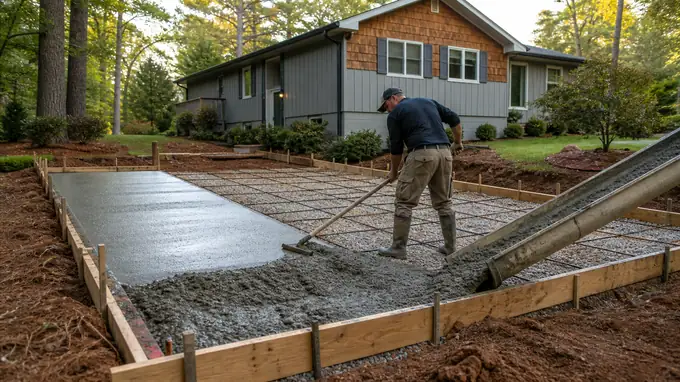
Replacement work runs differently than new build. We take out the old slab, look hard at what is under it, and fix the base first, because a driveway that heaved or cracked almost always did it from below. Lots here are rolling and wooded, so grades and drainage are already set by the house and the trees. We match them instead of arguing with them. Rebar or wire mesh goes in wherever the concrete has to carry vehicles. Then the pour, the wash, the cure.
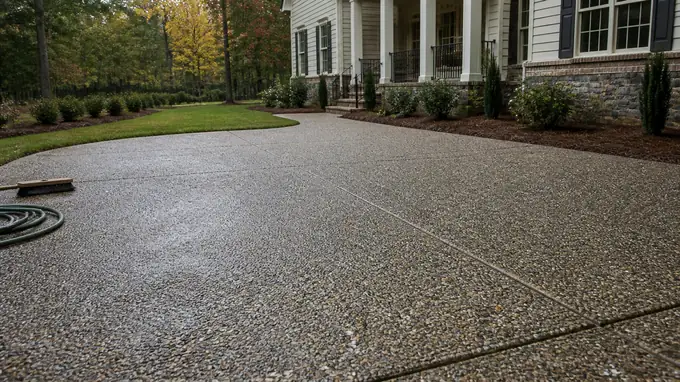
Timing is where this finish goes wrong. Wash too early and you pull stone loose and leave pits across the surface. Wash too late and the paste has set hard around the aggregate, so the slab stays flat and dull no matter how long anyone brushes it. That window moves with the weather and with the mix, so we watch the concrete rather than the clock. The other common failure is a good-looking surface poured over a base nobody prepared, which cracks on schedule regardless.
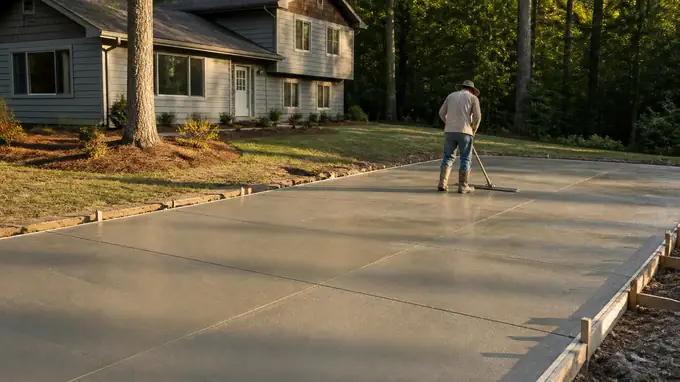
Getting it right costs time more than anything else. A crew that has to be somewhere at noon will wash on their own schedule and not the slab's. We would rather pour and stay until the surface is where it should be. Commercial flatwork around Perimeter Center and residential driveways a few streets into Dunwoody get the same handling, same attention to the wash. Exposed aggregate is a finish you live with for decades, and the decades get decided in one afternoon. Call for a free estimate, and say what you have now: age of the slab, where it cracks, whether water stands on it.