+1 470-740-7099
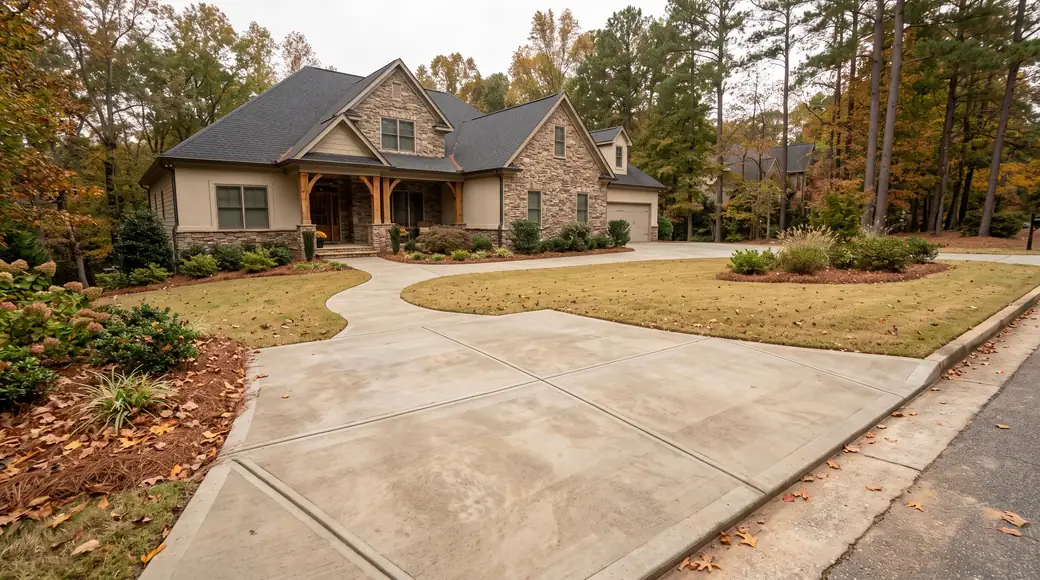
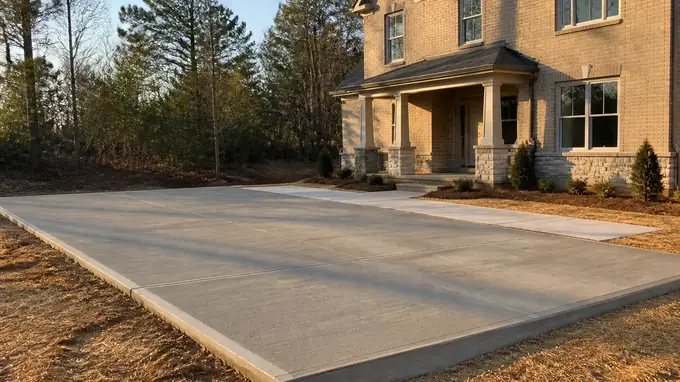
Wide view of finished concrete flatwork across the front of a home at a stacked-stone and stucco home in Sandy Springs, GA, under an overcast sky.

Concrete Expansion Joint Installation in Sandy Springs, GA

An expansion joint is the gap that lets a slab move without cracking. Concrete grows in the heat and shrinks in the cold, and when it butts against a wall, a step or the next section of driveway with nothing between them, something has to give. We cut out old joints that have dried, split or packed with grit, clean the channel back to sound concrete, set a backer rod at the right depth and seal it with a flexible compound that stays soft. That work goes into driveways, patios, walkways and pool decks, and into the slabs around commercial property along Roswell Road. The median home here was built in 1988. Joints that old have usually had their best years.

Water is the other reason. With about 50 inches of rain a year, an open joint is a channel straight under the slab, and what washes out from below is what lets a section settle or tip. Before we touch anything, we look at how the slab sits, where the water runs and whether the gaps line up with the stress points. Where a slab needs new joints, we saw-cut them in rather than leave the concrete to pick its own lines. Stamped and decorative surfaces get a sealant matched close to their color, so the repair reads as part of the finish. Call for a free estimate.

Call +1 470-740-7099

Get FREE Estimates

Our Concrete Expansion Joint Installation Work in Sandy Springs

concrete slab installation completed by a local contractor at a brick-and-siding two-story home in Sandy Springs, GA, in late afternoon light.

Concrete Slab Installation Cost

Cheap slabs usually save money in the same few places: a thin gravel base, reinforcement left lying in the dirt instead of held at mid-depth, and too few joints. Each of those shows up later as a crack. Our slab quotes cover a compacted base, rebar or wire mesh set on chairs, isolation joints wherever the slab meets a wall or footing, and control joints cut close enough together that the slab has somewhere planned to crack.


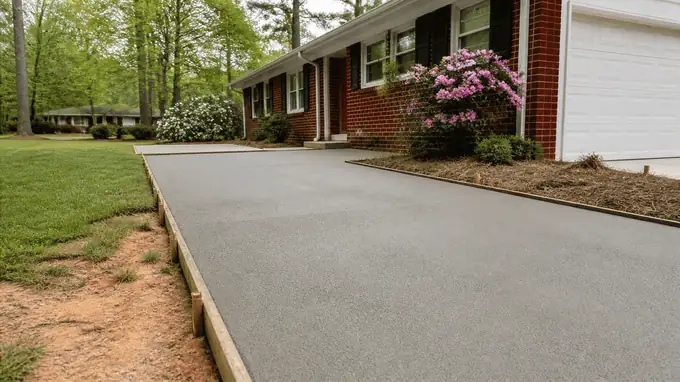
concrete driveway installation completed by a local contractor at a buff-brick ranch home in Sandy Springs, GA, under a hazy afternoon sky.

Concrete Driveway Installation

Driveways take loads a patio never sees, so we thicken the edges and the apron where tires turn. Expansion joints go wherever the drive meets the garage slab, a walk or the street, with a compressible filler strip that lets each piece move on its own. Control joints get cut early, before the concrete picks its own crack lines. About 50 inches of rain falls here a year, so every drive is sloped to shed water off the surface and away from the house.

concrete flooring installation completed by a local contractor at a painted-white-brick two-story home in Sandy Springs, GA, under low winter sun.

Concrete Flooring Installation

Inside, a floor has different jobs: it has to stay flat, stay dry and take a finish. We lay a vapor barrier under the slab so moisture from the ground does not come up through flooring or coatings. Columns and floor drains get boxed out with isolation joints so the slab can move around them without cracking at the corners. Joints can be filled flush for polished or sealed concrete, which suits garages, basements and commercial space.

concrete slab repair completed by a local contractor at a stacked-stone and stucco home in Sandy Springs, GA, in raking morning side light.

Concrete Slab Repair

With the median home here built in 1988, plenty of slabs still have their original joint filler, and much of it has broken down. Water runs into the gap, washes out the base, and the edges start to chip and sink. We cut out the old filler, clean the joint, set backer rod and seal it with a flexible polyurethane. Sections too far gone are saw-cut, doweled into the sound slab and poured new.

Why Sandy Springs Chooses Sandy Springs Concrete Pros

An expansion joint does one job: it gives a slab room to move, so the concrete shifts where we planned instead of cracking across the middle of your driveway. Around here that movement is real. The area takes about 50 inches of rain a year, and the median home was built in 1988, so plenty of driveways and patios have spent decades swelling, shrinking and settling. We look at each slab as it sits now. Fulton County's soil is mostly well-drained Rion, but it changes from lot to lot, so we test every site before we cut anything.

We keep our focus narrow, and that shows in the details. Joints are cut or set at the spacing each slab needs, not at a round number that looks tidy on paper. The gap gets filler and sealant suited to the surface, so water and grit stay out. On stamped and decorative work, we line joints up with the pattern so they read as part of the design. A residential patio and a commercial lot off Roswell Road get the same attention to reinforcement and layout. Call for a free estimate.

How a Concrete Expansion Joint Installation Job Runs in Sandy Springs

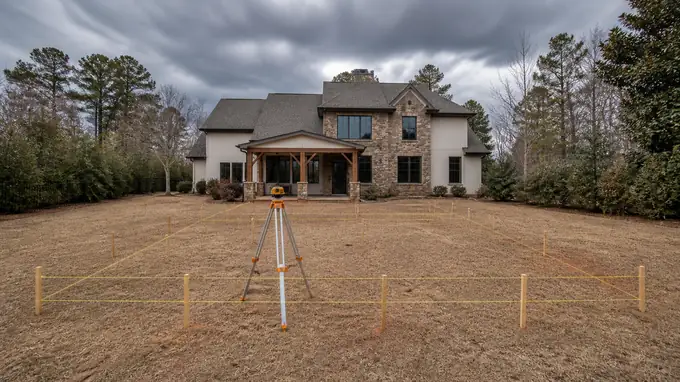
A contractor checks slope and drainage before work begins. at a stacked-stone and stucco home in Sandy Springs, GA, under a darkening storm sky.

Step 1: Site Assessment

We start at the slab itself. We measure where it meets the foundation, the garage apron, steps, columns and drains, because those are the places a joint has to go. Existing joints get checked for crumbled filler, weeds and spalled edges. Fulton County is gently rolling but varies from block to block, so we check grade and drainage on every property. If the project needs a permit, we handle the permit.

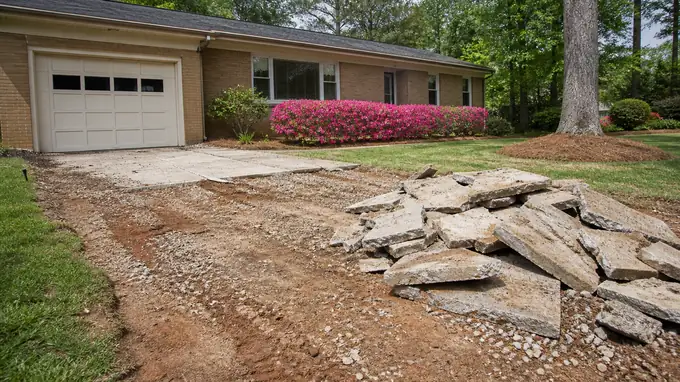
An old patio slab is broken up and hauled away. at a buff-brick ranch home in Sandy Springs, GA, in full afternoon sun.

Step 2: Site Preparation

Old filler comes out first. We cut out rotted fiber board and failed caulk, then saw broken edges back to sound concrete. For new sections we excavate and compact a gravel base in lifts. Rion soil, which is well drained, is the dominant type in Fulton County, but it changes across the county, so we test each site before we trust it. A soft spot left under a slab becomes a cracked slab later.

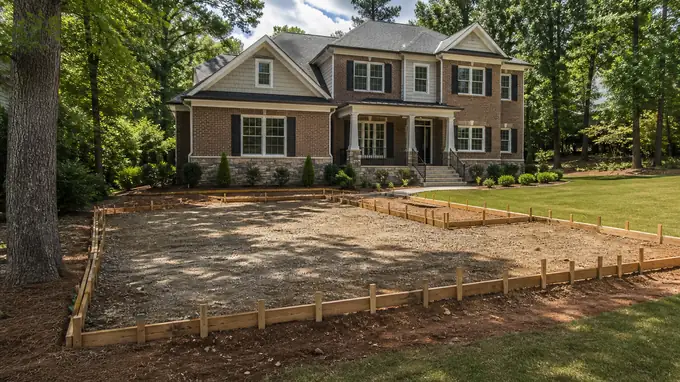
Wooden forms outline a patio slab before the pour. at a brick-and-siding two-story home in Sandy Springs, GA, under broken cloud.

Step 3: Forming & Reinforcement

Forms go in straight and braced, set to the grade we checked during the assessment. Isolation joints get full-depth filler: asphalt-impregnated fiber board or closed-cell foam, running the whole thickness of the slab so nothing bridges it. Where new concrete meets old, we drill in smooth dowels, sleeved on one end, so the slabs stay level but can still move. Rebar or welded wire sits on chairs. Never on the dirt.

A bull float smooths a residential walkway surface after screeding. at a tan-brick colonial in Sandy Springs, GA, under bright midday cloud.

Step 4: Pouring

Pouring is where a joint gets ruined if nobody is watching it. Wet concrete coming off the chute pushes hard against the filler board, and a board that tips or floats leaves a joint that is half concrete. We keep a crew member on the joints for the whole pour, working the mix up around dowels and wire as it goes. Warm weather shortens the working window, so we plan pour times around it.

A hand trowel smooths a small patio surface to a hard finish. at a red-brick ranch home in Sandy Springs, GA, under a hazy afternoon sky.

Step 5: Finishing

Once the bleed water is gone, we float and trowel the surface, then run an edging tool along every joint so the lines stay clean. Broom finish is standard for driveways and walks. Stamped and decorative surfaces get the same joint layout, cut through the pattern. Control joints are sawn within hours of the pour, a quarter of the slab's depth, placed so cracks form in the cut and nowhere else.

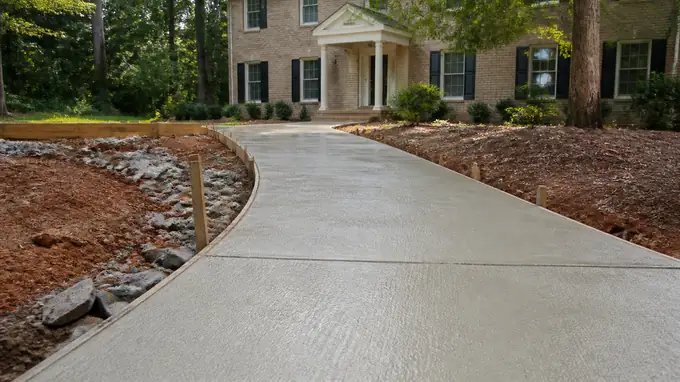
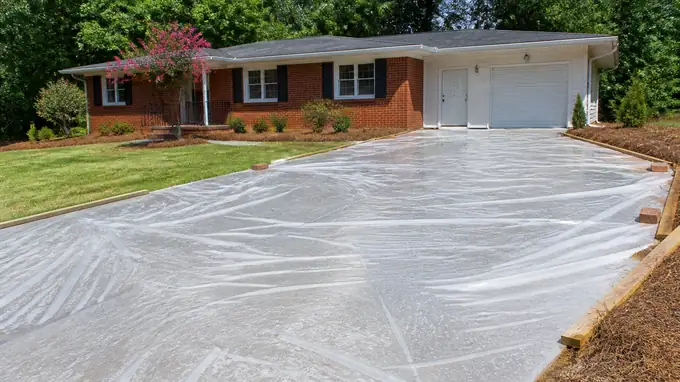
Plastic sheeting covers a curing driveway slab. at a red-brick ranch home in Sandy Springs, GA, in full afternoon sun.

Step 6: Curing

Curing decides how hard the surface ends up. We keep the slab wet under curing blankets or spray on a curing compound, so the top does not dry faster than the core and craze. Foot traffic comes back in days, vehicles later. Joint sealant waits longer still, because sealant laid over green, damp concrete loses its grip. We give you the dates for each before we leave the site.

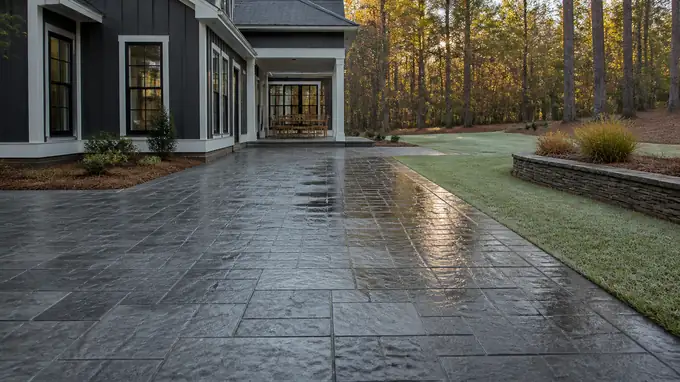
A roller applies sealer to a stamped patio surface. at a charcoal farmhouse-modern home in Sandy Springs, GA, in early morning light.

Step 7: Sealing

With the concrete cured, we trim the top of the filler board, clean and dry the joint, and press in a backer rod. The rod sets the sealant depth and keeps it from bonding to the bottom, so the bead stretches instead of tearing. Then we tool in a self-leveling polyurethane. Sandy Springs gets about 50 inches of rain a year, and a sealed joint is what keeps that water out of the base.

What Decides the Price of Concrete Expansion Joint Installation

Most of the price sits in what the joint needs before any sealant goes in. A clean joint on a new slab is quick work. An old driveway with rotted filler, ragged edges or a sunken panel takes much longer, and nearly all of that is something you can see on your own property before we arrive.

What changes the priceWhich wayWhy
Old filler still in the jointcosts moreRotted fiberboard or failed sealant has to be cut and scraped out down to clean concrete before new material will bond.
New joints sawcut into an existing slabcosts moreCutting a slab that has none means a saw, water, blade wear and cleanup. A new pour can have joints formed in place.
Slab thicknessthicker costs moreJoints are cut to a set share of the slab depth, so a thick driveway takes a deeper cut and more backer rod and sealant per foot.
Joint against the house foundationcosts moreThe isolation joint at the wall needs full-depth filler and a finish that sends water away from the house, not into it.
Settled or cracked panels on either sidecosts moreSealing between two slabs at different heights only hides the problem, so the edge gets ground or the panel gets dealt with first.
Stamped or decorative surfacecosts morePatterned concrete needs slower, cleaner cuts and a sealant color that sits right against the finish.
Patio behind a gate with no drive-up accesscosts moreThe saw, vacuum and materials get carried in by hand instead of worked off the truck.
Slab that sheds water and dries fastcosts lessSealant only goes into dry joints. With about 50 inches of rain a year, a surface that drains well keeps the schedule short.

Comparing bids, look past the total. Check whether each one says how the old filler comes out, what backer rod and sealant go in, how deep new cuts run, and whether the foundation joint is included. Two close numbers can cover very different work.

Frequently Asked Questions About Concrete Expansion Joint Installation in Sandy Springs

What concrete expansion joint types work best for driveways, patios, and sidewalks in Sandy Springs?

Most residential slabs need two kinds. Isolation joints are full-depth breaks, filled with compressible board or foam, wherever new concrete meets something that moves on its own schedule: the house, the garage slab, steps, a column. Control joints are tooled or saw-cut grooves that tell the slab where to crack, so it cracks in a straight line out of sight. On driveways, patios and sidewalks, we finish both with a polyurethane sealant that flexes with the concrete and keeps water out.

Will concrete expansion joint installations reduce cracking and shifting from temperature changes and soil movement in Sandy Springs?

Yes, for the movement they are built to handle. Concrete grows in the heat and shrinks as it cools, and joints give that movement somewhere to go instead of letting it tear across the surface. Shifting is a different problem. Rion soil, which is well drained, is the most common type in Fulton County, but it changes from lot to lot, so we test every site first. A joint cannot rescue a base that is settling underneath.

How do I know when a concrete expansion joint needs to be installed or replaced in Sandy Springs?

Start with the filler. If it has crumbled, pulled away from the edges, or gone hard and brittle, water is getting under the slab. Grass growing out of a joint means the same thing. Random cracks wandering across a panel say the joints are too far apart or too shallow. And in a town where the median home was built in 1988, plenty of original filler has simply outlived its job.

Do I need permits for foundation work in Sandy Springs?

Yes, foundation work usually calls for a permit, and we handle the permit whenever a job needs one. Replacing joints in a driveway, patio or walkway is a separate matter, because that work rarely reaches anything structural. Where a project does touch the foundation (a slab tied into the house, say, or a new footing under a set of steps), the paperwork and inspections are settled before any concrete is cut or poured.

Are you fully licensed, insured, and bonded for commercial work in Southern Sandy Springs?

Ask for the paperwork, and check it yourself before anything is signed. On commercial work, whether it is a storefront along the Roswell Road corridor or a plaza walkway near Perimeter Center, a property owner should see current license, insurance and bonding documents from any contractor and confirm them directly with whoever issued them. That goes for us too. A line on a website proves nothing, and a commercial slab is too big a project to take on trust.

How does the climate in Sandy Springs affect patio longevity and what does your company do to mitigate these effects?

Water is what we plan around. Sandy Springs sees about 50 inches of rain a year and roughly an inch of snow, so most of the work goes into keeping runoff on top of the slab and out of the base. We slope every patio away from the house, keep the joints sealed, and set reinforcement so the panels stay level as the seasons turn. Stamped and decorative surfaces also get a sealer to protect the finish.

Get a Free Estimate

Get FREE Estimates

Tap to call +1 470-740-7099