+1 470-740-7099
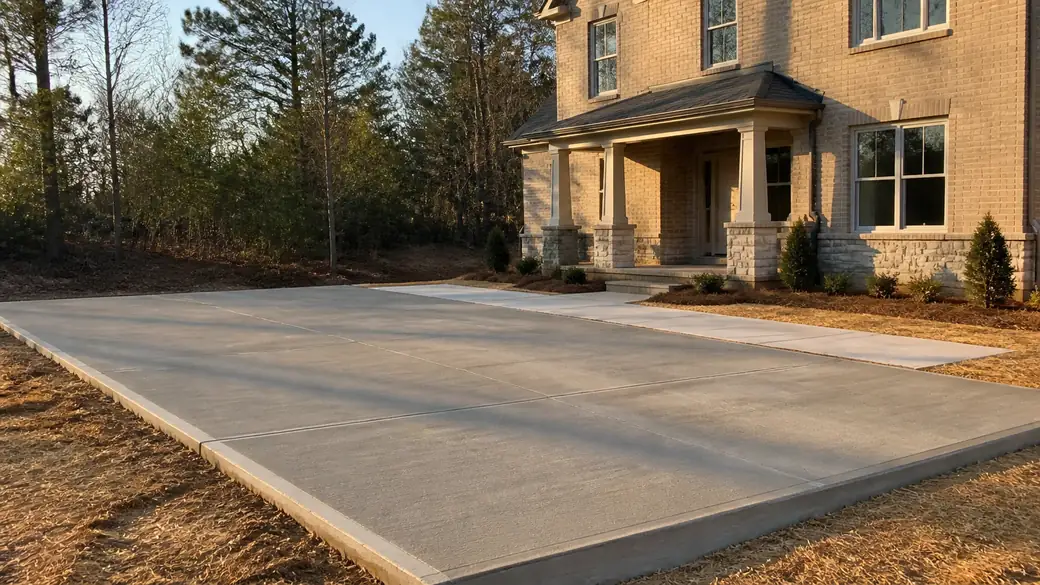
concrete slab installation completed by a local contractor at a brick-and-siding two-story home in Sandy Springs, GA, in late afternoon light.

Concrete Slab Installation in North Druid Hills, Georgia

A concrete slab is the flat, load-bearing surface everything else sits on: a garage floor, a patio, the base for a shed or an addition. We pour residential slabs across North Druid Hills, and the job looks simple from the street. It isn't. What holds up for decades is mostly decided below the finished surface, in the base, the reinforcement and the thickness chosen for what the slab will carry. That part is where we spend our time.

Every site is tested individually before work starts, because conditions can differ from one property to the next. From there we excavate, set forms to grade, and compact a stone base in lifts. Rebar or wire mesh goes in on chairs so it sits inside the concrete rather than under it. We pour, screed and float the surface, cut control joints while the slab is still young, and cure it properly instead of walking away once it looks hard.

Most slab failures trace back to water and a thin base. This area sees about 50 inches of rain a year, and water that collects under a slab softens what supports it. The results show up as cracks that wander across the floor, corners that settle, and a surface that pitches toward the house instead of away from it. Getting it right means proper drainage slope, a compacted base and steel where the loads are. None of that is visible afterward, which is exactly why we don't skip it.

Call +1 470-740-7099

Get FREE Estimates

Concrete Services in North Druid Hills

Concrete Slab Installation Cost

The figure on a slab estimate comes from what we find on site, so we walk the property before we quote. We measure, check the grade and test the ground, because Rion soil drains well across much of Fulton County but does not hold everywhere. Access matters too: a truck that can back up to the forms is a simpler pour than a site that needs a pump. Call for a free estimate on your slab.

concrete driveway installation completed by a local contractor at a buff-brick ranch home in Sandy Springs, GA, under a hazy afternoon sky.

Concrete Driveway Installation

Driveways fail at the edges and wherever water sits, so that is where our effort goes. We dig out soft base, compact a gravel sub-base, and set rebar or wire mesh on chairs so the steel ends up inside the slab rather than lying under it. With about 50 inches of rain a year, pitch matters. We slope the surface away from the garage and saw control joints early. Broom finish is standard; stamped is an option.

concrete flooring installation completed by a local contractor at a painted-white-brick two-story home in Sandy Springs, GA, under low winter sun.

Concrete Flooring Installation

Basements, garages, workshops and additions all start the same way: a compacted base, a vapor barrier under the slab, and reinforcement sized to the load. A garage floor carrying a car needs more steel than a basement floor carrying furniture. We float and trowel to the finish the room calls for, from a hard steel-trowel surface ready for epoxy to a smooth slab for tile or polish. Joints go where walls and cabinets will hide them.

concrete slab repair completed by a local contractor at a stacked-stone and stucco home in Sandy Springs, GA, in raking morning side light.

Concrete Slab Repair

Cracks tell you what went wrong, so we read them before we fix anything. Hairline shrinkage cracks are cosmetic and can be routed and sealed. A slab that has dropped at a corner usually sits over washed-out or poorly compacted fill, and a surface patch only hides that for a season. Where the base is sound, we repair in place. Where it is not, we saw out the failed section, rebuild the base, dowel into the old concrete and pour new.

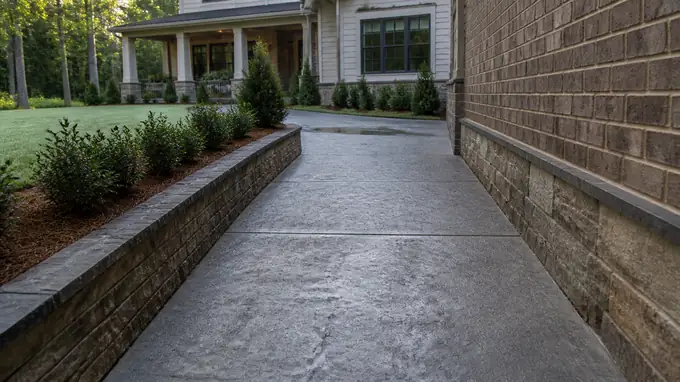
concrete sidewalk installation completed by a local contractor at a brick-and-siding two-story home in Sandy Springs, GA, in early morning light.

Concrete Sidewalk Installation

A sidewalk takes more foot traffic than it looks like it will, and it is often the first surface a growing tree root lifts. We set forms to a straight line or an easy curve, compact the base, and tool joints at regular spacing so cracks land in them instead of across the panel. The finish is a broom texture run across the direction of travel, for grip when it is wet. Street frontage in North Druid Hills or a path to the back gate, the build is the same.

Why Choose Sandy Springs Concrete Pros

A slab is only as good as what sits under it, so that is where we start. Before any forms go up, we test the ground on your property, because soil varies from one lot to the next and we would rather know than guess. From there we set the base, the thickness and the reinforcement to match what the slab has to carry: a shed, a patio, a garage floor, or a driveway that takes a loaded truck.

The work runs in a set order, and we do not skip steps to save a day. Grading and compaction come first, then forms, then steel or wire, then a check of our own before the concrete truck arrives. With around 50 inches of rain a year, we build slope and drainage into the surface from the start so water runs off instead of pooling against your house. Pours get scheduled around the forecast. Curing gets the time it needs.

Most cracked slabs fail for ordinary reasons: a soft base, thin reinforcement, missing control joints, or a surface finished too early and left to dry too fast. Each one costs far less to prevent than to fix once the slab is down, and a poor slab often has to come out whole. We would rather spend the extra hour on the base than explain a crack later. Before any work starts, we lay out what we plan to do and why. Call for a free estimate.

The Concrete Options Available in North Druid Hills

A slab can be plain, textured or decorative, and the right choice depends on what the surface has to do. For garage floors, shed bases and walkways, we pour a standard broom-finished slab, where the light texture gives shoes and tires something to grip. Patios and pool surrounds often suit stamped concrete, which takes the pattern of stone, brick or slate while it is still workable. Exposed aggregate is another route. We wash back the top layer to show the stone underneath, which sits well beside a brick house and stands up to foot traffic.

Whichever finish you pick, the installation underneath runs the same way. We test the ground first. Rion soil, which is well drained, is the dominant type in Fulton County, though it varies across the county, so every site is tested individually before a single form goes down. Then comes the subgrade: excavated, compacted and topped with a gravel base. Reinforcement goes in next, wire mesh or rebar depending on the load the slab will carry. We pour, screed, float and apply the finish. After that the concrete is left to cure properly before anyone drives or builds on it.

Most slab problems trace back to water, or to steps skipped early. With about 50 inches of rain a year, a patio needs a slight fall away from the house, and a driveway needs a path for runoff that does not end at the garage door. Control joints matter too. Concrete shrinks as it cures, and the joints tell it where to crack so the surface stays clean. Stamped and decorative slabs also want a sealer, reapplied every few years, to keep the color even. If you are weighing one finish against another, call for a free estimate.

What Decides the Price of Concrete in North Druid Hills

Most of what sets the price of a slab in North Druid Hills is decided before any concrete arrives. It sits in the ground you already have, the path a truck can take to the pour, and the weight and water the finished surface has to handle. Walk your property with these rows in mind and you will see where your project stands.

What changes the priceWhich wayWhy
An old slab, patio or driveway that has to come out firstcosts moreBreaking, hauling and disposing of old concrete is its own job, done before any new work starts.
A clear, firm path for a ready-mix truck to reach the formscosts lessConcrete goes straight down the chute. A long carry means a pump or wheelbarrows, and more hands on pour day.
Soft or mixed ground found when the site is testedcosts moreWe test every site before work starts. Weak spots get dug out and replaced with compacted base.
A slab that will carry cars or heavy equipmentcosts moreA driveway or garage floor needs more thickness and steel reinforcement than a walkway or shed pad.
Roots, stumps or buried lines inside the footprintcosts moreEach has to be located, then cleared or worked around before forming. That is slow, careful labor.
A yard that already sheds water away from the workcosts lessWith about 50 inches of rain a year, a site that drains well needs no added drains, just a pitched surface.
Ground that has to be built up or cut down to levelcosts moreBringing in fill or digging out a rise adds hours and material before the base goes down.

When you compare bids, line them up on the same points: slab thickness, the type and spacing of reinforcement, the depth of compacted base, and whether removal and drainage are written in or left out. A lower number that skips one of those is usually a different job, not a cheaper one.

North Druid Hills Questions

What areas beyond North Druid Hills does Sandy Springs Concrete Pros serve?

We work across metro Atlanta, and every town on our list gets the same crew, the same materials and the same way of doing the job. A driveway in Brookhaven is formed, reinforced and poured exactly the way a driveway in North Druid Hills is. The full list of towns we cover sits elsewhere on this page. If yours is on it, call for a free estimate.

Do I need permits for foundation work in North Druid Hills?

Yes, in most cases. Foundation work is structural, and structural concrete generally needs a building permit and inspections before the slab is covered or built on. The exact requirements come from the local permitting office, not from us, so we check them for each project rather than assume. Plan for that step in your schedule. It also puts a second set of eyes on the footings and reinforcement.

What's the difference between acid stain and water-based stain?

Acid stain reacts chemically with the lime in cured concrete. The color becomes part of the surface itself, and the result is mottled and translucent, in a fairly narrow range of browns, tans and muted greens. Water-based stain doesn't react. It carries pigment into the pores, which gives you a far wider choice of colors and a more even, predictable finish. Acid stain suits people who like variation. Both need a sealer.

What is the standard width for commercial sidewalks in North Druid Hills?

There isn't one figure worth quoting from memory, so we won't guess at it here. Commercial sidewalk width is set by the local code, accessibility requirements and the approved site plan for that property, and those can differ from one project to the next. We build to the dimensions on the approved drawings. If there are no drawings yet, that comes first, before anyone talks about pouring concrete.

What are the warranty or guarantee terms for services provided by Sandy Springs Concrete Pros?

We don't publish warranty or guarantee terms on this site. What we can describe is how the work gets done: every site is tested individually before work starts, the base is prepared to suit what that test shows, and reinforcement goes in where the slab needs it. If written terms matter to you (and they should), ask about them when you call for an estimate and get the answer on paper.

What areas beyond North Druid Hills do you serve?

Plenty of them, spread across metro Atlanta, and no town on our list is treated as an outskirt. Our crews handle slabs, driveways, patios and decorative surfaces throughout the area on the same terms, whether the property is residential or commercial. Rather than repeat the full list here, you'll find it in the service area section of this page. Not sure your street falls inside it? Call and ask.

Get a Free Estimate

Get FREE Estimates

Tap to call +1 470-740-7099