+1 470-740-7099
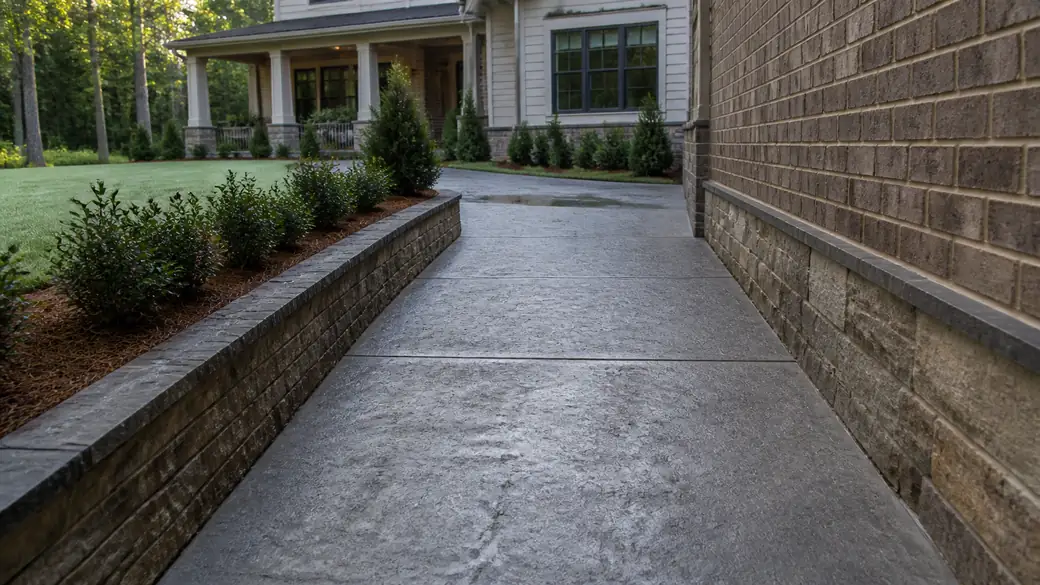
concrete sidewalk installation completed by a local contractor at a brick-and-siding two-story home in Sandy Springs, GA, in early morning light.

Concrete Sidewalk Installation in Sandy Springs, GA

A concrete sidewalk has one job: give people a flat, sure path from the street or driveway to the door, in every kind of weather. In Sandy Springs, where the median home was built in 1988, a lot of those walks are still the originals. We tear out the ones that have cracked, sunk or tipped toward the house, and we pour new residential and commercial walks on properties that never had one.

Most failures start underneath. The area takes about 50 inches of rain a year, so a walk that sheds water the wrong way, or sits on a base nobody compacted, will show it. The ground here rolls gently but changes from block to block. We grade and test each site on its own before any forms go down, then set the slope, the reinforcement and the joints to suit it. Call for a free estimate.

Call +1 470-740-7099

Get FREE Estimates

Our Concrete Sidewalk Installation Work in Sandy Springs

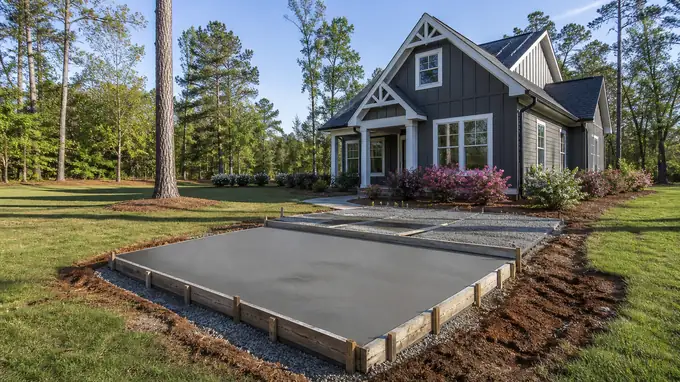
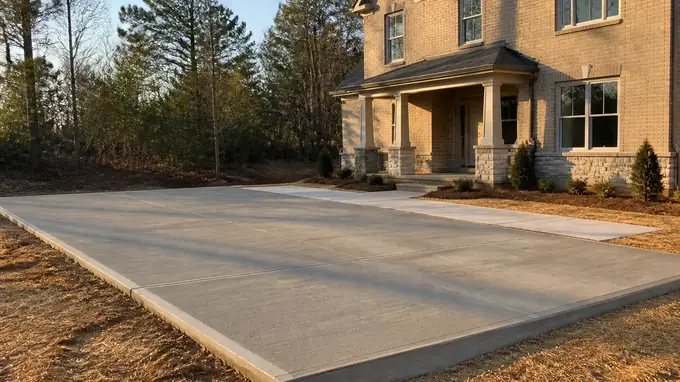
concrete slab installation completed by a local contractor at a brick-and-siding two-story home in Sandy Springs, GA, in late afternoon light.

Concrete Slab Installation Cost

What a slab costs depends on what sits under it and what it carries. A 4-inch patio slab on compacted gravel is a lighter job than a 6-inch pad for a vehicle, with rebar on chairs and a deeper base. Access changes the number too: a truck that backs up to the forms costs less than a line pump. Old concrete coming out adds breaking and hauling. Call for a free estimate.


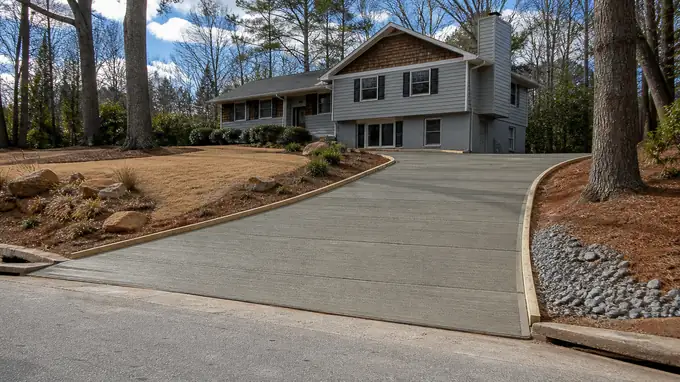
concrete driveway installation completed by a local contractor at a buff-brick ranch home in Sandy Springs, GA, under a hazy afternoon sky.

Concrete Driveway Installation

Driveways fail from the bottom up, so most of the work goes into the base. We dig out soft soil, compact crushed stone in lifts, and set rebar on chairs so it sits mid-slab instead of on the dirt. The pour is at least 4 inches, thicker where heavy trucks turn. Control joints give cracks a place to go. The surface gets a broom finish for grip, or goes stamped and colored if you want something decorative.

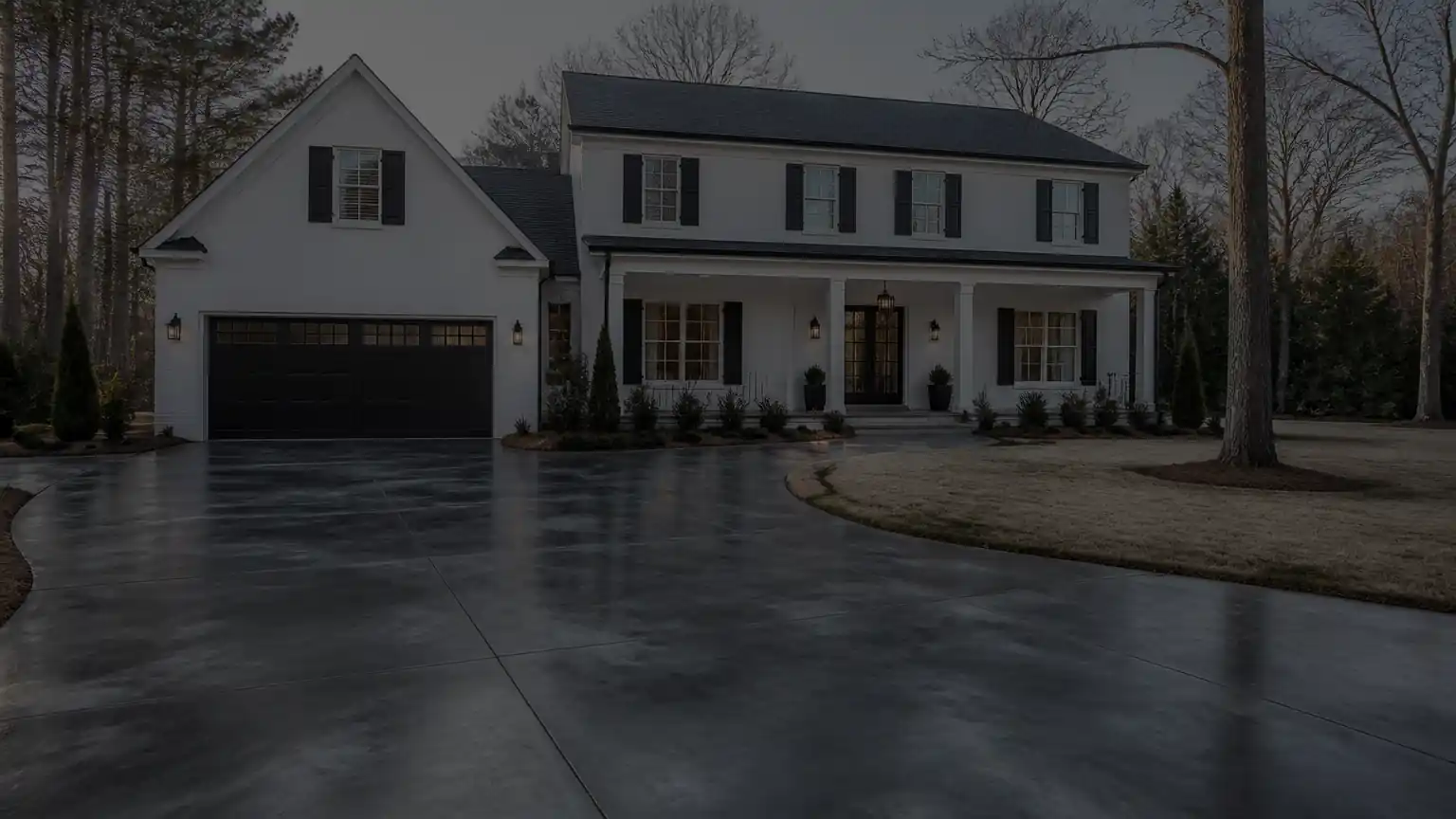
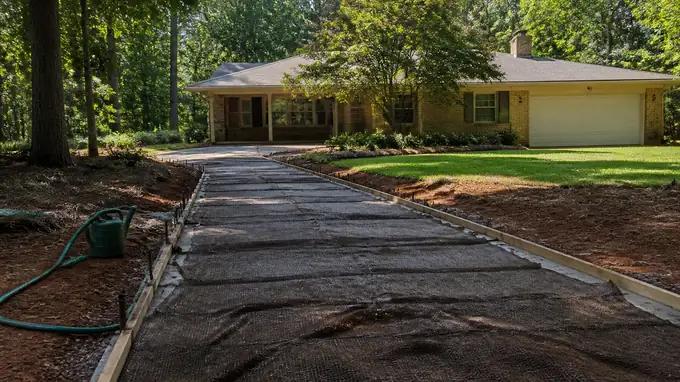
concrete flooring installation completed by a local contractor at a painted-white-brick two-story home in Sandy Springs, GA, under low winter sun.

Concrete Flooring Installation

A floor slab has two jobs: stay flat and keep ground moisture out. Under garage, basement and shop floors we compact a stone base, lay a heavy poly vapor barrier with taped seams, and set mesh or rebar. We power-trowel the surface smooth and hard, saw-cut control joints the day after the pour, and keep it wet while it cures. It can stay bare, take a sealer, or be ground and polished later.

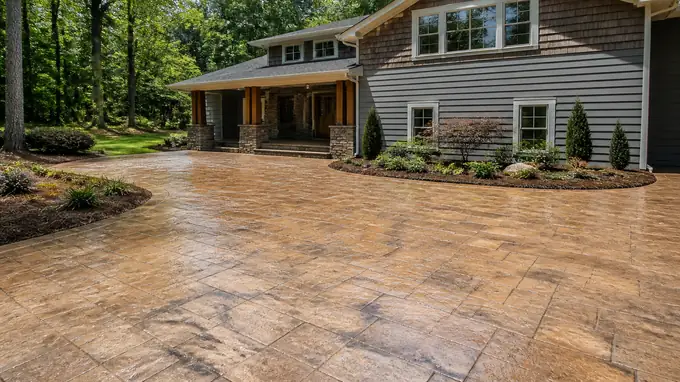
concrete slab repair completed by a local contractor at a stacked-stone and stucco home in Sandy Springs, GA, in raking morning side light.

Concrete Slab Repair

Not every cracked slab needs tearing out. Hairline shrinkage cracks are mostly cosmetic, so we route and seal them with polyurethane caulk to keep water out. A section that has sunk usually lost its base, often to a downspout or an open joint, which matters with about 50 inches of rain a year. We lift those with polyurethane foam. Flaking surfaces get ground and resurfaced. When the slab is broken through or the steel is rusting, we replace it.

Why Sandy Springs Chooses Sandy Springs Concrete Pros

A sidewalk is a small project, and we give it the same attention as a driveway or a slab. The median home in Sandy Springs was built in 1988, so plenty of the walks here have been down as long as the house has. We cut out what has failed, match the new surface to what stays, and leave a clean joint between them.

Water is the other thing a walk here has to handle. Sandy Springs gets about 50 inches of rain a year, and a sidewalk without the right pitch holds it against the foundation. Ground changes from block to block, so we test and grade every site on its own. The part that matters most is the part nobody sees once it cures.

How a Concrete Sidewalk Installation Job Runs in Sandy Springs

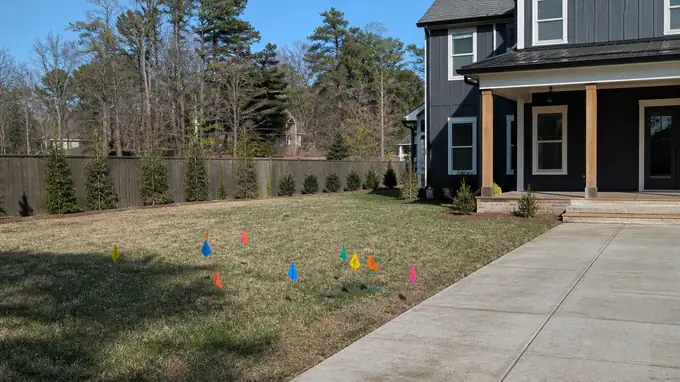
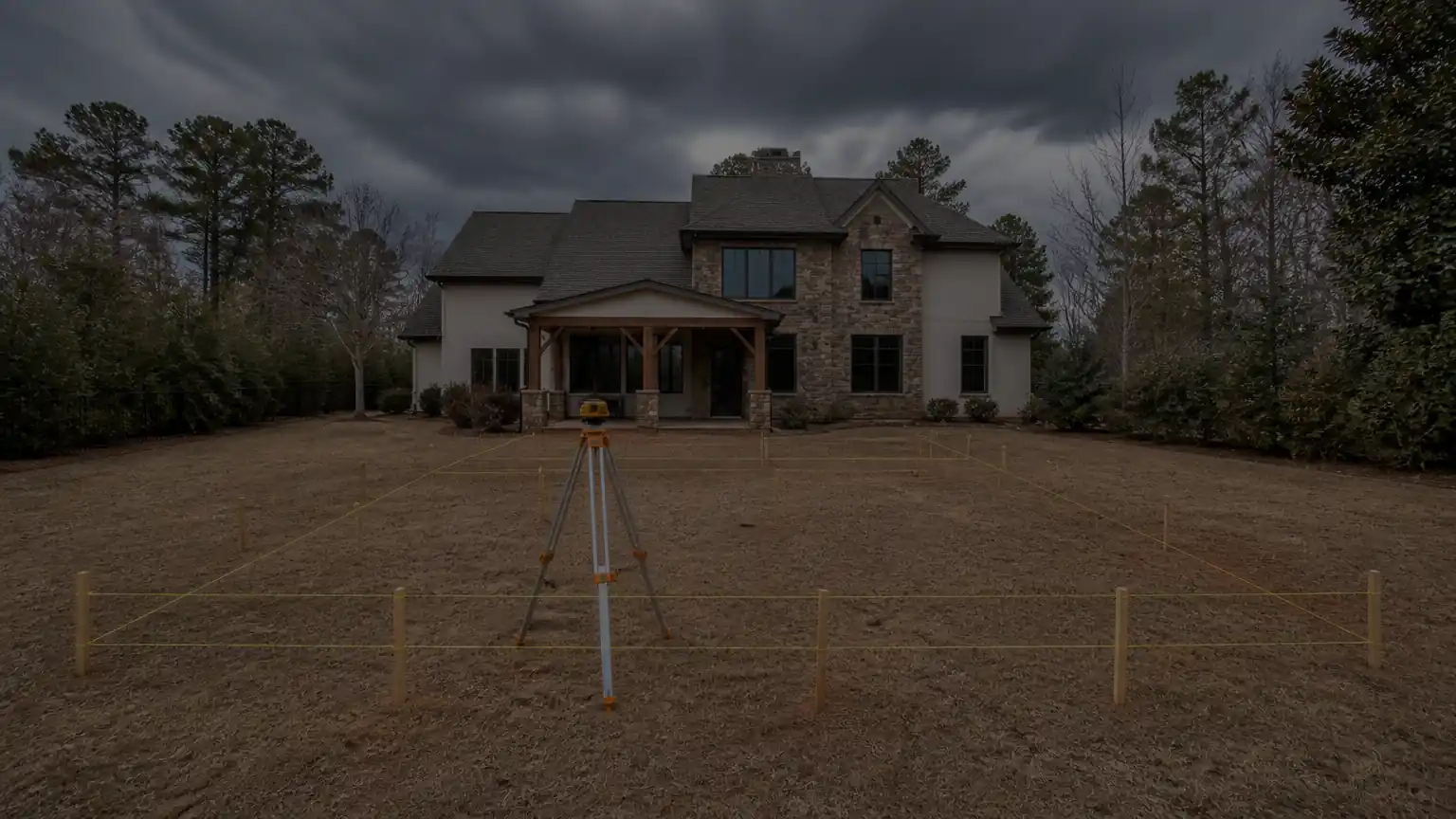
Utility flags mark buried lines before digging starts. at a charcoal farmhouse-modern home in Sandy Springs, GA, in full afternoon sun.

Step 1: Site Assessment

Before anything gets marked, we walk the route with you and look at where water goes when it rains. The area sees about 50 inches of rain a year, so a walk that sits low or pitches toward the foundation shows its problems fast. We check grade along the whole run, note tree roots, buried utilities and any old concrete that has to come out, and test the soil at that spot. We handle the permit.

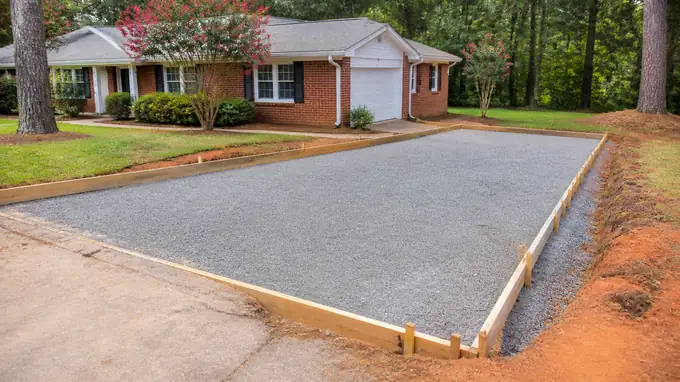
Crushed stone base is raked level inside driveway forms. at a red-brick ranch home in Sandy Springs, GA, under bright midday cloud.

Step 2: Site Preparation

Old concrete gets broken out and hauled away first. We dig past topsoil and roots down to firm ground, because organic material rots and leaves voids under the slab. Rion soil, the dominant type in Fulton County, drains well, but it changes from lot to lot, so we compact the subgrade and lay a crushed stone base in compacted lifts. Most failed sidewalks failed here. Skip the base, and the slab cracks and settles.

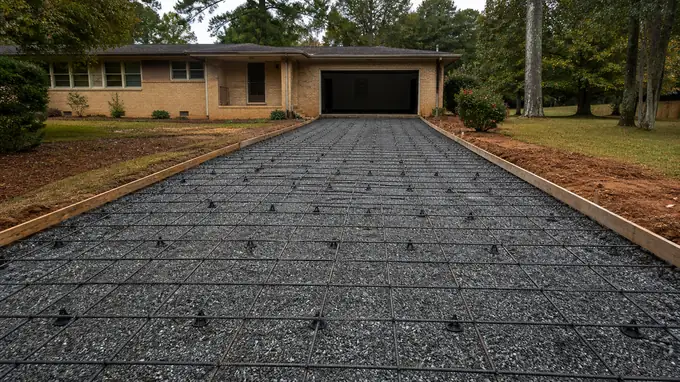
A worker ties rebar into a grid before a residential pour. at a buff-brick ranch home in Sandy Springs, GA, after a rain shower.

Step 3: Forming & Reinforcement

Forms go in next, set to string lines and staked tight so they hold straight when the concrete hits them. We build in a slight cross slope so rain sheds off the walk instead of pooling on it. Where the walk meets a driveway, a step or the house, we place expansion joint material. Reinforcement is rebar or welded wire mesh set up on chairs, so it sits inside the slab. Mesh lying on the ground does nothing.

A screed board levels fresh concrete on a small patio. at a charcoal farmhouse-modern home in Sandy Springs, GA, under low winter sun.

Step 4: Pouring

Ready-mix arrives from the plant batched to spec, and we check the load before it goes down. Adding water on site to make concrete easier to spread is a common shortcut. It weakens the surface and invites scaling, so we don't do it. The crew places the concrete, works it into corners and edges, and screeds it flush with the tops of the forms. Pour days get planned around the forecast, since heavy rain on fresh concrete ruins the surface.

A broom drags across a driveway creating a slip-resistant texture. at a grey split-level home in Sandy Springs, GA, under broken cloud.

Step 5: Finishing

Timing matters more than technique here. We bull float the surface, wait for the bleed water to leave, then edge both sides and tool control joints at regular spacing so cracks form in the joint rather than across the walk. A broom finish gives grip when it's wet, which is what most walks need. Stamped or decorative finishes suit a walk that ties into a patio. Troweling too early is what causes dusting and flaking later.

Damp burlap covers a small slab section during curing. at a buff-brick ranch home in Sandy Springs, GA, in raking morning side light.

Step 6: Curing

Fresh concrete gains strength slowly, and only while it holds its water. Right after finishing, we keep the slab damp or apply a curing compound, and cover it when the weather calls for it. Average highs sit around 72°F, so conditions are usually kind, but hot sun dries a surface quickly and cold nights slow the cure down. Foot traffic can come back after a few days. Cars and heavy loads wait considerably longer.

A finished stamped surface shows a glossy sealed sheen. at a grey split-level home in Sandy Springs, GA, in full afternoon sun.

Step 7: Sealing

Once the slab has fully cured, we apply a penetrating or film-forming sealer matched to the finish. Sealer slows water absorption, resists staining from leaves, oil and fertilizer, and keeps color in stamped work from fading. A plain broom-finish walk in full sun can go without, but shaded walks that stay damp benefit from it. Resealing every few years keeps the protection working. Then we pull the forms, backfill the edges and clean up the site.

Concrete Systems and Materials for Sandy Springs

Most of our sidewalks are plain broom-finished slabs poured over a compacted gravel base, with steel reinforcement held up in the middle of the pour instead of lying in the dirt. Control joints go in at regular spacing so the concrete cracks where we choose. If the walk should match a stamped patio or a decorative driveway, we can color or stamp it, though a broom finish gives better footing in the wet.

Site conditions decide the rest. Fulton County sees about 50 inches of rain a year, so we pitch every walk to shed water off the surface and away from the house. Rion soil, the county's dominant type, drains well but changes from lot to lot, and we test the base on each property before setting forms. Where the ground rolls, a walk may need a step or a short retaining edge. We plan that into the layout.

Frequently Asked Questions About Concrete Sidewalk Installation in Sandy Springs

What permits are required for sidewalk installation in Sandy Springs?

That depends on where the walk sits and what it connects to. A path from your back door to a garden bed is a different job, on paper, from a walk that meets the street, crosses a curb, or ties into the public sidewalk. We look at the layout on the estimate visit, work out what the project calls for, and we handle the permit. You should not have to chase paperwork to get a sidewalk poured.

Do I need a permit for sidewalk installation in Sandy Springs?

Yes, for some jobs, and not for others. The answer comes from the property itself: where the walk runs, how it meets the driveway or the street, and whether the grade changes along the way. We sort that out before anything is dug or formed, so nobody is guessing once the crew arrives. If a permit applies, we handle it. The work waits until it is in place.

How long does a concrete sidewalk installation take in Sandy Springs, GA?

Most of the time on site goes into the ground, not the concrete. We dig out, grade, compact the base, set forms and place the reinforcement, and each step is done properly before the next one starts. The pour and finish move quickly once the truck is there. After that the slab needs to cure before it takes full use. So the walk stays roped off for a while, even though it looks done.

How long does it take to complete a concrete sidewalk installation in Sandy Springs?

The calendar depends on more than the crew. Sandy Springs gets about 50 inches of rain a year, and we do not pour onto a wet base or ahead of a storm, so weather can move the date. A permit, where one applies, sets its own pace. Length, width and how much grading the path needs all count too. The schedule gets set for your job specifically, once we have seen the site.

What areas beyond Sandy Springs does Sandy Springs Concrete Pros serve?

We pour sidewalks in towns on every side of metro Atlanta, not just this one. A walk in Dunwoody gets the same crew, the same base preparation and the same finish as a walk in any other town we cover. Nobody waits behind anybody else because of an address. The full list of places we work is elsewhere on this page. If yours is on it, call for a free estimate.

Is Sandy Springs Concrete Pros licensed, insured, and bonded?

Ask for the paperwork before you sign anything, from any contractor pouring concrete on your property. A license, insurance and bonding should be shown in current documents, not taken on someone's word, and you can check each one with the body that issued it. A sidewalk is a small project. It still sits on your land and near the street, and that is reason enough to see proof first.

Get a Free Estimate

Get FREE Estimates

Tap to call +1 470-740-7099