+1 470-740-7099
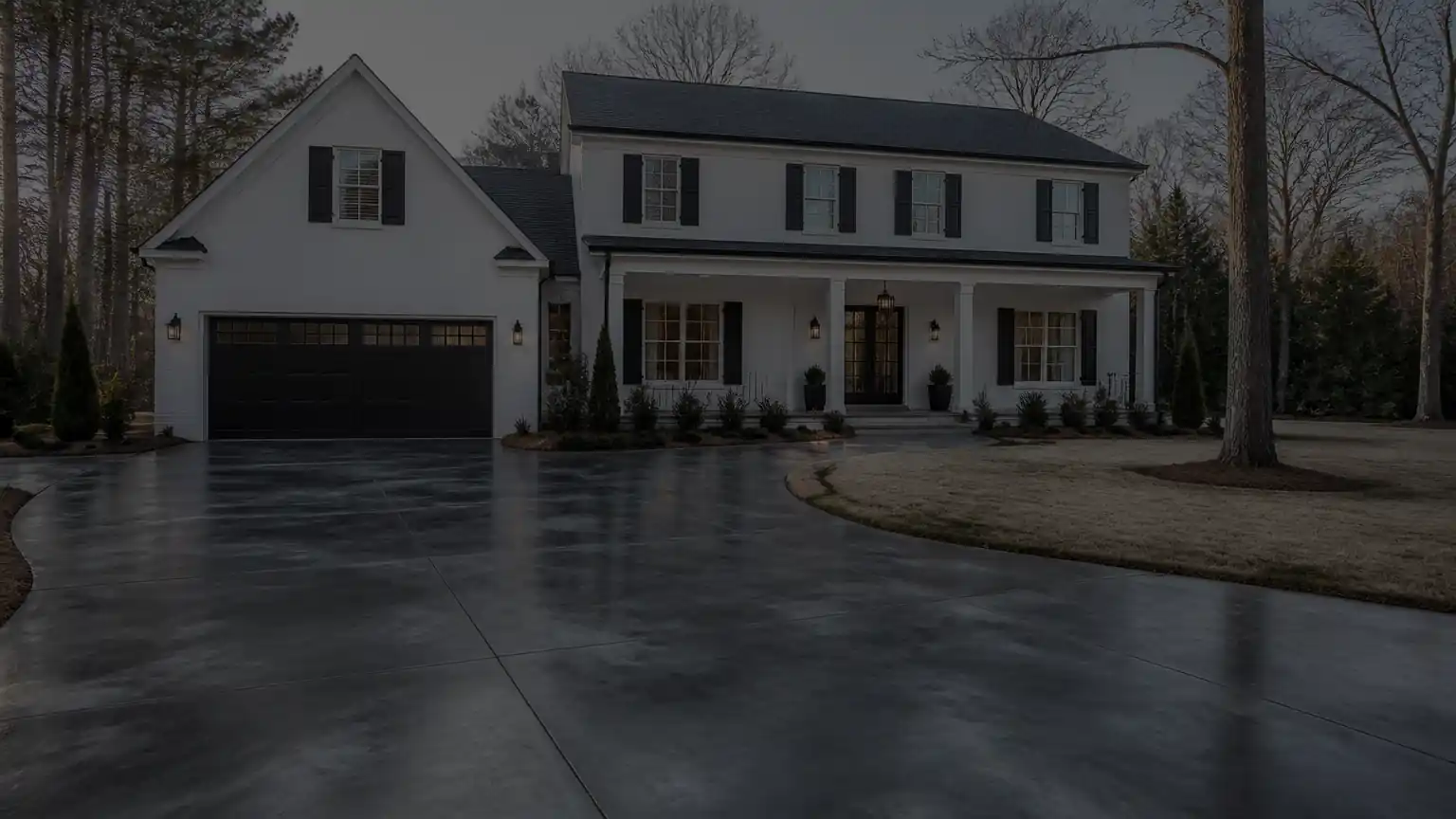
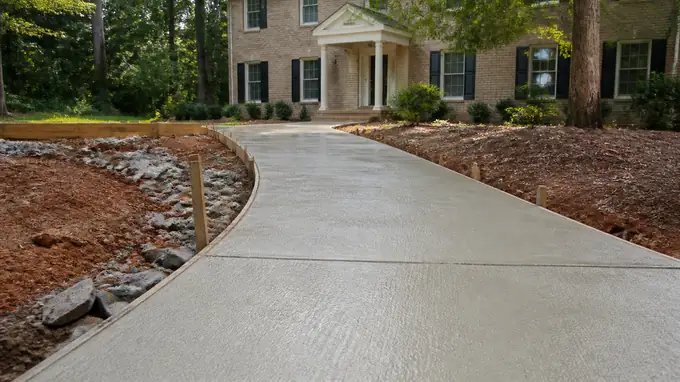
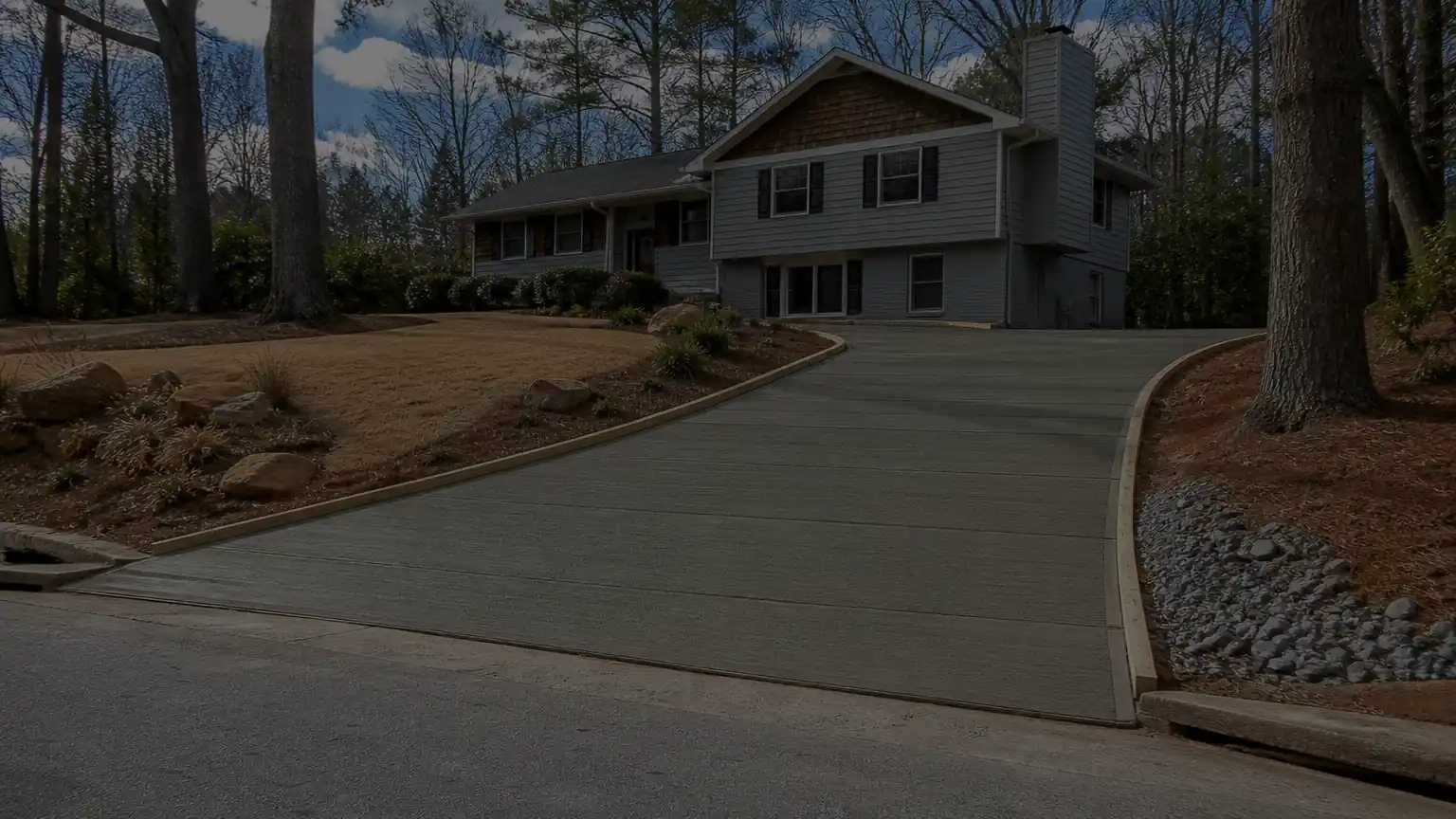
Wide view of finished concrete flatwork across the front of a home at a stacked-stone and stucco home in Sandy Springs, GA, under an overcast sky.

Concrete Repair Services in Sandy Springs, GA

Plenty of the concrete we repair in Sandy Springs is as old as the house beside it, and the median home here was built in 1988. That puts a lot of driveways, patios and walkways well into their fourth decade. We fix cracked slabs, sunken sections, flaking surfaces and broken steps on residential and commercial property. We also tell you plainly when a repair will hold and when a section needs replacing instead.

Water does most of the damage. The area sees about 50 inches of rain a year, and when that water gets under a slab or sheets off a driveway the wrong way, the base underneath starts to give. So we look at where the water goes before we patch anything. Grade and soil change from one lot to the next, which is why every site gets tested on its own. We handle the permit when one is needed. Call for a free estimate.

Call +1 470-740-7099

Get FREE Estimates

Our Concrete Repair Services Work in Sandy Springs

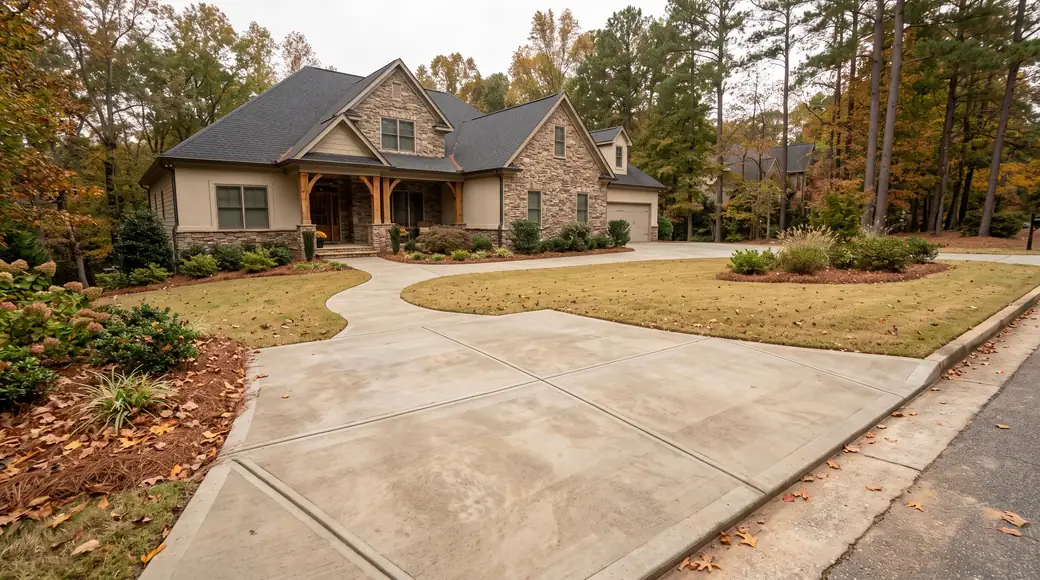
concrete slab installation completed by a local contractor at a brick-and-siding two-story home in Sandy Springs, GA, in late afternoon light.

Concrete Slab Installation Cost

What a slab costs comes down to what sits under it and what it has to carry. Site prep is the biggest variable: how much grading the lot needs, how deep the gravel base goes, and whether the slab calls for rebar or wire mesh. Thickness, finish and how close the truck can get all move the number too. We walk the site, check the ground, and price your property on its own. Call for a free estimate.


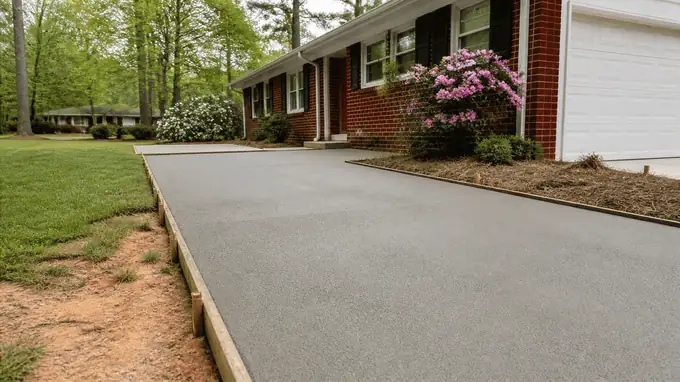
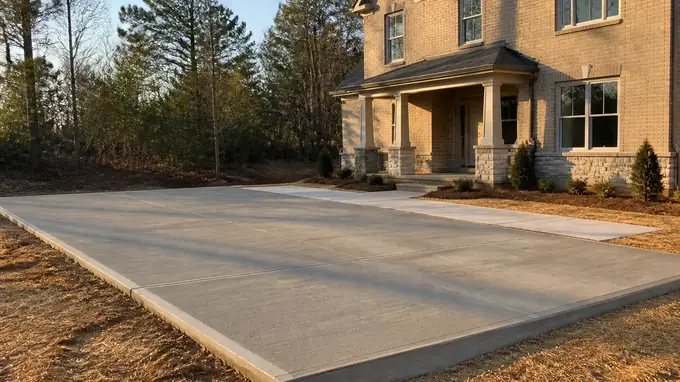
concrete driveway installation completed by a local contractor at a buff-brick ranch home in Sandy Springs, GA, under a hazy afternoon sky.

Concrete Driveway Installation

A driveway carries far more weight than a patio, so we pour it thicker and set rebar on chairs, not mesh left lying in the dirt. The base gets compacted in lifts. Control joints are cut at spacing matched to the slab, so cracks land in the joint instead of across the middle. With about 50 inches of rain a year, every driveway is sloped to shed water away from the garage. Broom finish is standard; stamped and exposed aggregate are options.

concrete flooring installation completed by a local contractor at a painted-white-brick two-story home in Sandy Springs, GA, under low winter sun.

Concrete Flooring Installation

Garage floors, basement slabs and shop floors all start the same way: a compacted gravel base, a vapor barrier, then reinforcement held at the right height through the pour. Garages get a hard, smooth trowel finish that sweeps clean and stands up to tires. Inside a home or workspace, the surface can be ground and polished, stained, or sealed into a finished floor. Joints are cut the same day, so the slab cracks where we choose.

concrete slab repair completed by a local contractor at a stacked-stone and stucco home in Sandy Springs, GA, in raking morning side light.

Concrete Slab Repair

The median home in Sandy Springs was built in 1988, and slabs that age show it: settled panels, lifted edges at the joints, spalled surfaces, cracks that keep widening. We find the cause first, usually water getting under the slab or a base that was never properly compacted. Hairline cracks can be routed and sealed. A sunken section can often be lifted. When the base has failed, we cut out the panel, rebuild underneath, dowel into sound concrete, and pour new.

Why Sandy Springs Chooses Sandy Springs Concrete Pros

The typical home here was built around 1988, so a lot of the driveways, patios and walkways in Sandy Springs have carried decades of cars, tree roots and weather. About 50 inches of rain a year finds every crack. We read the whole surface before we cut into it, and we tell you straight whether a repair will hold or the slab has to come out.

No two sites are alike, even a few streets apart, so every job starts with testing the soil and checking the grade under the damaged section. We match the mix and finish to what is already there, set the reinforcement the repair actually needs, and handle the permit when one is required. Call for a free estimate.

How a Concrete Repair Services Job Runs in Sandy Springs

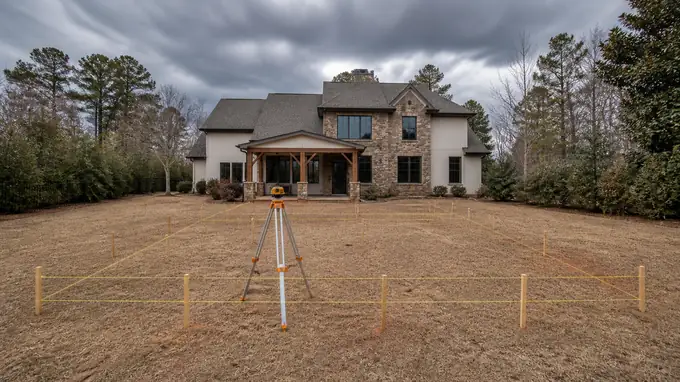
A contractor checks slope and drainage before work begins. at a stacked-stone and stucco home in Sandy Springs, GA, under a darkening storm sky.

Step 1: Site Assessment

We start by working out why the concrete failed, because patching the symptom just moves the crack a few feet over. We check whether the slab has settled, heaved or scaled, watch where water runs off the roof and yard, and tap the surface for hollow spots. With the median Sandy Springs home built in 1988, plenty of the driveways we see could be original to the house. Then we tell you plainly whether it needs repair or replacement.

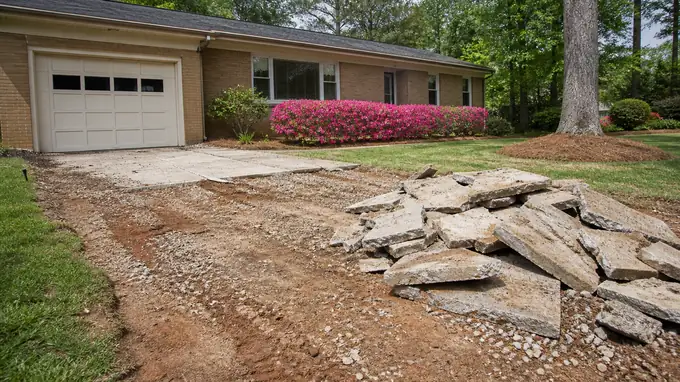
An old patio slab is broken up and hauled away. at a buff-brick ranch home in Sandy Springs, GA, in full afternoon sun.

Step 2: Site Preparation

Broken sections come out with a saw, cut on straight lines so the new pour meets sound concrete at a clean edge. Under that, the base matters more than anything we put on top. Fulton County's dominant soil is well drained, but it changes across the county, so we test each site before work starts. Soft spots get dug out and replaced with gravel compacted in lifts. Water that pooled under the old slab gets a way out.

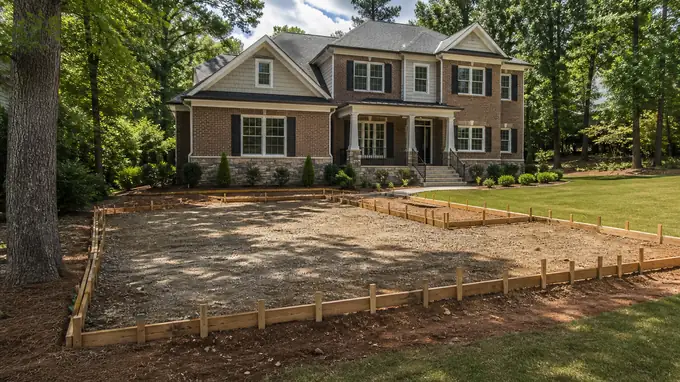
Wooden forms outline a patio slab before the pour. at a brick-and-siding two-story home in Sandy Springs, GA, under broken cloud.

Step 3: Forming & Reinforcement

Forms go in on stakes, set to string lines so the finished surface sheds water away from the house and garage. Where new concrete meets old, we drill and epoxy steel dowels into the existing slab so the two move together instead of stepping apart. Rebar sits up on chairs, where it can actually carry load. Mesh left lying in the gravel does nothing. Expansion material goes against foundations, steps and any fixed edge.

A bull float smooths a residential walkway surface after screeding. at a tan-brick colonial in Sandy Springs, GA, under bright midday cloud.

Step 4: Pouring

Mix is ordered for the job: a driveway gets a stronger, air-entrained mix than a garden path. We keep the water where the batch plant set it rather than adding more on site to make placing easier. Extra water is the most common reason a new slab dusts and scales early. We place it in one continuous pour where we can, screed it to the forms, and work it into the corners so no voids hide along the edges.

A hand trowel smooths a small patio surface to a hard finish. at a red-brick ranch home in Sandy Springs, GA, under a hazy afternoon sky.

Step 5: Finishing

Timing does most of the work here. We bull float to close the surface, then wait for the bleed water to leave before touching it again, since finishing too early traps water and weakens the top. Driveways and walks get a broom finish for grip. Stamped and decorative work gets pattern and color chosen to sit well with what is already on the property. Control joints are tooled or cut so the slab has a planned place to crack.

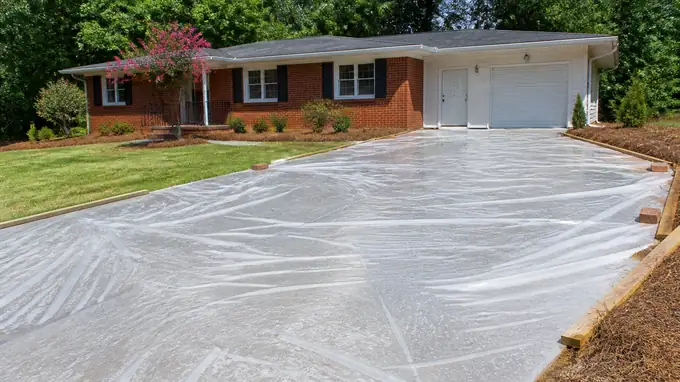
Plastic sheeting covers a curing driveway slab. at a red-brick ranch home in Sandy Springs, GA, in full afternoon sun.

Step 6: Curing

Concrete gains strength slowly, and only while it holds on to its water. Once the surface is finished, we apply a curing compound or keep it covered so the top does not dry faster than the slab beneath it. Average daily highs here run around 72°F, which suits curing, though a hot afternoon still calls for closer attention. We tell you when it is ready for foot traffic and when it is ready for a car.

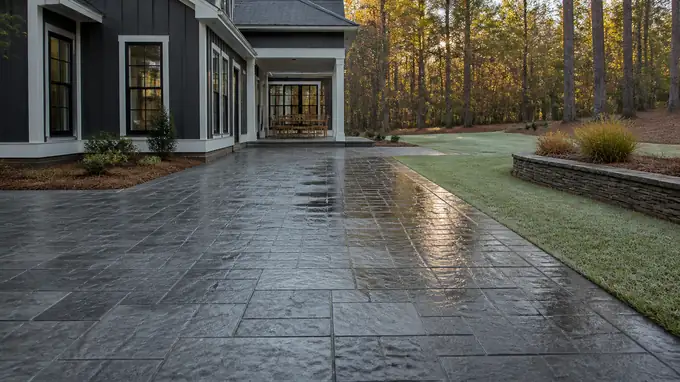
A roller applies sealer to a stamped patio surface. at a charcoal farmhouse-modern home in Sandy Springs, GA, in early morning light.

Step 7: Sealing

Sandy Springs gets about 50 inches of rain a year, and a sealer keeps that water from soaking into the surface and carrying dirt, oil and leaf stain with it. We let the slab cure before any sealer goes on. Plain broom-finished concrete takes a penetrating sealer that leaves no film and nothing slick underfoot. Stamped and decorative surfaces usually get a film-forming sealer that deepens the color and needs recoating over time.

Concrete Systems and Materials for Sandy Springs

Plenty of the slabs we repair here sit beside homes from the late 1980s, and the concrete has had decades to show where it was built well and where it was not. We match new work to what is already there. That means choosing the mix for the job, setting reinforcement where the load runs (rebar for driveways that carry vehicles, mesh or fiber for patios and walks), and cutting control joints so cracking happens where we plan it.

Water is the thing to plan around. The area gets about 50 inches of rain a year, and a repair that sheds it poorly will not stay repaired for long. We slope surfaces away from the house, prepare the base only after testing the ground on that property, and seal the finished surface. Stamped and decorative finishes get the same structural work underneath. A pattern only looks good for as long as the slab below it holds.

Frequently Asked Questions About Concrete Repair Services in Sandy Springs

What factors affect the cost of concrete surface repair in Sandy Springs?

Size and depth come first. A scaled patch on a front walk is a different job from a driveway surface worn through across its whole width. Access matters, and so does what sits underneath: sound concrete can be resurfaced, while weak material has to be cut back first. Drainage is the other big one. With about 50 inches of rain a year, water that pools on a surface or runs under it has to be handled as part of the repair.

Which concrete wall repair method is best for my situation in Sandy Springs?

It depends on what the wall is doing. Flaking and spalling get cleaned back to solid material and resurfaced with a bonded repair mortar. Cracks get injected. A wall that leans or bows is a structural problem, and dressing up its face only hides the movement. We look at the wall, the grade behind it and where the water goes before recommending anything. The median home here was built in 1988, so many walls have decades of settling behind them.

How much does it cost to repair cracks in a concrete driveway in Sandy Springs?

We price each driveway after seeing it, because the figure depends on things a photo won't show. Hairline cracks that are only cosmetic can be routed and sealed. Cracks that have widened, or where one side has dropped, point to movement under the slab, and that is a bigger job. Length, width and how many cracks there are all factor in. Call for a free estimate and you get a number for your driveway, not a guess.

Which repair method is best for concrete wall cracks in Sandy Springs?

For a structural crack, epoxy injection bonds the two faces back together and restores strength across the break. For a crack that leaks but isn't carrying load, polyurethane injection is usually the better choice, since it expands to fill the void and stays flexible. Surface patching alone rarely holds on a wall. Before picking a method, we work out why the wall cracked. A crack that is still moving will reopen, whatever goes into it.

How do you decide between concrete removal and repair in Sandy Springs, GA?

The base decides most of it. If the concrete is sound and the ground beneath it is stable, repair makes sense and saves tearing out a slab with plenty of life left. If sections have sunk, heaved or broken apart, the problem is underneath, and a surface fix won't hold. Soil varies across the area, so we test each site rather than assume. Sometimes the right call is replacing one section and repairing the rest.

Does Sandy Springs Concrete Pros offer concrete repair without full replacement?

Yes. Crack injection, routing and sealing, resurfacing scaled or worn surfaces, and replacing single damaged sections while the rest stays in place are all part of our repair work. Full replacement is the last option, not the first. On a driveway or patio that is structurally sound, repair keeps the property usable and avoids the cost and mess of a tear-out. When replacement is the honest answer, we say so and explain why.

Get a Free Estimate

Get FREE Estimates

Tap to call +1 470-740-7099