+1 470-740-7099
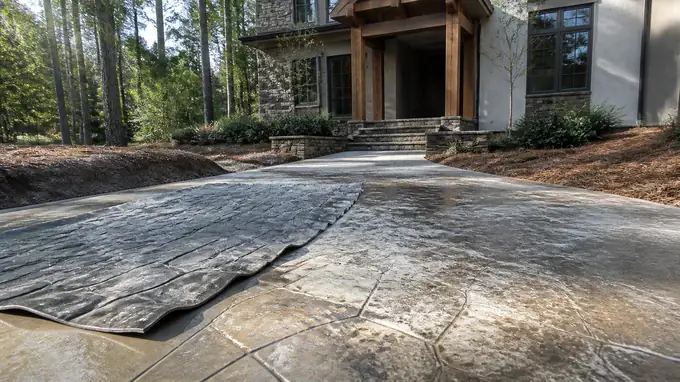
concrete sidewalk installation completed by a local contractor at a brick-and-siding two-story home in Sandy Springs, GA, in early morning light.

Concrete Sidewalk Installation in College Park, Georgia

A sidewalk has one job: give people a flat, sound surface to walk on, from the street to the door or around the side of the house to the yard. We pour concrete sidewalks for residential property owners in College Park, along with the walks that tie into driveways and patios. Most runs are simple. The ones that fail were usually rushed at the base, poured too thin, or set without enough slope to shed water. We build every walk to avoid all three.

Water is what a sidewalk mostly contends with, and this area gets about 50 inches of rain a year. So the grade comes first. We cut the path, check the soil (every site is tested individually before work starts), and compact a solid base. Forms go in with a slight cross slope so rain runs off rather than sitting on the surface. Reinforcement goes where the slab needs it, joints go in to control cracking, and a broom finish gives grip. Call for a free estimate.

Call +1 470-740-7099

Get FREE Estimates

Concrete Services in College Park

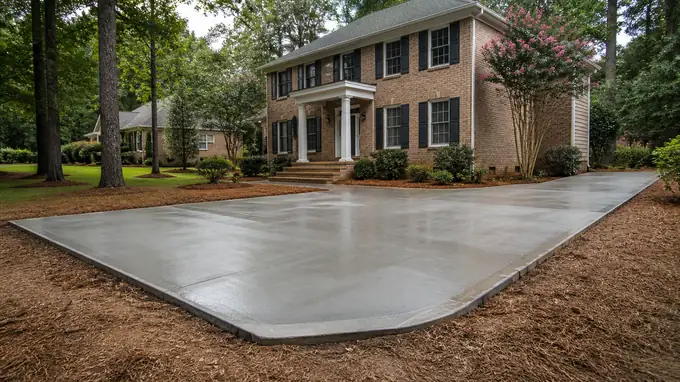
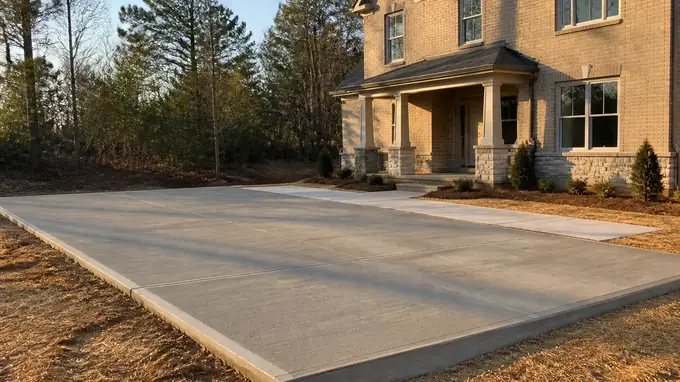
concrete slab installation completed by a local contractor at a brick-and-siding two-story home in Sandy Springs, GA, in late afternoon light.

Concrete Slab Installation Cost

What a slab costs comes down to things you can see on the site: its size, its thickness, how much ground has to be cut or filled, and the reinforcement it needs. A 4-inch patio slab on level ground is a different job from a 6-inch garage slab carrying vehicles. Access for the truck and pump matters too. We measure all of it, and the estimate is built from those measurements. Call for a free estimate.


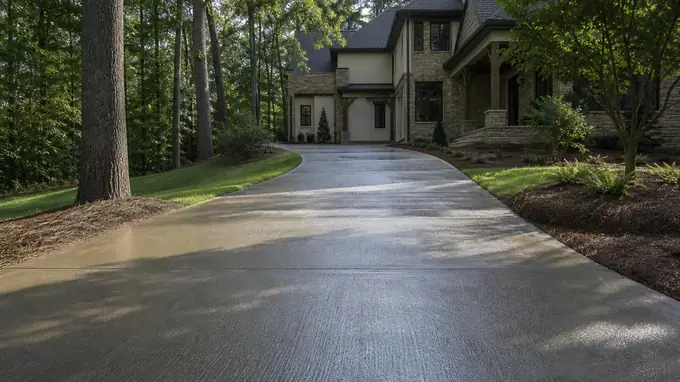
concrete driveway installation completed by a local contractor at a buff-brick ranch home in Sandy Springs, GA, under a hazy afternoon sky.

Concrete Driveway Installation

A driveway fails from the bottom up, so most of the work happens before the truck arrives. We dig to firm subgrade, compact a crushed stone base, and set forms with enough fall that water runs off rather than sitting. Residential driveways get 4 to 5 inches of concrete, with rebar or wire mesh held up on chairs so it ends up mid-slab. With about 50 inches of rain a year, drainage is planned from the start. Control joints decide where cracks go.

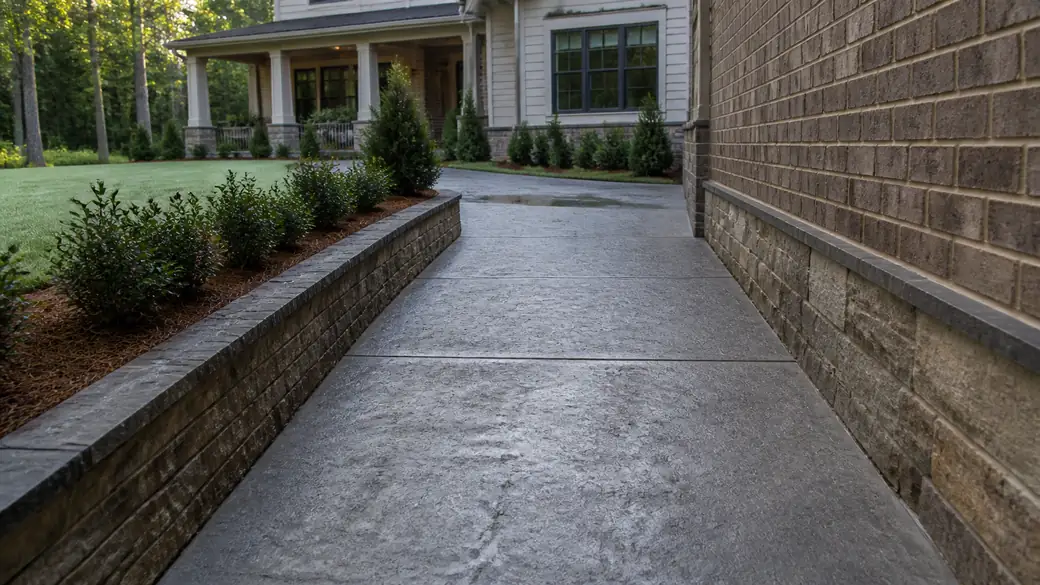
concrete flooring installation completed by a local contractor at a painted-white-brick two-story home in Sandy Springs, GA, under low winter sun.

Concrete Flooring Installation

Interior floors for garages, workshops, basements and commercial space start with a vapor barrier under the slab, so ground moisture does not come up through whatever gets laid on top later. We place the concrete, screed it flat, and finish it to suit the use: a hard steel trowel for a dense, clean surface, or a light broom where traction matters. Saw cuts go in early to control shrinkage cracking. Sealers and polished finishes are options once it cures.

concrete slab repair completed by a local contractor at a stacked-stone and stucco home in Sandy Springs, GA, in raking morning side light.

Concrete Slab Repair

Not every cracked slab needs tearing out. A hairline shrinkage crack is cosmetic. A crack with one side higher than the other, or a slab that rocks underfoot, points to voids or soft ground underneath, and we find out which before quoting anything. Small, stable cracks get routed and filled. Where the base has washed out or the concrete has broken into pieces, replacing that section on a properly compacted base is the repair that lasts.

Concrete Sidewalk Installation

Sidewalks and walkways are usually 4 inches thick on a compacted gravel base, formed with a slight cross-slope so rain sheds to one side instead of pooling. Soil across Fulton County is mostly well-drained Rion, but it varies, so we test each site before we pour. Control joints go in at regular intervals, roughly as far apart as the walk is wide. Expansion joints go where the walk meets a driveway, steps or the house. A broom finish gives grip when wet.

Why Choose Sandy Springs Concrete Pros

A sidewalk looks like the simplest pour on a property, and that is exactly why it gets rushed. We treat it as a structural job. Rion soil is the dominant type across Fulton County, but it varies from one part of the county to another, so we test every site before any forms go down. The base gets compacted in lifts, the reinforcement sits where it belongs in the slab, and the control joints go in at spacing that lets the concrete crack where we choose, not where it wants.

Water decides how long a walk lasts. The area gets about 50 inches of rain a year, so we set a slight cross-slope on each run to shed it off the surface and away from the house, and we finish with a broom texture that keeps footing sure when it is wet. Ask us anything on site and you get a straight answer, including when a repair makes more sense than a new installation. Call for a free estimate on your College Park sidewalk.

What to Expect on a College Park Concrete Job

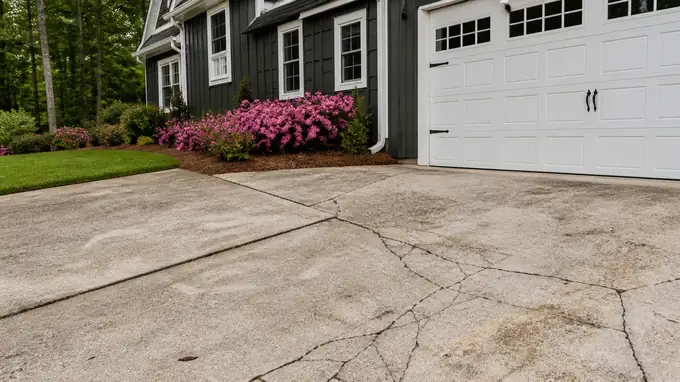
A worker examines an old driveway before replacement. at a charcoal farmhouse-modern home in Sandy Springs, GA, in full afternoon sun.

Step 1: Site Assessment

We walk the route the sidewalk will take and look at where water goes now, because a walk that fights the drainage will crack or pond. Rion soil, which is well drained, is Fulton County's dominant type, but it varies from lot to lot, so we test every site before work starts. We also mark utilities, tree roots, grade changes and the points where the new walk has to meet steps, a driveway or an existing slab.

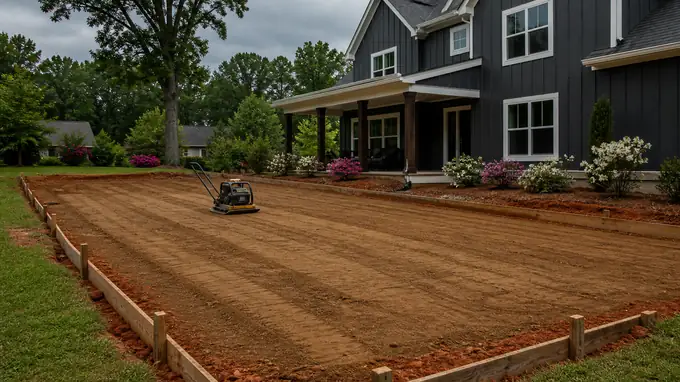
A plate compactor tamps down soil in a small excavated area. at a charcoal farmhouse-modern home in Sandy Springs, GA, under a darkening storm sky.

Step 2: Site Preparation

Digging out comes first. We remove sod, roots and soft material down to firm ground, then lay a compacted gravel base in lifts so it does not settle unevenly later. Most sidewalk failures start here: a base that was dumped instead of compacted, or organic soil left under the slab. The subgrade gets a gentle cross slope so water sheds off the walk. With about 50 inches of rain a year, that pitch matters more than people expect.

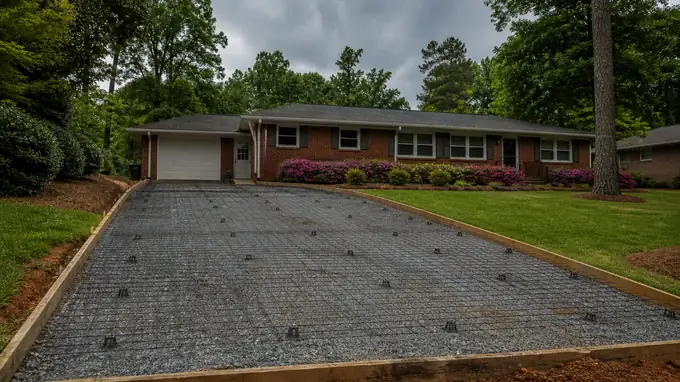
Wire mesh is unrolled across a driveway base before pouring. at a red-brick ranch home in Sandy Springs, GA, under a darkening storm sky.

Step 3: Forming & Reinforcement

Forms set the shape, height and slope of the finished walk, so they are staked straight and checked with a level and string line before any concrete arrives. Inside them goes the reinforcement: welded wire mesh or rebar, held up on chairs so it sits in the middle of the slab rather than on the ground, where it does nothing. Where the walk crosses a driveway apron, we thicken the section to carry vehicle weight.

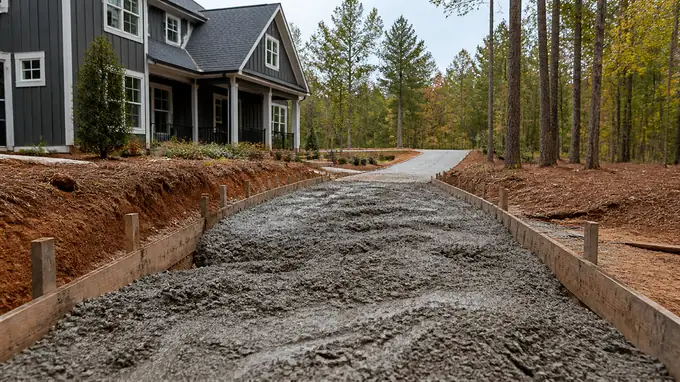
A ready-mix truck discharges concrete into a driveway form. at a charcoal farmhouse-modern home in Sandy Springs, GA, under a hazy afternoon sky.

Step 4: Pouring

On pour day the truck backs as close as the site allows, and we place concrete from one end of the forms to the other without long pauses, since a gap lets one batch start setting before the next arrives and leaves a cold joint. The mix is screeded flat to the tops of the forms and consolidated so there are no voids. Adding water at the truck makes pouring easier and the slab weaker, so we don't.

Stamping mats are pressed into a patio surface to imprint a pattern. at a stacked-stone and stucco home in Sandy Springs, GA, under low winter sun.

Step 5: Finishing

Timing decides the finish. We wait for bleed water to leave the surface before floating, because working it in early leaves a weak, dusty top that flakes. Edges get rounded with an edging tool, and control joints are tooled or saw-cut to tell the slab where to crack. Skip them and the slab picks its own lines, usually crooked ones. A broom finish is standard for sidewalks because it gives grip in the wet.

A hand sprayer applies curing compound to a finished patio. at a tan-brick colonial in Sandy Springs, GA, under an overcast sky.

Step 6: Curing

Concrete keeps gaining strength for weeks, and the first few days set how strong it ends up. We hold moisture in the slab with curing compound or wet coverings, so the surface does not dry faster than the concrete underneath; that mismatch causes shrinkage cracks and a soft, dusting top. Foot traffic can usually come back within a couple of days. Cars stay off longer, and we tell you when the slab is ready for them.

A sprayer applies sealer across a driveway. at a stacked-stone and stucco home in Sandy Springs, GA, under low winter sun.

Step 7: Sealing

Sealer goes on only after the concrete has cured enough to release its moisture; seal too early and water gets trapped underneath, leaving a cloudy, blotchy surface. For sidewalks we use a penetrating silane or siloxane sealer. It soaks in rather than forming a film, so the walk stays grippy when wet while water, oil and tannin from fallen leaves have a harder time getting into the slab. Resealing every few years keeps that protection working.

The Concrete Options Available in College Park

A plain broom finish is where most sidewalks start, and for good reason. The light texture gives shoes some grip when the surface is wet, and it takes years of foot traffic without fuss. From there the choices open up. Exposed aggregate brings the stone in the mix to the surface and hides dirt well. Stamped concrete can take on the look of brick, slate or flagstone, and color can run through the whole slab or be worked into the top. A smooth border framing a broom-finished center is a simple decorative touch that suits most homes.

Underneath the finish, the decisions matter just as much. We choose the reinforcement for each project, wire mesh or rebar, based on what the walk has to carry and what the site test tells us. This part of Georgia sees about 50 inches of rain a year, so slope and drainage get planned before any forms go down, and water runs off the walk instead of sitting on it. Control joints are cut so that any cracking follows a straight line rather than wandering. Stamped and colored surfaces need resealing now and then to hold their look. A broom finish asks for very little.

College Park Questions

Is Sandy Springs Concrete Pros licensed, insured, and bonded?

Those are the right things to ask, and you should see the answers on paper instead of taking them from a web page. Before any concrete contractor starts work on your property, ask for a license number, a current certificate of insurance and proof of any bond. Then check each one yourself with whoever issued it. A contractor who is set up properly hands those over without any fuss.

Are you licensed and insured?

We'd point you to the same answer: verify it, don't read it. A line on a website costs nothing to write, and a sidewalk or driveway sits on your property for decades. When you get an estimate from anyone, ask whose name is on the insurance certificate, what it covers and when it expires. On a College Park job that runs along a public walk, also ask who is responsible if someone trips during construction.

Can commercial driveways in College Park be repaired while staying open to traffic?

Yes, in most cases. We split the driveway into sections and work them one at a time, so part of the entrance stays open while the rest is torn out, reinforced and poured. Cones and barricades keep cars off fresh concrete until it has cured enough to carry weight. How many phases a lot needs depends on its layout, how many entrances it has and when your busiest hours fall.

How does the climate in College Park affect patio longevity and what does your company do to mitigate these effects?

Water does most of the damage here. The area sees about 50 inches of rain a year and only about an inch of snow, so we build patios around drainage more than cold. That means a compacted base, a slope that sheds water away from the house, control joints placed where cracks would otherwise pick their own line, and reinforcement sized to the slab. Soil varies, so every site is tested before work starts.

What's the difference between acid stain and water-based stain?

Acid stain reacts chemically with the lime in cured concrete. The color becomes part of the surface, and it comes out mottled and uneven in a way that reads like stone or leather, mostly in browns, tans and muted greens. Water-based stain doesn't react. It soaks into the surface and leaves pigment behind, which gives you a wider range of colors and a more even finish. Both need a sealer over them.

Should a damaged College Park patio be repaired or replaced?

It depends on what's under the damage. Surface scaling, a few hairline cracks or one sunken section can usually be repaired, and repair makes sense when the base underneath is still sound. Wide cracks running across the slab, heaving, or settling in several places usually point to a failed base, and patching the top won't fix that. We find the cause before recommending either. Call for a free estimate.

Get a Free Estimate

Get FREE Estimates

Tap to call +1 470-740-7099