+1 470-740-7099
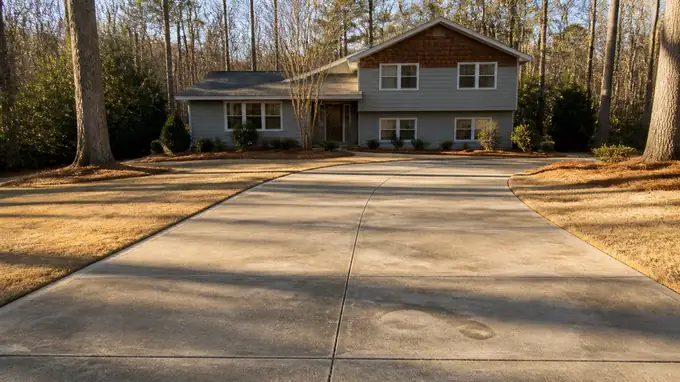
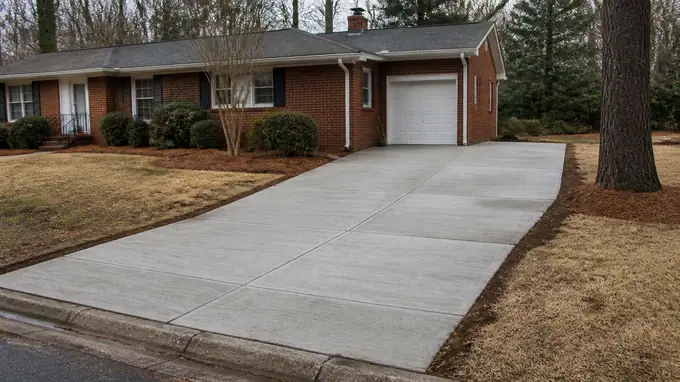
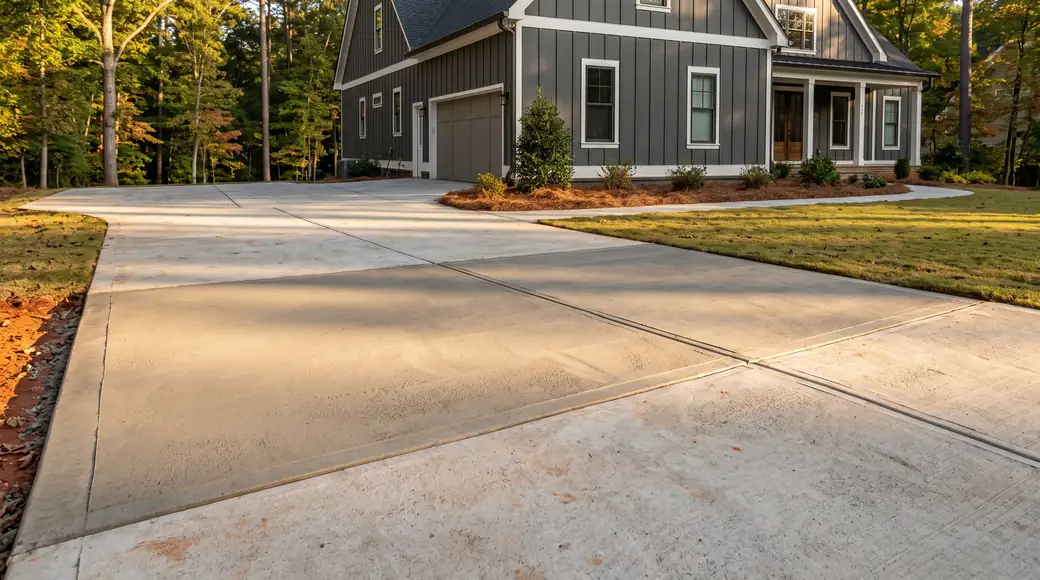
Replaced concrete driveway panel with clean saw-cut edges at a charcoal farmhouse-modern home in Sandy Springs, GA, in late afternoon light.

Repair, Leveling & Resurfacing in Sandy Springs, GA

We are a concrete contractor working almost entirely on properties that already have concrete on them. Most jobs are replacement rather than new build: a driveway that has outlived its base, a front walk that shifted, a patio slab that cracked and then kept cracking. We pour new work too. It is the smaller share. Repair, leveling and resurfacing take up most of our week, because that is what the houses around here actually need.

Sandy Springs filled in early. Suburban development began in the 1950s, the housing boom followed highway construction in the early 1960s, and infill carried on through the 1980s. Flatwork from those decades has had time to settle, get patched once by somebody, and settle again. Lots here are rolling and wooded, so a driveway running down a grade is a different animal from one sitting level, and we build the two differently.

Cracks that keep travelling, edges crumbling under a tire, one sidewalk panel standing proud of the next: that is the daily list. Some of it is plain gray slab. Some is stamped concrete a previous owner picked out, which makes matching the surrounding surface part of the job rather than an afterthought. We do the same work across the line in Dunwoody. Call for a free estimate on whatever you have on the ground.

Call +1 470-740-7099

Licensed, Bonded, and Insured ยท A combined 15 years of experience

Get FREE Estimates

We warranty all of our work because we believe in what we do.

What Repair, Leveling & Resurfacing Involves

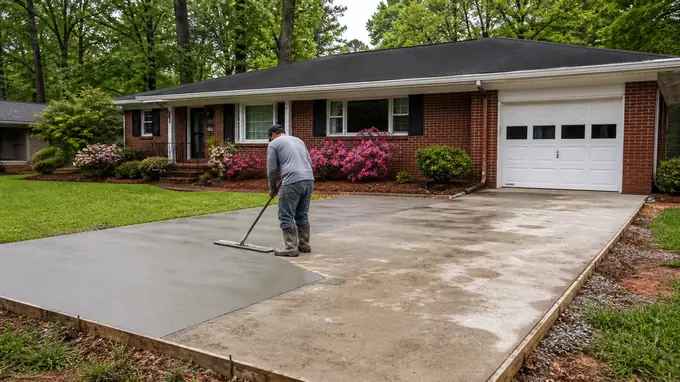
Thin concrete overlay being troweled onto an old worn slab at a red-brick ranch home in Sandy Springs, GA, after a rain shower.

Concrete resurfacing

Resurfacing puts a new wearing surface over a slab that is still sound underneath. We grind and clean the old concrete, patch the spalled areas, then bond a polymer-modified overlay across the whole pour. Stamped concrete and colored finishes both go down at this stage, so a plain slab can come back looking like tooled stone. What resurfacing will not fix: a panel that rocks, cracks that keep moving, or washed-out subgrade.
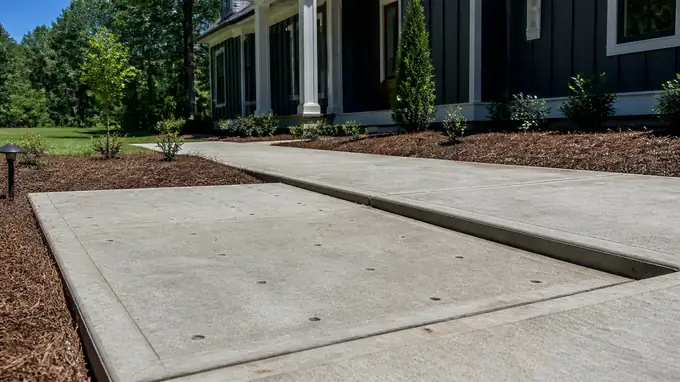
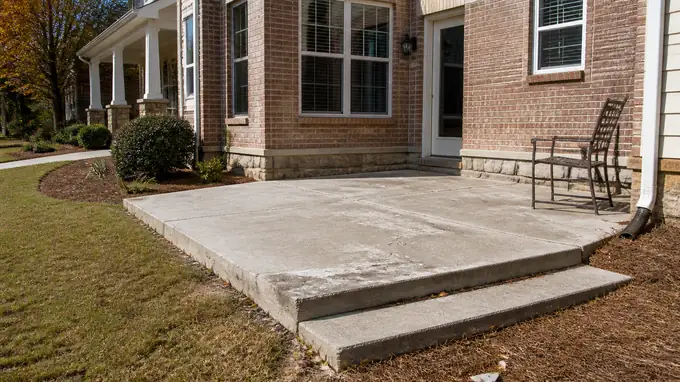
Sunken concrete slab with small drill holes for leveling at a charcoal farmhouse-modern home in Sandy Springs, GA, in clear late-morning sun.

Concrete leveling

Slabs settle. A concrete sidewalk panel drops at one joint, a driveway apron sinks away from the garage, a patio starts tipping back toward the house. Leveling returns the low section to grade by filling the void beneath it instead of tearing out good concrete above. We look for the cause first, usually a leaking downspout line, poor compaction under the original pour, or tree roots. Fix that and the repair holds.

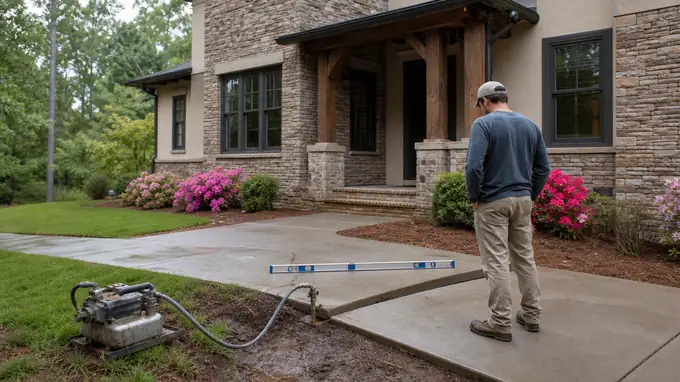
Slab-jacking pump lifting a sunken concrete slab back level at a stacked-stone and stucco home in Sandy Springs, GA, after a rain shower.

Concrete lifting

Lifting is the mechanical half of that work. We drill small ports through the slab, inject material underneath, and raise the panel in stages until it meets its neighbor clean. The ports get patched. Good candidates stay in one piece: front steps, sidewalks, garage floors, pool decks. A slab already broken into three or four pieces gets replaced instead, because lifting fractured concrete only spreads the cracks wider.

Concrete slab leveled with small patched holes from mudjacking at a grey split-level home in Sandy Springs, GA, in late afternoon light.

Mudjacking

Mudjacking is the older approach, a slurry of sand, soil and cement pumped through bored holes to float the slab back up. The material is heavy and wants firm bearing soil beneath it. Foam weighs far less and sets faster. Any concrete contractor should tell you plainly which one fits your slab. On commercial concrete where a walk has to go back into service quickly, foam usually wins.

Repair, Leveling & Resurfacing in metro Atlanta

Most of the concrete we pour here goes down where concrete already sits. Suburban development in Sandy Springs started in the 1950s, picked up hard in the early 1960s once the highway construction brought people out this way, and kept filling in through the 1980s. Driveways, sidewalks and patios from those decades have carried a lot of weight for a long time, and most of them have stopped holding the line. What we see is flatwork at the end of a long working life rather than concrete that failed early, and that changes what the right fix is.

Settling is the usual reason the phone rings. A driveway drops at the apron, a sidewalk panel lifts at a joint until it catches a toe, or a slab surface roughens and begins shedding sand. Older flatwork was often poured thin, and a good deal of it went in with no rebar and no wire mesh, which is why it splits in long clean lines instead of holding together through a crack. Lots around here are rolling and wooded, so a driveway rarely runs dead flat to begin with.

Leveling or resurfacing can buy a sound slab another long stretch of service, and on concrete that has broken up underneath, neither one is worth your money. We look at thickness, at what the base is doing, and at how the cracking runs before we say which it is. You get the reasoning either way, whether the job is a front walk in Sandy Springs or a full driveway out toward Roswell. Concrete work on a house this established should match what is already there, in grade, in color and in how it meets the garage. Call for a free estimate.

How the Work Runs

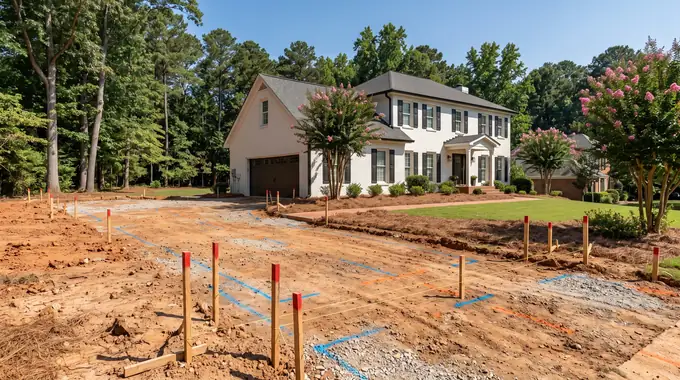
String lines and grade stakes laid out across a yard before a pour at a painted-white-brick two-story home in Sandy Springs, GA, in clear late-morning sun.

Step 1: Site Evaluation

We walk the slab with you and look at what the concrete is telling us. Hairline cracking, spalled surface, settled panels, a driveway apron that has dropped away from the garage slab. We check drainage, look for tree roots under sidewalks, and probe the base where a corner has sunk. Then we say whether the pour is worth saving or whether replacement is the honest answer.

Concrete driveway and walk at a home, the kind of job an estimate covers at a stacked-stone and stucco home in Sandy Springs, GA, in early morning light.

Step 2: Written Estimate and Permits

You get the scope in writing: square footage, slab thickness, reinforcement, finish, and what gets torn out. Where a repair turns into full concrete installation, we say so plainly rather than letting it grow midway through the job. Permits get pulled where the work requires them, and we handle that paperwork before anything gets broken up.

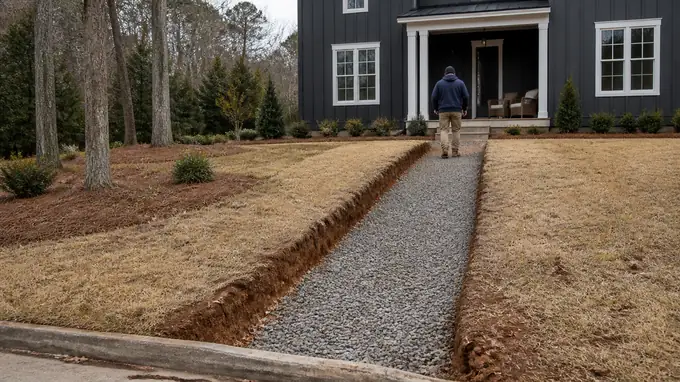
Broken-out concrete removed and the base rebuilt before a new pour at a charcoal farmhouse-modern home in Sandy Springs, GA, after a rain shower.

Step 3: Demolition and Base Prep

Old concrete comes out in sections and gets hauled off. Most failures we see on a concrete driveway trace back to the base, not the mix, so this is where the time goes. We dig out soft or organic soil, bring in compactable stone, and run a plate compactor over it in lifts. Grade gets set to move water away from the house.

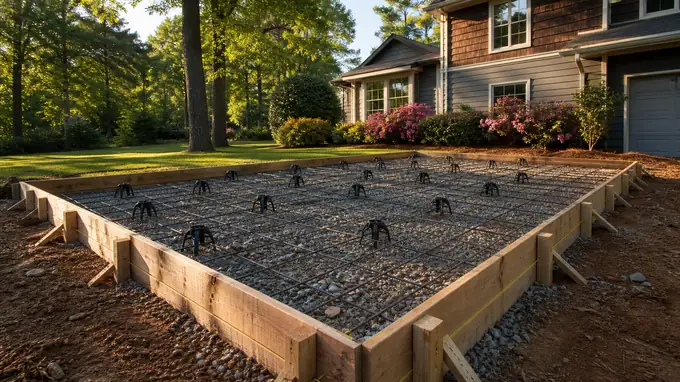
Wooden forms and rebar grid set and tied, ready for concrete at a brick-and-siding two-story home in Sandy Springs, GA, under an overcast sky.

Step 4: Forming, Steel and the Pour

Forms get staked and strung to line, with fall built in so puddles do not sit. Driveways get four inches of concrete over compacted base, thicker where a truck turns, with rebar on chairs at drive thickness and wire mesh where sidewalks call for it. Steel sits in the middle of the slab, not on the ground. We pour, screed, and bull float in one continuous run.

Freshly finished concrete slab curing under a clean broom texture at a grey split-level home in Sandy Springs, GA, under bright midday cloud.

Step 5: Finishing, Curing and Final Walkthrough

Finish depends on the surface. Sidewalks get a broom texture for grip, patios can take stamped or exposed aggregate, and colored concrete gets integral pigment rather than a topical stain that wears off the traffic lanes. Control joints go in early, roughly at intervals matching slab thickness, because concrete cracks where you tell it to or where it chooses. Curing follows, then we walk it with you.

Vehicles stay off new driveways while the slab gains strength, and we tell you when that changes. Foot traffic on sidewalks comes sooner. We clean up forms, stakes, washout and debris, then go over joint layout, sealing, and what to watch in the first season.

What Decides the Price

Two driveways of the same size can land far apart, and the reasons are usually visible from the curb. Most of the number comes from condition and access, not from the finish you pick. Here is what we look at on a walkthrough.

What changes the priceWhich wayWhy
Old slab still sound underneathCosts lessResurfacing over solid concrete skips demolition and haul off entirely.
Sections that have settled over voidsCosts moreWashed out subgrade gets filled and compacted before any new flatwork goes down.
Mixer can back within a hose length of the pourCosts lessConcrete moved by wheelbarrow adds labor to every yard placed.
Gate, fence or narrow side yard in the wayCosts moreCrews hand carry material and tools past the pinch point all day.
Rebar called for instead of wire meshCosts moreA driveway carrying vehicle loads needs heavier reinforcement than a sidewalk does.
Water standing on the surface after rainCosts moreSlope has to be rebuilt, which usually means replacement rather than repair.
Stamped, colored or exposed aggregate finishCosts moreForming, releasing and sealing decorative concrete keeps more hands on site longer.

Compare bids on slab thickness, reinforcement, and what happens to the old concrete. Ask how joints are cut and spaced, what goes under the pour, and who hauls the debris. A lower bid often covers less ground.

Questions About Repair, Leveling & Resurfacing

What causes concrete to sink in Sandy Springs, Georgia?

Water and time, mostly. Soil under a slab washes out or settles, and the concrete follows it down. Downspouts that dump beside a driveway are a common culprit, along with poorly compacted fill from the original pour. On rolling, wooded lots, runoff finds a path under flatwork and keeps taking material with it. Tree roots lift as often as voids drop.

How does concrete lifting work, and does it last in Georgia?

We drill small ports through the slab, inject material underneath to fill the void, and the pressure raises the concrete back to grade. The holes get patched. It lasts when the cause is fixed too: correct the drainage that emptied the soil, and the fill stays put. Skip that step and the same slab settles again.

Is my Sandy Springs concrete worth repairing, or should it be replaced?

Depends on what the cracking tells us. A slab that sank as one piece, or has a few clean cracks and a sound surface, is a good repair candidate. Concrete that crumbles under a screwdriver, has spiderwebbed across most of its area, or sits on failed subgrade has run out of life. We look at thickness, edges and drainage, then say which one it is.

Will a resurfaced Sandy Springs slab match the concrete next to it?

No, not exactly. New concrete cures lighter and darkens over the first year or two, so a fresh overlay reads different against a driveway that has weathered since the 1980s. It closes some of the gap with time. When the difference matters, we resurface to a natural break like a control joint or an apron edge, or carry a color or stamped finish across the whole area.

Is repair cheaper than replacement for a Sandy Springs driveway?

Usually, yes. Lifting and resurfacing keep the existing slab, which means no demolition, no hauling and much less new concrete, rebar or wire mesh. The math changes when a driveway needs repair in several places at once, or when the base underneath has to be rebuilt anyway. At that point tearing out and pouring new gets you a longer-lived driveway for similar effort.

How soon can we walk on repaired concrete in Georgia weather?

Foot traffic comes back quickly on lifted slabs, often the same day, since the concrete itself was already cured. Fresh pours and overlays need longer, and vehicles need longer still. Heat speeds the set, rain and cool damp weather slow it. We tell you the specific windows for your slab before we leave the site.

Get a Free Estimate

Get FREE Estimates

We warranty all of our work because we believe in what we do.

Tap to call +1 470-740-7099