+1 470-740-7099
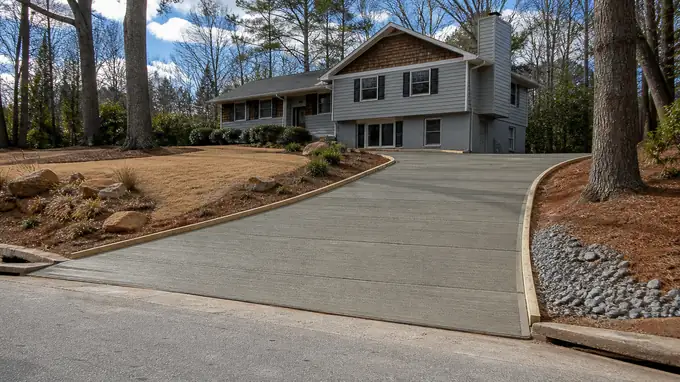
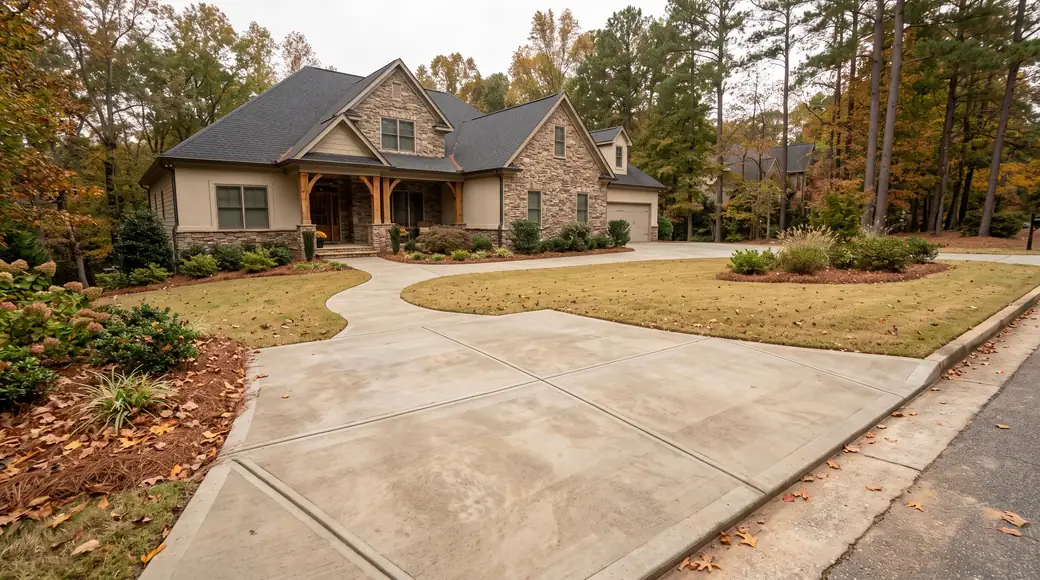
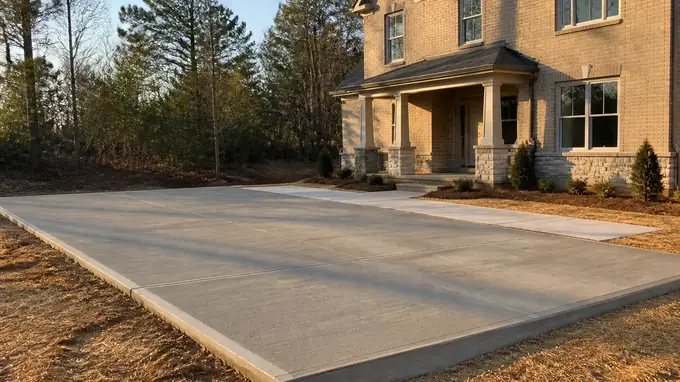
Wide view of finished concrete flatwork across the front of a home at a stacked-stone and stucco home in Sandy Springs, GA, under an overcast sky.

Concrete Repair And Resurfacing in Sandy Springs, GA

Concrete around a Sandy Springs home rarely fails all at once. A driveway settles at one corner, a patio surface starts to flake, a walk lifts where a root has pushed under it, and the slab that was fine last spring now holds a puddle. With the median house here built in 1988, a lot of that concrete has been carrying cars and weather for decades. We repair what can be saved, resurface what is sound underneath, and tell you plainly when neither will hold.

Most concrete damage starts with water. This area gets about 50 inches of rain a year, and it finds every crack, open joint and low edge on a slab. Once it gets under the concrete, the base softens and the surface above it follows. A resurfacing coat laid over that kind of movement looks good for a season, then cracks along the same lines. So we look at drainage and the base first, and some jobs need structural repair before any new surface goes down.

Getting it right means the repair matches what failed. Soil and grade change from one lot to the next, so we test and check every site on its own before any work starts. Sometimes the fix is a patch and a sealed joint. Sometimes it means cutting out a section, adding reinforcement and pouring new, or laying a stamped or decorative overlay on a driveway that is solid but tired. Call for a free estimate on your driveway, patio or walkway.

Call +1 470-740-7099

Get FREE Estimates

Our Concrete Repair And Resurfacing Work in Sandy Springs

concrete slab installation completed by a local contractor at a brick-and-siding two-story home in Sandy Springs, GA, in late afternoon light.

Concrete Slab Installation Cost

What a slab costs comes down to what sits under it and what it has to carry. A pad for a shed or AC unit needs less base and less steel than a garage floor holding a loaded truck. We break the scope into excavation, compacted gravel base, reinforcement, forming, finish and haul-off, so you can see exactly what you are paying for. Call for a free estimate on your slab.


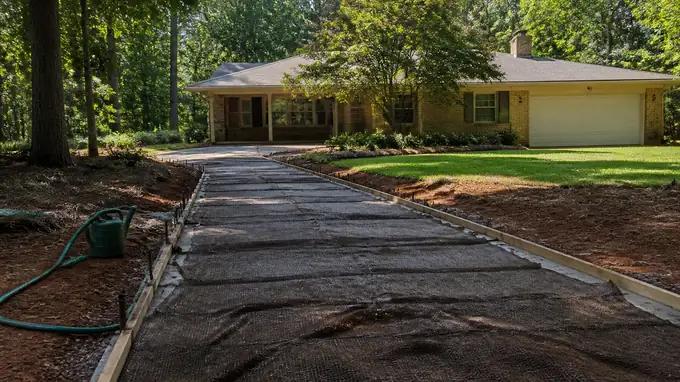
concrete driveway installation completed by a local contractor at a buff-brick ranch home in Sandy Springs, GA, under a hazy afternoon sky.

Concrete Driveway Installation

Most driveways we pour replace one that cracked across the middle or sank at the apron. We break out the old concrete, cut the grade so water sheds off the surface and away from the garage, and compact a crushed-stone base. With about 50 inches of rain a year, that drainage matters more than the finish. Rebar sits on chairs mid-slab, joints get cut on time, and you choose broom, exposed aggregate or stamped.

concrete flooring installation completed by a local contractor at a painted-white-brick two-story home in Sandy Springs, GA, under low winter sun.

Concrete Flooring Installation

Garage floors, basements, workshops and additions all start the same way: a compacted base and a vapor barrier under the pour. Skip the barrier and ground moisture works up through the slab, and glued-down flooring lets go within a few seasons. We finish to suit what goes on top. A hard steel trowel suits polishing or epoxy coatings. A smooth, flat surface suits tile or vinyl. Existing floors can be ground, patched and sealed instead.

concrete slab repair completed by a local contractor at a stacked-stone and stucco home in Sandy Springs, GA, in raking morning side light.

Concrete Slab Repair

The median home here was built in 1988, so many slabs we see have decades of use on them. Hairline shrinkage cracks get routed and sealed. Cracks that move or open wider get epoxy injection or a stitched repair with steel. Scaled, pitted surfaces take a bonded resurfacing overlay once the old top is ground clean. When a section has settled badly or the base underneath has washed out, we tell you plainly that replacement is the better call.

How a Concrete Repair And Resurfacing Job Runs in Sandy Springs

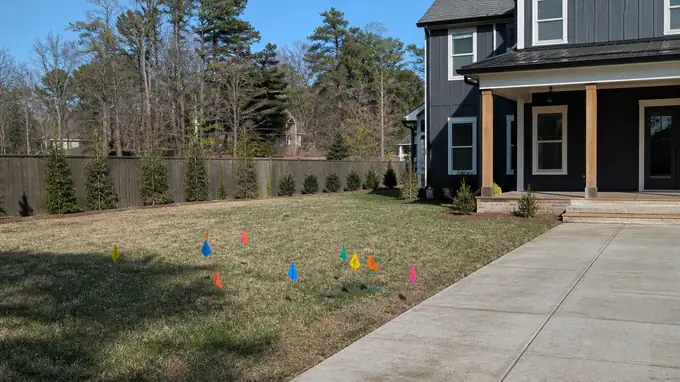
Utility flags mark buried lines before digging starts. at a charcoal farmhouse-modern home in Sandy Springs, GA, in full afternoon sun.

Step 1: Site Assessment

We start by walking the slab and working out why it failed, because that answer decides whether it gets resurfaced, patched or cut out. Hairline shrinkage cracks, scaling, spalled edges and a section that has dropped at a joint are different problems with different fixes. We sound the surface for hollow spots, check how water runs off, and look at the base where we can. With the median home here built in 1988, plenty of these slabs have simply earned their wear.

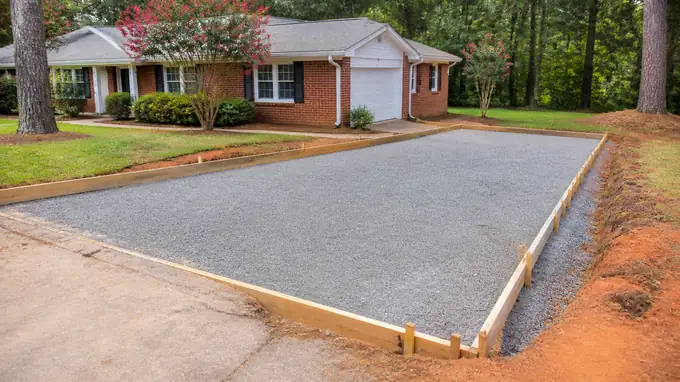
Crushed stone base is raked level inside driveway forms. at a red-brick ranch home in Sandy Springs, GA, under bright midday cloud.

Step 2: Site Preparation

Overlays fail at the bond, so most of the real work happens before any new material shows up. We grind or shot-blast the surface to open it up, wash out the dust, and rout cracks wide enough to take a proper repair. Loose and delaminated concrete gets chipped back to sound material. Where a section has to come out, we saw-cut it clean, dig out the base and recompact it. Every site is tested on its own before work starts.

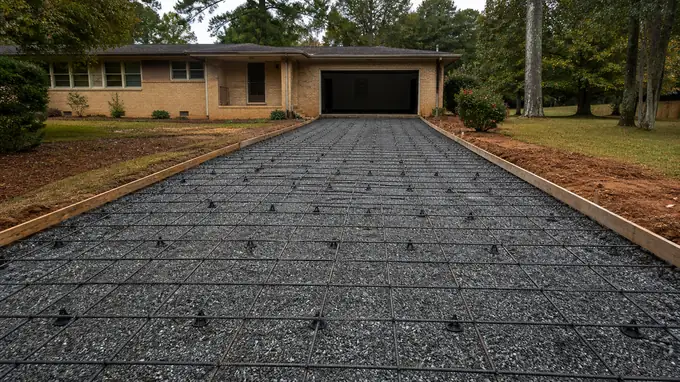
A worker ties rebar into a grid before a residential pour. at a buff-brick ranch home in Sandy Springs, GA, after a rain shower.

Step 3: Forming & Reinforcement

Replaced sections get forms set to the grade of the slab around them, with enough pitch to shed water away from the house. We drill into the existing concrete and epoxy in rebar dowels so the new pour and the old one move together instead of splitting at the joint. New sections get a rebar grid set up on chairs, not mesh left lying in the dirt. Resurfacing jobs skip the forms and get crack-bridging fabric over the repaired cracks instead.

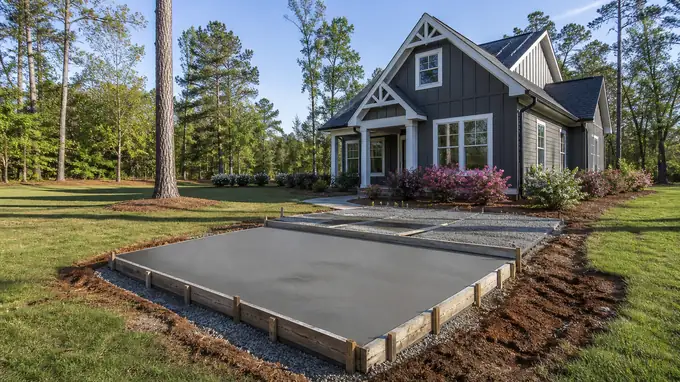
A screed board levels fresh concrete on a small patio. at a charcoal farmhouse-modern home in Sandy Springs, GA, under low winter sun.

Step 4: Pouring

We order ready-mix to the strength the section needs and place it without adding water at the truck, which is the quickest way to weaken a slab. For overlays, we mix polymer-modified cement in small batches and spread it over a primed surface so it grabs. The forecast gets watched closely. Sandy Springs sees about 50 inches of rain a year, and fresh concrete does not want any of it landing on the surface before it sets.

A broom drags across a driveway creating a slip-resistant texture. at a grey split-level home in Sandy Springs, GA, under broken cloud.

Step 5: Finishing

This is where the surface gets its final look and its grip. Poured sections are screeded, floated and broom-finished across the slope so they stay walkable when wet. Control joints are tooled or saw-cut so the next crack lands where we put it, not across the middle of the driveway. Overlays can be troweled smooth, given a knockdown texture, or stamped and stained for a decorative finish. We finish only after the bleed water is gone, never before.

Damp burlap covers a small slab section during curing. at a buff-brick ranch home in Sandy Springs, GA, in raking morning side light.

Step 6: Curing

Concrete gains strength slowly, and many of the surface problems we repair started with a slab that dried out too fast. We keep new work damp, covered or sprayed with a curing compound, depending on the weather and the material. Overlays follow the manufacturer's cure schedule, not a guess. Foot traffic comes back once the surface has set, and cars wait considerably longer on a driveway. Nobody enjoys the wait. It still beats doing the repair twice.

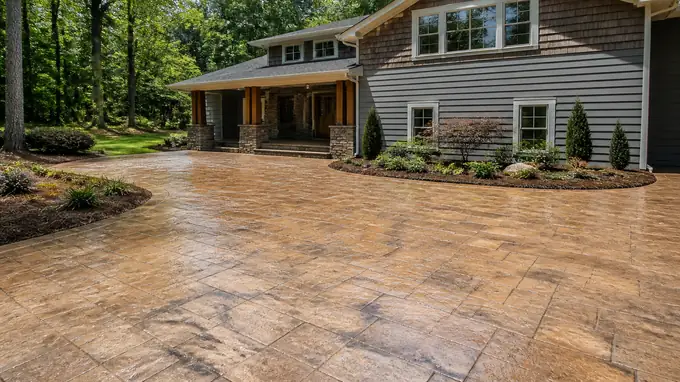
A finished stamped surface shows a glossy sealed sheen. at a grey split-level home in Sandy Springs, GA, in full afternoon sun.

Step 7: Sealing

A sealer is the last coat and the one that keeps the rest of the work looking right. Once the concrete has cured, we apply a penetrating silane or siloxane sealer to plain driveways and walks, or an acrylic that deepens the color on stamped and decorative surfaces. Either one slows down water, oil and stains soaking in. With this much rain every year, resealing is part of owning concrete. Water that stops beading on the surface is the sign it is due.

Concrete Systems and Materials for Sandy Springs

Resurfacing is a thin bonded layer, not a new slab. For driveways, patios and walks that are sound underneath but worn on top, we use a polymer-modified cement overlay, troweled or sprayed on and finished smooth, broomed or stamped. Cracks get their own treatment. Structural cracks are opened and filled with an epoxy or polyurethane injection, while hairline and surface cracks are routed and sealed so water stays out. Spalled edges are cut back square and patched with repair mortar before any overlay goes down.

Choosing between these starts with the slab, not the catalog. The median home here was built in 1988, so plenty of driveways and patios have had decades to settle, crack and wear. We check whether the concrete underneath is still solid and whether it has moved. Rion soil, which drains well, is the county's most common type, but it changes from one lot to the next, so we test every site on its own. A slab that is still shifting gets repaired or replaced. It does not get a cosmetic coat.

Most failures we are called out to fix trace back to preparation. An overlay only holds if it bonds, which means grinding or shot-blasting the old surface clean, opening the pores, and priming it first. Skip that and the new layer lifts in sheets. Water is the other problem. The area sees about 50 inches of rain a year, so we keep slopes running away from the house, carry the existing control joints through the new surface, and finish with a sealer suited to it. Stamped and decorative work uses the same base materials, with more time spent on the finish.

What Decides the Price of Concrete Repair And Resurfacing

Most of the price of a repair is decided before anyone mixes material. It comes down to what the existing slab is doing, what has to come off it, and how hard it is to reach. The median home here was built in 1988, so many of the slabs we look at have already had one repair or coating. We walk the property with you and point each of these out on the concrete itself.

What changes the priceWhich wayWhy
Hollow spots or sunken sections when you tap or step on the slabcosts moreThe base has to be filled or the section replaced, because a new surface over a moving slab cracks again.
Cracks that run through the full depth, or edges at different heightscosts moreStructural cracks need cutting out and repair, not a cover layer.
Old sealer, paint or a worn overlay on the surfacecosts moreIt has to be ground off so the new material bonds to sound concrete.
A backyard patio with no gate wide enough for equipmentcosts moreMaterials go in by hand or by pump line instead of straight off the truck.
Downspouts emptying onto the slab, or water that sits after raincosts moreWe fix where the water goes first, or the repair fails the same way.
Tree roots lifting a sectioncosts moreRoots are cut back and that section is usually removed and replaced.
A thicker overlay or added reinforcementcosts moreMore material and more labor, where the slab and its load call for it.
A sound slab with only surface wear or scalingcosts lessClean, patch and resurface, with no demolition.

When you compare bids, lay them side by side line by line. Check whether each one covers removing old coatings, how cracks get repaired, the overlay thickness, any drainage work and hauling away debris. A lower number often means one of those lines is missing.

Get a Free Estimate

Get FREE Estimates

Tap to call +1 470-740-7099