+1 470-740-7099
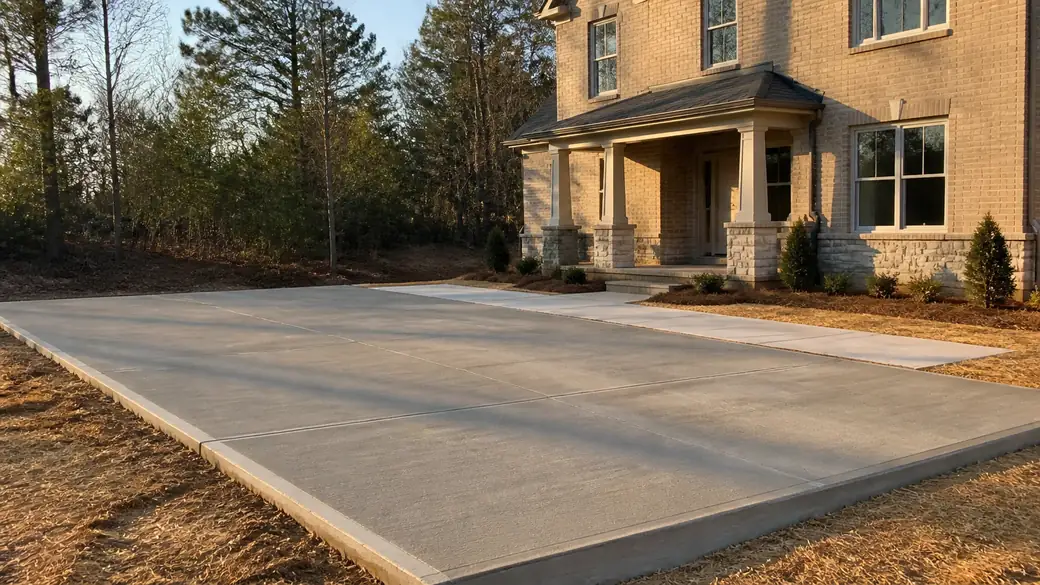
concrete slab installation completed by a local contractor at a brick-and-siding two-story home in Sandy Springs, GA, in late afternoon light.

Concrete Slab Installation in Candler-McAfee, Georgia

A slab is the flat, load-bearing surface that everything else sits on: a garage floor, a shed pad, a patio, the base under a home addition. We pour residential and light commercial slabs across Candler-McAfee, and we treat every one as a structural job first and a finished surface second. The thickness, the reinforcement and the base underneath are set by what the slab has to carry, not by what looks tidy on the day it is poured.

The work starts below grade. We test the soil on every site before anything else happens, because ground changes from one property to the next and a slab is only as steady as what holds it up. Then we set forms, compact a stone base, place the steel, and pour. Finishing follows the concrete, not the clock. Curing gets the same patience, since a slab that dries too fast gives up strength it never gets back.

Most slab failures trace back to shortcuts nobody sees at the time: a thin base, reinforcement left lying in the dirt instead of lifted into the pour, control joints cut late or skipped. Cracks, settling and standing water show up later, and by then the fix means breaking out concrete. Getting it right takes more attention and better materials up front, and far less trouble over the life of the slab. Call us for a free estimate on your project.

Call +1 470-740-7099

Get FREE Estimates

Concrete Services in Candler-McAfee

Concrete Slab Installation Cost

Three things set the number: how thick the slab is, what goes inside it, and how hard the site is to reach. A four-inch patio slab on compacted gravel costs less than a six-inch garage slab with rebar set on chairs. Tearing out old concrete, hauling in fill, or pumping over a fence all add to it. We price each job after walking the property and testing the site, so the estimate reflects your ground.


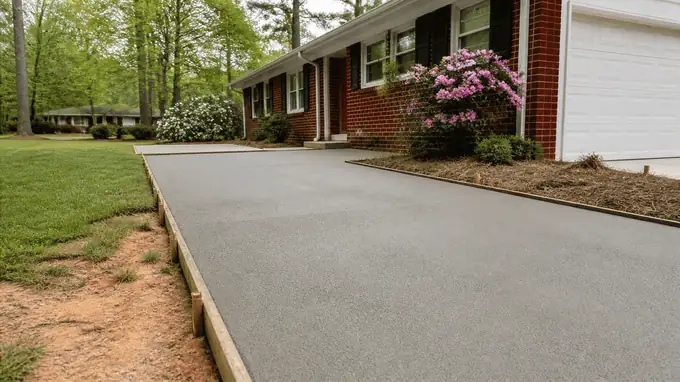
concrete driveway installation completed by a local contractor at a buff-brick ranch home in Sandy Springs, GA, under a hazy afternoon sky.

Concrete Driveway Installation

Most driveways fail at the base, not the surface. We dig down to firm subgrade, compact a bed of crushed stone, and pour at least four inches thick, going to five where trucks or trailers park. Rebar or wire mesh ties the slab together. Control joints are cut at planned spacing so any cracking happens where we choose. Finishes run from a plain broom texture to stamped and colored decorative work.

concrete flooring installation completed by a local contractor at a painted-white-brick two-story home in Sandy Springs, GA, under low winter sun.

Concrete Flooring Installation

Interior floors live or die by moisture. Under a basement, garage or workshop slab we lay a heavy polyethylene vapor barrier over compacted stone, so ground moisture does not wick up and lift tile, glue-down flooring or epoxy later. We power-trowel the surface flat and dense, then leave it bare, seal it, or prep it for a coating. A floor troweled too early dusts; one cured too fast curls at the edges. Timing matters.

concrete slab repair completed by a local contractor at a stacked-stone and stucco home in Sandy Springs, GA, in raking morning side light.

Concrete Slab Repair

Before quoting a repair, we find out why the slab moved. A hairline shrinkage crack is cosmetic and can be routed and sealed. A crack with one side higher usually means the base washed out or settled, and patching the top only hides it. Sunken sections can sometimes be lifted and the voids filled. Heaved or broken slabs get cut out and repoured with a proper base and new reinforcement.

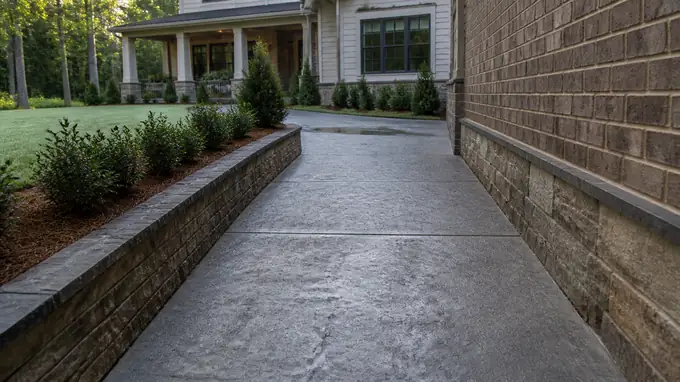
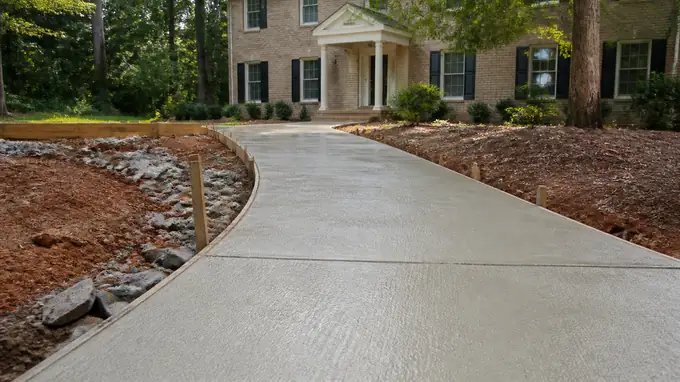
concrete sidewalk installation completed by a local contractor at a brick-and-siding two-story home in Sandy Springs, GA, in early morning light.

Concrete Sidewalk Installation

Walks carry people, not vehicles, so a four-inch slab over compacted stone is standard, with tooled joints at short, even spacing and a broom finish for grip when wet. With about 50 inches of rain a year, slope counts: we pitch every walk slightly away from the house so water sheets off instead of pooling at the foundation. Where a walk meets a driveway or steps, an expansion joint lets each surface move on its own.

What to Expect on a Candler-McAfee Concrete Job

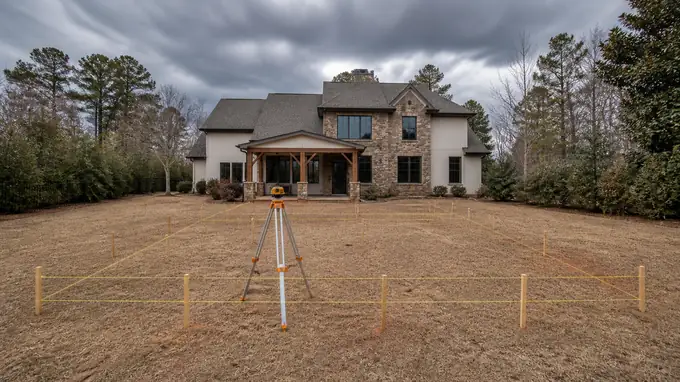
A contractor checks slope and drainage before work begins. at a stacked-stone and stucco home in Sandy Springs, GA, under a darkening storm sky.

Step 1: Site Assessment

Before anything is dug, we walk the property and test the ground where the slab will sit. Rion soil is Fulton County's dominant type and it drains well, but it varies across the county, so every site is tested individually. We check grade, where water runs after a storm, what the slab has to carry, and what is buried nearby. A patio and a driveway ask very different things of the same dirt.

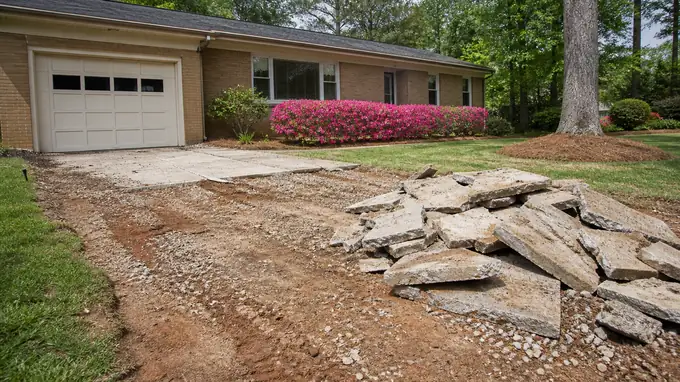
An old patio slab is broken up and hauled away. at a buff-brick ranch home in Sandy Springs, GA, in full afternoon sun.

Step 2: Site Preparation

Sod, roots and topsoil come out first, because organic material rots and leaves voids under a slab. We cut to grade, bring in crushed stone and compact it in lifts with a plate compactor until it stops moving. With about 60" of rain a year here, drainage gets planned now, not later. The finished base pitches water away from the house. Most slabs that crack badly failed underneath long before the surface showed it.

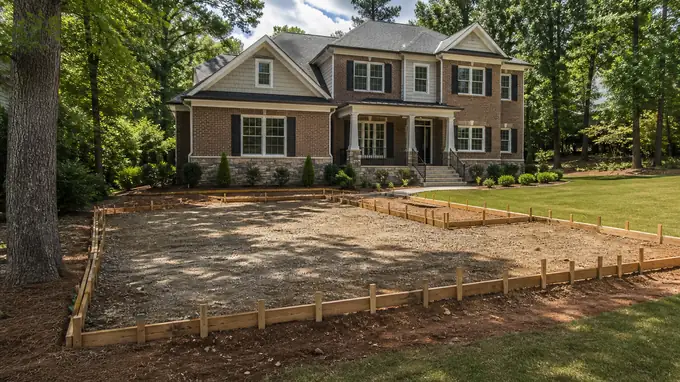
Wooden forms outline a patio slab before the pour. at a brick-and-siding two-story home in Sandy Springs, GA, under broken cloud.

Step 3: Forming & Reinforcement

Forms go up in straight lumber, staked tight and checked with a string line so the slab finishes flat with the right pitch. Reinforcement depends on the load. Patios and walkways usually get welded wire mesh; driveways and structural slabs get steel rebar tied in a grid. Either way it sits on chairs so it ends up in the middle of the slab, not pressed into the gravel where it does nothing. Isolation joint material goes wherever concrete meets the house.

A bull float smooths a residential walkway surface after screeding. at a tan-brick colonial in Sandy Springs, GA, under bright midday cloud.

Step 4: Pouring

Ready-mix arrives from the plant batched to the strength the project calls for, and we check it at the truck before it goes down. Adding water at the chute makes concrete easier to place and weaker once it sets, so we don't do it. The crew places it quickly, rakes it into the corners and screeds it level off the forms. A bull float follows, pushing the stone down, bringing the cream up and closing the surface.

A hand trowel smooths a small patio surface to a hard finish. at a red-brick ranch home in Sandy Springs, GA, under a hazy afternoon sky.

Step 5: Finishing

Timing matters more than technique at this stage. We wait for the bleed water to leave before working the surface, since troweling it back in leaves a weak top that flakes. Control joints get tooled or saw-cut so cracking happens where we choose. Driveways and walks get a broom finish for grip. Stamped and decorative surfaces get their color hardener, release agent and texture mats while the concrete is still workable, and that window is narrow.

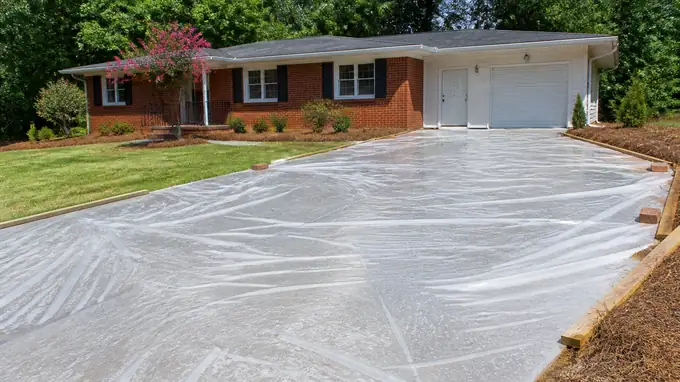
Plastic sheeting covers a curing driveway slab. at a red-brick ranch home in Sandy Springs, GA, in full afternoon sun.

Step 6: Curing

Strength keeps building for weeks after the slab looks hard, and concrete needs moisture to get there. We apply a curing compound or keep the slab covered and damp so the top doesn't dry faster than the bottom. Average daily highs and lows here sit around 72°F and 54°F, which is kind weather for a pour, but a hot, windy afternoon still pulls water out fast. Foot traffic waits until the surface can take it. Vehicles wait longer.

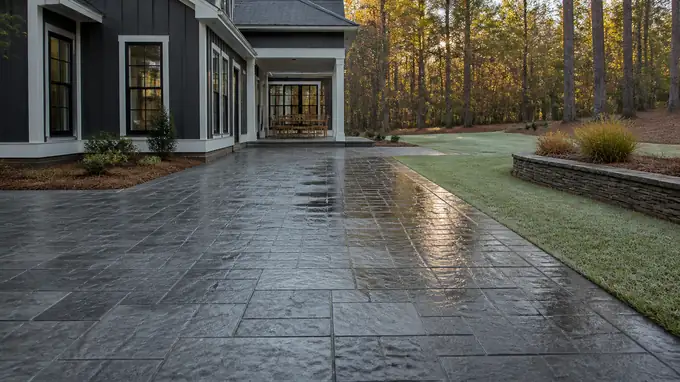
A roller applies sealer to a stamped patio surface. at a charcoal farmhouse-modern home in Sandy Springs, GA, in early morning light.

Step 7: Sealing

Sealer goes on once the slab has cured, not before, or it traps moisture and turns cloudy. On plain broom-finished concrete, a penetrating sealer soaks in and repels water and oil without changing the look. Stamped and colored work usually gets an acrylic sealer that deepens the color and adds a low sheen. Any sealer wears with traffic and weather, so resealing is part of owning the surface. Keep the product name; matching it makes that job simple.

The Concrete Options Available in Candler-McAfee

Most slabs we pour in Candler-McAfee end up with one of three finishes. A broom finish is the plain, gripping surface you see on most driveways and garage aprons, and it is the one we recommend wherever tires and wet shoes meet. Stamped concrete takes a pattern (slate, brick, cobble, wood plank) pressed into the surface while it is still workable, then sealed. Exposed aggregate washes back the top layer to show the stone in the mix. Color can go into the batch or onto the surface. Every one of these starts from the same structural slab.

What sits under the finish matters more than what sits on it. We test each site before forms go up, then grade the base and compact it in lifts so the slab carries load evenly. Reinforcement follows the job: rebar for driveways and anything that takes vehicle weight, welded wire or fiber for patios and walkways. Thickness works the same way. A patio and a driveway can look alike from the street and still need different construction underneath. We build for how the surface gets used, not how it looks on day one.

Water is what tests a slab here. With about 50 inches of rain a year, concrete that pitches toward the house, or sits flat enough to pond, shows it sooner than anyone would like. We slope every surface away from the foundation and cut control joints where the slab wants to crack anyway, so it cracks along the line instead of across the middle. Decorative finishes need resealing on a schedule to hold their color and grip. That upkeep is part of choosing them. Call for a free estimate to talk through which option fits your property.

Candler-McAfee Questions

What's the best foundation contractor in Candler-McAfee?

The one who asks about your ground before they talk about your slab. A good foundation contractor tests the site, explains the reinforcement they plan to use and why, and shows you where the forms will sit before any concrete arrives. Ask every contractor you meet to walk you through that plan. If the answers stay vague, keep looking. We are glad to walk you through ours on a free estimate.

How do you minimize dust, noise, and disruption on occupied Candler-McAfee properties during demolition ?

Water does most of the work. We cut concrete wet, which keeps silica dust on the ground instead of in your windows and vents. Where we can, we saw-cut slabs into sections and lift them out rather than hammering them apart, which is a good deal quieter. We agree on working hours and access routes with you beforehand, keep doors and walkways clear, and load debris straight into the truck so it never piles up.

How deep do commercial foundations need to be in Candler-McAfee?

Deep enough for the building that sits on them, and that answer comes from the structural engineer, the local code and the site itself. No single number holds for every commercial project. A light retail slab and a multistory footing are different jobs. We test every site before work starts, then build to the engineer's drawings: footing depth, width and reinforcement, exactly as specified. Nothing gets shortened because the digging got hard.

Can commercial driveways in Candler-McAfee be repaired while staying open to traffic?

Yes, in most cases. We phase the work, closing one section at a time and keeping a lane open for customers, deliveries and emergency access. Cones, signs and barricades mark the route clearly. Each repaired section stays closed until the concrete has cured enough to carry vehicles, and nothing opens early to save a day. On a busy lot, we schedule each phase around your quieter hours.

How does Sandy Springs Concrete Pros protect our property and keep the job site clean?

On any Candler-McAfee job, plywood goes down over lawns and soft ground before the first form does, wherever wheelbarrows and equipment will run. Plastic sheeting covers siding, doors and finished surfaces near the pour. Truck washout goes into a contained area, never a storm drain or your yard. At the end of each day we sweep, stack materials and haul off broken concrete. A work site in progress should still look cared for.

Should a damaged Candler-McAfee patio be repaired or replaced?

That depends on what failed. Hairline cracks, surface scaling and worn finishes can usually be repaired, and a resurfacing or decorative overlay can make an older patio look fresh again. When the slab has settled, heaved or cracked through in several places, the problem is underneath. Patching the top only hides it for a while. In that case, replacement with proper base preparation and reinforcement is the better use of your money.

Get a Free Estimate

Get FREE Estimates

Tap to call +1 470-740-7099