+1 470-740-7099
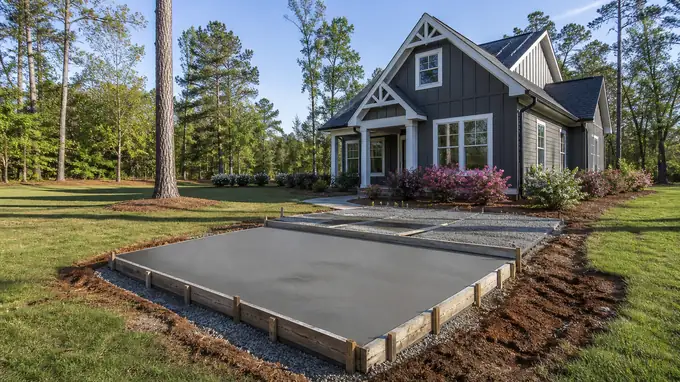
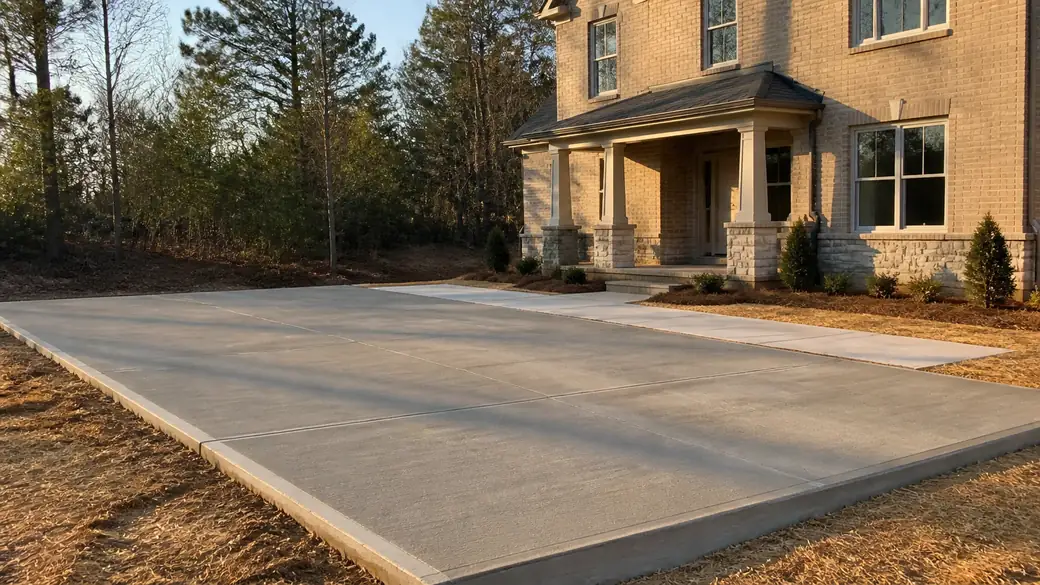
concrete slab installation completed by a local contractor at a brick-and-siding two-story home in Sandy Springs, GA, in late afternoon light.

Concrete Slab Installation in Berkeley Lake, Georgia

A concrete slab is the flat, load-bearing surface everything else sits on: a garage floor, a shed pad, a patio, the base under a hot tub or an addition. We pour slabs for residential property in Berkeley Lake, and the job is the same whatever the size. Get the ground right, get the reinforcement right, place the concrete at the right thickness, and finish it so water leaves the surface instead of sitting on it. A slab looks simple once it cures. Most of what decides whether it lasts is underneath it, where nobody looks again.

Every site is tested before any work starts, because soil changes from one lot to the next and the base has to suit what is actually there. From there we dig out, bring in and compact a stone base, set forms to grade, and lay steel or wire reinforcement on chairs so it ends up inside the slab rather than lying under it. Pour day is planned around the weather. The concrete is placed, screeded, floated and finished, then control joints are cut before the slab has a chance to crack wherever it pleases. Curing takes longer than most people expect, and we let it.

Water causes more slab trouble than anything else. This part of metro Atlanta sees about 50 inches of rain a year, so we plan every slab around where that water will go. A slab poured without enough fall holds puddles against the house. One placed over a soft or badly compacted base settles unevenly and cracks along the weak line. Leave out the reinforcement and hairline cracks open into wide ones. Each of these is simple to prevent while the ground is open, and hard to put right once the concrete has set. If you are planning a slab, call for a free estimate.

Call +1 470-740-7099

Get FREE Estimates

Concrete Services in Berkeley Lake

Concrete Slab Installation Cost

What a slab costs comes down to what goes under it and into it. Thickness, the compacted base beneath it, the reinforcement, how close the truck can get and how much ground has to be cut or filled all move the number. A patio slab on a level Berkeley Lake lot and a garage slab on a slope are different jobs. We measure and test the site, then price your slab from what we find. Call for a free estimate.


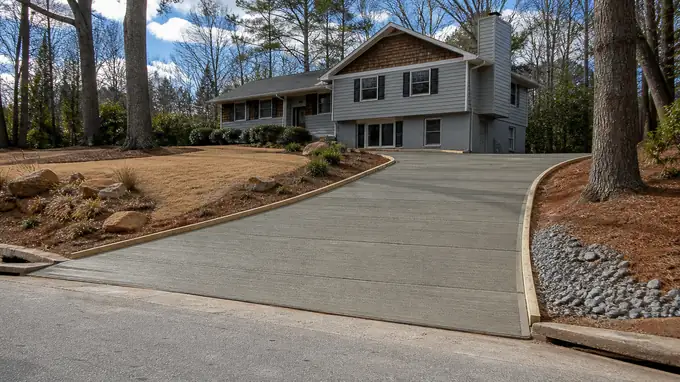
concrete driveway installation completed by a local contractor at a buff-brick ranch home in Sandy Springs, GA, under a hazy afternoon sky.

Concrete Driveway Installation

A driveway carries weight a patio never sees, so we pour it thicker, usually five inches, with rebar set on chairs so the steel sits in the middle of the slab instead of lying in the dirt. Most driveway cracks trace back to a soft base or joints cut too late. We compact a gravel base, saw control joints within hours of finishing, and leave a broom texture that holds its grip in the rain.

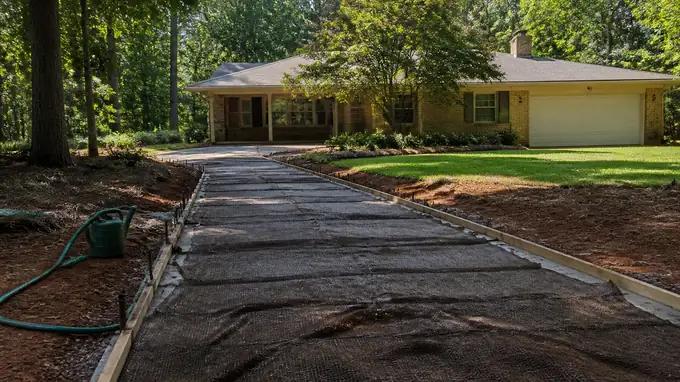
concrete flooring installation completed by a local contractor at a painted-white-brick two-story home in Sandy Springs, GA, under low winter sun.

Concrete Flooring Installation

Interior floors cover basements, garages, workshops and additions. Under every floor slab we lay a vapor barrier, because moisture wicking up through bare concrete ruins whatever gets glued on top later. Garage floors get a steel-trowel finish that sweeps clean. In finished rooms, the concrete can be polished or stained and left as the final surface, or troweled flat to take tile, wood or carpet. We match the floor to the height of the rooms around it.

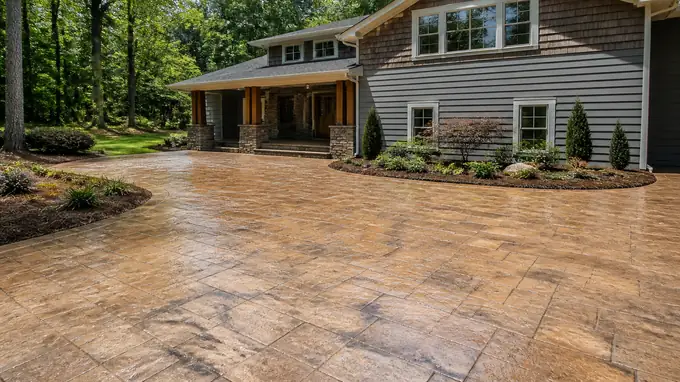
concrete slab repair completed by a local contractor at a stacked-stone and stucco home in Sandy Springs, GA, in raking morning side light.

Concrete Slab Repair

Not every cracked slab needs replacing. Hairline shrinkage cracks are normal and can be sealed. A slab that has sunk, heaved or split with one side higher than the other is a different problem, usually water under it or a base that was never compacted. With about 50 inches of rain a year, we look at where the water goes before touching the concrete. Then we either lift and level the section or cut out the damaged panel and pour it again.

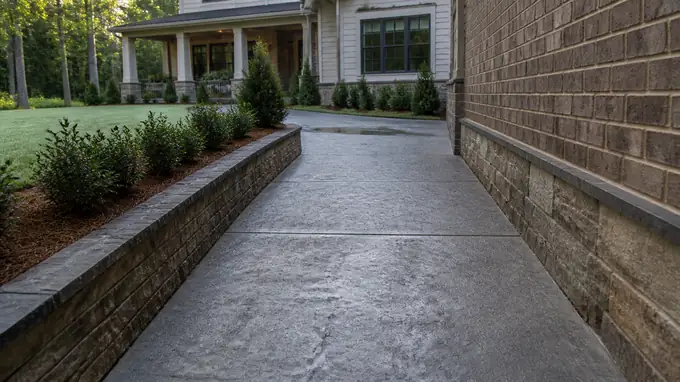
concrete sidewalk installation completed by a local contractor at a brick-and-siding two-story home in Sandy Springs, GA, in early morning light.

Concrete Sidewalk Installation

Walkways run from the driveway to the front door, along the side of the house, or out to a patio. We form them four inches thick, pitch them slightly so water runs off instead of sitting, and cut joints at even spacing so cracks land in the joints rather than across the walk. Broom finish is standard. Stamped or exposed-aggregate borders tie a walk into a decorative patio, and tooled round edges keep it from chipping.

Why Choose Sandy Springs Concrete Pros

A slab is only as good as what sits under it, and that is where we spend most of our attention. We are a concrete crew doing residential and commercial work: driveways, patios, garage floors, shop slabs, and the stamped and decorative surfaces people see from the street. Every project runs through the same process, whether it is a small pad behind a house or a larger commercial pour. We would rather talk you out of work that does not need doing than sell it to you. That habit keeps our answers straight. It also keeps our jobs plain, and plain concrete lasts.

Before any forms go in, we test the site. Soil varies from place to place, so we do not assume anything about the ground until we have checked it. From there we grade, compact the base, and set reinforcement to suit the load the slab will carry, which is very different for a parked truck than for a patio table. Drainage and slope get planned at the same stage, because the metro sees about 50 inches of rain a year and that water needs somewhere to go. Control joints are cut where the concrete wants to crack. That way, when it does, it cracks in a straight line.

Most slabs that fail share a short list of causes: a soft base, too little steel, poor drainage, or concrete placed and finished in a hurry. None of those show on the day of the pour. They show a few seasons later, as a sunken corner, a puddle that never dries, or a crack that keeps widening. Doing it right takes more care at the start and far less repair at the end. The materials cost what they cost either way; the difference is in the preparation. If you are planning a slab in Berkeley Lake, call for a free estimate and ask us anything about the ground under it.

What to Expect on a Berkeley Lake Concrete Job

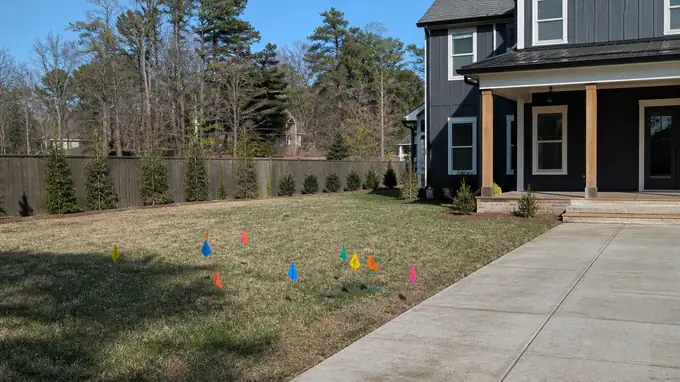
Utility flags mark buried lines before digging starts. at a charcoal farmhouse-modern home in Sandy Springs, GA, in full afternoon sun.

Step 1: Site Assessment

Before we quote anything, we walk the property and look at where water goes. We note the grade, the downspouts, any tree roots, and what the slab has to carry: foot traffic, a parked truck, a shed. Rion soil is the dominant type in Fulton County, but it varies from lot to lot, so every site is tested individually before work starts. That test decides how much base we need and what has to come out.

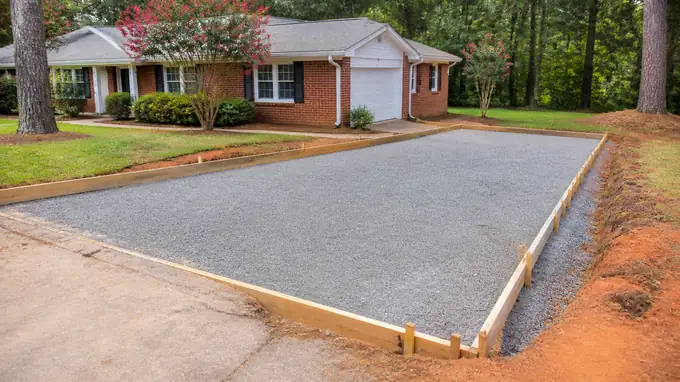
Crushed stone base is raked level inside driveway forms. at a red-brick ranch home in Sandy Springs, GA, under bright midday cloud.

Step 2: Site Preparation

Excavation comes next. We strip sod, topsoil and anything organic down to firm ground, because organic material breaks down and leaves voids under the slab. Then we bring in crushed stone, spread it in lifts and compact each lift with a plate compactor. The grade gets shaped so water sheds away from the house. Most slabs that crack early were poured on a base that settled, so this is where we spend the most time.

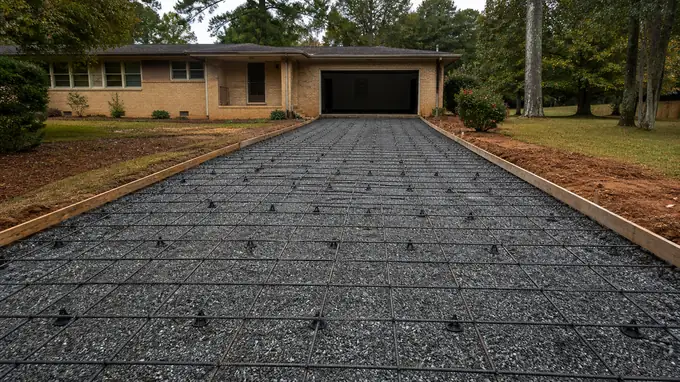
A worker ties rebar into a grid before a residential pour. at a buff-brick ranch home in Sandy Springs, GA, after a rain shower.

Step 3: Forming & Reinforcement

Forms go up in straight lumber, staked and checked for level and pitch, with bender board where the design curves. Inside them we set reinforcement: welded wire mesh for light patios and walkways, a rebar grid for driveways and anything carrying vehicle weight. The steel sits on plastic chairs so it ends up in the middle of the slab. Mesh trampled into the dirt during the pour does nothing, and that shortcut is common.

A screed board levels fresh concrete on a small patio. at a charcoal farmhouse-modern home in Sandy Springs, GA, under low winter sun.

Step 4: Pouring

On pour day the ready-mix truck backs in as close as the site allows. Where it cannot reach, we pump or run wheelbarrows. The mix is ordered for the job, often with fiber added for exterior slabs. We place the concrete, spread it with rakes and come-alongs, then screed it flat off the forms. We do not add water at the truck to make it spread easier. Wet concrete places faster but finishes weaker and dusts later.

A broom drags across a driveway creating a slip-resistant texture. at a grey split-level home in Sandy Springs, GA, under broken cloud.

Step 5: Finishing

Timing matters more here than anywhere else. We bull float right after screeding, then wait for the bleed water to leave the surface before touching it again. Working that water back in weakens the top layer and leads to scaling. Edges get rounded with an edger, and control joints are tooled or saw cut so the slab cracks where we choose. Driveways get a broom finish for grip. Stamped and decorative finishes happen in this window too.

Damp burlap covers a small slab section during curing. at a buff-brick ranch home in Sandy Springs, GA, in raking morning side light.

Step 6: Curing

Concrete keeps gaining strength for weeks after the pour, and it needs moisture to do it. We spray a curing compound or cover the slab with plastic so the surface does not dry out ahead of the concrete below it. Hot, windy days make this matter most, because fast drying is what opens up surface cracks. Foot traffic can come once the slab has hardened. Vehicles wait until it has cured further.

A finished stamped surface shows a glossy sealed sheen. at a grey split-level home in Sandy Springs, GA, in full afternoon sun.

Step 7: Sealing

Once the slab has cured, a sealer keeps water, oil and stains from soaking in. We use a penetrating sealer on broom-finished driveways and walks, since it does not make the surface slick. Stamped and colored concrete gets an acrylic sealer that brings out the color and protects the pattern. Sealer wears down with traffic and sun, so it needs reapplying over the years. Sealing too early traps moisture and leaves the surface cloudy.

The Concrete Options Available in Berkeley Lake

Most slabs we pour in Berkeley Lake come in one of three kinds: plain broom-finished concrete, stamped concrete, and decorative finishes such as exposed aggregate or integral color. The broom finish is the workhorse. It gives driveways, walks and garage floors a textured surface that holds traction in the wet and asks for very little afterward. Stamped slabs have a pattern pressed in while the concrete is still plastic, so a patio can read as slate or brick without loose joints. Decorative work sits somewhere between the two.

The choice changes the pour day more than the groundwork. Every option starts the same way: the site is tested, the grade is cut and compacted, forms go in, and reinforcement is set to suit the load the slab will carry. After that the work splits. A broom finish is floated, edged and textured in one steady pass. Stamped and colored surfaces need more hands, because the pattern has to go in during a short window before the concrete sets up. We plan the crew around that window before the truck ever arrives.

Water causes more failures than any finish choice. The area sees about 50 inches of rain a year, and a slab that sheds it toward the house or lets it sit at a low corner will settle and crack no matter how good the surface looks. Stamped work carries its own risks. Miss the timing and the pattern blurs. Skip the sealer and the color fades. Control joints cut too shallow or spaced too far apart leave the slab to pick its own cracks, and it always picks the worst places.

Getting it right costs attention more than anything exotic. A plain slab on a sound base, with proper drainage, well-placed joints and the right reinforcement, will outlast a fancy one poured on a lazy base. Stamped and decorative work puts more labor into the pour and asks for resealing on a schedule afterward, so plan for upkeep as well as installation. Which finish makes sense depends on how you use the space. A free estimate is the right place to sort that out.

Get a Free Estimate

Get FREE Estimates

Tap to call +1 470-740-7099