+1 470-740-7099
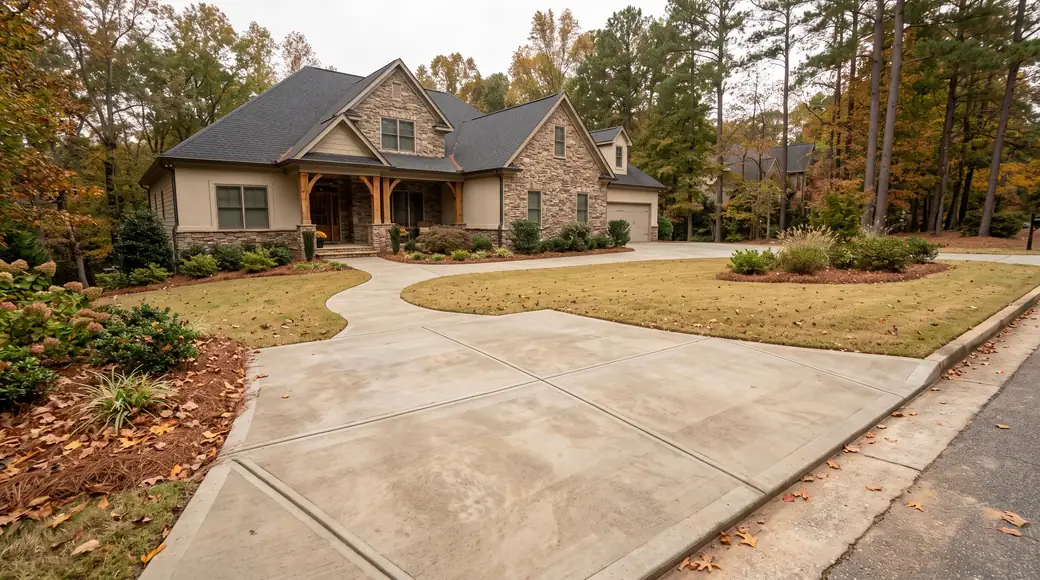
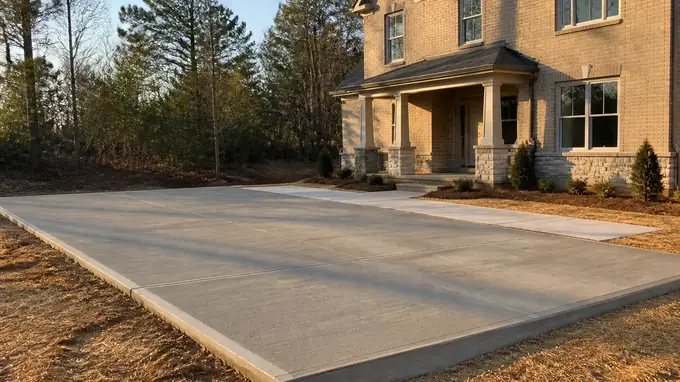
Wide view of finished concrete flatwork across the front of a home at a stacked-stone and stucco home in Sandy Springs, GA, under an overcast sky.

Concrete Demolition And Removal in Sandy Springs, GA

We break out and haul away old concrete across Sandy Springs: cracked driveways, heaved walkways, tired patios, garage slabs, and the footings and pads left behind when a shed or hot tub goes. The median home here was built in 1988, so a lot of the concrete around these houses has been carrying cars and weather for decades. Some of it can be repaired. Much of it has settled, split along old joints, or lost its surface to the point where pulling it out is the honest answer. We also take on commercial removal, from worn sections of parking lot along the Roswell Road corridor to interior slab work in office and retail space.

Removal is only half the job. The other half is what we leave behind. We saw-cut clean lines where old concrete meets anything that stays, so a new driveway ties into the garage apron and a patio meets the house without a ragged edge. Reinforcement comes out with the concrete, and every load of rubble leaves the property with us. Once the slab is up, we look at the base underneath, because the ground under a failed slab often tells us why it failed. Every site is tested on its own before new work starts. If the job needs a permit, we handle the permit. Call for a free estimate.

Call +1 470-740-7099

Get FREE Estimates

Our Concrete Demolition And Removal Work in Sandy Springs

concrete slab installation completed by a local contractor at a brick-and-siding two-story home in Sandy Springs, GA, in late afternoon light.

Concrete Slab Installation Cost

What a new slab costs depends on how much old concrete has to come out first, what the ground looks like under it, and how thick the new pour needs to be. A shed pad and a garage floor are different jobs. We break out and haul the old surface, test the subgrade, compact a gravel base, and set rebar or wire mesh before any concrete arrives. A tight side yard that keeps the skid steer out means breaking by hand, and that adds labor.


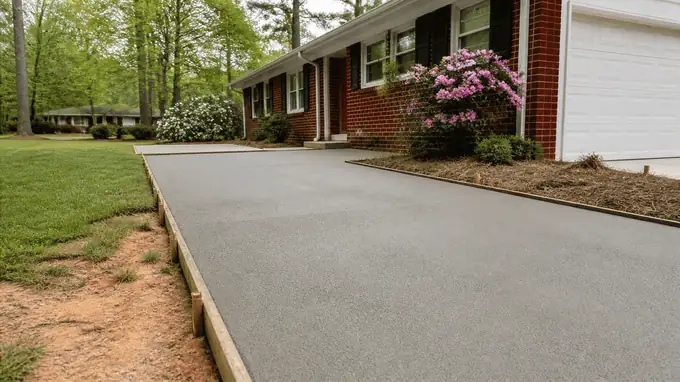
concrete driveway installation completed by a local contractor at a buff-brick ranch home in Sandy Springs, GA, under a hazy afternoon sky.

Concrete Driveway Installation

Most driveway replacements start with tearing out a slab that has done its time. With the median home here built in 1988, plenty of driveways around Sandy Springs have been down a long while and show it: heaved joints, sunken sections by the garage, cracks running edge to edge. We cut, break and haul the old concrete, regrade for drainage, and pour a reinforced slab with control joints placed where cracks want to form. Broom finish is standard. Stamped and exposed aggregate are options.

concrete flooring installation completed by a local contractor at a painted-white-brick two-story home in Sandy Springs, GA, under low winter sun.

Concrete Flooring Installation

Basement floors, garage floors and slabs under a new addition all go in much the same way once the old floor is out. We saw-cut along the walls so the break stays clean, remove the concrete in manageable pieces, and check the base for voids or soft spots. Then comes a vapor barrier, reinforcement, and a pour finished smooth with a steel trowel or left ready for tile, epoxy or polishing. Interior demolition is loud and dusty, so we seal off the work area first.

concrete slab repair completed by a local contractor at a stacked-stone and stucco home in Sandy Springs, GA, in raking morning side light.

Concrete Slab Repair

Sometimes a whole slab does not need to go. When one section has sunk or cracked through and the rest is sound, we saw-cut out the damaged panel, dowel the new pour into the old concrete on either side, and match the finish as closely as the existing surface allows. The cause matters more than the crack. With about 50 inches of rain a year, water getting under a slab is worth ruling out, so we look at downspouts and grading before we pour.

Why Sandy Springs Chooses Sandy Springs Concrete Pros

The median home in Sandy Springs was built in 1988, so a lot of the concrete around these houses has done its years and is now cracked, stained, or simply in the way of what the owner wants next. We take it out cleanly. That means saw-cutting a straight edge where a slab has to stay, breaking out only what is coming up, and pulling the reinforcement so nothing is left buried under the next surface. Driveways, patios, walkways and old footings all come out the same careful way, on a residential lot or a commercial pad.

Demolition is only half the job. The other half is the ground we leave behind. We haul the broken concrete off the property, clean out the old base, and check the grade so water moves away from the house instead of toward it. Soil changes from one lot to the next, even across Fulton County, so every site gets looked at on its own before we decide what the subgrade needs. If new driveways or patios are going in afterward, the ground is ready for them. We handle the permit. Call for a free estimate.

How a Concrete Demolition And Removal Job Runs in Sandy Springs

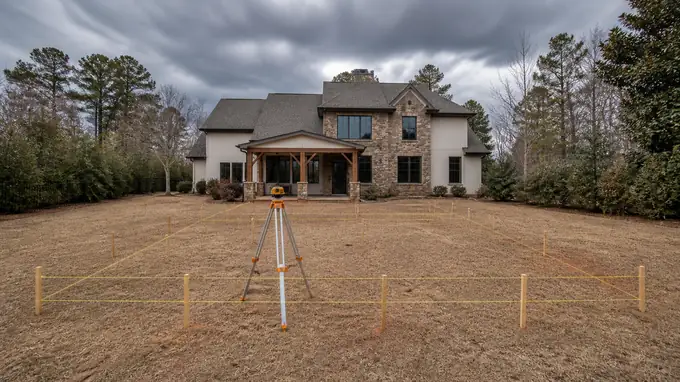
A contractor checks slope and drainage before work begins. at a stacked-stone and stucco home in Sandy Springs, GA, under a darkening storm sky.

Step 1: Site Assessment

Before anything breaks, we walk the slab and work out what it is hiding. We check thickness at an exposed edge, look for rebar or wire mesh, and mark where water, gas and irrigation lines run underneath. The median home here was built in 1988, so the concrete we remove has usually cracked, heaved or settled for a reason. We find that reason first, because a new slab poured over the same problem fails the same way.

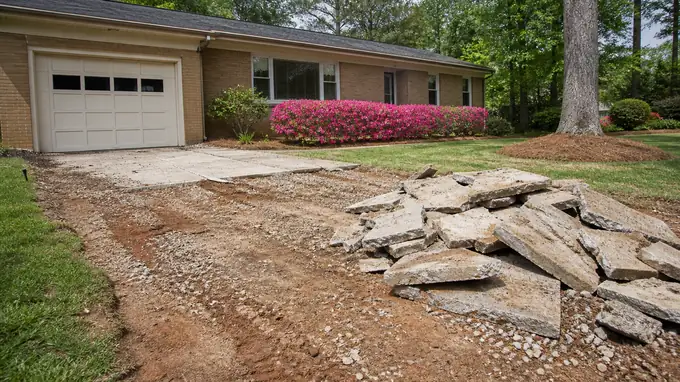
An old patio slab is broken up and hauled away. at a buff-brick ranch home in Sandy Springs, GA, in full afternoon sun.

Step 2: Site Preparation

Demolition happens here. We saw-cut the edges so the break stops where it should, not halfway into a walkway you are keeping. A breaker splits the old slab into pieces a loader can carry, and the concrete and steel get hauled off. Then we dig out soft base, grade for drainage and compact fresh gravel. Ground here is gently rolling but changes block to block, so every site is graded and tested on its own. If the job needs a permit, we handle the permit.

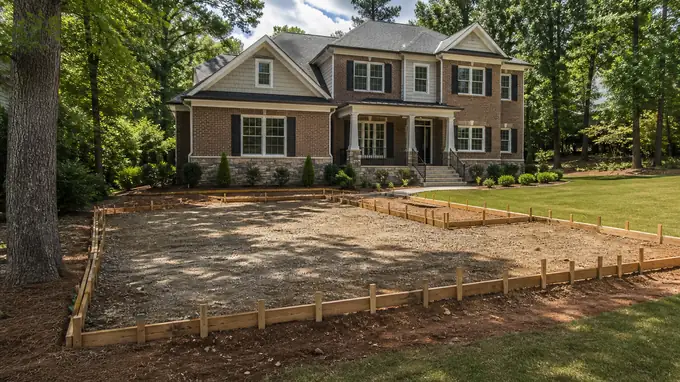
Wooden forms outline a patio slab before the pour. at a brick-and-siding two-story home in Sandy Springs, GA, under broken cloud.

Step 3: Forming & Reinforcement

Forms go in next: straight lumber staked along the edges, set to the slope we worked out during grading so water runs away from the house. With about 50 inches of rain a year, that pitch matters. Reinforcement depends on the slab. Driveways get rebar tied in a grid and held up on chairs so it sits inside the concrete, not flat on the gravel where it does nothing. Patios and walks often take wire mesh or fiber.

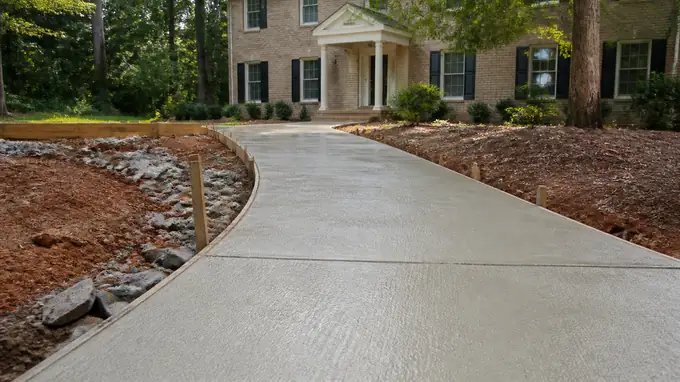
A bull float smooths a residential walkway surface after screeding. at a tan-brick colonial in Sandy Springs, GA, under bright midday cloud.

Step 4: Pouring

On pour day the ready-mix truck backs in as close as the property allows. Where it cannot reach, we pump or wheelbarrow. We place concrete from the far end toward the truck, working it into corners and around the steel so no voids are left behind. Screeding brings the surface flat to the forms. What we refuse to do is add water at the chute so it spreads easier. Wet concrete places fast, then cracks, dusts and scales for years.

A hand trowel smooths a small patio surface to a hard finish. at a red-brick ranch home in Sandy Springs, GA, under a hazy afternoon sky.

Step 5: Finishing

Timing decides the finish. Once bleed water leaves the surface, we float it, round the edges and tool or saw control joints so the slab cracks where we choose instead of where it wants. Driveways and walks get a broom finish for grip in the rain. For stamped or decorative work, we press the pattern and color while the concrete is still soft enough to take it. That window is short, and there are no second chances.

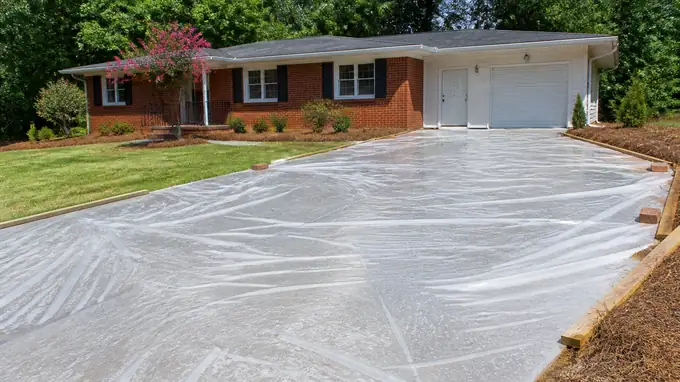
Plastic sheeting covers a curing driveway slab. at a red-brick ranch home in Sandy Springs, GA, in full afternoon sun.

Step 6: Curing

Concrete keeps gaining strength for weeks after it looks done, and how it cures matters as much as how it was poured. We keep the slab moist with a curing compound or covering so the top does not dry faster than the bottom. Average daily highs here sit around 72°F, but a hot afternoon still pulls water out of fresh concrete quickly. Foot traffic comes first. Cars wait longer, and we tell you when the driveway is ready.

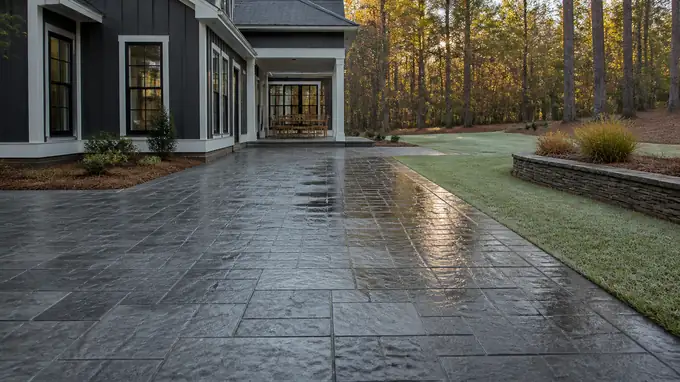
A roller applies sealer to a stamped patio surface. at a charcoal farmhouse-modern home in Sandy Springs, GA, in early morning light.

Step 7: Sealing

Sealer is the last coat and the easiest one to skip. A penetrating sealer soaks in and slows down water, oil and staining; a film-forming sealer adds sheen and deepens color on stamped and decorative surfaces. We apply it only after the slab has cured, because sealing too early traps moisture and leaves a cloudy white haze. Water that stops beading on the surface is the sign it needs another coat, usually every few years.

What Decides the Price of Concrete Demolition And Removal

Two slabs the same size can take very different amounts of work to break out and haul away. What is inside the concrete, what surrounds it, and how a truck reaches it matter more than square footage. With the median home here built in 1988, a driveway or patio may have been patched or poured over at least once, and that shows up in the price too. Most of this you can check on your own property before you ask for an estimate.

What changes the priceWhich wayWhy
Wire mesh or rebar in the slab (look at a cracked edge)costs moreSteel has to be cut and separated from the rubble, and reinforced concrete breaks slower.
A thicker slab, such as a driveway built for heavy vehiclescosts moreMore material to break and more truckloads to haul.
A clear, firm path from the street to the slabcosts lessA loader and dump truck can work right at the edge instead of carrying rubble out in smaller loads.
A patio behind a fence, down a slope, or past a narrow side yardcosts moreSmaller machines and more hand work mean more hours on site.
Posts, sheds, hot tubs or planting that must come out firstcosts moreThat work happens before the concrete can be touched.
Irrigation, gas or lighting lines running under or near the slabcosts moreBreaking near buried lines is slow and careful.
An old slab poured over another onecosts moreTwo layers means twice the breaking and hauling.
Low spots where water collects once the slab is gonecosts moreThe ground may need grading before anything new goes down.

When you compare bids, line them up item by item. Check whether haul-off and disposal are included, whether the gravel base comes out or stays, and whether backfill and grading are in the number. Ask who pulls the permit and how the lawn and driveway will be protected while trucks are working.

Frequently Asked Questions About Concrete Demolition And Removal in Sandy Springs

How much does concrete demolition and removal cost in Sandy Springs, GA?

It depends on the slab, so we don't quote a figure until we've seen it. Thickness, reinforcement, square footage and how a truck gets to the work all move the number, and no two Sandy Springs driveways share the same mix of those. The estimate is free. We measure, look at the edges to see what's under the surface, and work the price out from what is actually on your property rather than from an average.

What concrete demolition methods do you use for Sandy Springs driveways, patios, and slabs?

Most residential jobs start with a saw. We cut a clean line wherever the old concrete meets something that is staying, like a garage apron, a walk or a foundation, so the break stops exactly where it should. Then the slab comes apart with a breaker, either handheld or mounted on a skid steer, depending on thickness and room to work. Wire mesh and rebar get cut free, and every piece is loaded out and hauled off.

Do you handle the concrete demolition and removal permits, utility locating, and site safety in Sandy Springs?

Yes. We handle the permit when the job calls for one, so you are not sorting that out yourself. Before any saw or breaker touches a driveway or patio, underground utilities get marked, and we check for the things marks don't show, like irrigation lines or low-voltage wiring. On site, we fence off the work area, keep dust down with water while cutting, and protect the surfaces around it that are staying put.

What factors affect the cost of concrete demolition and removal in Sandy Springs?

Size and thickness come first. A patio slab breaks out faster than a driveway built to carry vehicles, and heavy rebar takes longer to cut than light wire mesh. Access matters just as much: a backyard with no gate wide enough for a machine means more hand work and more wheelbarrow trips. Slope, how far debris travels to the truck, and whether anything gets poured back afterward round it out.

What types of commercial projects does Sandy Springs Concrete Pros handle?

Sandy Springs Concrete Pros takes on commercial demolition and removal as well as residential. That covers sidewalk and plaza sections, parking areas, dumpster pads, loading areas, and interior slabs coming out during a tenant refit. Around Perimeter Center and along Roswell Road, the real concern is usually keeping a business open while the work goes on, so we stage the job, fence it properly, and schedule the loud work around the hours the property needs.

Is Sandy Springs Concrete Pros licensed, insured, and bonded?

Proof of licensing, insurance and bonding isn't something we post on this page. Before any contractor breaks concrete on your property, us included, ask for current certificates and confirm them with the issuer yourself. That's sound practice on any demolition job. Heavy equipment works close to your house, your utilities and your neighbor's property line, and you should know exactly who stands behind the work before it starts.

Get a Free Estimate

Get FREE Estimates

Tap to call +1 470-740-7099