+1 470-740-7099
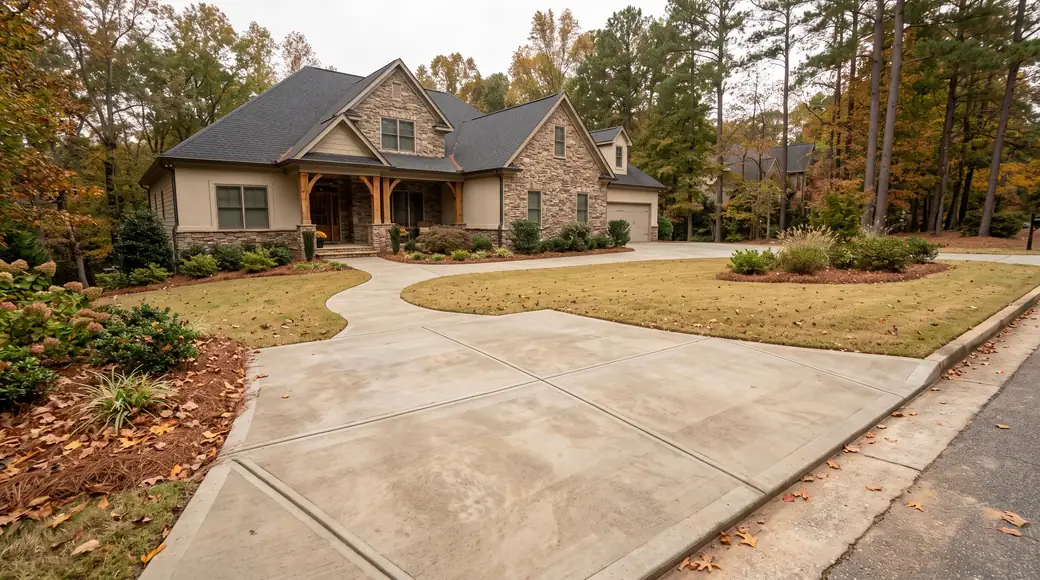
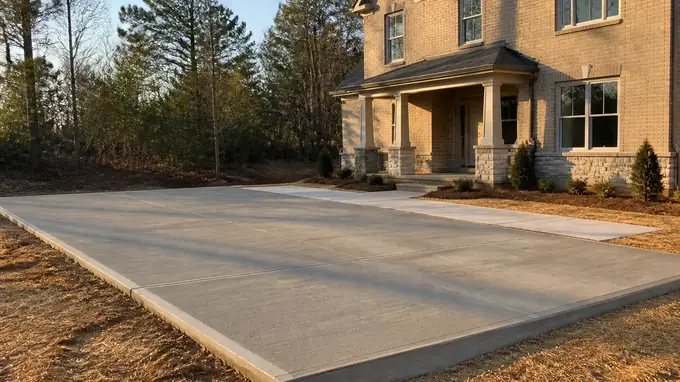
Wide view of finished concrete flatwork across the front of a home at a stacked-stone and stucco home in Sandy Springs, GA, under an overcast sky.

General Concrete Construction in Sandy Springs, GA

General concrete construction covers the slabs, driveways, patios, walks and footings that hold a property together, and we pour all of it across Sandy Springs. The median home here was built in 1988, so a good share of what we break out is original concrete that has done its job and reached the end of it. We take on residential and commercial work alike, from a stamped patio off a back door to flatwork along the Roswell Road corridor. The standard for base, reinforcement and finish stays the same at every size.

Most failures start below the surface. Rion soil is the dominant type in Fulton County and it drains well, but it changes across the county, and the ground here is gently rolling in a way that shifts from block to block. Two yards on the same street can grade very differently. That is why we test and grade each site on its own before a single form goes down. With about 50 inches of rain a year, water has to leave the slab and keep moving. A driveway that sheds toward the garage will cause trouble long after the concrete has cured.

Getting it right costs care at the start. That means a compacted base, reinforcement sized for the load the slab will carry, control joints placed where cracks would otherwise pick their own line, and a cure nobody rushes. Decorative work follows the same rules: stamped or colored concrete is only as good as the slab underneath it. We handle the permit where one is needed, and we tell you plainly what your site calls for, including when a repair makes more sense than a replacement. Call for a free estimate.

Call +1 470-740-7099

Get FREE Estimates

Our General Concrete Construction Work in Sandy Springs

concrete slab installation completed by a local contractor at a brick-and-siding two-story home in Sandy Springs, GA, in late afternoon light.

Concrete Slab Installation Cost

What a slab costs comes down to what sits under it and what it has to carry. A shed pad and a garage floor are different pours: the garage gets more thickness, thickened edges, and steel set on chairs so it stays in the middle of the slab instead of lying in the dirt. Base depth, forming, access and finish all move the number. The free estimate is where that becomes a figure for your site.


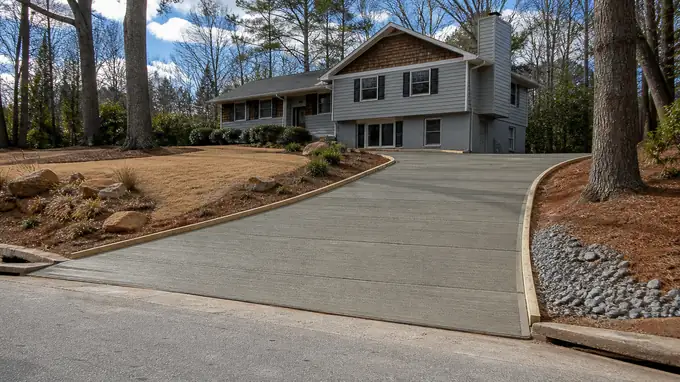
concrete driveway installation completed by a local contractor at a buff-brick ranch home in Sandy Springs, GA, under a hazy afternoon sky.

Concrete Driveway Installation

Driveways fail at the edges and joints first, usually because the base was thin or the water had nowhere to go. With about 50 inches of rain a year here, drainage gets as much thought as the concrete. We compact a crushed stone base, set reinforcement, pitch the surface away from the garage and cut control joints so cracks follow our lines, not their own. Broom finish is standard. Stamped or exposed aggregate if you want something decorative.

concrete flooring installation completed by a local contractor at a painted-white-brick two-story home in Sandy Springs, GA, under low winter sun.

Concrete Flooring Installation

Interior concrete floors go into basements, garages, shops and ground-floor rooms, and each one wants something different underneath. We lay a vapor barrier over a compacted base, pour, and steel-trowel the surface tight and hard. From there it can be sealed, stained, or ground and polished. A retail floor on the Roswell Road corridor and a finished basement follow the same sequence. What changes is the load the slab is built for and the finish on top.

concrete slab repair completed by a local contractor at a stacked-stone and stucco home in Sandy Springs, GA, in raking morning side light.

Concrete Slab Repair

With the median house here built in 1988, plenty of slabs have had decades to settle, crack and lift at the joints. Not every crack means a new slab. Hairline shrinkage cracks can be routed and sealed. A section that has sunk or broken through usually gets sawcut out, the base rebuilt, and new concrete doweled into the old. We find out why it moved before we touch it, because patching over a washed-out base only buys time.

Why Sandy Springs Chooses Sandy Springs Concrete Pros

The median home in Sandy Springs was built in 1988, so much of the concrete around these houses has been carrying cars, tree roots and weather for a long time. Slabs that age tend to show it: driveway panels that have lifted, patios settling toward the foundation, walks cracked straight across. We replace that residential concrete, and we pour new stamped and decorative surfaces too. A driveway off Roswell Road gets the same care from us as one over in Dunwoody.

Rain is the thing we plan around. The area gets about 50 inches a year, so every slab we pour is shaped to shed water away from the foundation and off the surface. Rion soil, which is well drained, is the dominant type in Fulton County, but it changes across the county, so we test each site on its own before work starts. Reinforcement, base depth and joint spacing follow what that test shows, not a standard sheet.

What goes wrong with concrete usually starts under it: a thin base, no path for water, control joints cut too late. None of that shows on pour day. It shows a few seasons later, as cracks and sunken corners, and by then the fix usually means tearing it out. So we spend our time on the parts nobody sees once the surface is finished. If your driveway, patio or slab is showing its age, call for a free estimate.

How a General Concrete Construction Job Runs in Sandy Springs

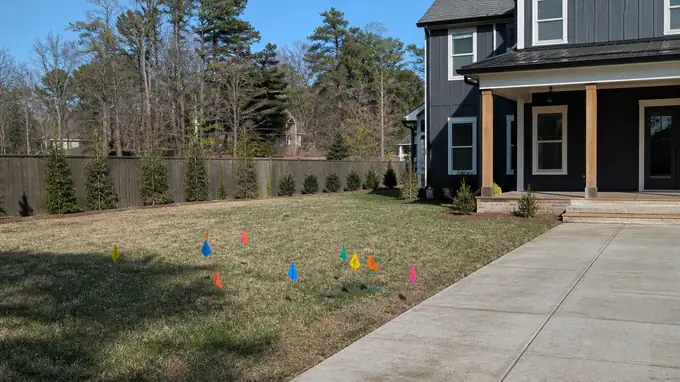
Utility flags mark buried lines before digging starts. at a charcoal farmhouse-modern home in Sandy Springs, GA, in full afternoon sun.

Step 1: Site Assessment

We start by walking the property and asking what the slab has to carry: a truck, a patio table, a basketball hoop. Rion soil, which drains well, is Fulton County's dominant type, but it varies from lot to lot, so we test yours before planning anything. We check grade and where water sits after a storm. The median home here was built in 1988, so there is often old concrete on site, and the way it cracked tells us plenty.

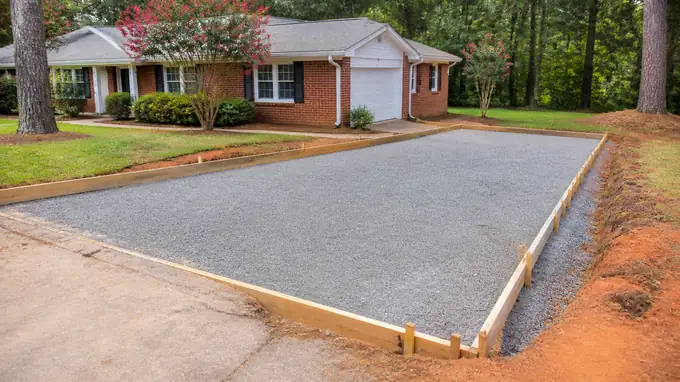
Crushed stone base is raked level inside driveway forms. at a red-brick ranch home in Sandy Springs, GA, under bright midday cloud.

Step 2: Site Preparation

Most slab failures begin underneath. We dig out topsoil, roots and anything organic, then bring in crushed stone base and compact it in lifts with a plate compactor or roller. Soft spots get removed and replaced, not covered over. We set the grade so water runs away from the house and off the surface, which matters in a place that sees about 50 inches of rain a year. If the job needs a permit, we handle the permit.

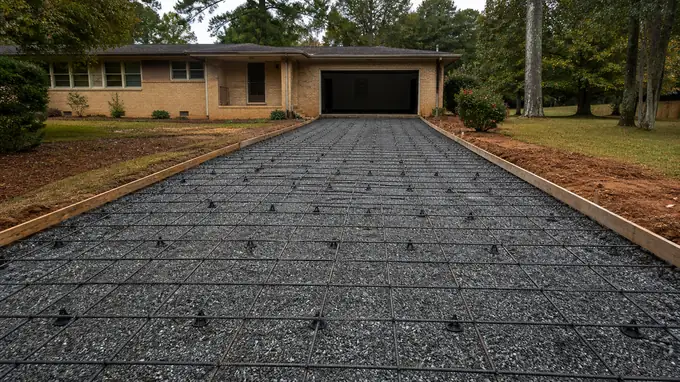
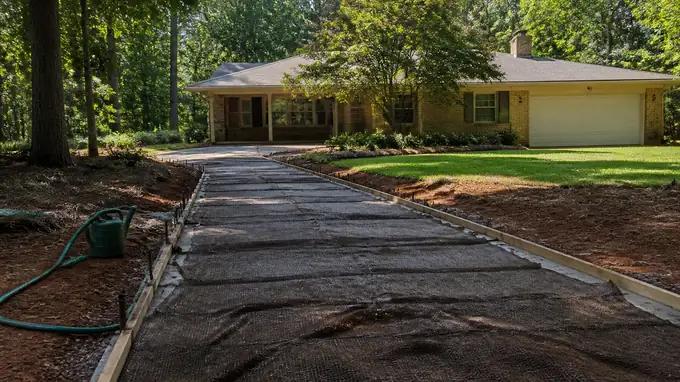
A worker ties rebar into a grid before a residential pour. at a buff-brick ranch home in Sandy Springs, GA, after a rain shower.

Step 3: Forming & Reinforcement

Forms go in next, usually lumber staked and braced along string lines, or flexible forms where a patio or walkway curves. We check them for level and pitch before any steel goes in. Reinforcement depends on the load: welded wire mesh for lighter surfaces, rebar in a grid for driveways and structural work. Either way it sits on chairs so it ends up inside the slab. Mesh left lying on the base does nothing.

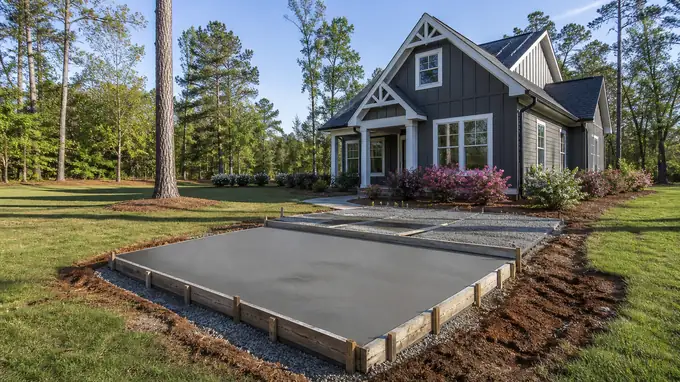
A screed board levels fresh concrete on a small patio. at a charcoal farmhouse-modern home in Sandy Springs, GA, under low winter sun.

Step 4: Pouring

Pour day moves fast, so everything is ready before the truck arrives: forms checked, base dampened, tools laid out. We order the mix to suit the load, and on a tight lot we bring a pump rather than run wheelbarrows across the lawn. Concrete goes as close to its final spot as possible, then gets screeded flat. Nobody adds water at the truck to make it spread easier. That extra water costs strength and leaves a weak, dusty surface.

A broom drags across a driveway creating a slip-resistant texture. at a grey split-level home in Sandy Springs, GA, under broken cloud.

Step 5: Finishing

Timing is most of finishing. We bull float right after screeding, then wait for the bleed water to leave before touching it again, because working it wet is what makes surfaces scale and flake later. Driveways and walks get a broom finish for grip. Patios can take exposed aggregate or a stamped pattern with color release. Control joints get tooled or saw cut at the right spacing, so the slab cracks where we choose, not where it wants.

Damp burlap covers a small slab section during curing. at a buff-brick ranch home in Sandy Springs, GA, in raking morning side light.

Step 6: Curing

Concrete keeps gaining strength for weeks after the pour, and it needs moisture to do it. We spray a curing compound or keep the slab covered and damp so the top doesn't dry ahead of the rest. Hot, windy afternoons pull water out fast, and that is where surface cracking starts. Foot traffic comes well before vehicles. We tell you when each is safe, and driving on a new driveway early is the fastest way to crack it.

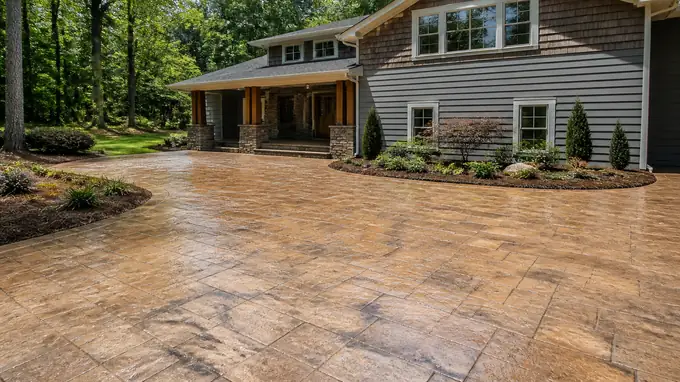
A finished stamped surface shows a glossy sealed sheen. at a grey split-level home in Sandy Springs, GA, in full afternoon sun.

Step 7: Sealing

Once the slab has fully cured, we seal it. A penetrating silane or siloxane sealer soaks in and keeps out water and oil stains without changing the look, which suits a broom-finished driveway. Stamped and decorative surfaces usually get an acrylic sealer that deepens the color and adds some sheen. We lay it on in thin coats, because too heavy a coat turns cloudy and gets slick when wet. Any sealer wears, so plan on resealing down the road.

What Decides the Price of General Concrete Construction

Two jobs with the same footprint can come in far apart, and the gap is rarely the concrete itself. Most of what moves the price sits in the ground or on the way to it, and you can walk out and look at nearly all of it before anyone writes an estimate.

What changes the priceWhich wayWhy
Old concrete or asphalt still in placecosts moreIt has to be broken up, loaded and hauled off first. Old slabs with wire or rebar in them come out slower.
How a mixer truck reaches the pourcosts more when blockedIf the truck can back up to the forms, we chute straight in. A fence, a narrow side yard or a tight turn means a pump or wheelbarrows.
Slope across the work areacosts moreFulton County is gently rolling, but it changes lot to lot. More fall means more cut, fill and compaction before the base is right.
Where water sits after a stormcosts more if it poolsWith about 50 inches of rain a year, a surface that drains toward the house needs regrading, a drain or a different pitch.
Thickness and reinforcement the slab needscosts more as it goes upA walkway and a driveway that carries a loaded truck are different slabs. More depth and rebar in place of wire add material and labor.
Roots and buried lines under the footprintcosts moreRoots get cut back, and irrigation, cable or drain lines get located and worked around.
Stamped or colored finishcosts moreDecorative work takes added material and more hands during a short finishing window. A broom finish costs less.

When bids come in, lay them side by side on the same points: slab thickness, reinforcement type and spacing, base depth, tear-out and haul-off, joint layout, and whether the permit is included. A lower number that leaves out tear-out or base work is quoting a different job.

Get a Free Estimate

Get FREE Estimates

Tap to call +1 470-740-7099