+1 470-740-7099
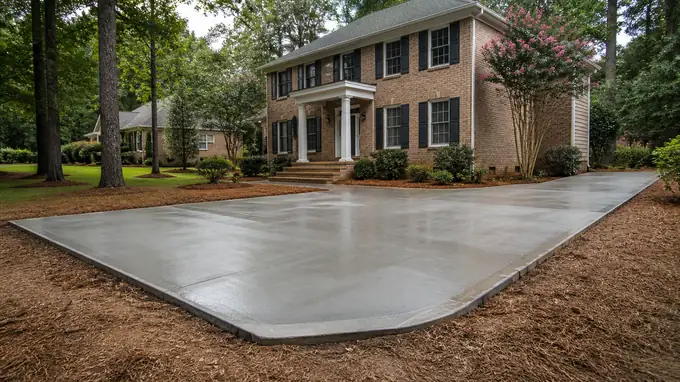
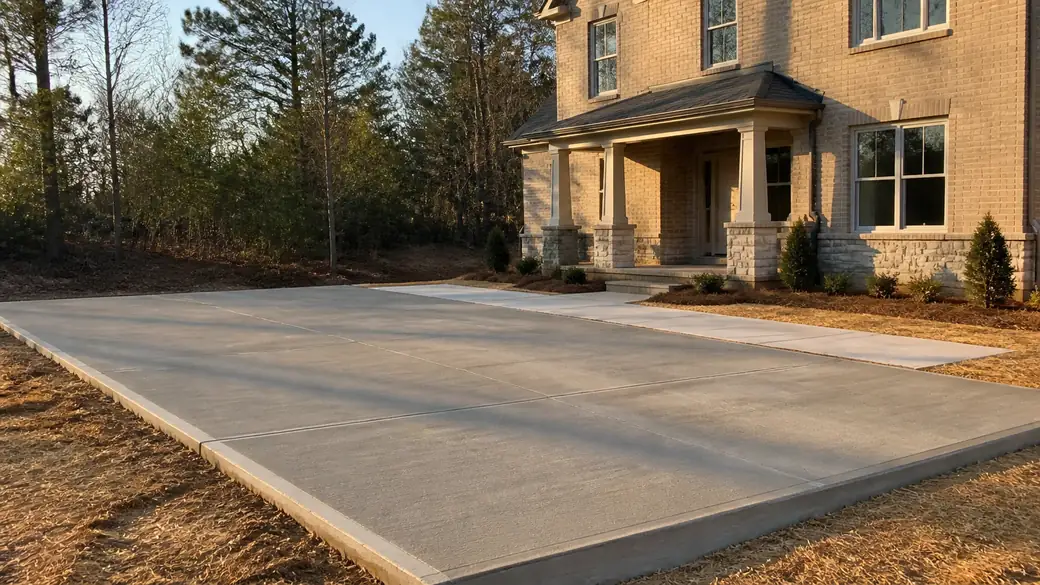
concrete slab installation completed by a local contractor at a brick-and-siding two-story home in Sandy Springs, GA, in late afternoon light.

Concrete Slab Installation in Lilburn, Georgia

A slab is the part of a job nobody looks at once it is finished, and the part everything else depends on. We pour concrete slabs for Lilburn homes and businesses: garage floors, shed and workshop pads, patio bases, and the flat work under additions and outbuildings. Each one has to carry its load, shed water and stay level year after year. That comes down to what sits underneath the concrete and what goes inside it, far more than the finish on top.

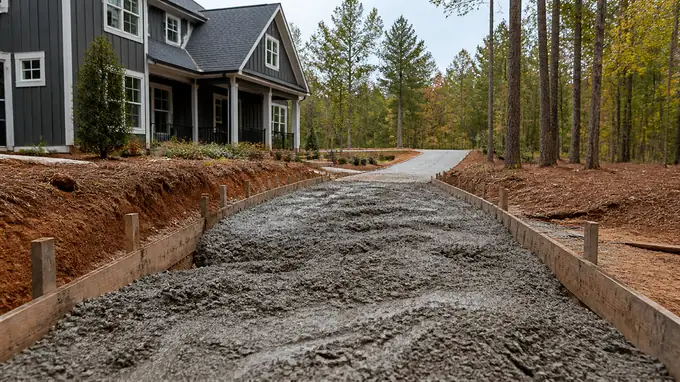
Work starts below grade. We test the soil on every site before anything else, then strip out organic material, bring in a compacted gravel base and set forms to the pitch the slab needs for drainage. Reinforcement goes in next: rebar or wire mesh, set up on chairs so it sits in the middle of the pour instead of lying in the dirt. Thickness follows the load. A shed pad and a slab that will hold a truck are not the same job, and we do not pour them the same way.

Most slab failures trace back to shortcuts. A soft base settles and the slab cracks across the middle. Mesh left on the ground does nothing at all. Control joints cut too late, or spaced too far apart, let the concrete crack wherever it chooses. Doing it properly takes a little more time and material up front: a deeper base, real compaction, joints cut the same day, and a cure nobody rushes. That is still less than tearing out a failed slab and pouring it twice. Call for a free estimate on your Lilburn slab.

Call +1 470-740-7099

Get FREE Estimates

Concrete Services in Lilburn

Concrete Slab Installation Cost

What a slab costs comes down to what sits under it and what goes into it. Excavation, a compacted gravel base, forming, thickness and reinforcement all move the number, and so does tearing out an old slab or reaching a backyard with no truck access. A plain broom finish costs less than stamped or colored work. Every Lilburn project is priced on its own site conditions. Call for a free estimate.


concrete driveway installation completed by a local contractor at a buff-brick ranch home in Sandy Springs, GA, under a hazy afternoon sky.

Concrete Driveway Installation

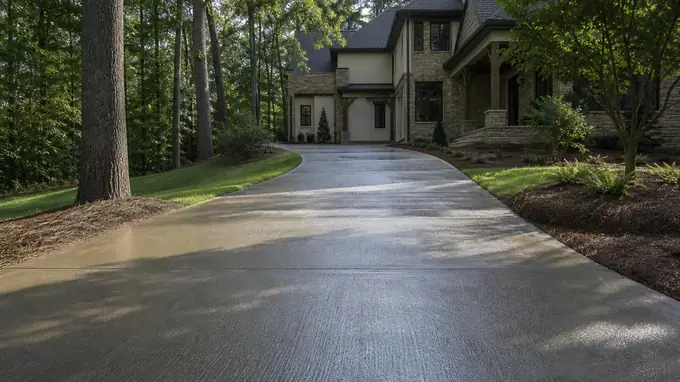
Driveways fail from the base up, so most of our work happens before the truck arrives. We cut down to firm subgrade, lay and compact crushed stone, and set rebar on chairs so it ends up in the middle of the slab instead of lying on the dirt. Control joints are cut close enough to keep cracking on the lines where we want it. Finishes run from plain broom to stamped borders.

concrete flooring installation completed by a local contractor at a painted-white-brick two-story home in Sandy Springs, GA, under low winter sun.

Concrete Flooring Installation

Interior slabs for basements, garages, workshops and additions need a vapor barrier under them. Skip it, and moisture comes up through the concrete and lifts whatever flooring sits on top. We place poly over the compacted base, reinforce with wire mesh or fiber, and finish with a power trowel for a tight, smooth surface. Floors that stay bare can be polished, stained or sealed. Garage slabs get a slight slope toward the door.

concrete slab repair completed by a local contractor at a stacked-stone and stucco home in Sandy Springs, GA, in raking morning side light.

Concrete Slab Repair

Not every cracked slab needs replacing. Hairline shrinkage cracks can be routed and sealed. A slab that has settled at one corner can often be lifted back into place, and spalled or flaking surfaces can take a bonded resurfacing overlay. Once a slab has broken into pieces, heaved, or has water running underneath it, repair only buys time. We look for the cause of the damage, not just the crack, because patching over a drainage problem fails again.

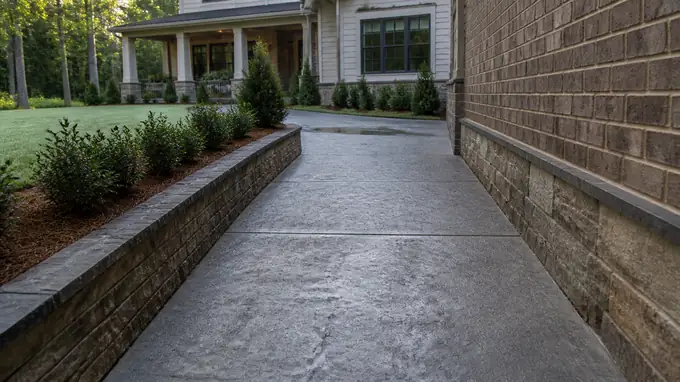
concrete sidewalk installation completed by a local contractor at a brick-and-siding two-story home in Sandy Springs, GA, in early morning light.

Concrete Sidewalk Installation

Walks look simple, and that is why they so often get built badly. A good residential sidewalk sits on compacted stone, pitches slightly to one side so water sheds off, and has tooled joints spaced close enough to control cracking. Edges are rounded so they do not chip. Where a walk meets a driveway, porch or step, we set an expansion joint so the two surfaces move independently. A broom finish keeps footing sure when it is wet.

Why Choose Sandy Springs Concrete Pros

A slab is only as good as the ground under it and the work that goes into it before the pour. We build residential driveways, patios and slabs, plus commercial surfaces, and we treat each one as a structural project first and a finished surface second. That order matters. A decorative or stamped finish keeps looking right only when the base, the reinforcement and the drainage underneath it were done properly, and that is the part of the job we spend the most time on.

Soil varies from one site to the next, so every site is tested individually before work starts. The results decide how deep we excavate, what base materials go down and how much reinforcement the slab carries. Water is the other thing we plan around. With about 50 inches of rain a year, a slab needs grade and slope that carry runoff across the surface and away from the house, rather than letting it sit or work its way underneath. We check that slope before the pour, not after.

When a slab cracks, heaves or sinks, the cause is usually underneath it: a base that was never compacted, reinforcement that was skipped, or water that had nowhere to go. None of that shows on the day of the pour. It shows a few seasons later, and by then the fix means breaking out concrete and starting again. Doing it right costs time at the start, and we build that time into the schedule instead of cutting it. If you have a slab, patio or driveway in mind, call for a free estimate.

What to Expect on a Lilburn Concrete Job

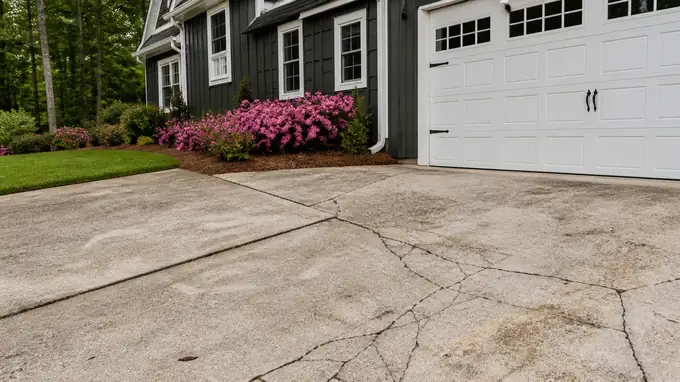
A worker examines an old driveway before replacement. at a charcoal farmhouse-modern home in Sandy Springs, GA, in full afternoon sun.

Step 1: Site Assessment

We start by walking the ground where the slab will go. We look at how water moves across the lot, where the downspouts empty, what the existing grade is doing, and whether roots or old fill sit underneath. Soil varies from one yard to the next, so every site is tested individually before work starts. That test, not a guess, decides how deep we dig and what base goes back in.

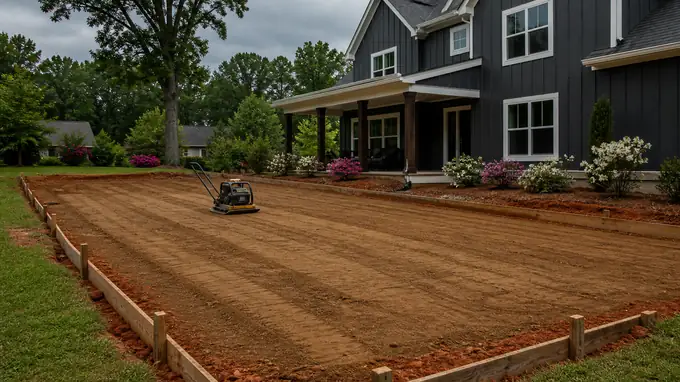
A plate compactor tamps down soil in a small excavated area. at a charcoal farmhouse-modern home in Sandy Springs, GA, under a darkening storm sky.

Step 2: Site Preparation

Most slab failures begin here, long before any concrete shows up. We strip the topsoil and organic material, cut to grade, and slope the subgrade so water runs away from the house. Then we lay a crushed stone base and compact it in lifts with a plate compactor or roller. Soft spots get dug out and replaced. A slab poured over loose fill will settle and crack, however well it was finished.

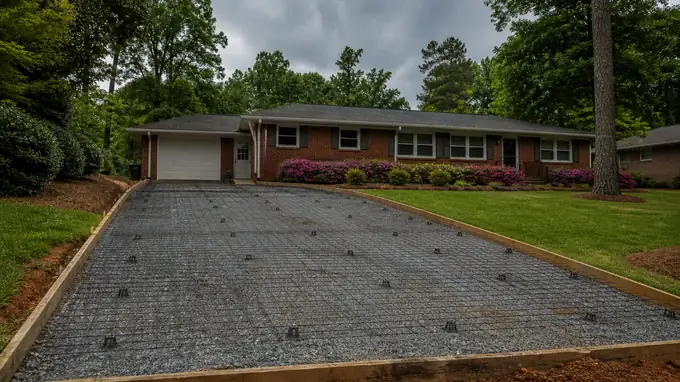
Wire mesh is unrolled across a driveway base before pouring. at a red-brick ranch home in Sandy Springs, GA, under a darkening storm sky.

Step 3: Forming & Reinforcement

Forms go up next: straight lumber, staked tight and set to string lines so the finished surface drains the way it should. A patio or shed slab typically runs four inches thick, and a driveway that carries vehicles gets more. Inside the forms we set rebar or welded wire mesh on chairs, so the steel sits in the middle of the slab instead of lying useless in the dirt. Isolation joints go wherever the slab meets a foundation.

A ready-mix truck discharges concrete into a driveway form. at a charcoal farmhouse-modern home in Sandy Springs, GA, under a hazy afternoon sky.

Step 4: Pouring

Pour day moves quickly once the truck arrives. We check the mix ticket, then place concrete from the far end back toward the truck, keeping each load against wet concrete so no cold joints form. We don't add water at the chute to make it spread easier. Extra water weakens the surface and invites cracking. The concrete gets worked tight against the forms and edges, then screeded flat.

Stamping mats are pressed into a patio surface to imprint a pattern. at a stacked-stone and stucco home in Sandy Springs, GA, under low winter sun.

Step 5: Finishing

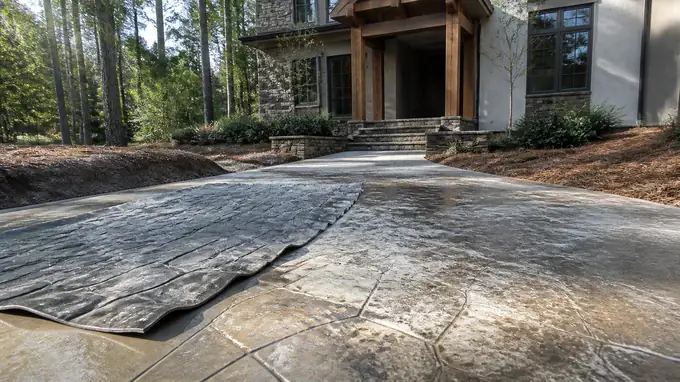
Timing matters more than technique at this stage. We bull float right after screeding, then wait for the bleed water to leave before touching the surface again; working it too early brings up weak paste that flakes off later. Edges get tooled, and control joints are cut at regular spacing so cracks happen where we choose. Driveways and patios usually get a broom finish for grip. Stamped and decorative patterns are pressed in now.

A hand sprayer applies curing compound to a finished patio. at a tan-brick colonial in Sandy Springs, GA, under an overcast sky.

Step 6: Curing

Concrete gains strength by holding onto its water, not by drying out. For the first week we keep the slab moist with curing compound, wet coverings or plastic sheeting, depending on the weather. A slab that dries too fast in sun and wind shrinks at the surface and crazes. You can walk on it after a day or two. Keep cars off for about a week, and heavy trucks off longer.

A sprayer applies sealer across a driveway. at a stacked-stone and stucco home in Sandy Springs, GA, under low winter sun.

Step 7: Sealing

Sealer goes on once the slab has cured enough, usually around a month after the pour. A penetrating sealer soaks in and helps the surface shed water, oil and de-icing salt without changing how it looks. Stamped and colored concrete generally gets a film-forming acrylic that deepens the color and protects the pattern. Neither kind lasts forever. Resealing every few years keeps a decorative surface looking like it did the week it was finished.

Lilburn Questions

Is Sandy Springs Concrete Pros licensed, insured, and bonded?

No, this site doesn't list license, insurance or bonding details, and we won't ask you to take them on faith. Ask for the paperwork when you call about your slab. Any contractor pouring concrete at your property should be able to show current documents before the forms go in. Read them the same way you'd read an estimate: line by line, with your own questions ready.

What areas beyond Lilburn does Sandy Springs Concrete Pros serve?

We pour driveways, patios and slabs across metro Atlanta, on every side of the city. Every town we cover gets the same crew, the same materials and the same way of working. Nobody waits behind anyone else. If your property sits somewhere around the perimeter and you aren't sure it's in range, call and ask. It's a short conversation, and asking costs nothing.

Can you provide custom wire mesh sizes for specific projects?

Yes. Reinforcement gets sized to the job, not pulled off the truck out of habit. A patio slab might take welded wire mesh cut and lapped to fit the forms, while a driveway carrying vehicle loads may call for a rebar grid instead. We set the steel on chairs so it sits within the pour, where it actually does its work, rather than lying on the ground underneath it.

Do I need permits for foundation work in Lilburn?

Yes, in most cases. Foundation work is structural, and structural concrete is exactly what building departments want to review and inspect before it gets covered. The exact rules belong to the city, so the first step is confirming what Lilburn requires for your specific project. Simple flatwork like a garden path often falls outside that. A slab under a building or an addition usually doesn't.

What areas beyond Lilburn do you serve?

The short answer: most of the metro, on the same terms everywhere. A homeowner in Tucker gets the same estimate process, the same concrete, and the same attention to reinforcement and finishing as one in Lilburn. The full list of towns appears elsewhere on this page. If yours isn't on it, give us a call anyway and tell us where the property is.

Will Sandy Springs Concrete Pros take care of our city permits and inspections?

Yes. Permits come with the job, and we treat them as part of the construction rather than a chore handed back to you. We prepare the application, book inspections at the stages the city calls for (typically before a structural pour), and keep the paperwork together so you have it afterward. Some jurisdictions want a homeowner signature on the application, and we'll tell you if yours does.

Get a Free Estimate

Get FREE Estimates

Tap to call +1 470-740-7099