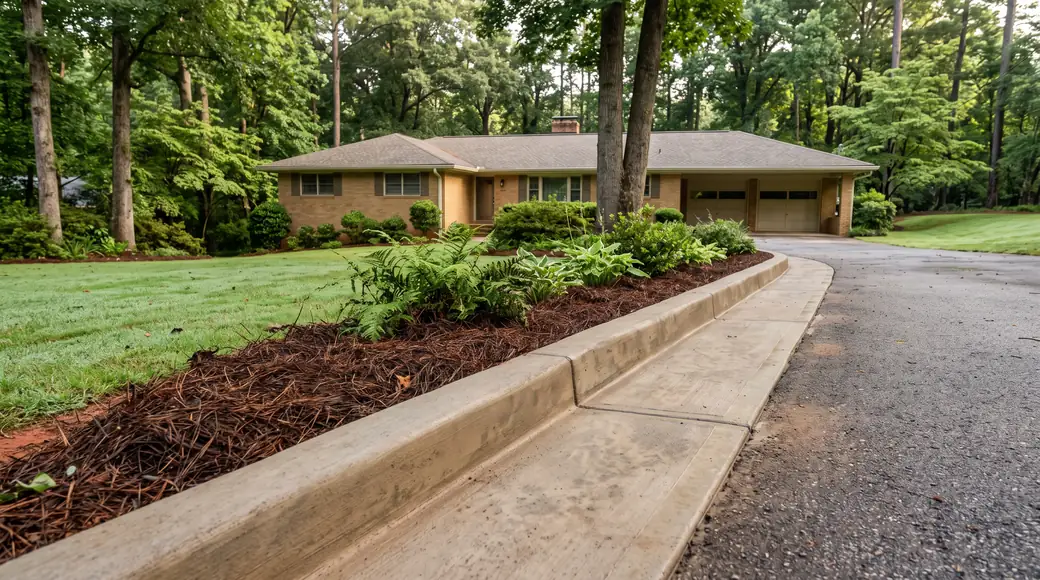
Most of the curbing and edging we set in metro Atlanta goes into yards that already have their shape. Suburban development here began in the 1950s, an early-1960s housing boom followed the highway construction, and infill kept going through the 1980s. We serve Sandy Springs, Atlanta, Dunwoody, Roswell and Brookhaven on the same terms. The ground is rolling and wooded, so a bed line that looked right on paper often has to be walked on site first. Almost none of this is new build.
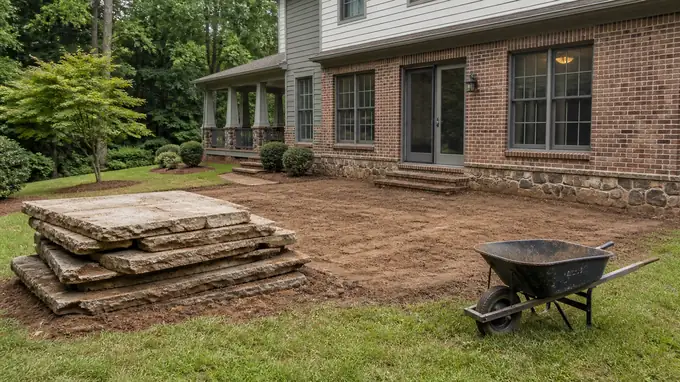
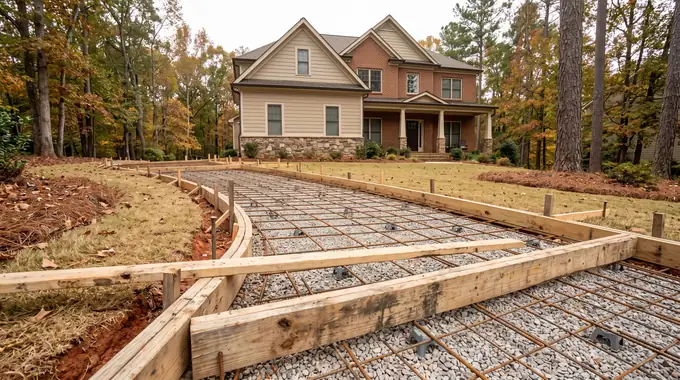
Layout starts with what is already there: the driveway, the walk, the beds that have been in place since the house was young. Mature roots and old grading change where a curb can go, and we would rather move a line a few inches than fight a tree that will win. Forms get bent to the curve, the base gets compacted, and reinforcement goes in where a run crosses anything that moves. None of that is visible later. It shows up in whether the edge holds its line.
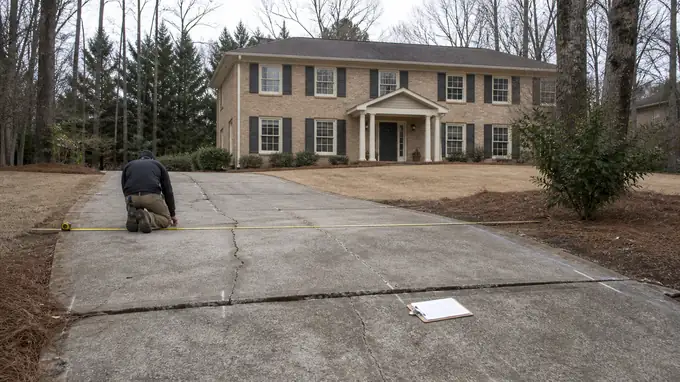
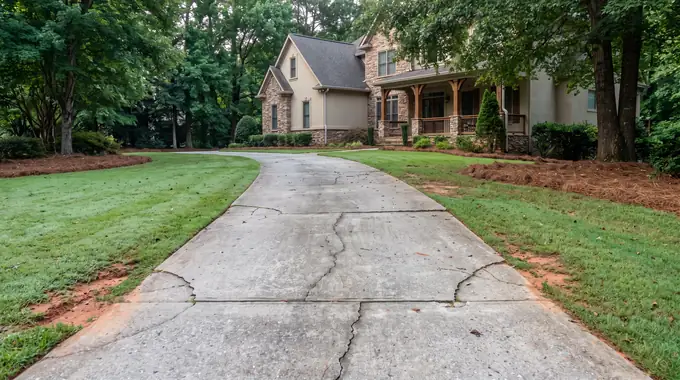
Old edging fails in ways you can read. Plastic and steel border heaves up out of the ground and never settles back. Poured concrete that was set thin, or set on loose fill, cracks in the same places every time: the corners, the low spots, the point where a driveway apron meets grass. On a wooded lot, roots finish the job. Replacing a failed edge is most of what we do, and the way it failed usually tells us what to build differently.
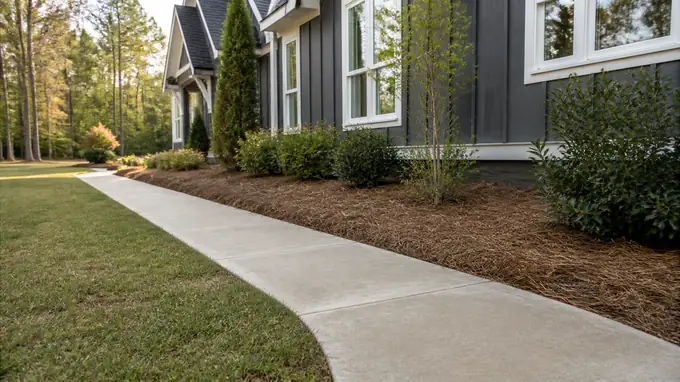
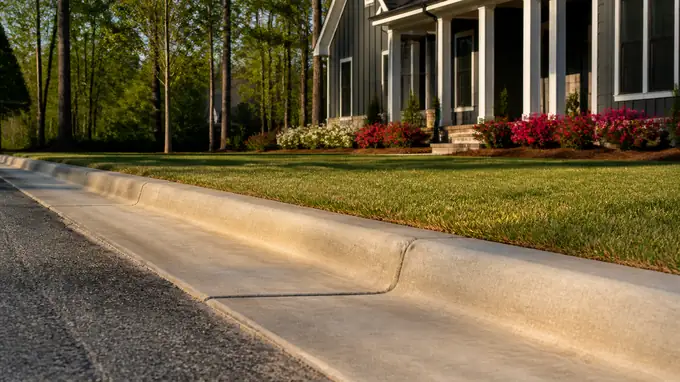
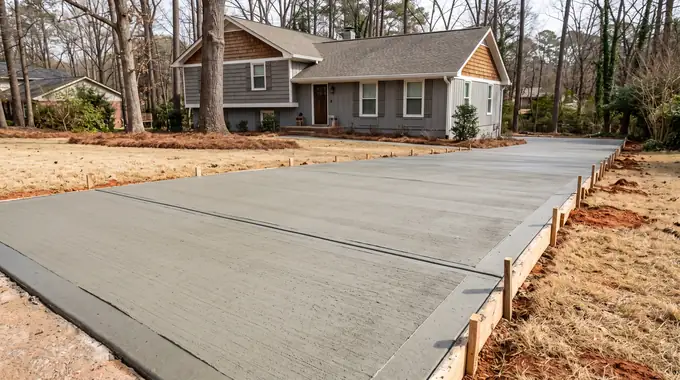
Getting it right takes time more than it takes anything clever. A curb that will outlast the flatwork it borders needs a real base, honest thickness, and joints placed where the concrete already wants to move. We match what is on the property when matching matters, whether that means a plain broom finish, exposed aggregate, or colored and stamped concrete running alongside a patio. Curbing is small work that frames expensive work, so we treat it that way. Call for a free estimate.