+1 470-740-7099
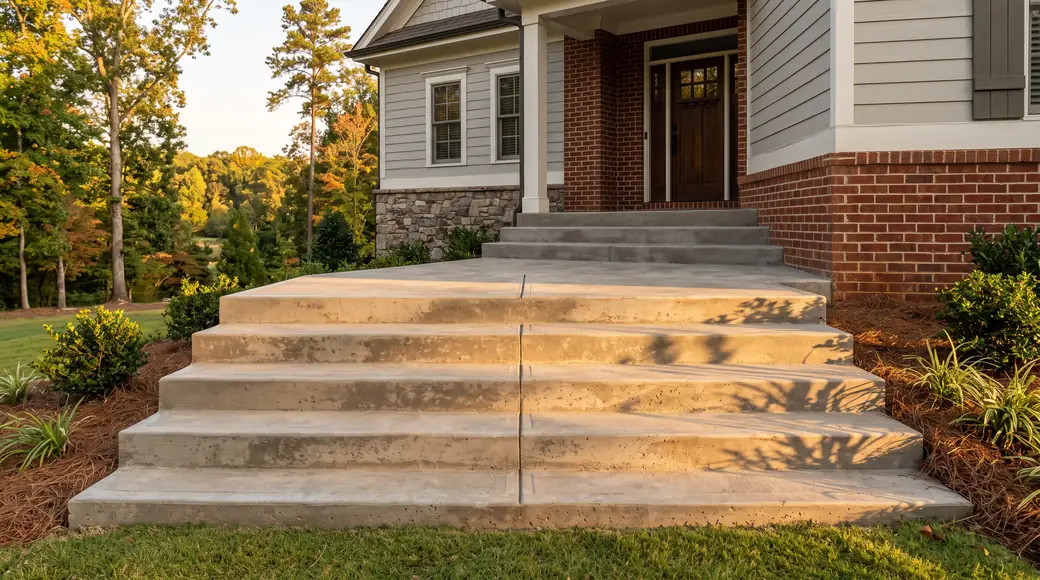
Poured concrete front steps rising to a landing at the front door at a brick-and-siding two-story home in Sandy Springs, GA, in late afternoon light.

Steps, Stoops & Landings in Sandy Springs, GA

Most of the steps, stoops and landings we build replace something that is already there and has stopped working. New pours happen, but replacement is the bulk of the work. A tread has cracked through, the top landing has settled away from the threshold, a handrail post has torn loose from crumbling concrete. We are a concrete contractor, so we look at the whole thing: what the steps sit on, where the water goes, how the sidewalk meets the bottom tread. Sometimes a repair is the right call. Often it is not, and we say so before anyone pours anything.

Sandy Springs houses are usually older than their finishes suggest. Development here started in the 1950s, a housing boom followed highway construction in the early 1960s, and infill continued through the 1980s. Steps from those decades were poured thin, over ground that had not finished settling, on rolling wooded lots where the front walk has to climb. Six decades of that shows up as uneven risers, a stoop drifting away from the brick, and a bottom step sunk an inch below grade. We see it every week.

Permits for this work go through the City of Sandy Springs, and we pull them. Finishes run from a plain broom texture that matches the existing walk to stamped concrete on a landing people stand on and look at every day. We do the same work in Dunwoody on the same terms. Steps are the part of a house every visitor touches, so they are worth getting square and level. Call for a free estimate. Bring photos of what failed if you have them, because the crack pattern usually tells us what is going on underneath.

Call +1 470-740-7099

Licensed, Bonded, and Insured ยท A combined 15 years of experience

Get FREE Estimates

We warranty all of our work because we believe in what we do.

What Steps, Stoops & Landings Involves

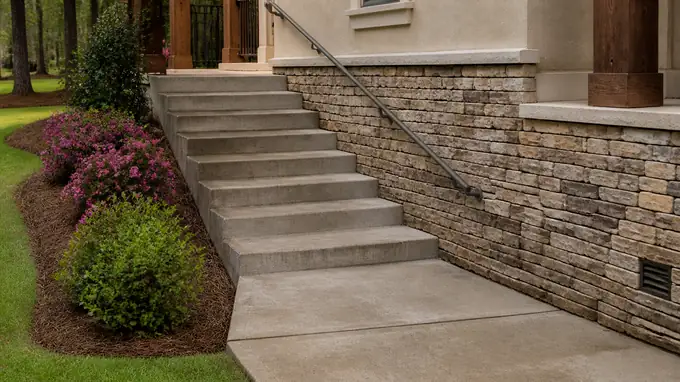
Concrete exterior stairs with a pipe handrail leading to a side entry at a stacked-stone and stucco home in Sandy Springs, GA, after a rain shower.

Concrete stairs

Concrete stairs carry more weight than any other flatwork on the property, so we build them to hold. Footings below frost depth, rebar tied through the risers, and a slab poured monolithic with the landing where the layout allows. Most failures we see come from stairs poured on loose fill: the treads settle, the risers go uneven, and the whole run pulls away from the house. We dig to firm ground first.

Tread depth and riser height stay consistent top to bottom, which is what makes a stair feel right underfoot. Broom finish is standard for traction. Stamped concrete works here too when it matches an existing walk.
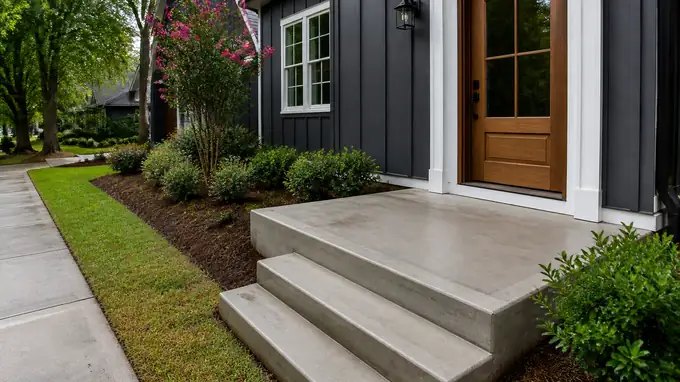
Small concrete front porch slab with a tooled edge at a charcoal farmhouse-modern home in Sandy Springs, GA, after a rain shower.

Concrete porch

A concrete porch is a slab, a perimeter footing and whatever reinforcement the span calls for, usually rebar on chairs rather than wire mesh once you get past a small entry pad. We form the edges square, slope the surface slightly away from the door, and tie the pour into the steps and the concrete sidewalk so water moves off in one direction.

Old porches crack at the corners and spall at the nosing. Replacement is often cleaner than patching. Finishes include broom, exposed aggregate, and colored concrete.

Steps, Stoops & Landings in metro Atlanta

Most front steps in this part of metro Atlanta are as old as the house they belong to. Suburban development here started in the 1950s, ran through an early-1960s housing boom after the highways went in, and kept filling in through the 1980s. That means the stoop you walk up every day was probably poured decades ago, to the standards of its time. Concrete does not last forever, and a set of steps carrying that much traffic eventually tells you so.

Our work across the metro is nearly all replacement. We take out the old flight, dig and pour a footing that carries the load, set forms to the rise and run the entryway actually needs, and tie the new concrete together with rebar or wire mesh before it goes in. Matching the house matters as much as the pour. A 1960s brick ranch in Dunwoody and a later infill build want different proportions, different finishes, different landing depths.

Failures we see repeat themselves. Treads settle away from the door and leave a tall first step. Risers crack where a footing was too shallow or was never there at all. Old repairs, a skim coat or a patch troweled over a moving crack, come loose in sheets and take the surface with them. Landings pull away from the brick and open a gap that carries water straight down the foundation wall. Most of it starts underneath, not at the surface.

Doing this right costs time more than anything else. Excavation and a proper footing take a day nobody sees. Concrete needs to cure before it carries weight, and rushing that is how a new flight cracks in its first year. Finish is where the choices open up: broom, stamped, colored, exposed aggregate to match a walk already on the property. Call us for a free estimate on steps, stoops or landings anywhere we work in the Atlanta suburbs.

How the Work Runs

String lines and grade stakes laid out across a yard before a pour at a painted-white-brick two-story home in Sandy Springs, GA, in clear late-morning sun.

Step 1: Site Evaluation

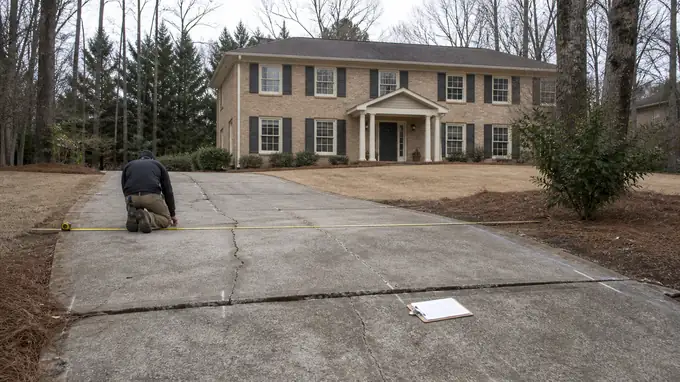
We start by looking at what is already there. Settlement cracks, a stoop pulling away from the brick, treads worn round at the nose, water sitting where it should drain. We check riser heights top to bottom, since old sets often drift out of even. We look at how the steps meet the walk and the concrete driveway, and where the ground has moved under everything.

Concrete driveway and walk at a home, the kind of job an estimate covers at a stacked-stone and stucco home in Sandy Springs, GA, in early morning light.

Step 2: Written Estimate and Permits

Everything goes in writing before we touch anything: dimensions, slab thickness, reinforcement, finish, and how we handle debris. We note the tread and riser layout we intend to build, and any handrail anchoring the design needs. Where a permit applies, we handle that paperwork. You get the scope on paper so there is no argument later about what was included.

Broken-out concrete removed and the base rebuilt before a new pour at a charcoal farmhouse-modern home in Sandy Springs, GA, after a rain shower.

Step 3: Demolition and Base Prep

Old steps come out whole, not chipped down and capped. Capping is why so many stoops on 1960s houses sit too high and shed water back toward the door. We haul the debris, then cut and compact the base in lifts. Poor compaction under a stoop is the usual reason a set drops a half inch and cracks along the first riser.

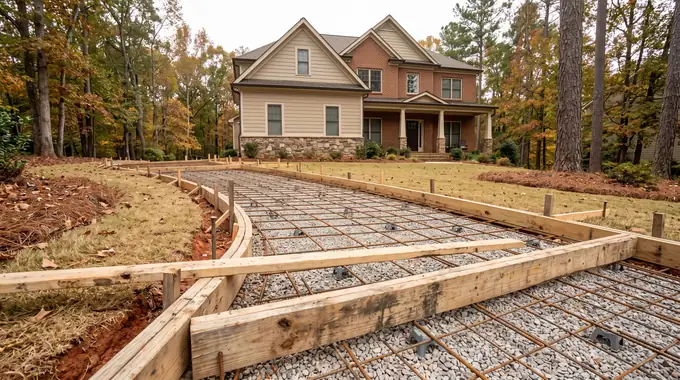
Wooden forms and rebar grid set and tied, ready for concrete at a brick-and-siding two-story home in Sandy Springs, GA, under an overcast sky.

Step 4: Forming, Steel and the Pour

Forms get braced hard, because step forms carry real pressure and a bowed riser is permanent. We tie rebar through the treads and into the landing slab, dowel into the house foundation where it makes sense, and keep steel on chairs rather than laid flat. Concrete installation happens in one pour so there is no cold joint between the landing and the steps.

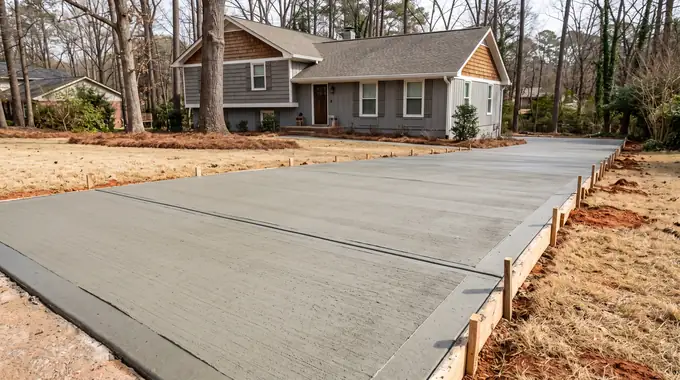
Freshly finished concrete slab curing under a clean broom texture at a grey split-level home in Sandy Springs, GA, under bright midday cloud.

Step 5: Finishing, Curing and Final Walkthrough

Treads get a broom finish across the direction of travel, since a slick nose on a wet morning is the failure that matters most. Edges are tooled, noses are rounded, and we cure rather than let it flash off in the sun. We walk it with you, check every riser underfoot, and note when it takes traffic.

Sidewalks and driveways we build go through the same sequence, so a set of steps tied into new flatwork cures on one schedule.

What Decides the Price

Price on a set of steps comes down to what we find when the old ones come out, and how much structure the new ones need under them. Most of it is visible before anyone quotes. Walk your own stoop and read the list below. The same factors apply in Sandy Springs, Dunwoody, Roswell, Brookhaven and anywhere else we work across Atlanta and metro Atlanta.

What changes the priceWhich wayWhy
Hollow brick steps with rubble fill insidecosts moreDemolition and haul-off run long, and there is rarely a footing underneath worth keeping
A truck that can reach the work from the driveway or streetcosts lessConcrete goes down the chute instead of being moved by buggy or pump
Number of risers and the height of the landingcosts more per riserTaller work takes more forming, more fill and deeper footings
Rebar in the landing rather than wire meshcosts moreA landing carrying a door, a railing and daily traffic gets bar, not mesh
Brick veneer, iron rail or a porch column bearing on the old stoopcosts moreEach comes off and goes back, and a column needs temporary support while we pour
Water standing at the base of the stepscosts moreWe regrade or drain first, because a wet base moves under a new slab
Steps tied into an existing driveway, sidewalk or patiocosts moreWe saw a clean joint and match thickness to the flatwork already there
Stamped, colored or exposed aggregate finishcosts moreIt adds labor at finish time and a second pass on the surface

Compare bids line by line. Look at slab thickness, whether reinforcement is bar or mesh, how deep the footings go, whether demolition and haul-off sit inside the number, and what the new steps bear on. Quotes that look far apart usually differ on one of those.

Questions About Steps, Stoops & Landings

How long before new Sandy Springs steps can be used?

Light foot traffic comes well before full strength. We keep everyone off the slab until it has set hard, then open the steps for walking while the concrete keeps curing underneath. Heavy loads wait longer: appliances, furniture, anything being dragged. We tell you on the day of the pour where things stand, and we leave the barriers up if there are kids or dogs in the house.

How do you stop steps icing over in Georgia winters?

Drainage does most of that work. We pitch the treads so water runs off the front edge instead of standing in a low spot, and we finish with a broom texture that holds grip when the surface is wet. Rock salt is the thing to avoid on new concrete, since it chews up the surface. Sand gives traction without doing damage.

Can new steps be tied into an existing Sandy Springs porch?

Yes. We drill into the existing structure and set dowels so the new steps and the old porch move as one piece rather than splitting apart at the joint. The porch footing gets looked at first. Tying solid new steps to a slab that is already settling does not fix the settling, it just moves the crack to a new place.

Can you repair crumbling Sandy Springs front steps rather than replace them?

Yes, when the damage stops at the surface. Spalled edges, a chipped nose, a shallow section that has flaked off: those we can cut back and rebuild. Once the rebar inside has rusted and swelled, or a riser has broken through, repair stops being honest work. Rust keeps expanding after the patch goes on, and the new material comes off in sheets.

Do concrete steps need a handrail under Sandy Springs code?

Yes, once a flight rises past the point where code calls for one, and most front entries do. The rail has to be graspable and continuous, anchored solidly rather than surface-tacked into a thin edge. We plan for it during layout, setting the anchors or sleeves while the concrete is still wet, which holds far better than drilling a cured slab later.

What rise and run do Sandy Springs steps have to meet?

Code sets a maximum riser height and a minimum tread depth, and it also holds every riser in a flight to the same height. That last part matters most. A single odd step at the top or bottom is what people trip on. We measure the total height first, divide it evenly, and confirm the current requirements before any forms go up.

Get a Free Estimate

Get FREE Estimates

We warranty all of our work because we believe in what we do.

Tap to call +1 470-740-7099