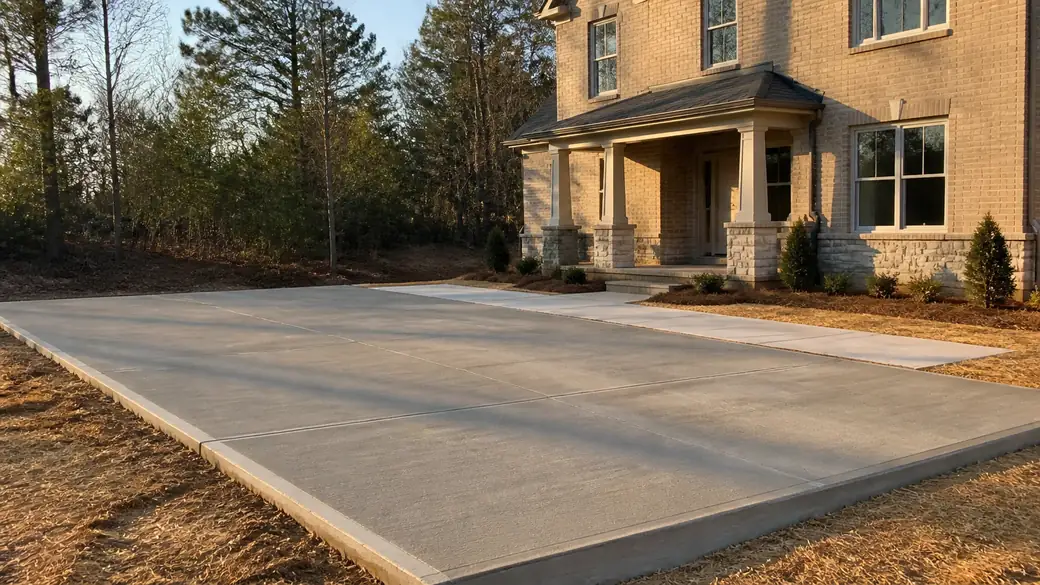
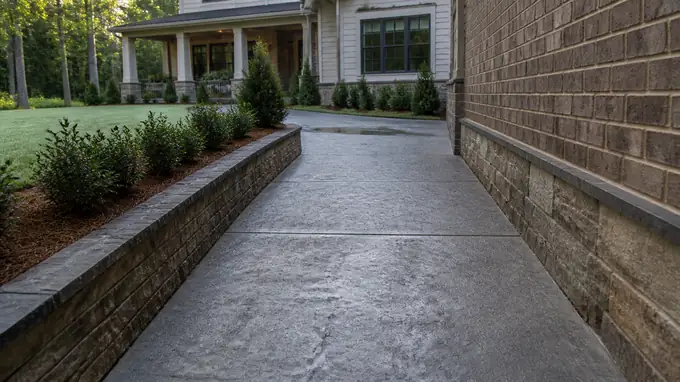
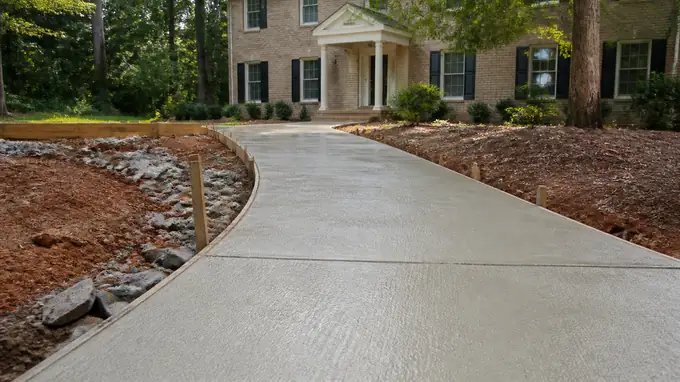
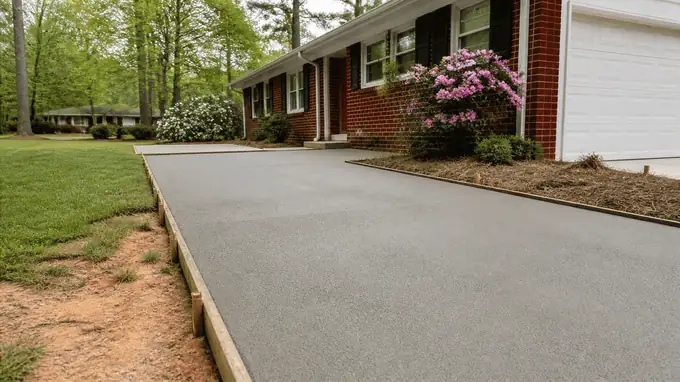
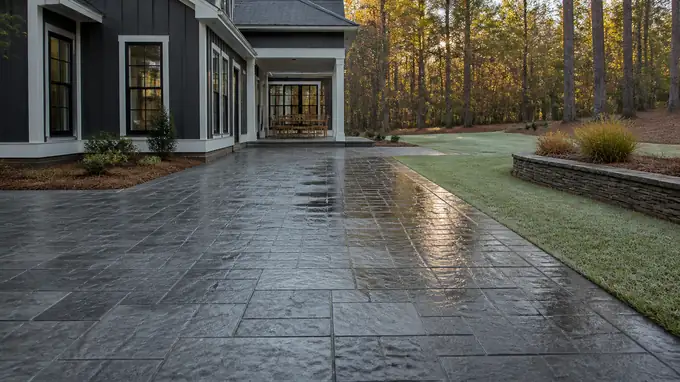
Slab work in Scottdale mostly comes down to a handful of options. A plain broom-finished slab is the workhorse: driveways, garage floors, shed pads and walkways. Stamped concrete starts as the same structural slab, then gets a pattern pressed into the surface while it is still workable, so a patio can read as slate, brick or flagstone. Exposed aggregate strips back the top layer to show the stone underneath and gives good footing on a sloped driveway. Color can go into any of them. On commercial property, load matters more than looks.
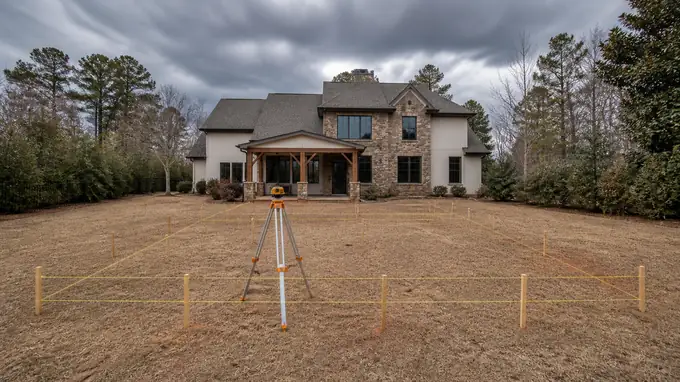
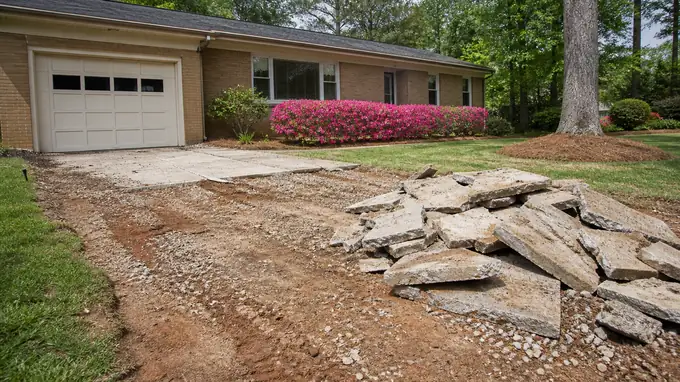
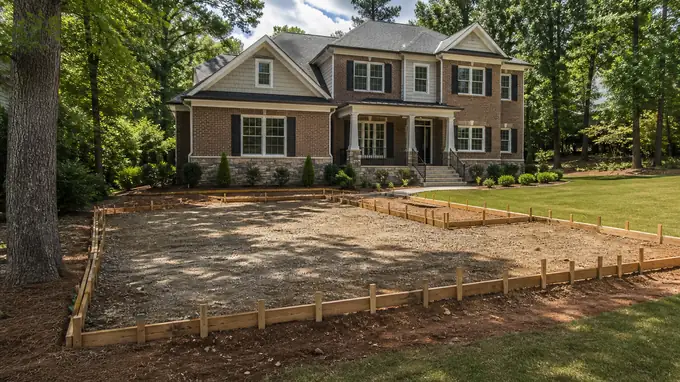
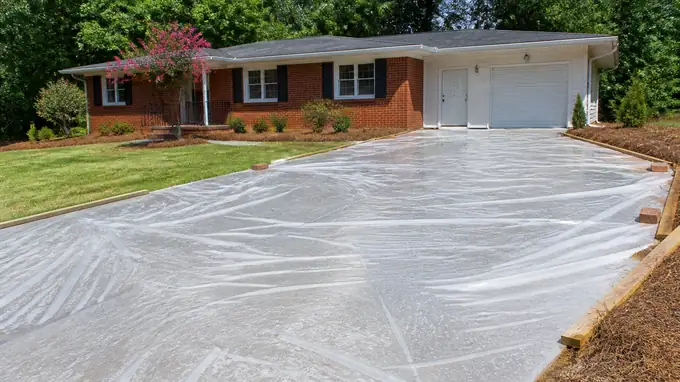
Whichever finish you choose, the part nobody sees decides how long it lasts. We test the site first, dig down to firm ground, then lay and compact a gravel base. Reinforcement goes in next, rebar or wire mesh set up on chairs so it sits inside the slab instead of on the dirt below it. Forms are pitched so water runs away from the house. We pour, finish, and cut control joints so the concrete cracks where we want it to. Decorative work adds steps, not shortcuts.
Water causes most of the trouble. The area sees about 50 inches of rain a year, and water that pools against a slab or runs under its edge finds any soft spot in the fill and carries it off. The slab settles, cracks, and tips toward the house. Stamped surfaces have a failure of their own. Skip the sealer, or let it wear through, and the color fades while the pattern holds grime. Joints cut too late or spaced too far apart let the slab crack wherever it likes.
Getting it right costs more under the surface than on it. A deeper base, reinforcement placed where it does its job and a real plan for drainage all add material and labor before any decorative choice is made, and they are the last places we trim. Stamped and colored finishes run higher than a broom finish because they take more crew time and more product, and they need resealing every few years. The right slab depends on what sits on it, how water crosses the property, and how it needs to look. Call for a free estimate.