+1 470-740-7099
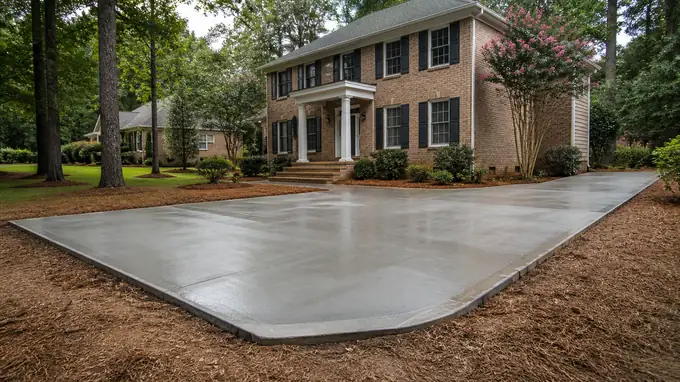
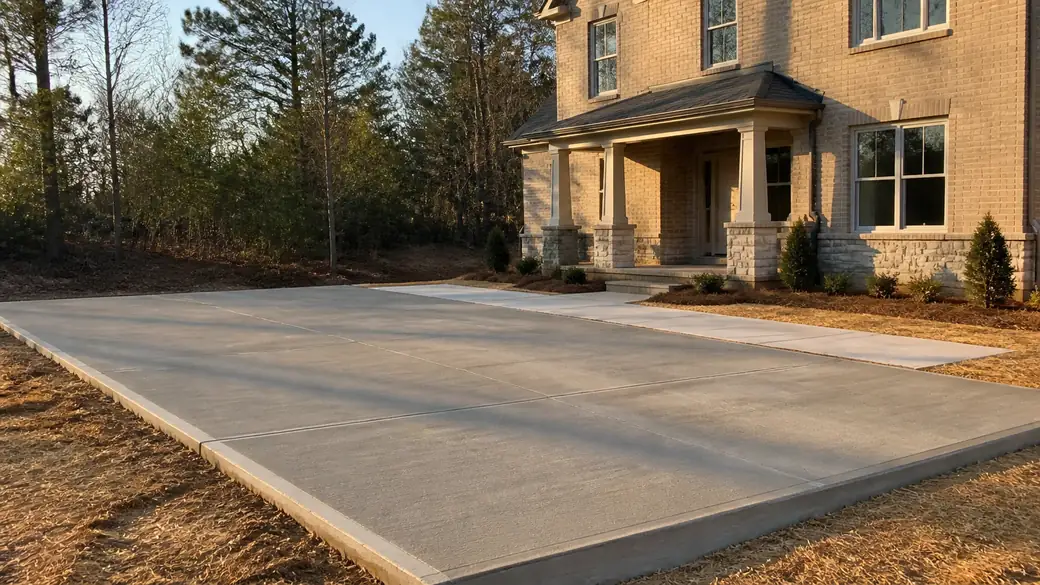
concrete slab installation completed by a local contractor at a brick-and-siding two-story home in Sandy Springs, GA, in late afternoon light.

Concrete Slab Installation in Clarkston, Georgia

A concrete slab is the flat, load-bearing surface that everything else sits on: a garage floor, a shed pad, a patio base, the floor of a room addition. We pour slabs for residential and commercial property in Clarkston, and we treat each one as a structural job rather than a surface job. That difference matters. A slab that looks fine on the day it is finished can still crack, settle or hold water a few seasons later if the ground under it was never ready. Most of what decides how long a slab lasts happens before any concrete arrives, and that is where we spend our time.

The work starts below grade. We test the soil on every site before anything else happens, because conditions change from one lot to the next and a guess is not a plan. Then we cut to depth, compact the base in lifts, and set forms to a grade that moves water away from the building. Reinforcement goes in next, sized to what the slab will carry: a patio table is not a pickup truck. We place the concrete, screed it flat, and cut control joints so the slab cracks where we choose. Curing gets the same attention as the pour.

Water is what ruins most slabs. This part of Georgia gets about 50 inches of rain a year, and a slab with a thin base, poor drainage or no joints will show it: edges undermined, sections heaved, cracks running wherever they please. Most slab failures trace back to shortcuts taken early in the job, not to the concrete itself. The prep is slower, and it is the part nobody sees once the slab is down, which is exactly why it gets skipped. We do not skip it. If you have a slab in mind, call for a free estimate.

Call +1 470-740-7099

Get FREE Estimates

Concrete Services in Clarkston

Concrete Slab Installation Cost

The number on a slab estimate comes from things you can see on the site: square footage, thickness, what goes under the slab and what goes in it. A 4-inch patio slab on compacted gravel with wire mesh is a different job from a 6-inch shop floor with rebar on 18-inch centers. Truck access counts too. If the chute can't reach, we pump or wheel it in. We measure all of it before writing a number. Call for a free estimate.

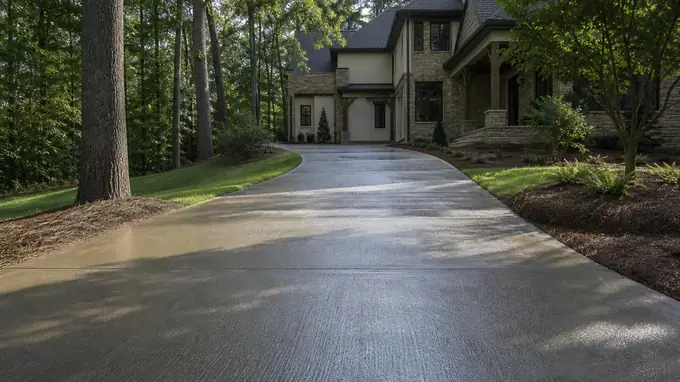
concrete driveway installation completed by a local contractor at a buff-brick ranch home in Sandy Springs, GA, under a hazy afternoon sky.

Concrete Driveway Installation

Most residential driveways we pour run 4 to 5 inches thick, with rebar or fiber reinforcement, over a compacted stone base. That base does more of the work than people expect. With about 50 inches of rain a year, we pitch the surface so water runs toward the street and away from the garage. Control joints go in roughly every 10 feet. That gives the slab a straight line to crack along instead of a random one.

concrete flooring installation completed by a local contractor at a painted-white-brick two-story home in Sandy Springs, GA, under low winter sun.

Concrete Flooring Installation

Interior floors start below the concrete. We lay a vapor barrier (10-mil poly is typical) over compacted fill so ground moisture doesn't wick up into whatever sits on top. For a floor that stays exposed, we trowel it hard and smooth, then seal, stain, or grind and polish it. For one that gets tile or wood later, flatness matters more than shine, and we test moisture before anything goes over it. Basements, garages and additions all follow that sequence.

concrete slab repair completed by a local contractor at a stacked-stone and stucco home in Sandy Springs, GA, in raking morning side light.

Concrete Slab Repair

Not every crack means a failed slab. Hairline shrinkage cracks are normal and mostly cosmetic. What we look for is movement: one side sitting higher than the other, a slab tilting toward the house, a hollow sound underfoot, or spalling where the surface flakes away. Settled sections can often be lifted and the voids filled. Wide cracks get routed and sealed. When the base has washed out or the reinforcement is rusting through, patching only buys time, and replacement is the honest answer.

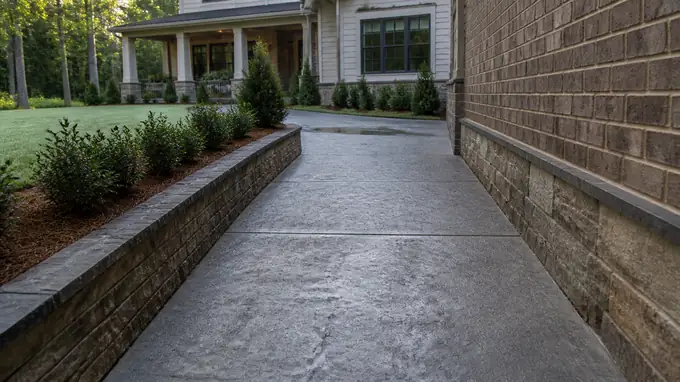
concrete sidewalk installation completed by a local contractor at a brick-and-siding two-story home in Sandy Springs, GA, in early morning light.

Concrete Sidewalk Installation

Walkways pour at 4 inches thick, usually 3 to 4 feet wide, a little wider where two people walk side by side. We tool or saw joints every 4 to 5 feet, about the width of the walk, so cracks stay in the joints. A light broom finish gives grip when it's wet. Where a walk meets the driveway or front steps, we set an expansion joint so the two pieces move on their own instead of pushing against each other.

What to Expect on a Clarkston Concrete Job

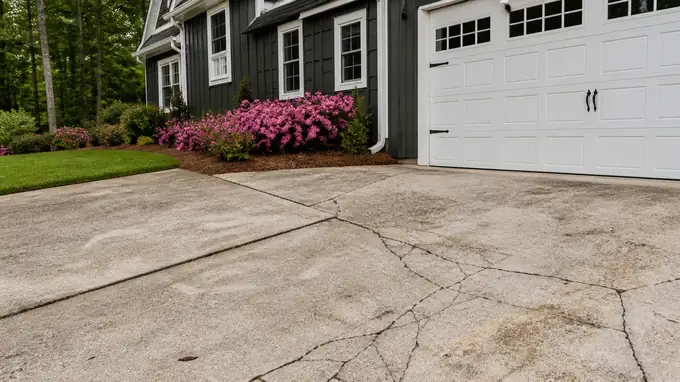
A worker examines an old driveway before replacement. at a charcoal farmhouse-modern home in Sandy Springs, GA, in full afternoon sun.

Step 1: Site Assessment

We walk the site before anything is quoted or dug. We look at where water runs off the roof and across the yard, what is buried (utilities get marked before any digging), where old concrete or tree roots need to come out, and how a truck will reach the pour. Every site is tested individually before work starts, because the ground under a slab decides how long it lasts more than the concrete does.

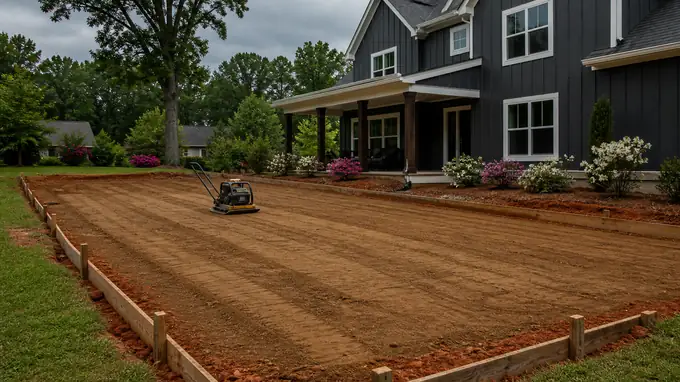
A plate compactor tamps down soil in a small excavated area. at a charcoal farmhouse-modern home in Sandy Springs, GA, under a darkening storm sky.

Step 2: Site Preparation

Digging comes next, down past topsoil and anything organic, which rots and leaves voids under a slab. We set grade so the finished surface sheds water away from the house. With about 60" of rain a year, a slab that holds puddles shows it early. Crushed stone base goes in and gets compacted in lifts with a plate compactor. Soft spots are dug out and replaced, not covered over. Most cracked slabs we tear out failed at this stage.

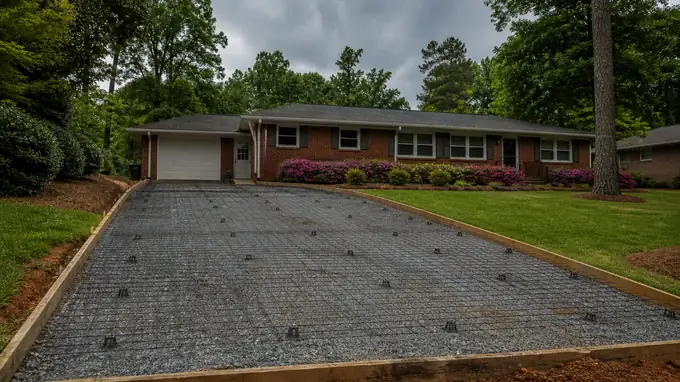
Wire mesh is unrolled across a driveway base before pouring. at a red-brick ranch home in Sandy Springs, GA, under a darkening storm sky.

Step 3: Forming & Reinforcement

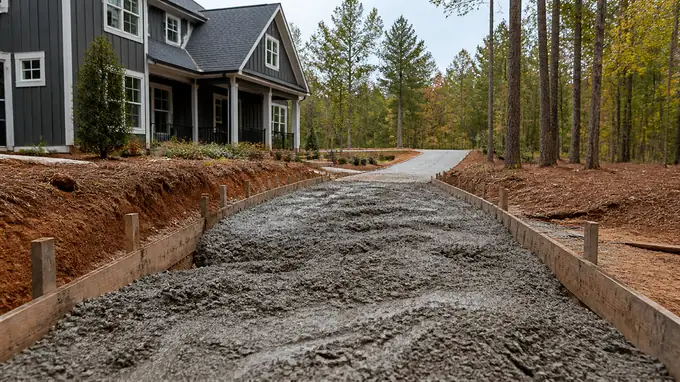
Forms are straight lumber or steel, staked tight and set to string lines so the slab comes out level where it should be and pitched where it drains. Inside, we set rebar or welded wire mesh on chairs so it sits in the middle of the slab, not on the ground where it does nothing. Where new concrete meets a foundation or an existing walk, we add expansion joint material so the two can move independently.

A ready-mix truck discharges concrete into a driveway form. at a charcoal farmhouse-modern home in Sandy Springs, GA, under a hazy afternoon sky.

Step 4: Pouring

Pour day moves fast once the truck arrives. We check the ticket against the mix we ordered and don't let water get added at the chute to make it flow easier, since extra water weakens the surface and invites cracking. Concrete goes down where it belongs rather than being dragged, gets worked in around the reinforcement, then is screeded off the forms to grade. We won't pour onto muddy or frozen base, and we reschedule rather than race a storm.

Stamping mats are pressed into a patio surface to imprint a pattern. at a stacked-stone and stucco home in Sandy Springs, GA, under low winter sun.

Step 5: Finishing

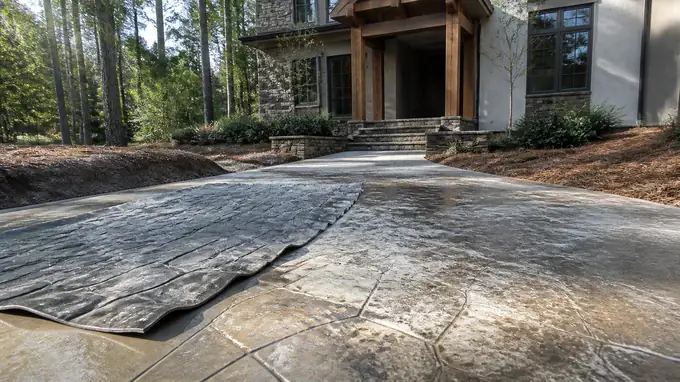
Timing decides a good finish. We bull float right behind the screed, then wait for bleed water to leave the surface before touching it again. Working that water back in is how you get dusting and scaling later. Edges are rounded with an edger, control joints are tooled or saw-cut at a spacing matched to slab thickness, and the top gets a broom finish for grip. Stamped and decorative patterns are pressed in during this same window.

A hand sprayer applies curing compound to a finished patio. at a tan-brick colonial in Sandy Springs, GA, under an overcast sky.

Step 6: Curing

Concrete doesn't dry out so much as cure, and it needs moisture to do that properly. Right after finishing we apply a curing compound or cover the slab with wet burlap or plastic so the surface doesn't lose water faster than the inside. A slab that dries too quickly develops a weak, crazed top layer that flakes. Foot traffic can come back fairly soon. Cars and heavy loads wait longer, and we tell you exactly when before we leave.

A sprayer applies sealer across a driveway. at a stacked-stone and stucco home in Sandy Springs, GA, under low winter sun.

Step 7: Sealing

A sealer goes on once the slab has cured, not before. For plain driveways and patios we usually use a penetrating silane or siloxane sealer, which soaks in, repels water and leaves the surface looking unchanged. Stamped and colored concrete often gets an acrylic sealer that deepens the color and adds some sheen. That type can get slick when wet, so we mix in a grip additive. Either kind needs a fresh coat every few years.

The Concrete Options Available in Clarkston

Most slabs we pour in Clarkston get a broom, stamped or exposed aggregate finish. A broom finish is the plain workhorse: the surface is dragged with a stiff broom while still green, leaving fine ridges that grip underfoot on driveways, walkways and garage aprons. Stamped concrete presses a pattern into the same slab, so a patio can read as slate, brick or wood plank. Exposed aggregate washes back the top layer to show the stone mixed inside. Each one sits on the same structural slab, built the same way. Only the surface changes, and so does what it asks of you afterward.

Choosing between them happens before any forms go down, because the finish decides how the day of the pour runs. Broom finishing is quick and forgiving. Stamping is not. The crew has a short window while the concrete is firm enough to hold a pattern but soft enough to take it, so we bring extra hands and stage the mats and release agent before the truck arrives. Color, whether mixed through or broadcast on top, gets settled in advance too. Reinforcement stays the same under all of them: wire mesh or rebar sized to what the slab will carry.

Decorative work shows its mistakes more than plain work does. A stamped patio laid on a poorly compacted base will crack, and the crack often runs straight across the pattern where nobody can miss it. Water is the other problem. Metro Atlanta sees about 50 inches of rain a year, and a surface that holds it will stain and turn slick. We set a fall on every slab so water runs off toward the yard or a drain, not the house. Stamped and colored surfaces also get a sealer, which needs renewing as it wears.

Getting any of these right comes down to the ground underneath and the hours spent before the truck shows up. Soil varies from site to site, so every site is tested before work starts, and the base is built to what the test finds rather than to habit. A plain broom finish forgives small flaws in that preparation. Stamped and exposed aggregate do not: they need tighter joint spacing, firmer compaction and a sealer kept up on schedule. If you are weighing one against another, call for a free estimate and we can talk it through.

What Decides the Price of Concrete in Clarkston

Most of what a slab costs is settled before the first truck shows up. It depends on the ground you already have, how the concrete gets to the forms, and what the slab has to carry. You can check nearly every item below by walking your own property.

What changes the priceWhich wayWhy
Old concrete, asphalt or pavers in the footprintcosts moreIt has to be broken out, loaded and hauled away before we can form anything.
Stumps or large roots under the slab areacosts moreRoots left in place rot or grow, and either one cracks the slab from below.
A clear path for the mixer truck to the formscosts lessIf the truck can't reach, we pump or wheel the concrete in, which adds equipment and labor.
Ground that slopes across the slabcosts moreA sloped site needs fill, compaction and deeper forms on the low side to come out level.
Where water runs and pools todaycosts more if it runs toward the slabWith about 50 inches of rain a year, a slab needs regrading or a drain so water moves away from it.
Soft or previously dug-up groundcosts moreLoose soil gets dug out and replaced with compacted stone. Every site is tested individually before work starts.
Vehicles parking on the slabcosts moreA driveway is poured thicker than a patio and carries heavier reinforcement.
Rebar grid instead of wire mesh or fibercosts moreRebar is cut, tied and set on chairs by hand, and it holds cracks tighter under load.

To compare bids, line them up item by item. Check the thickness each one quotes, the type of reinforcement, and how much compacted base goes under the slab. See who removes and hauls the old surface, and whether drainage work is written in. A lower number that leaves those out is pricing a different job.

Get a Free Estimate

Get FREE Estimates

Tap to call +1 470-740-7099