+1 470-740-7099
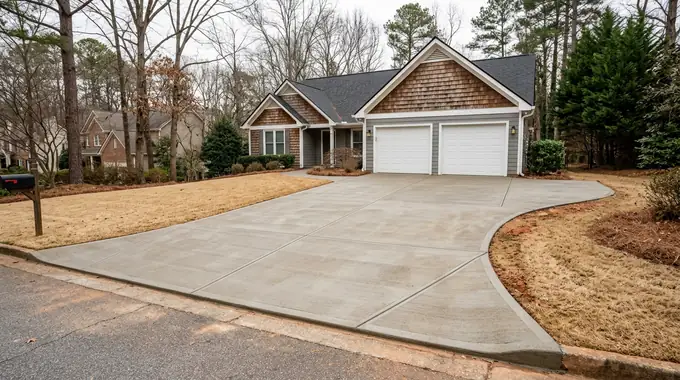
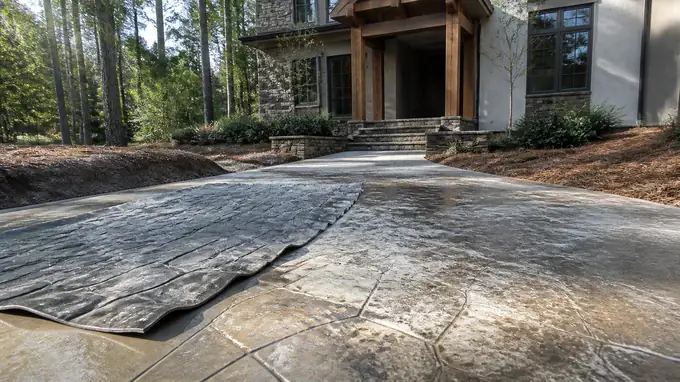
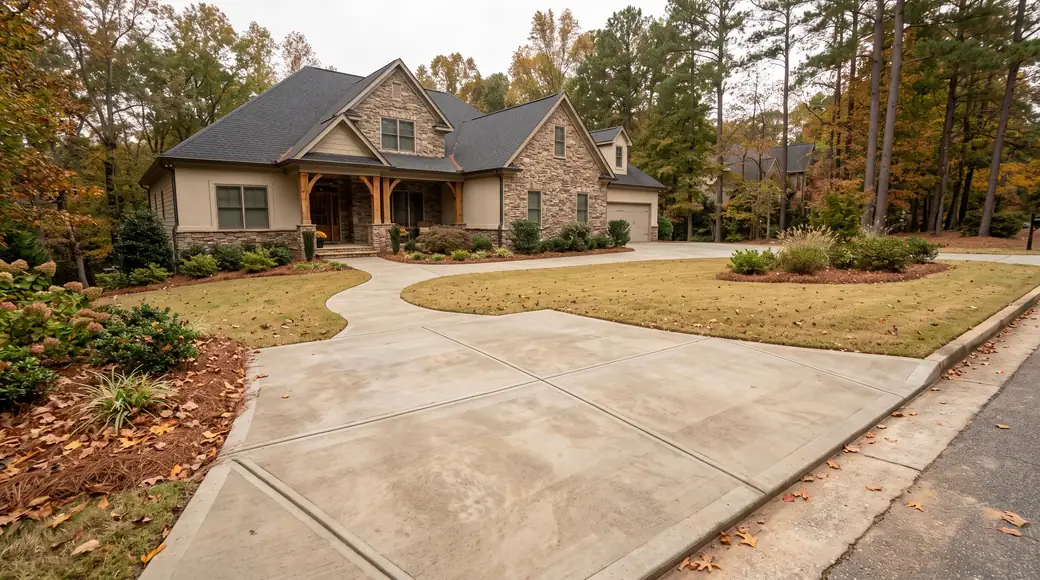
Wide view of finished concrete flatwork across the front of a home at a stacked-stone and stucco home in Sandy Springs, GA, under an overcast sky.

Commercial Concrete for Offices & Corporate Properties in Sandy Springs, GA

We pour and replace concrete for office parks, corporate campuses and retail properties around Sandy Springs. Most of it is flatwork: entrance walks, loading pads, dumpster pads, parking islands, curbing, and the sidewalk that carries people from the visitor lot to the front door. Some of it is decorative. Stamped concrete and colored concrete turn up at plaza entries and courtyard seating, where a property manager wants the approach to read as finished rather than purely functional. We work as a concrete contractor rather than a general contractor, so the subgrade, the rebar or wire mesh, the pour and the finish are ours from start to end.

Around Perimeter Center, the towers sit on ground that filled in as the suburbs grew from the 1950s onward, and those properties have been added to, re-tenanted and resurfaced many times since. Very little of what we do here is new construction. We are usually taking out a walkway that has heaved, a service drive cracked through at the joints, a ramp that no longer meets the threshold flush. The terrain is rolling and wooded, so grade and drainage differ from one property line to the next. We read where the water goes before anything gets formed.

Call +1 470-740-7099

Licensed, Bonded, and Insured ยท A combined 15 years of experience

Get FREE Estimates

We warranty all of our work because we believe in what we do.

What Commercial Concrete for Offices & Corporate Properties Involves

Commercial concrete on an office property is mostly flatwork people walk and drive across every day. Entry sidewalks, the pad under a dumpster enclosure, loading areas, parking bays, curb lines, stair landings. Around Perimeter Center and along the Roswell Road corridor, much of this is replacement work rather than new pour, because the buildings are already standing and the concrete under them has been carrying traffic and delivery trucks for a long time. A property manager usually calls us about one bad section, and the job turns out to be that section plus whatever drains into it.

Most of the work starts with demolition. We saw cut to a clean joint, break out the old slab, haul it off, then look at what is underneath, because a slab that failed early usually failed from below. Base gets regraded and compacted. Forms go in, then rebar or wire mesh depending on what the slab has to carry. As a concrete contractor working occupied buildings, we stage the pour so a usable door and a usable route stay open, and a concrete sidewalk at a main entrance gets a finish that is still walkable wet.

Failures repeat themselves. Water sitting where it should be running off, a slab poured too thin for the load that ended up on it, joints cut late or spaced too far apart, roots lifting a walk on a wooded lot. Stamped concrete fails its own way: the pattern holds up fine, but the surface was sealed over trapped moisture and it starts to flake. We look for the cause before we price a fix, because replacing a panel that failed from bad drainage buys you a few years and then the same phone call.

Getting it right is unglamorous. Thickness matched to the load, reinforcement held at the right height in the slab instead of lying on the ground, control joints cut on time, and a base that will not move under it. Stamped and colored work adds a step, since color has to stay consistent across pours that happen on different days and out of different trucks. We do commercial concrete in Sandy Springs, Dunwoody, Roswell, Brookhaven, Atlanta and the rest of metro Atlanta, same crews and same terms in every one of them. Call for a free estimate.

Commercial Concrete for Offices & Corporate Properties in metro Atlanta

Most of our commercial work sits in and around Perimeter Center, where office towers, parking areas and the walkways between them carry foot traffic from early morning on. The Roswell Road corridor asks for something different: retail and mixed-use frontage, service aprons, loading areas, concrete sidewalk running tight along the street. City Springs anchors the built downtown. Each setting puts its own loads on flatwork, so we read the existing slab before we decide anything about it.

Sandy Springs grew up around its housing, and the commercial property serving those neighborhoods is about the same age. Suburban development began in the 1950s, an early-1960s boom followed highway construction, and infill kept going through the 1980s. What that leaves us is mostly replacement work rather than new build. Sidewalks poured decades ago, driveways and aprons that have outlasted whatever went under them, slabs cracked on lines nobody drew. We open one up and look at the rebar or wire mesh before choosing between patching and tearing out.

Our range runs across metro Atlanta, and a corporate property in Dunwoody gets the same crew and the same method as one a few minutes from where we load the truck. Concrete installation at an occupied building has to work around the people using it, which shapes how we sequence a job: pours staged by section, entrances kept open, sidewalk installation done in runs short enough to leave a walking path the whole time. Call for a free estimate on any of it.

How the Work Runs

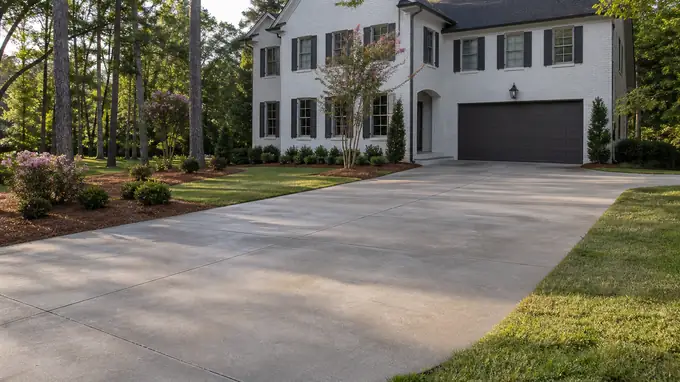
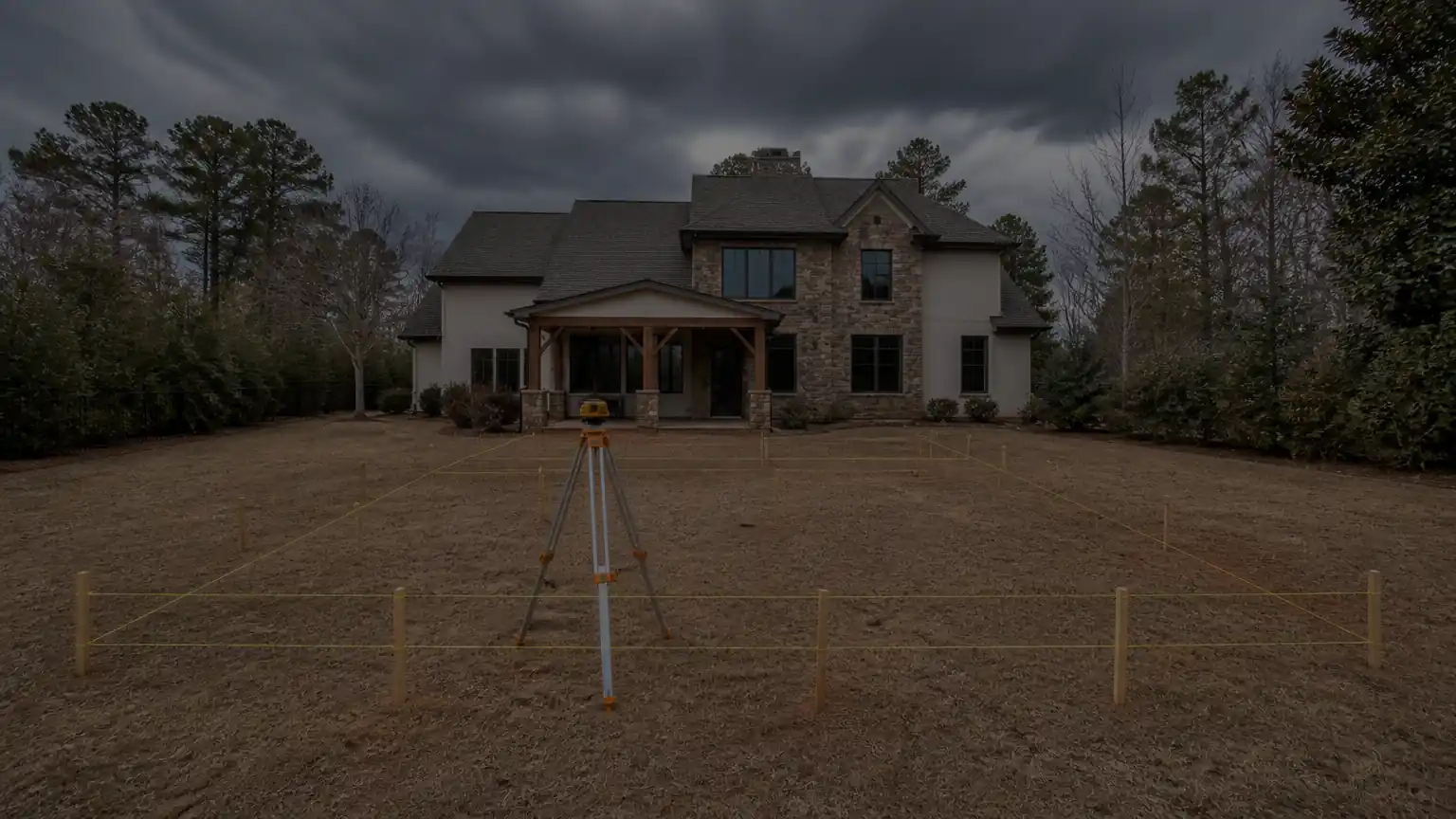
String lines and grade stakes laid out across a yard before a pour at a painted-white-brick two-story home in Sandy Springs, GA, in clear late-morning sun.

Step 1: Site Evaluation

We walk the property and look at what is already there. Slab thickness at broken edges, how water moves across the lot, where trucks and delivery vans turn, which panels have heaved and which have simply worn out. On office properties we check the path from parking to the door, because that run of sidewalks takes the most foot traffic and shows failure first. We measure and photograph everything.

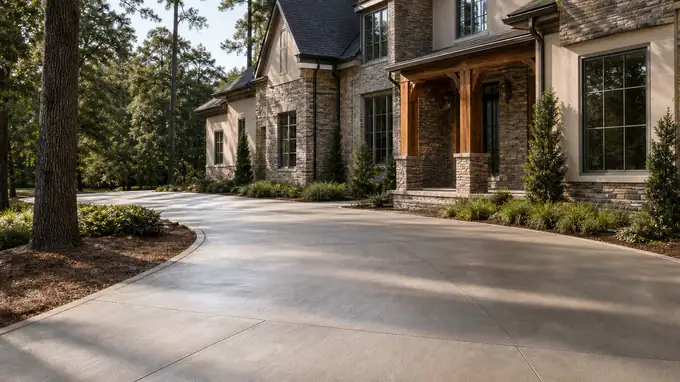
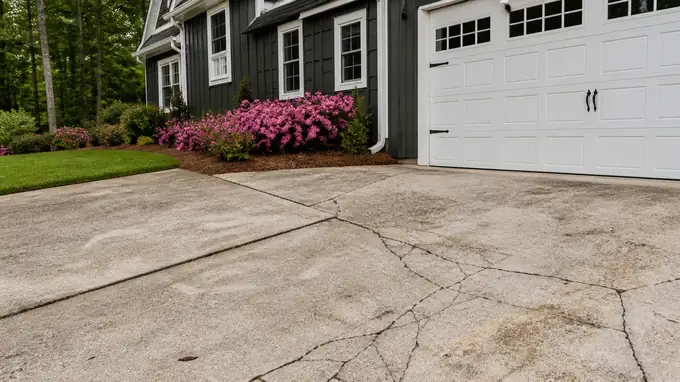
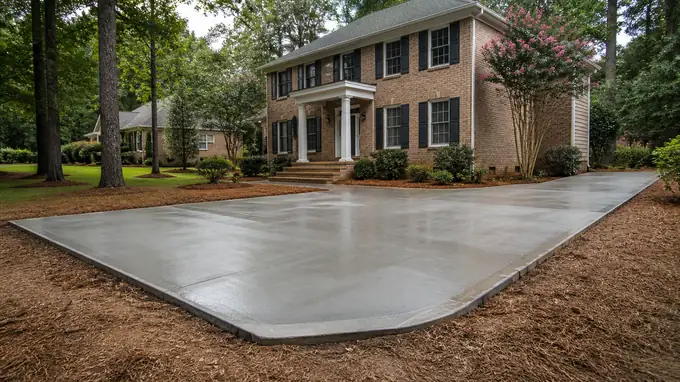
Concrete driveway and walk at a home, the kind of job an estimate covers at a stacked-stone and stucco home in Sandy Springs, GA, in early morning light.

Step 2: Written Estimate and Permits

You get the scope in writing: square footage, slab thickness, reinforcement (rebar or wire mesh), finish, jointing plan and how the site gets staged around your tenants. We handle permit paperwork where the job needs it. Phasing matters on occupied buildings, so the estimate says which sections close when and how people reach the entrance while concrete cures.

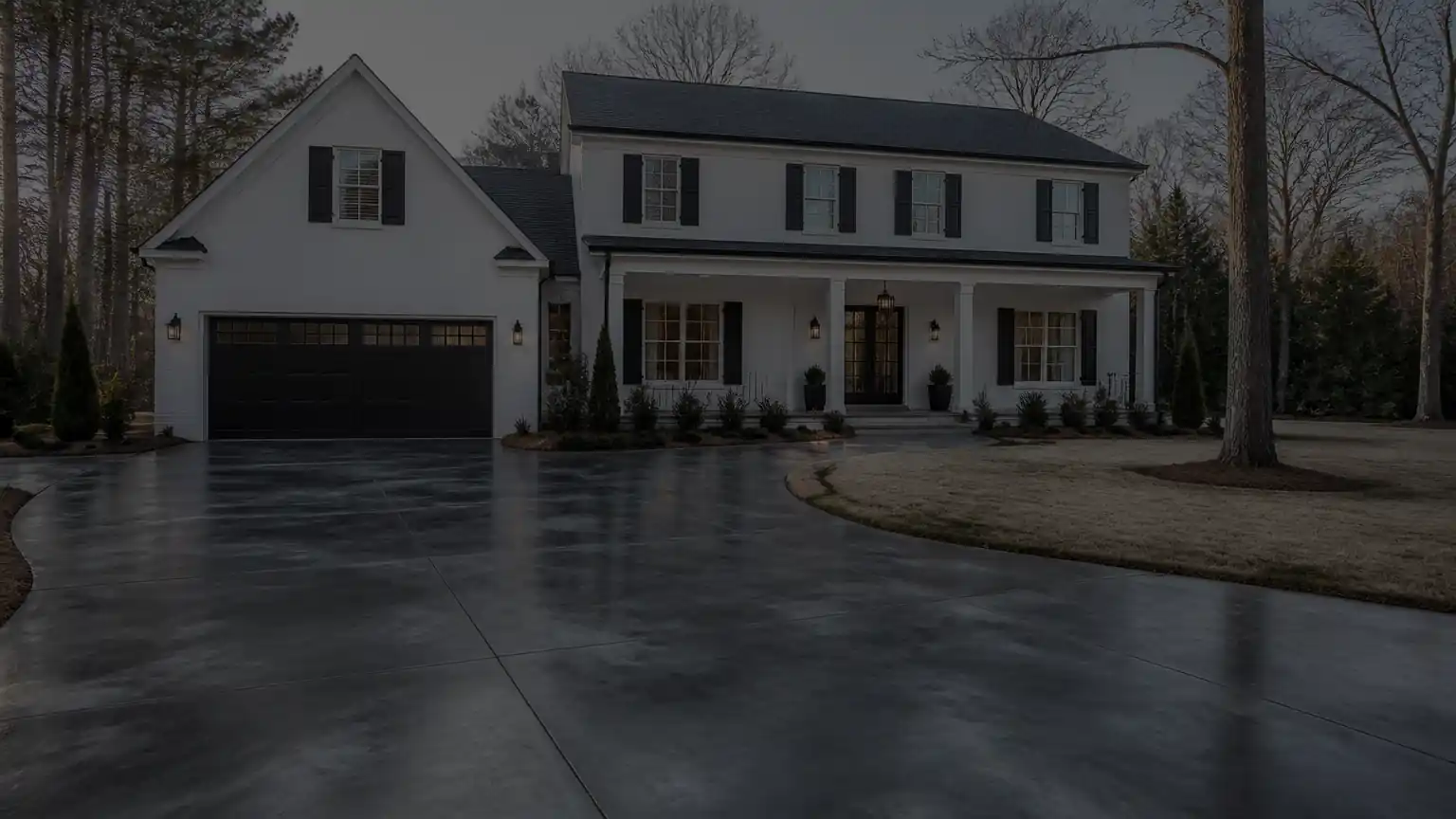
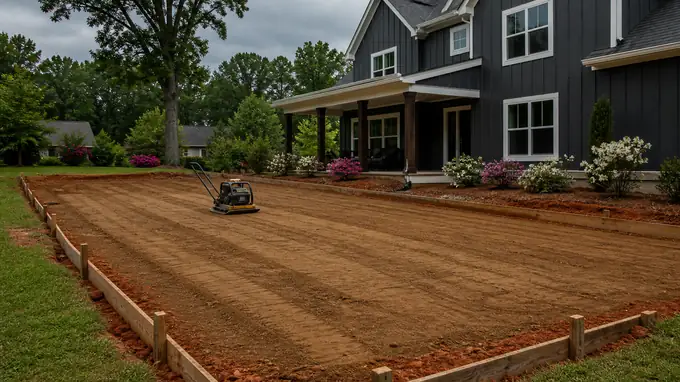
Broken-out concrete removed and the base rebuilt before a new pour at a charcoal farmhouse-modern home in Sandy Springs, GA, after a rain shower.

Step 3: Demolition and Base Prep

Old concrete comes out in sections, gets loaded and hauled off. Then the real work: cutting to grade, removing soft spots, bringing in graded base and compacting it in lifts. Most failed concrete installation traces back to base, not mix. A driveway poured on loose fill cracks no matter how good the finish looked on day one. We compact and check grade before forming.

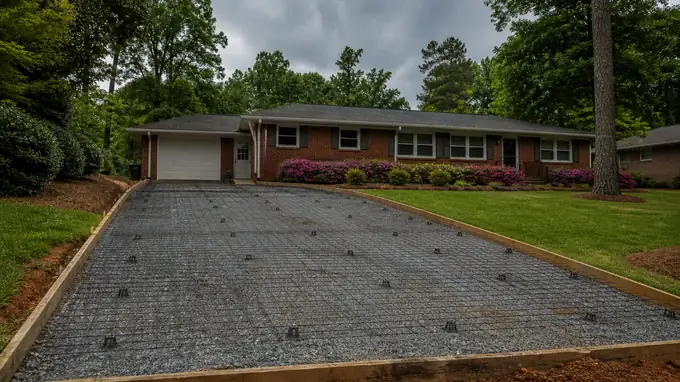
Wooden forms and rebar grid set and tied, ready for concrete at a brick-and-siding two-story home in Sandy Springs, GA, under an overcast sky.

Step 4: Forming, Steel and the Pour

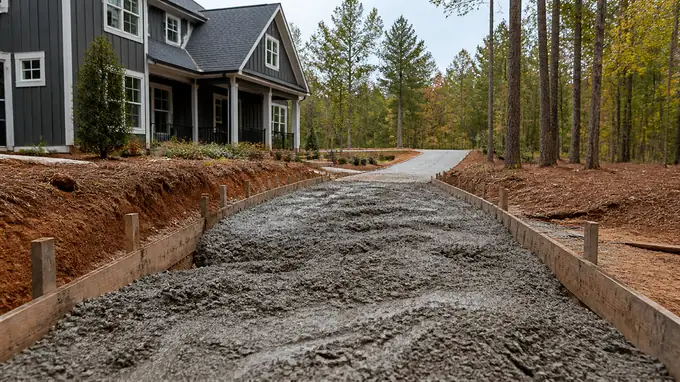
Forms get set to line and grade with slope pitched away from buildings. Reinforcement goes in next, rebar on chairs for a commercial concrete driveway or heavier drive aisle, wire mesh on lighter flatwork, held up off the base rather than laid flat and stepped on. Concrete arrives ready mix, placed in a continuous pour per section, screeded and consolidated as it goes.

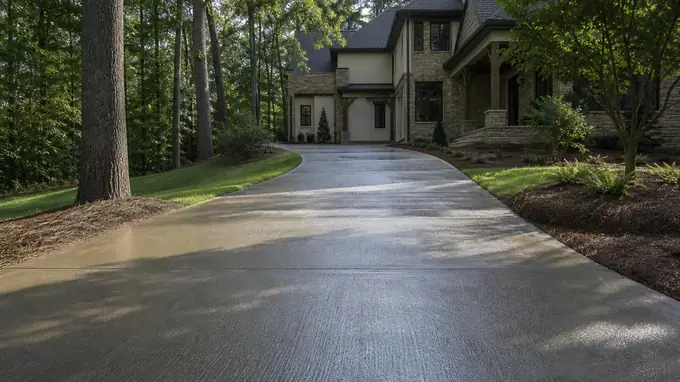
Freshly finished concrete slab curing under a clean broom texture at a grey split-level home in Sandy Springs, GA, under bright midday cloud.

Step 5: Finishing, Curing and Final Walkthrough

Finish depends on the surface. Broom texture for driveways and walks, exposed aggregate or stamped and colored where the entry needs to look like something. Control joints get cut early, before shrinkage picks its own crack line. Then curing compound and barricades, and we tell you honestly when foot traffic and vehicles can return. We walk it with you at the end.

What Decides the Price

Price on a commercial pour comes down to conditions you can walk out and look at yourself. Before quoting, we check what sits under the existing surface, how close a truck can get, and where water goes when the lot fills up.

What changes the priceWhich wayWhy
Old slab still in placeCosts moreBreaking out, hauling off, then rebuilding the subgrade underneath
Mixer backs within chute reachCosts lessNo pump, no wheelbarrow runs across the property
Slab thickness the traffic calls forCosts moreDelivery and truck lanes need more depth than a walkway
Rebar mat instead of wire meshCosts moreMore steel, tied in place, on chairs rather than laid flat
Grade falling toward the buildingCosts moreReworking slope, sometimes adding drains, before any concrete
Irrigation, conduit or tree roots under the pourCosts moreHand excavation and rerouting around what stays
Stamped or colored finishCosts moreExtra labor, release, sealing, and a longer finish window

Compare bids line by line: slab thickness, reinforcement and its spacing, whether tear-out and haul-off are included, how the subgrade is prepared, and where control joints land. Two similar numbers often describe two different slabs.

Questions About Commercial Concrete for Offices & Corporate Properties

How do you phase the work so a Sandy Springs office stays open?

We break the site into zones and pour one at a time, keeping a continuous path from parking to every entrance. Barricades and signage go up before demolition starts. Most office lots have enough spare parking to lose a bay or two for a few days. We walk the phasing plan with you before anything is cut, so you know which stalls close and when they open again.

How do you handle accessibility compliance at an office in Sandy Springs?

Accessible routes, ramp slopes, landings and van-accessible stall dimensions are set by code, not preference. We shoot grades before demolition and confirm the new flatwork will run within tolerance, because a ramp poured a degree too steep has to come back out. Detectable warning surfaces get set into the concrete at curb ramps. Where the existing route is already out of compliance, we tell you before we pour.

What notice do you need for Sandy Springs office work?

Enough to pull permits through the City of Sandy Springs, order material and schedule a crew. Commercial flatwork usually needs a permit and sometimes a plan review, and that timeline belongs to the city, not to us. Utility locates take their own time. Call as soon as you know the scope, even if the budget is not approved yet, and we can start the paperwork clock early.

Can you work outside business hours at a Sandy Springs office?

Yes. Nights and weekends are common on occupied properties, and for a busy entrance or a loading dock they are often the only sensible option. Concrete still needs cure time, so an overnight pour does not mean traffic returns at eight in the morning. Some jurisdictions and property covenants restrict noise after certain hours. We check that first and build the schedule around whatever the restrictions allow.

Can you match existing hardscape across an office park in metro Atlanta?

Close, rarely exact. Concrete cures to a color that shifts over years of sun and traffic, so a fresh slab beside a twenty-year-old one reads different no matter what mix we run. What we can control is finish, joint pattern, aggregate exposure and broom direction, which is most of what the eye picks up. Sometimes pouring a full panel to a natural break looks better than patching.

Do you carry the insurance a Sandy Springs property manager will ask for?

Property managers and building owners typically require certificates before a crew sets foot on site, and they name the specific coverages and limits they want. Send us your requirements and we will go through them line by line with you. If there is something on your list we cannot meet, we say so up front rather than showing up and sorting it out at the gate.

Get a Free Estimate

Get FREE Estimates

We warranty all of our work because we believe in what we do.

Tap to call +1 470-740-7099