+1 470-740-7099
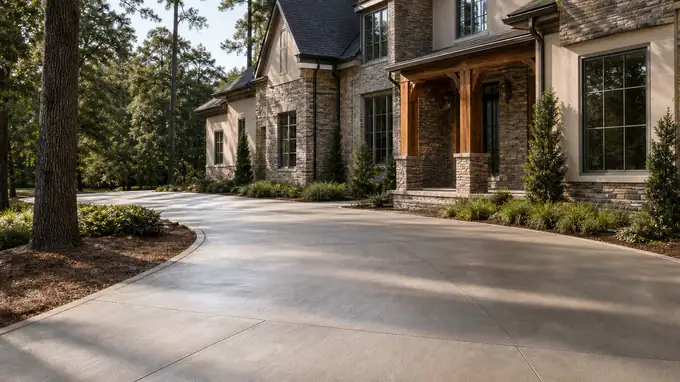
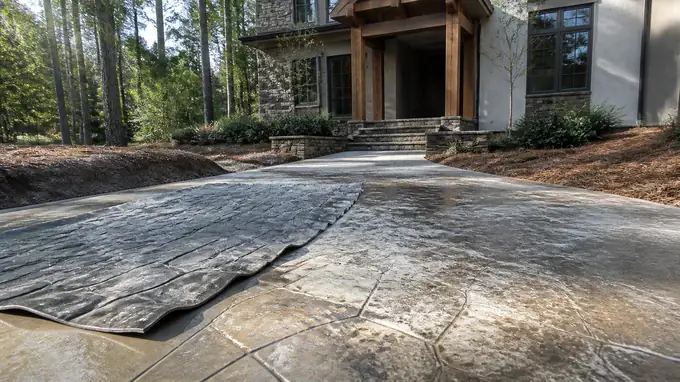
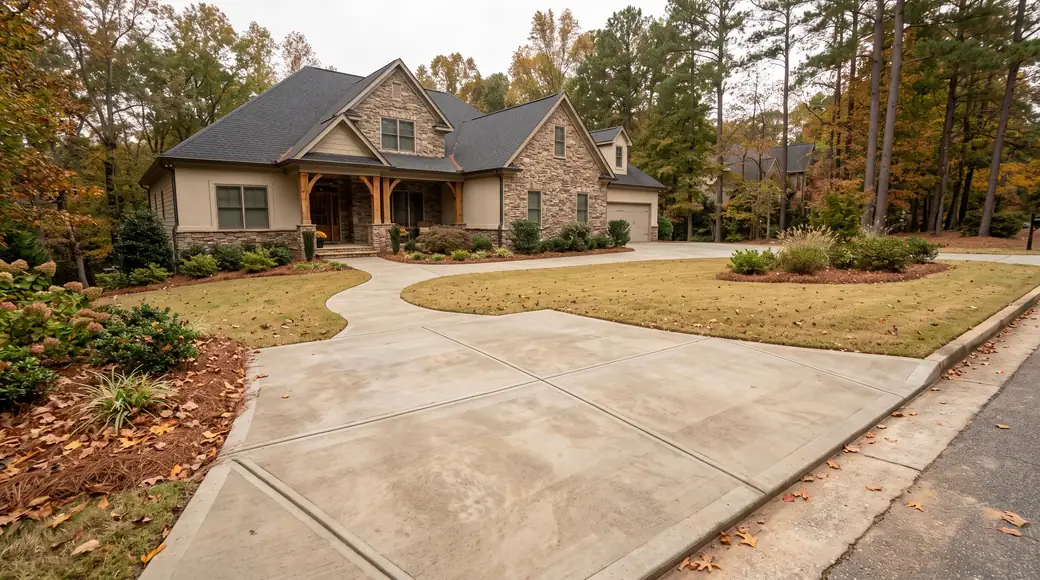
Wide view of finished concrete flatwork across the front of a home at a stacked-stone and stucco home in Sandy Springs, GA, under an overcast sky.

Commercial Concrete for Warehouses & Distribution in Sandy Springs, GA

We pour and replace concrete for warehouses, distribution buildings and the dock areas around them in Sandy Springs, Georgia. Most of it is replacement work, not new construction. The city built out starting in the 1950s, boomed in the early 1960s once the highway went in, and kept filling in through the 1980s, so a lot of commercial slab here has carried forklift traffic and loaded trailers for decades. Old concrete fails in patterns you can read: cracked joints, sunken aprons, a sidewalk that has lifted at one end. We walk the site before we say anything about scope.

Running a job on an occupied building means working around whatever that building is doing. Dock aprons come out in sections so trailers keep turning. Permits go through the City of Sandy Springs, and we handle that paperwork as part of the job. As a concrete contractor we do the decorative end as well, stamped concrete at an office entrance or a colored walkway, but a warehouse floor is a different animal: thickness, rebar or wire mesh, joint spacing, and a surface flat enough to run a lift across. We work Sandy Springs and the surrounding metro Atlanta area, Roswell included. Call for a free estimate.

Call +1 470-740-7099

Licensed, Bonded, and Insured ยท A combined 15 years of experience

Get FREE Estimates

We warranty all of our work because we believe in what we do.

What Commercial Concrete for Warehouses & Distribution Involves

Warehouse and distribution concrete is flatwork built to carry weight that residential work never sees. Loaded forklifts, pallet jacks, trailer traffic at the dock, racking legs concentrating tons onto a few square inches of slab. Commercial concrete for these buildings means thicker sections, engineered subgrade, rebar or wire mesh sized to the load, and joints laid out so cracking happens where we put it rather than where it wants to go. The same job covers the pieces around the building: aprons, ramps, dumpster pads, the concrete sidewalk running the office frontage.

Every pour starts underneath. We look at subgrade first, because a slab is only as good as what it sits on, and compaction problems do not announce themselves until a year in. From there we set forms, place rebar or mesh at the right height in the section instead of letting it sink to the bottom, and pour in panels sized to the joint plan. Finish depends on use. Warehouse floors get a hard trowel finish, exterior flatwork gets a broom finish for traction.

Failures in this kind of work are rarely mysterious. Slabs go bad because the base was soft, the steel sat too low, the joints came too late, or the concrete got water added on site to make it easier to place. Curing is the other one. A slab that dries too fast at the surface will craze and dust under wheel traffic. Dock aprons take the worst of it, since trailers land hard on a small area and any settlement there shows up as a lip that catches equipment.

Doing it right is mostly a matter of not skipping the unglamorous parts. Proper subgrade prep, correct mix design for the loading, steel placed and supported where the engineer put it, saw cuts on time, and a real curing regimen. Those decisions drive what a project costs more than anything visible in the finished floor. Decorative options exist for the customer-facing side of a distribution building, and stamped concrete or a broom-finished walk at the entry reads fine against an office elevation, but the working surfaces earn their keep on thickness, reinforcement and finish quality. Hire a concrete contractor who talks about the base before the topping.

Commercial Concrete for Warehouses & Distribution in metro Atlanta

Most of the commercial slab work in this part of metro Atlanta is replacement, not new pours on open ground. Suburban development here began in the 1950s, accelerated through the early-1960s housing boom that followed highway construction, and kept filling in through the 1980s. The warehouse and distribution buildings that grew alongside that housing are still running on their original floors and yards. Concrete of that age has usually been patched several times before anyone calls a concrete contractor about replacing it.

Our commercial concrete work covers Sandy Springs and reaches out through the rest of the metro, including buildings near the Perimeter Center office towers and along the Roswell Road corridor. Dunwoody sits close enough that the same crew and the same equipment cover both sides of the line, on the same terms. The terrain is rolling and wooded, so truck courts and side yards on these older sites rarely sit dead flat, and water tends to find the weak joint first.

Replacement on an occupied building is a different animal from new construction. We take it in sections so trucks keep moving, set rebar or wire mesh for the loads the floor carries now rather than the loads it was poured for, and cut joints where the old slab has already shown us it wants them. Dock aprons, truck courts, interior flatwork and the concrete sidewalk runs that connect them age at different rates. We look at all of it, then decide what actually has to come out.

How the Work Runs

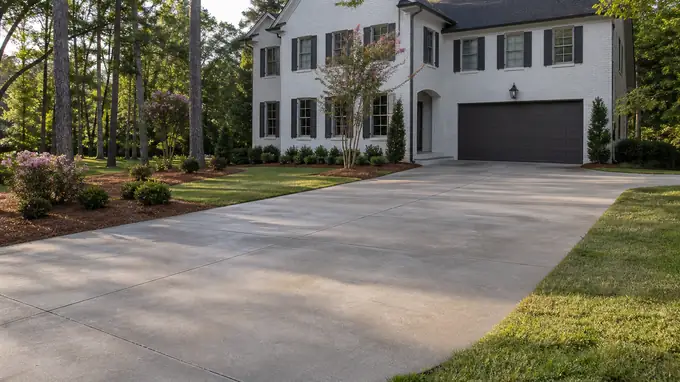
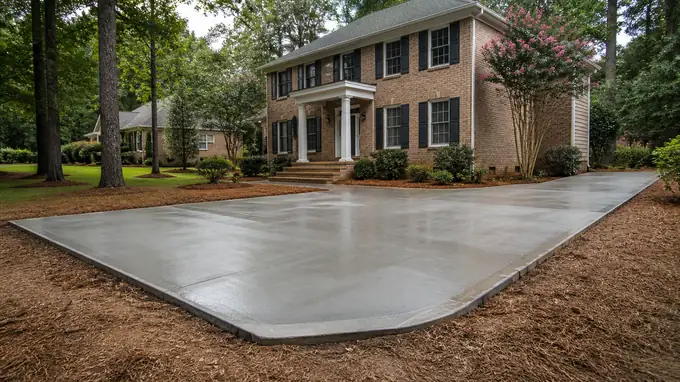
String lines and grade stakes laid out across a yard before a pour at a painted-white-brick two-story home in Sandy Springs, GA, in clear late-morning sun.

Step 1: Site Evaluation

We walk the slab you have now and read what failed. Cracking that follows a pattern usually means the base moved or the steel was too shallow. We check thickness at the edges, look at drainage, note where truck traffic actually turns, and measure the pour area. Access matters too: a mixer needs a path in, and that decides how the concrete installation gets staged.

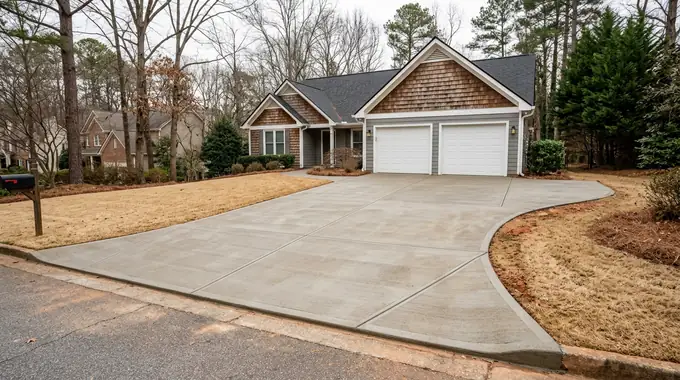
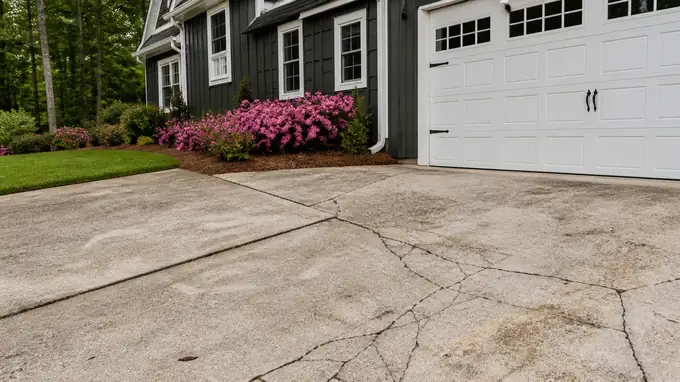
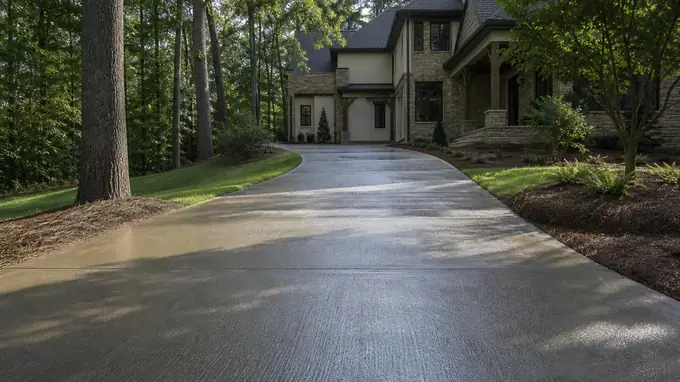
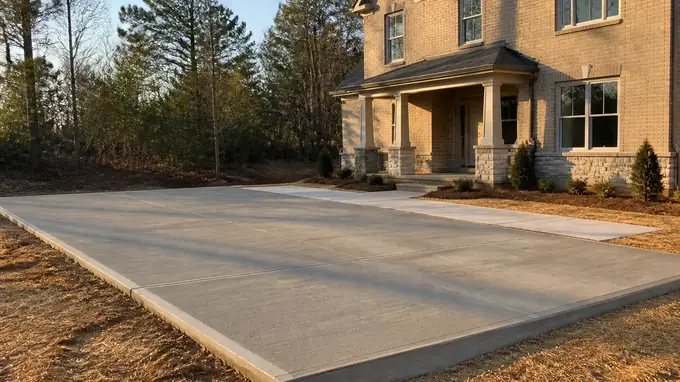
Concrete driveway and walk at a home, the kind of job an estimate covers at a stacked-stone and stucco home in Sandy Springs, GA, in early morning light.

Step 2: Written Estimate and Permits

Everything goes in writing before anyone breaks ground: square footage, slab thickness, reinforcement, mix design, finish, joint layout and how the work is sequenced. If a section stays in service while another is poured, the estimate spells out that phasing. Permit work gets handled on our end. You approve the scope, and nothing changes without a written revision you have seen first.

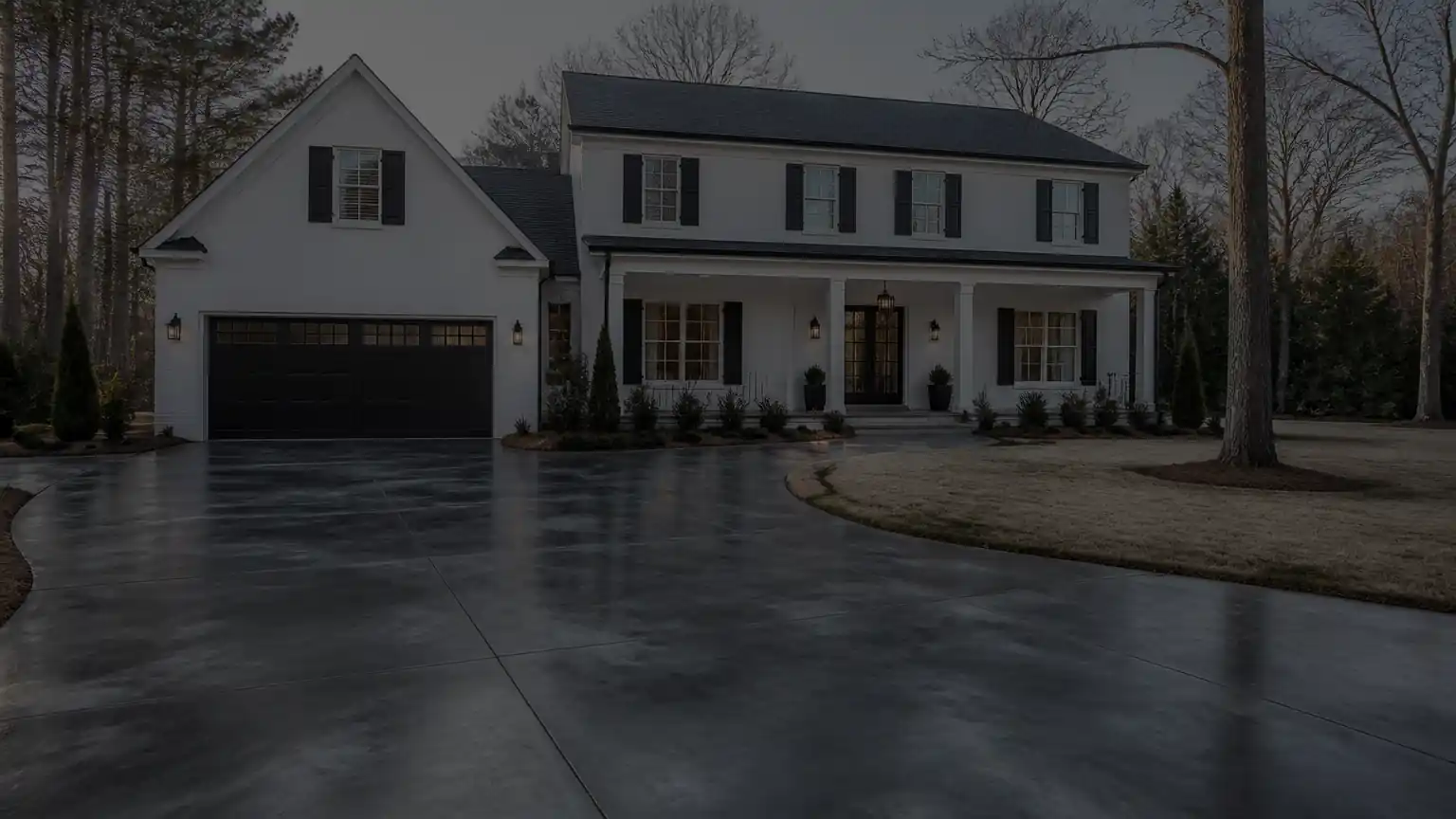
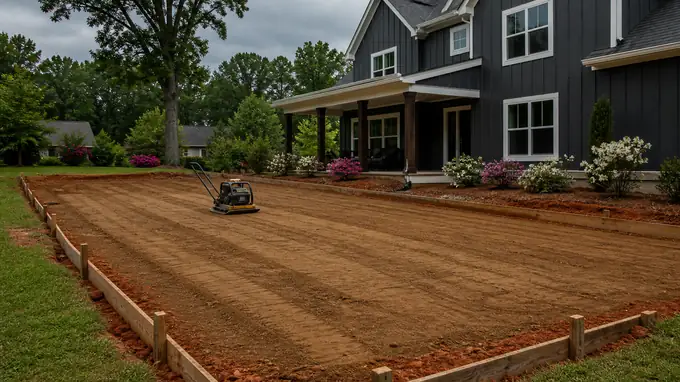
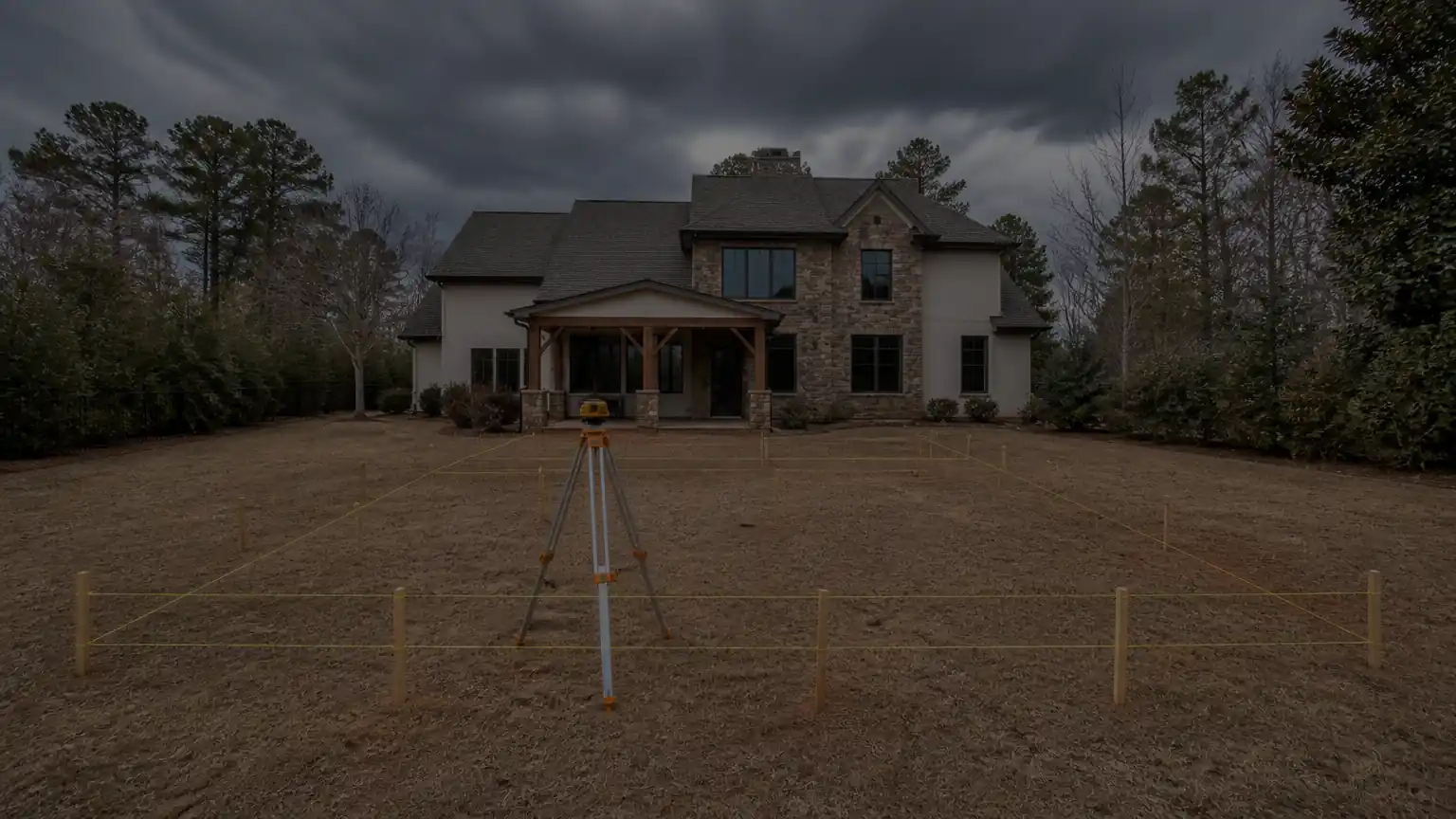
Broken-out concrete removed and the base rebuilt before a new pour at a charcoal farmhouse-modern home in Sandy Springs, GA, after a rain shower.

Step 3: Demolition and Base Prep

Old concrete comes out in sections, gets hauled off, and then the real work starts. We cut to grade, remove soft spots, and bring in graded aggregate base compacted in lifts. Skipping compaction is what puts a crack down the middle of a two-year-old slab. Subgrade under driveways and loading aprons gets proof-rolled, since those carry the heaviest wheel loads on the property.

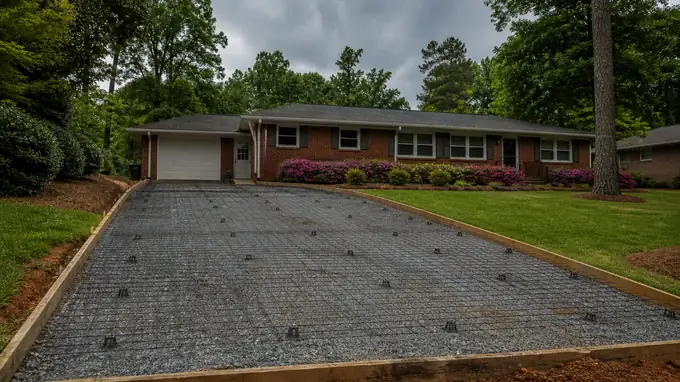
Wooden forms and rebar grid set and tied, ready for concrete at a brick-and-siding two-story home in Sandy Springs, GA, under an overcast sky.

Step 4: Forming, Steel and the Pour

Forms go up straight and pinned, set to the slope that moves water away from the building. Reinforcement depends on load: wire mesh under light-duty sidewalks, rebar on chairs at the correct depth for anything trucks touch. Steel lying on the ground does nothing. We pour continuously, screed, and place control joints on a spacing that decides where the concrete cracks instead of guessing.

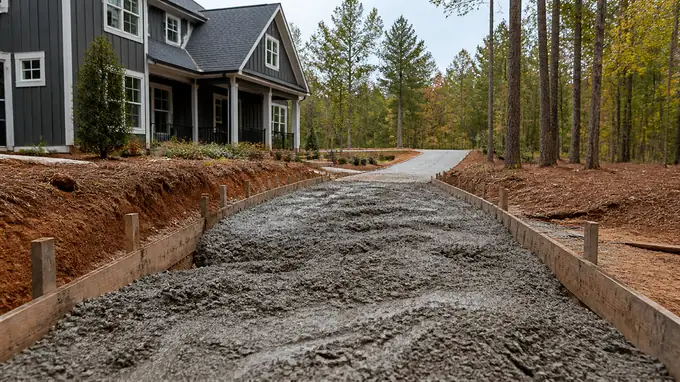
Freshly finished concrete slab curing under a clean broom texture at a grey split-level home in Sandy Springs, GA, under bright midday cloud.

Step 5: Finishing, Curing and Final Walkthrough

Finish depends on use. Broom texture for traction on a concrete driveway or exterior walkway, hard trowel for interior slabs, exposed aggregate or stamped and colored work where appearance carries weight. Then we cure it properly, because concrete that dries too fast surface-crazes and dusts. We walk the finished flatwork with you, note joint layout, and tell you when to keep loads off.

What Decides the Price

Most of what moves a concrete price is visible on a walkthrough, before anyone writes a number down. We look at the same things on every job in Sandy Springs, Dunwoody, Roswell, Brookhaven and the rest of metro Atlanta.

What changes the priceWhich wayWhy
Old slab still in placeCosts moreBreakout and haul-off are their own line of work
Where a truck can parkCosts less when closeLong chutes, buggies or a pump add crew and time
Slab thickness the loads call forCosts more as it climbsTruck and forklift traffic needs more concrete than foot traffic
Rebar mat instead of wire meshCosts moreMore steel, tied and chaired, but it holds a slab together under load
Soft or wet subgradeCosts moreBad ground gets dug out and replaced with compacted stone
Standing water after rainCosts moreGrading, slope and drains get built into the flatwork
Stamped, colored or exposed aggregate finishCosts more than a broom finishExtra materials and a longer finishing window

Compare bids on the same lines: slab thickness, reinforcement size and spacing, subgrade prep, joint layout, and who hauls the old concrete away.

Questions About Commercial Concrete for Warehouses & Distribution

What slab thickness does a Sandy Springs warehouse need for forklifts?

Thickness comes from the load, not from a default. We look at the heaviest lift truck you run fully loaded, the wheel and axle spacing, the rack post loads sitting beside the traffic lanes, and what the subgrade will actually carry. A thinner slab over well compacted stone outlasts a thick one poured on soft fill. Reinforcement, rebar or wire mesh, gets sized against the same loads.

How do you handle racking that cannot be moved in a Sandy Springs warehouse?

We pour around it. The slab gets sawcut back to a clean line outside the rack footprint, so the base under the posts is never disturbed and the uprights stay loaded. New flatwork is dowelled into the old edge and the joint lands where it belongs, in the traffic lane rather than under a leg. Sections come out in bays, and the aisles beside them stay open.

Can you repair Sandy Springs warehouse floor joints without stopping work?

Yes. Joint work is done aisle by aisle, off shift or over a weekend, with the section barricaded while the rest of the floor runs. Spalled edges get cut square, filled and ground flush, and the filler is chosen so it carries wheel loads across the joint instead of squeezing out under them. Each stretch reopens once the material has hardened enough for forklift traffic.

Do you pour loading docks and aprons around metro Atlanta?

Yes. Dock aprons take the hardest abuse on any site: trailer landing gear punching down, dock plates dropping, water standing against the building. We build them thicker at the dock face, reinforce heavily under the landing gear path, and slope the concrete so drainage runs away from the wall. Approach slabs, trench drains and dolly pads are part of the same pour where the layout calls for them.

What cure time should a Sandy Springs warehouse plan for?

Plan in stages rather than one date. Foot traffic comes first, then light wheeled loads, then full forklift movement and rack loading last, because the concrete keeps gaining strength well after it looks finished. Mix design, slab thickness, and the weather during the pour all move that schedule. You get the sequence before we place anything, so the reopening plan is built around real dates.

How flat can a Sandy Springs warehouse floor be made, and how is it checked?

Flatness depends on how the slab is placed and finished. Laser screed placement holds tighter tolerances than wet screeding, and the finish sequence matters as much as the equipment. We verify with F-number readings taken soon after the pour, while numbers are still meaningful, and with a straightedge on defined traffic areas. Very narrow aisle floors get measured along the wheel paths themselves, which is a stricter check.

Get a Free Estimate

Get FREE Estimates

We warranty all of our work because we believe in what we do.

Tap to call +1 470-740-7099