+1 470-740-7099
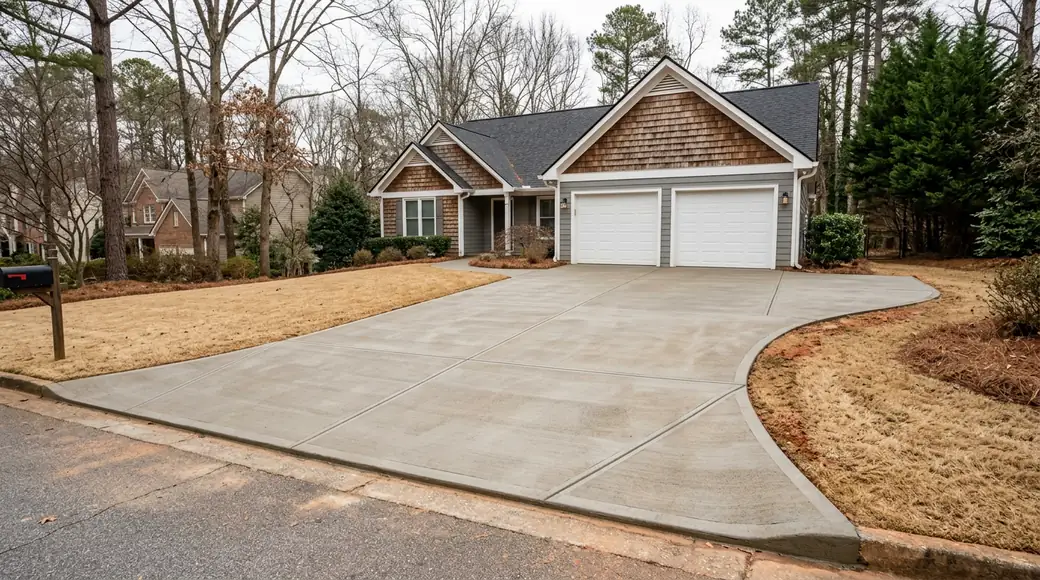
Broom-finished concrete driveway running up to a two-car garage at a grey split-level home in Sandy Springs, GA, under bright midday cloud.

Driveway Installation & Replacement in Sandy Springs, GA

We replace concrete driveways on houses that already have one, which is most of the work around here. A typical job means breaking out the old slab, rebuilding the base underneath it, and pouring new concrete over rebar or wire mesh. Sometimes only one bad section has to go. We work as a concrete contractor on lived-in property, so the cars, the trash pickup and your daily comings and goings shape the schedule.

Suburban development here started in the 1950s, a housing boom followed highway construction in the early 1960s, and infill kept filling the gaps through the 1980s. Driveways from those decades are on their second or third owner, and plenty of them have outlived the base they were poured on. Rolling, wooded lots put grade and drainage on the table too. We read the old drive first, because it usually tells us what failed.

Beyond driveways, we pour the flatwork that goes with them: a concrete sidewalk from the drive to the front steps, a patio out back, stamped concrete or exposed aggregate where a broom finish would look plain against the house. Sidewalks and driveways take the same crew and the same trucks, so it is usually sensible to do them together. We work in Sandy Springs, Georgia, plus Atlanta, Dunwoody, Roswell and Brookhaven across metro Atlanta. Call for a free estimate.

Call +1 470-740-7099

Licensed, Bonded, and Insured ยท A combined 15 years of experience

Get FREE Estimates

We warranty all of our work because we believe in what we do.

What Driveway Installation & Replacement Involves

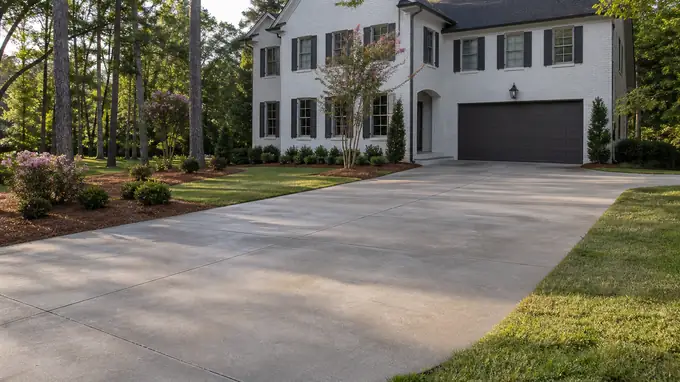
Freshly poured concrete driveway still curing, dark and damp at a painted-white-brick two-story home in Sandy Springs, GA, after a rain shower.

Driveway installation

A new driveway starts with excavation down to firm subgrade, then a compacted gravel base. We pour four inches of concrete for cars, six where a truck or RV parks. Rebar or wire mesh goes in on chairs, not thrown on the ground. Control joints get cut early, before the slab decides where to crack on its own. Finish options run from broom texture to stamped concrete.

Old driveway broken out with a new concrete pour underway beside it at a grey split-level home in Sandy Springs, GA, under bright midday cloud.

Driveway replacement

Replacement is the common job on houses built through the 1960s boom, where the original slab has outlived its base. We break out and haul off the old concrete, then check what is underneath, since a failed driveway usually means a failed subgrade. Rebuilding that base matters more than the pour above it. Where the apron meets a concrete sidewalk, we tie the new work in flush.

Cracked driveway panel cut out and marked for repair at a painted-white-brick two-story home in Sandy Springs, GA, after a rain shower.

Concrete driveway repair

Repair makes sense when the slab is sound and the problem is local. Spalled surfaces, a settled panel, a cracked section at the street: those we cut out and replace panel by panel, or lift with slabjacking where settlement is the issue. Hairline cracking we seal. What repair cannot fix is a slab lifting on roots or breaking up across its whole width.

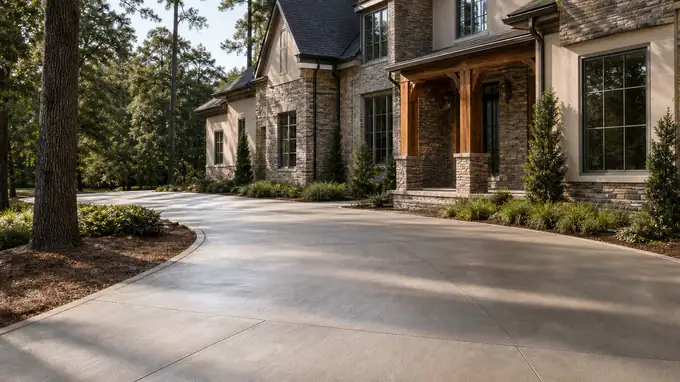
Wide concrete driveway viewed from the street toward the garage at a stacked-stone and stucco home in Sandy Springs, GA, in clear late-morning sun.

Driveway paving

Paving here means poured concrete, not asphalt. Any concrete contractor will tell you the finish decides how the driveway looks for the next thirty years, so we go through the choices before mixing: broom, exposed aggregate, colored, stamped. Work in the City of Sandy Springs is permitted through the city, and we pull what the job requires. Larger projects, including commercial concrete and shared drives, follow the same sequence.

Driveway Installation & Replacement in metro Atlanta

Most of the driveways we replace here were poured for houses that went up decades ago. Sandy Springs filled in through the 1950s, then the highway brought an early-1960s housing boom, and infill kept going into the 1980s. That means the concrete under your car is often on its second owner, sometimes its third. Original slabs, patched slabs, asphalt laid over the original slab. Replacement is the normal job in this area, not the exception. New pours happen, but they tend to be an addition to a lot that already has a house sitting on it.

Older lots come with conditions a new subdivision does not have. Rolling, wooded ground means grade changes across the run and root systems close to the slab. Turnarounds sit where a smaller car used to fit. Garage aprons, front walks and the street edge all have to meet the new concrete cleanly, and the finish should look like it belongs to the house rather than to the year we poured it. Stamped and colored concrete, exposed aggregate, a plain broom finish: the house usually tells us which one is right.

We work across metro Atlanta on the same terms wherever the address sits. A 1960s ranch in Sandy Springs and the same house in Dunwoody show the same worn apron and the same cracked slab, and we read both the same way. Perimeter Center and the Roswell Road corridor keep this side of town busy, and the residential streets behind them are where we spend most days. Median home value here is $732,100, and the driveway is the first thing anyone sees pulling up to one. Concrete flatwork done right outlasts most of the other work done outside a house. Call for a free estimate.

How the Work Runs

String lines and grade stakes laid out across a yard before a pour at a painted-white-brick two-story home in Sandy Springs, GA, in clear late-morning sun.

Step 1: Site Evaluation

We walk the driveway with you and measure it, then look at the things that decide everything after: slope, where water leaves, how thick the existing slab is, and whether tree roots have lifted it. Most of what we see was poured decades ago on the wooded, rolling lots common in Sandy Springs and Dunwoody. We check the sidewalks it ties into, and truck access.

Concrete driveway and walk at a home, the kind of job an estimate covers at a stacked-stone and stucco home in Sandy Springs, GA, in early morning light.

Step 2: Written Estimate and Permits

The estimate comes in writing and spells out scope: square footage, slab thickness, base depth, reinforcement, joint layout, finish, and removal and haul-off of the old concrete. If conditions change once the old slab is out, we show you what we found before anything gets added. Work that touches the apron or the public right of way generally needs a permit, and we pull it and schedule inspection.

Broken-out concrete removed and the base rebuilt before a new pour at a charcoal farmhouse-modern home in Sandy Springs, GA, after a rain shower.

Step 3: Demolition and Base Prep

Old concrete comes out in pieces and leaves the property. Then we cut to grade, take out roots and soft spots, and bring in graded aggregate base compacted in lifts until the plate stops sinking it. Base is where most driveways actually fail. A slab poured over loose fill, or over a low spot that holds water, will crack no matter how good the mix or the finish was.

Wooden forms and rebar grid set and tied, ready for concrete at a brick-and-siding two-story home in Sandy Springs, GA, under an overcast sky.

Step 4: Forming, Steel and the Pour

Forms set on string lines so the slab sheds water away from the garage and meets the street clean. Reinforcement sits up on chairs rather than lying in the dirt: rebar through driveways and any section that carries weight, wire mesh where the pour suits it. Concrete installation runs four inches over the compacted base, thicker at the apron. We place, screed and float in one continuous pour.

Freshly finished concrete slab curing under a clean broom texture at a grey split-level home in Sandy Springs, GA, under bright midday cloud.

Step 5: Finishing, Curing and Final Walkthrough

Broom finish is standard, since it holds traction on a slope. Stamped, colored and exposed aggregate are all available, and we put a sample in front of you before any pattern goes down. Joints are tooled or sawcut on a layout that tells the concrete driveway where to crack instead of leaving it to chance. Curing gets a compound and time. We walk the finished slab with you at the end.

What Decides the Price

Most of what moves the number on a driveway is already sitting in your yard before we quote it. The houses here went up between the 1950s and the 1980s, so we are usually taking out concrete that has been in the ground a long time, and what is under it decides more than the flatwork on top does. Walk the drive and you can see most of it yourself.

What changes the priceWhich wayWhy
An existing slab that has to come outCosts moreBreaking, loading and hauling old concrete is its own stretch of work before a single yard gets poured.
How close a mixer truck can pull to the formsCosts less when it is closeA short chute run is fast. Long wheelbarrow runs or a pump line add hours and equipment.
Slope across the drive and where water leaves itCosts more on a fallGrading, thickened edges and a place to send runoff all add work the flat lots do not need.
Slab thickness the drive actually calls forCosts more when thickerA drive that carries a truck or trailer needs more concrete and deeper base than one that carries a sedan.
Rebar instead of wire meshCosts moreRebar is more steel, tied on chairs, and slower to set than rolled mesh.
Trees and roots along the edgeCosts moreRoots under the slab have to be cut back and the void filled and compacted.
Subgrade condition once the old slab is offCosts more if softSoft ground needs stone brought in and compacted so the new slab has something to sit on.
The apron where the drive meets the streetCosts moreTying into the street is separate work with its own forms and inspection.

Compare bids line by line: slab thickness in inches, rebar or mesh, whether removal and haul off is included, how much base stone goes down, and whether the apron is in the number or left out.

Questions About Driveway Installation & Replacement

Is a reinforced driveway worth the extra cost around Sandy Springs?

Yes. Reinforcement will not stop concrete from cracking, but it holds the slab together when it does, so the two sides stay level instead of stepping apart under a car tire. We run rebar on a grid for driveways carrying regular vehicle weight, wire mesh on lighter pours. On a house worth what houses here are worth, the difference in material cost is small against a slab that stays flat.

What causes driveway cracking in Georgia, and can it be prevented?

Concrete shrinks as it cures, and something has to give. Cracking also comes from a base that was never compacted properly, tree roots working underneath, and slabs poured too thin for what parks on them. Prevention is mostly control: a solid compacted base, proper thickness, reinforcement, and control joints cut early so the slab cracks where we tell it to rather than across the middle.

Can you replace a Sandy Springs driveway without damaging the garage apron?

Yes, if the apron is sound and you want to keep it. We saw a clean line at the joint rather than breaking straight through, then pull the old flatwork back from there. Sometimes the apron has settled or spalled badly enough that leaving it means a bad seam and a lip you feel every time you pull in. We look at it with you before demo starts.

How long before I can park on a new driveway in Sandy Springs?

Foot traffic comes first, usually after a day or two. Passenger vehicles wait about a week. Heavier trucks, trailers or dumpsters should stay off for a month, because concrete keeps gaining strength well past the point it feels hard underfoot. Weather shifts these windows. Cool, damp stretches slow the cure, and we will tell you where a specific pour stands before you drive on it.

Do you remove the old driveway before pouring a new one in Sandy Springs?

Yes. We break out the existing slab, haul it off, then check what is underneath before anything new goes down. Pouring a thin layer over failing concrete just copies the old cracks upward in a season or two. Removal also lets us correct grade and drainage, which on rolling, wooded lots is often the reason the first driveway failed.

How thick should a concrete driveway be in Sandy Springs, Georgia?

Four inches handles ordinary cars in a residential setting. We go five or six where there is a heavy truck, an RV, or a turnaround that sees repeated loading, and we thicken edges where a slab meets soft ground. Thickness matters less than what sits below it, though. Four inches on a well compacted base outlasts six inches on loose fill every time.

Get a Free Estimate

Get FREE Estimates

We warranty all of our work because we believe in what we do.

Tap to call +1 470-740-7099