+1 470-740-7099
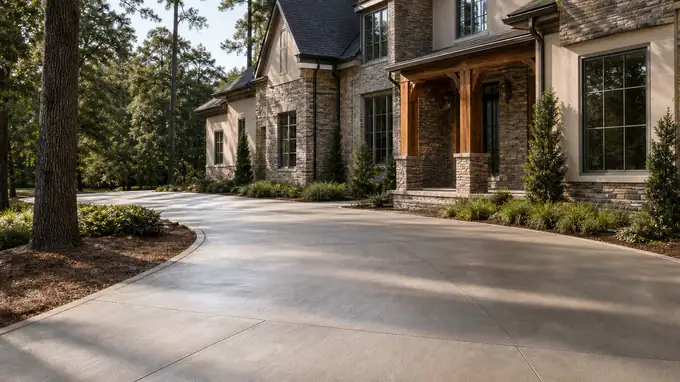
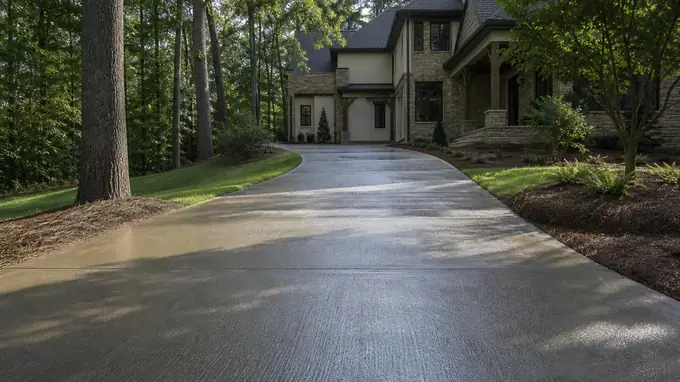
Wide view of finished concrete flatwork across the front of a home at a stacked-stone and stucco home in Sandy Springs, GA, under an overcast sky.

Garage & Shed Floors in Sandy Springs, GA

We replace garage floors and shed slabs on houses that already have one. Sandy Springs filled in early, with suburban building starting in the 1950s, a boom in the early 1960s that followed highway construction, and infill continuing through the 1980s. That means the concrete under most garages here has been carrying a car since well before the current owner bought the house. Some of it is still sound. Some has cracked through, dropped at one corner, or flaked apart across the surface until sweeping it just makes more dust.

The work covers the slab itself and everything it meets: the apron at the door, the pad a shed sits on, the concrete sidewalk running back from the drive. We set rebar or wire mesh according to what the floor has to carry, and we form and slope it so water leaves the building instead of standing at the threshold. Where a floor will actually be looked at, stamped concrete and colored finishes are worth discussing. Most garage floors get a broom or steel trowel finish, which is what a garage floor should get.

Hiring a concrete contractor for a garage floor is not a project anyone looks forward to. It is a slab, it lives under a vehicle, and it stops being invisible only when it fails. What we can give you first is a straight read on the one you have: what is wrong with it, whether patching is honest or the slab needs to come out, and what a new pour would take on your particular lot. Same for a shed pad in Dunwoody, or a sidewalk that has lifted. Call for a free estimate.

Call +1 470-740-7099

Licensed, Bonded, and Insured ยท A combined 15 years of experience

Get FREE Estimates

We warranty all of our work because we believe in what we do.

What Garage & Shed Floors Involves

Epoxy-coated garage floor with speckled grey and charcoal flakes in Sandy Springs, GA, in clear late-morning sun.

Garage floor coating

Coating fails when the slab underneath is not ready. We diamond grind the surface, open the pores, and patch pitting before anything goes down. Epoxy and polyaspartic both bond well to sound concrete, though moisture coming up through an uncoated slab will lift either one. Hot tire pickup, peeling at the edges, and blushing over old sealer are the usual complaints. Broadcast flake or a plain solid color, both wear much the same.

New concrete garage floor slab troweled smooth in an unfinished garage in Sandy Springs, GA, in clear late-morning sun.

Concrete floor installation

Most sheds and garages get a four inch slab over compacted base, with wire mesh or rebar tied in and control joints cut the same day. Vapor barrier goes under anything that will later be coated. We isolate the apron where it meets a concrete sidewalk so the two move separately. Broom finish is standard, though stamped concrete and exposed aggregate both work outdoors. The mix is what any concrete contractor pours for commercial concrete flatwork.

Garage & Shed Floors in metro Atlanta

Most garage floors we pour in metro Atlanta are replacements. Suburban development here started in the 1950s, picked up hard in the early 1960s once the highway construction went in, and kept filling in through the 1980s. So a lot of these slabs are on their second or third owner. Detached sheds and backyard workshops came later, usually set on a piece of the lot the original builder left alone. The floors under them vary a good deal more than the houses do.

Access decides half the job on these lots. Rolling, wooded ground means a detached shed in Dunwoody can sit forty feet off the driveway with a slope and two trees in between, so the concrete moves by buggy instead of straight off the chute. Attached garages are the opposite problem: easy to reach, tight to work in, with the walls already up and the header height fixed. We plan the pour around whichever of those the lot hands us.

Old slabs fail in a few familiar ways, and the failure tells you what the fix has to be. Thin flatwork poured with no wire mesh or rebar cracks under a modern vehicle and settles into ruts you can feel through the tires. Shed floors set on fill that was never compacted drop at one corner and pull the frame out of square. Some were never sloped toward the door, so water stands at the back wall.

Getting it right costs time more than material. Breaking out the old slab, hauling it off, cutting the subgrade back to a real depth and tying in rebar or wire mesh all take longer than skimming a thin cap over the problem, which is why the thin cap keeps showing up. Homes here carry a median value of $732,100, and the garage floor is the part of the house that gets driven on every single day. Call for a free estimate on garage or shed concrete.

How the Work Runs

String lines and grade stakes laid out across a yard before a pour at a painted-white-brick two-story home in Sandy Springs, GA, in clear late-morning sun.

Step 1: Site Evaluation

We walk the existing slab with you and look at what it is telling us. Cracks that run corner to corner, a low spot near the door, spalling where salt and tires have worked on the surface. We check the slab thickness at a broken edge, measure the opening, and look at how water moves off the apron and toward the concrete driveway.

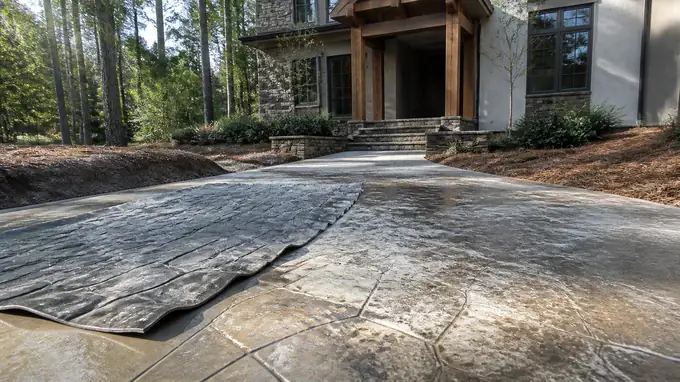
Concrete driveway and walk at a home, the kind of job an estimate covers at a stacked-stone and stucco home in Sandy Springs, GA, in early morning light.

Step 2: Written Estimate and Permits

You get the scope in writing: square footage, slab thickness, reinforcement (rebar or wire mesh), finish, and how the demolition debris leaves the property. Permits get pulled where the work calls for one. Nothing starts until you have read the estimate and agreed to it. If something looks different once the old slab comes out, we tell you before we keep going.

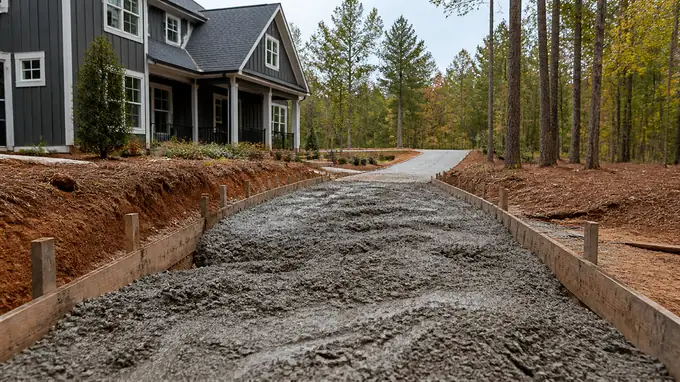
Broken-out concrete removed and the base rebuilt before a new pour at a charcoal farmhouse-modern home in Sandy Springs, GA, after a rain shower.

Step 3: Demolition and Base Prep

Old concrete gets broken out and hauled off, not buried. Then the real work: grading the subgrade, cutting out soft spots, and compacting a base of crushed stone in lifts. Most garage floor failures we see trace back to base, not concrete. A slab poured on loose fill will settle and crack no matter how good the mix was.

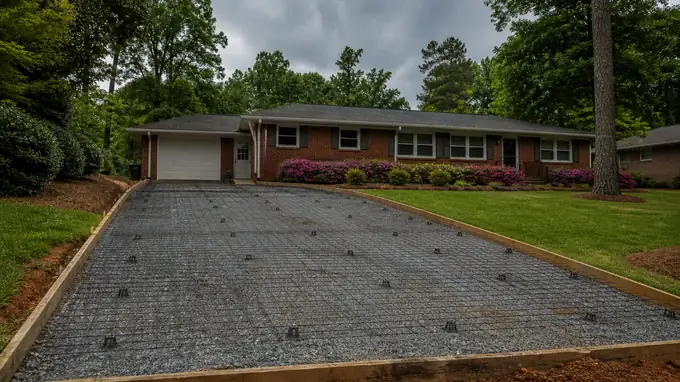
Wooden forms and rebar grid set and tied, ready for concrete at a brick-and-siding two-story home in Sandy Springs, GA, under an overcast sky.

Step 4: Forming, Steel and the Pour

Forms get set to hold the slope we want toward the door. Rebar or wire mesh goes on chairs so the steel sits in the slab, not on the ground under it, which is the most common shortcut in concrete installation. We pour a four inch slab, thicker where a lift or heavy equipment is planned, and screed it flat in one continuous placement.

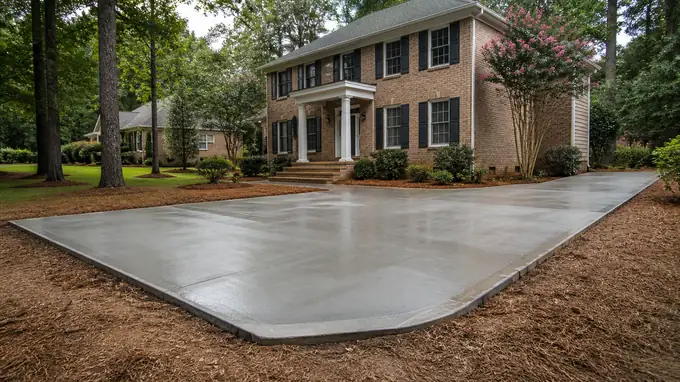
Freshly finished concrete slab curing under a clean broom texture at a grey split-level home in Sandy Springs, GA, under bright midday cloud.

Step 5: Finishing, Curing and Final Walkthrough

Garage floors get a hard steel trowel finish for a dense, sealable surface. Shed floors we often broom lightly. Control joints go in early, cut deep enough to steer the cracking where we want it. Curing runs several days under compound or plastic. We walk it with you, point out the joints, and tell you when to drive on it.

Attached sidewalks and driveways are handled the same way. Where a shed floor meets existing sidewalks or the driveway, we tie in flush and let the joint do its job. We serve Sandy Springs, Dunwoody, Roswell and Brookhaven.

What Decides the Price

The number on your estimate comes from a handful of things you can walk out and look at yourself. Garage floors and shed floors are priced off the same list, and the two usually land in different places on it.

What changes the priceWhich wayWhy
An old slab already in placecosts moreIt has to be broken out and hauled off before anyone can look at the base underneath.
Bare dirt or gravel where the pad goescosts lessNothing to demo, so we grade, compact and form on what is already there.
A truck that can back close to the formscosts lessConcrete runs down the chute instead of moving by buggy, wheelbarrow or pump line.
A shed pad behind a fence or up a narrow side yardcosts moreBase rock, forms and every yard of concrete go in by hand.
A thicker slab with rebar in place of wire meshcosts moreA floor that parks vehicles carries weight a shed floor never sees.
Ground that falls toward the openingcosts moreWe have to build slope away from the door, which takes more fill on the low side.
Soft fill, buried debris or tree roots under the padcosts moreThat gets dug out and replaced with compacted stone so the slab does not settle later.
Stamped, colored or exposed aggregate finishcosts moreThe surface takes more labor and a tighter window to work it.

Compare bids on the parts that are easy to leave vague: slab thickness, whether reinforcement is rebar or mesh and how it sits in the pour, where the old slab goes, base depth, and how the joints get cut. Numbers far apart usually differ there.

Questions About Garage & Shed Floors

Why does my Sandy Springs garage floor dust, and can it be fixed?

Dusting means the top layer of the slab is weak and breaking down under tire and foot traffic. It usually traces back to how the concrete was finished or cured decades ago, which matters here because plenty of these garages date to the early-1960s housing boom. Yes, it can be fixed. Grinding off the soft surface and applying a densifier hardens what remains, and a coating over that stops it for good.

How long before I can drive on a new Sandy Springs garage floor?

Concrete gains strength over weeks, not hours, and vehicle weight is a real load on a slab that is still curing. You can usually walk on it well before you can park on it. We give you a specific date for foot traffic and a later one for your car when we pour, because it depends on the mix, the thickness and the weather that week. Wait for both.

Can you level a sloping garage floor in a Sandy Springs home?

Yes, though the right method depends on why it slopes. Some garage slabs were poured with intentional pitch toward the door so water runs out, and that pitch is worth keeping. Settlement is different. If a slab has dropped, we either grind the high spots, pour a leveling layer over the existing concrete, or take the slab out and start again with proper base and rebar.

What coating holds up on a garage floor in Georgia humidity?

Polyaspartic and epoxy systems both work, but the moisture coming up through the slab decides more than the product name does. We test the slab for vapor before quoting a coating. A concrete floor sitting on damp ground pushes moisture upward, and any coating that cannot breathe or is not paired with a vapor barrier will bubble and peel. Surface prep by grinding matters as much as the coating itself.

Can you pour a new garage floor over the old one in Sandy Springs?

Sometimes. An overlay works when the existing slab is sound, when it has not settled unevenly, and when you have the headroom to lose an inch or two at the door threshold and the entry step. Cracked or sinking concrete will telegraph straight through a thin overlay. We look at what is under your feet first and tell you honestly which one your floor needs.

Do you do workshop and shed floors around Sandy Springs too?

Yes. Detached workshops, garden sheds, storage buildings and hobby spaces all get the same flatwork treatment: compacted base, wire mesh or rebar, and a slab poured to a thickness that suits what will sit on it. A shed floor holding a mower is a different pour from a workshop floor holding a lift. Detached structures may need a permit from the City of Sandy Springs, and we handle that.

Get a Free Estimate

Get FREE Estimates

We warranty all of our work because we believe in what we do.

Tap to call +1 470-740-7099