+1 470-740-7099
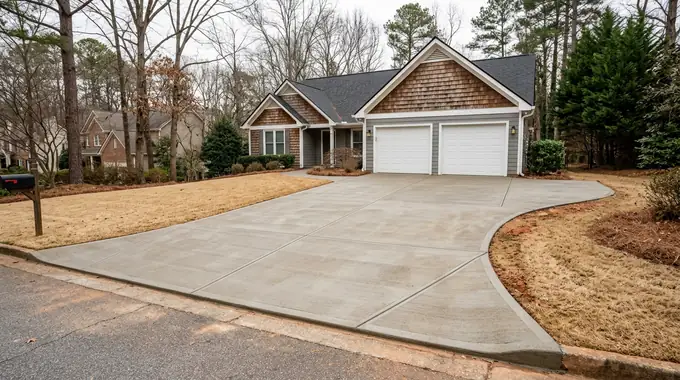
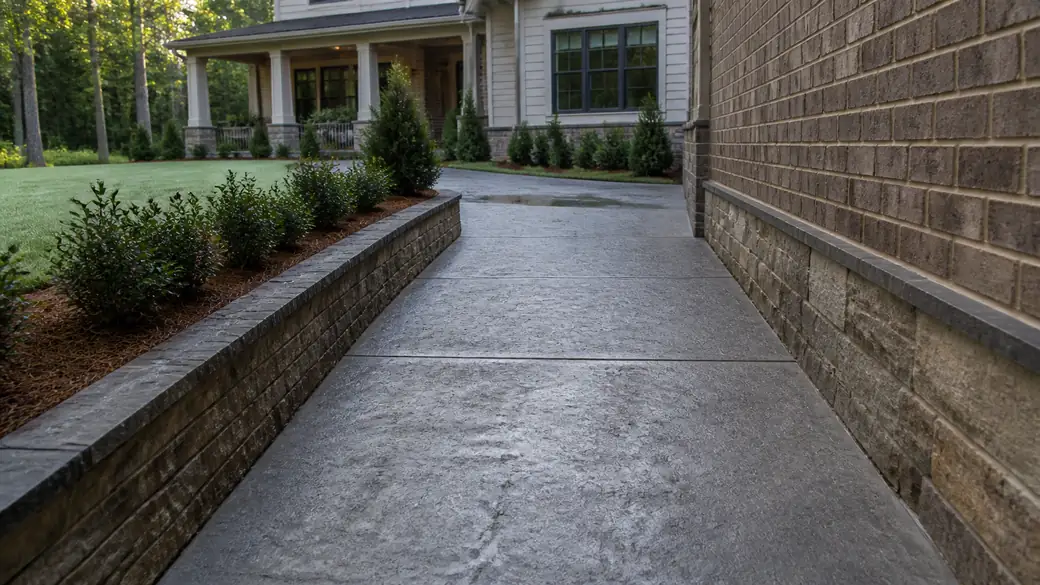
Concrete walkway meeting the driveway apron and front steps at a tan-brick colonial in Sandy Springs, GA, in clear late-morning sun.

Walkway & Sidewalk Installation in Sandy Springs, GA

Most of the walkways we pour in Sandy Springs replace something that is already there. The houses here go back to the 1950s and the early-1960s boom that followed highway construction, with infill continuing through the 1980s, so a front walk has usually been carrying traffic for decades before we look at it. Concrete that old cracks, settles at the joints, and lifts where roots run underneath.

As a concrete contractor we spend more time on tear-out, base and grading than on the pour itself. Walks on rolling, wooded ground rarely run flat, so we set the line and the fall before any forms go in. Finish is your call: a broom finish for grip, or stamped concrete when the walk should read closer to the stone or brick already on the house. The slab underneath is the same work either way.

Permits for this go through the City of Sandy Springs, and we pull them as part of the job rather than handing you the paperwork. Whether one is needed depends on where the concrete sits. A path that stays on private property is a different matter from anything touching the public sidewalk or the right of way, and we sort out which one you have before the first cut. Call for a free estimate and we will walk the route with you.

Call +1 470-740-7099

Licensed, Bonded, and Insured ยท A combined 15 years of experience

Get FREE Estimates

We warranty all of our work because we believe in what we do.

What Walkway & Sidewalk Installation Involves

Curving concrete walkway crossing a front yard at a red-brick ranch home in Sandy Springs, GA, in clear late-morning sun.

Concrete walkway

A concrete walkway is four inches of concrete over compacted base, with wire mesh or rebar running through it and control joints cut so the cracking happens where we put it rather than where it wants to. Broom finish is the default for grip. Exposed aggregate and colored concrete are both available on the same slab. What fails early is almost always the base, not the mix.

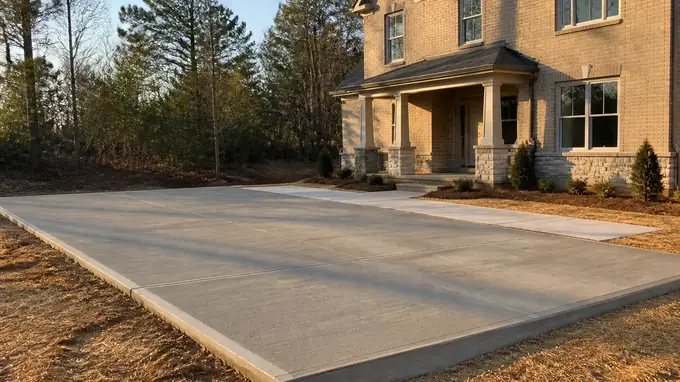
New concrete sidewalk being formed along a street with a driveway ramp at a tan-brick colonial in Sandy Springs, GA, in late afternoon light.

Sidewalk installation

Most sidewalk installation around here is replacement rather than new. Houses from the early-1960s boom came with walks that tree roots have since lifted, or that dropped where the original fill settled. We remove the broken sections, saw clean edges, and dowel the new pour into the sound concrete beside it. A concrete sidewalk laid over loose fill will telegraph that fill straight back through.

Narrow exposed-aggregate concrete garden path bordered by plantings at a red-brick ranch home in Sandy Springs, GA, in early morning light.

Concrete path

Paths through a yard get formed in curves instead of straight runs, which means flexible forms and slower hand work along both edges. Width comes down to whether two people need to walk it side by side. Stamped concrete suits these well: the pattern absorbs the seams a curved pour creates, and the finished surface reads closer to stone. On rolling, wooded lots, grade decides the route.

Concrete walkways connecting a driveway, front door and side gate at a buff-brick ranch home in Sandy Springs, GA, after a rain shower.

Walkways and pathways

We take on the flatwork that connects to a walkway too: front stoops, steps, landings, and the apron where a driveway meets the door. Same crew and same pour, so joints line up and the finish matches across all of it. Commercial concrete work runs to entry walks and connecting paths between buildings. One concrete contractor doing the whole set keeps the color consistent, which piecemeal patching never manages.

Walkway & Sidewalk Installation in metro Atlanta

Most of the walkways we replace were poured for houses that went up two or three generations ago. Suburban Sandy Springs started filling in during the 1950s, and the early 1960s brought a housing boom that followed the highway construction, with infill continuing through the 1980s. So the front walk we tear out is usually old concrete: thin, unreinforced, poured on a base that has had decades to settle. New construction is the exception here. Nearly all of our sidewalk installation is replacement work on a property that already had one, often more than one.

Old lots also mean old trees, and on rolling, wooded property the roots go where they want. Roots lift slabs. Water finds the low corner. A walk that has been patched twice already tells us what to fix before we pour anything: drainage, base depth, and where the joints belong. We size the new flatwork to the house rather than to a standard, and we set rebar or wire mesh where the span and the base call for it. Matching a 1960s brick front takes some thought about color and finish.

We cover Sandy Springs and the rest of metro Atlanta on the same terms. A job in Dunwoody gets the same crew, the same base prep, and the same concrete as one three streets from City Springs. Along the Roswell Road corridor and around the Perimeter Center towers we do commercial concrete as well: entry walks, connector sidewalks, and the flatwork that ties a parking area to a door. Most of that looks like the residential work, poured to heavier spec. If you want a free estimate on a walkway or sidewalk, call and tell us what you are working with.

How the Work Runs

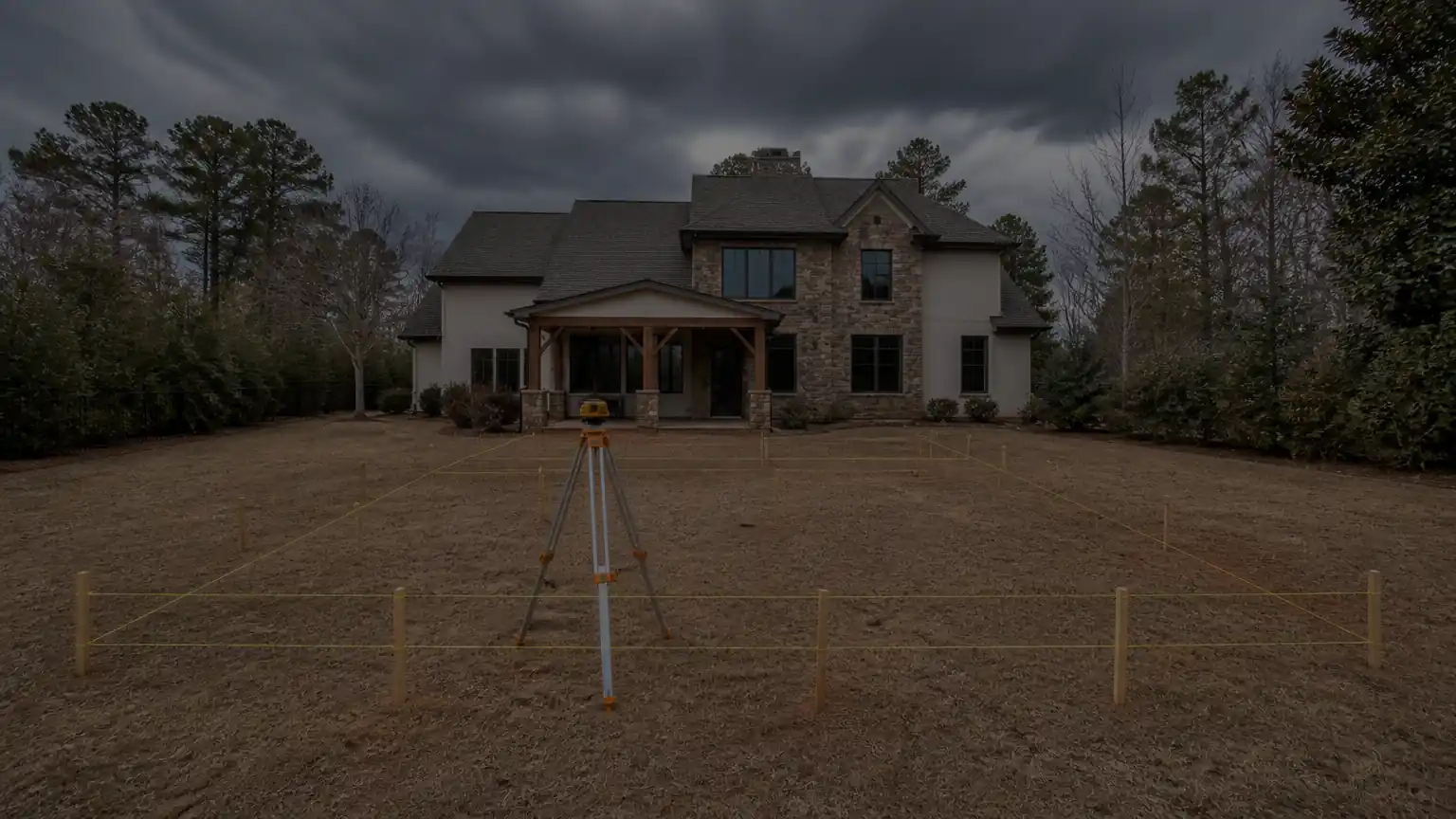
String lines and grade stakes laid out across a yard before a pour at a painted-white-brick two-story home in Sandy Springs, GA, in clear late-morning sun.

Step 1: Site Evaluation

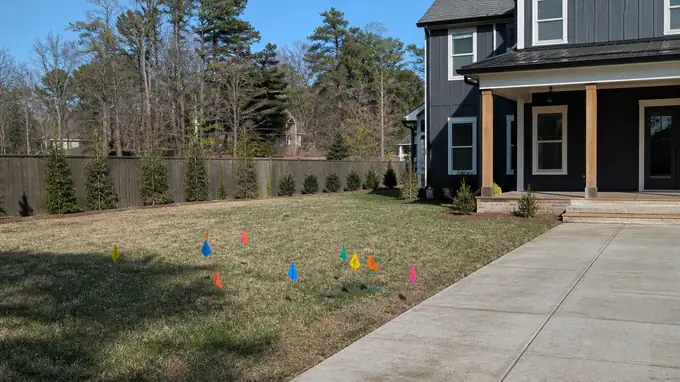
We walk the full run of the proposed path with you, measure it, and look at where water goes now. Existing sidewalks tell us a lot: the pattern of the cracking, whether panels have heaved over roots, how the old base held up under them. We check the fall away from the house, note roots we will have to work around, and settle on the finish you want.

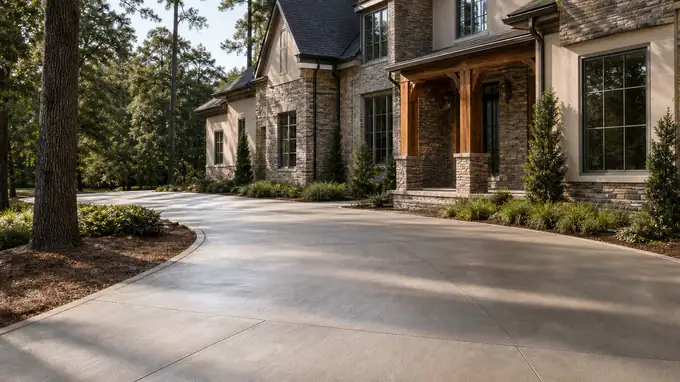
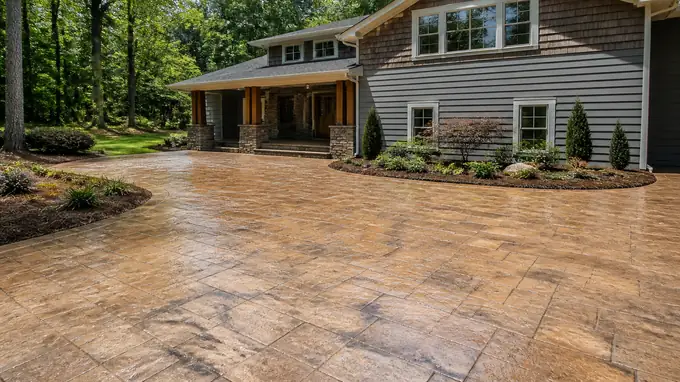
Concrete driveway and walk at a home, the kind of job an estimate covers at a stacked-stone and stucco home in Sandy Springs, GA, in early morning light.

Step 2: Written Estimate and Permits

Everything goes in writing before anyone starts work: square footage, slab thickness, reinforcement, joint layout, finish, and how the debris leaves the property. If the job touches the right of way or ties into a concrete driveway at the street, permits are pulled and inspections scheduled ahead of the pour. Call for a free estimate and we price the work off measurements taken on site, not a look from the curb.

Broken-out concrete removed and the base rebuilt before a new pour at a charcoal farmhouse-modern home in Sandy Springs, GA, after a rain shower.

Step 3: Demolition and Base Prep

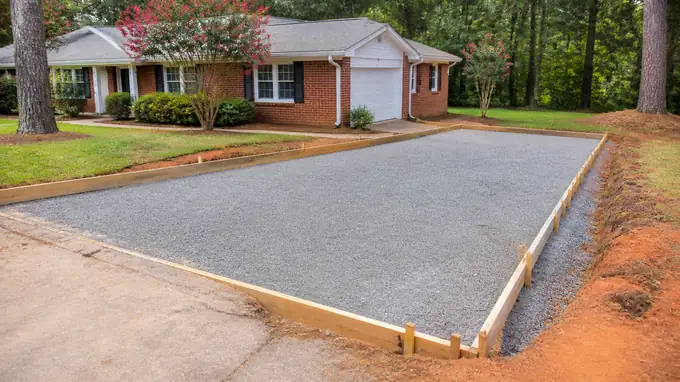
Old flatwork comes out rather than getting patched over. We break it up, haul it off, cut the subgrade to depth, then compact graded aggregate base in lifts so the slab sits on something that will not move under it. Most failed walks failed here first, in soft or uncompacted fill. Roots big enough to lift the new concrete get cut back while the ground is still open.

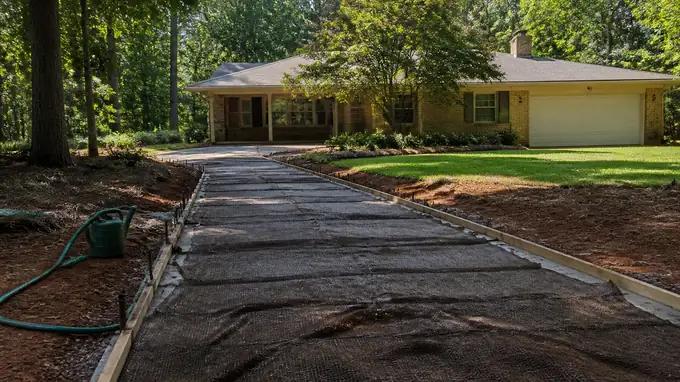
Wooden forms and rebar grid set and tied, ready for concrete at a brick-and-siding two-story home in Sandy Springs, GA, under an overcast sky.

Step 4: Forming, Steel and the Pour

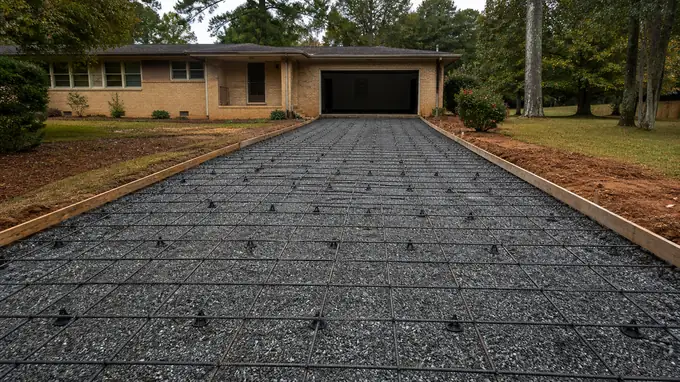
Forms are staked to the line and the fall we set, so water runs off the walk instead of standing on it. Wire mesh or rebar rides up on chairs inside the pour, not laid flat on the base. Walks go down at four inches. Where a path crosses a drive or an apron, we thicken that section for vehicle load. Concrete installation runs as one continuous pour wherever the layout allows it.

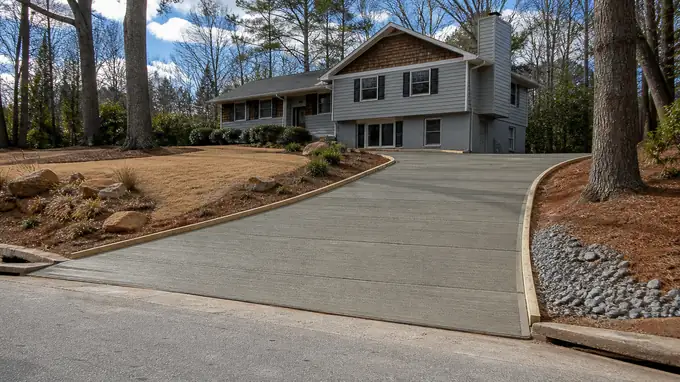
Freshly finished concrete slab curing under a clean broom texture at a grey split-level home in Sandy Springs, GA, under bright midday cloud.

Step 5: Finishing, Curing and Final Walkthrough

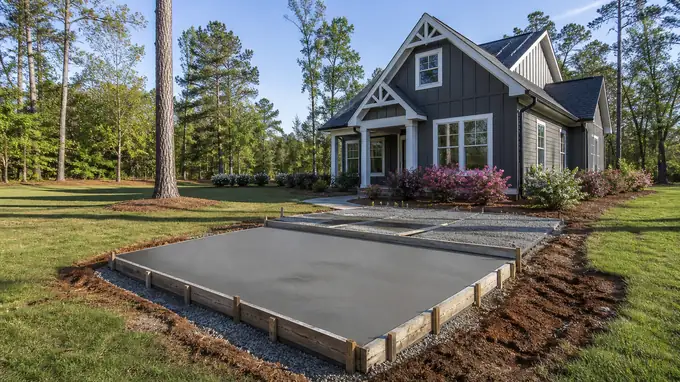
Finishing is timed to the concrete, not the clock: float it, then broom it for grip, or stamped and colored, or exposed aggregate if that suits the house better. Control joints get cut at spacing that decides where the cracks go, because they will go somewhere. Curing compound goes on last. We ask you to stay off it while it gains strength, then we walk the finished sidewalks and driveways with you.

What Decides the Price

Walkway pricing tracks what the site demands, not square footage alone. Two front walks of identical size can land in different places because of what sits under them, how close a truck can get, and how much has to leave the property before we pour.

What changes the priceWhich wayWhy
An old slab still in the groundCosts moreBreaking out concrete and hauling it off is its own stretch of labor before new flatwork begins.
Mixer truck can reach the forms directlyCosts lessConcrete down the chute skips buggies and wheelbarrow runs across a lawn.
Tree roots crossing the pathCosts moreRoots get cut back or the walk gets routed around them, and excavation slows either way.
Thicker slab with rebar rather than wire meshCosts moreA section carrying vehicle traffic at the driveway apron needs more steel and more concrete than a garden path.
Grade already falls away from the houseCosts lessLess regrading, fewer loads of base stone, no drainage to rebuild.
Stamped, colored or exposed aggregate finishCosts moreThose finishes add material and hand work on pour day.
Steps, curves or a landingCosts moreForming risers and radii takes time a straight run does not.

Between bids, compare slab thickness, reinforcement, base depth, and whether removal and haul-off sit inside the number or get added afterward. Ask what each contractor is pouring, not only what they are charging.

Questions About Walkway & Sidewalk Installation

How long does a Sandy Springs walkway take from pour to walkable?

Most walkways take a few days from pour to foot traffic. Concrete gains strength on its own schedule, and we watch the weather and the mix before we tell anyone to step on it. Light foot traffic comes first. Furniture, planters and anything heavy wait longer. We will tell you at the pour what the timeline looks like on your specific slab.

Can you pour a walkway over tree roots on a Sandy Springs lot?

No, not directly over them. Roots move, and concrete poured on top of a live root will crack along it within a few seasons. On a wooded lot we route the walkway around the root zone, or cut and reform the base where the tree can spare it. Sometimes the better answer is shifting the path two feet. We look before we form anything.

Do you have to meet accessibility rules for a walkway in Sandy Springs?

It depends on the property. A private front walkway from your driveway to your door is not held to the same standard as a public or commercial connection. Commercial concrete work, entries serving a business, and anything tying into a public route generally carries requirements on width, slope, cross slope and surface. We check which category your job falls into before we design the run.

What stops a sidewalk lifting and becoming a trip hazard in Georgia?

Base work, mostly. A compacted base that drains keeps water from moving under the slab, and that is where most lifting starts. Root intrusion is the other common cause. Control joints at the right spacing let the concrete crack where you want it, and rebar or wire mesh keeps the pieces working together instead of stepping apart at a joint.

How wide should a front walkway be on a Sandy Springs property?

Four feet is the common answer for a front walk, and it is the width where two people can walk side by side without one stepping off. Narrower reads tight against a large house. Wider suits a long approach or a wide facade. Much of the housing stock here dates to the 1950s and the early-1960s boom, and those front elevations usually carry a generous walk well.

Who is responsible for the public sidewalk outside a Sandy Springs property?

That varies by street and by how the sidewalk was originally built. In many cases the adjacent property owner carries some maintenance obligation for the walk fronting their lot, while the right of way itself belongs to the city. Before we touch anything in the right of way, we confirm who owns what and what approvals the work needs. Call for a free estimate and we will sort it out.

Get a Free Estimate

Get FREE Estimates

We warranty all of our work because we believe in what we do.

Tap to call +1 470-740-7099