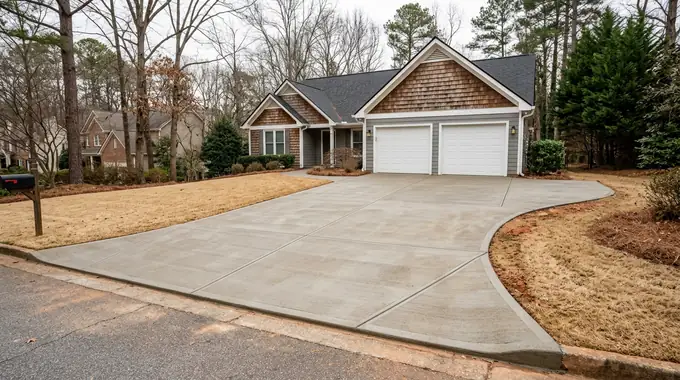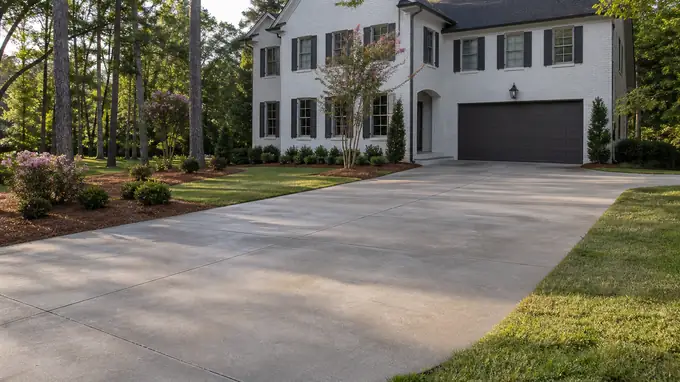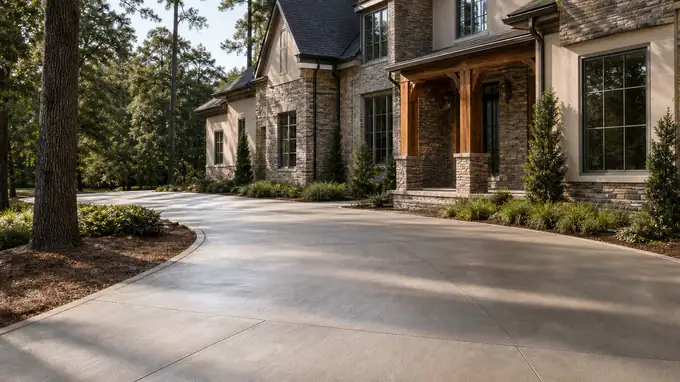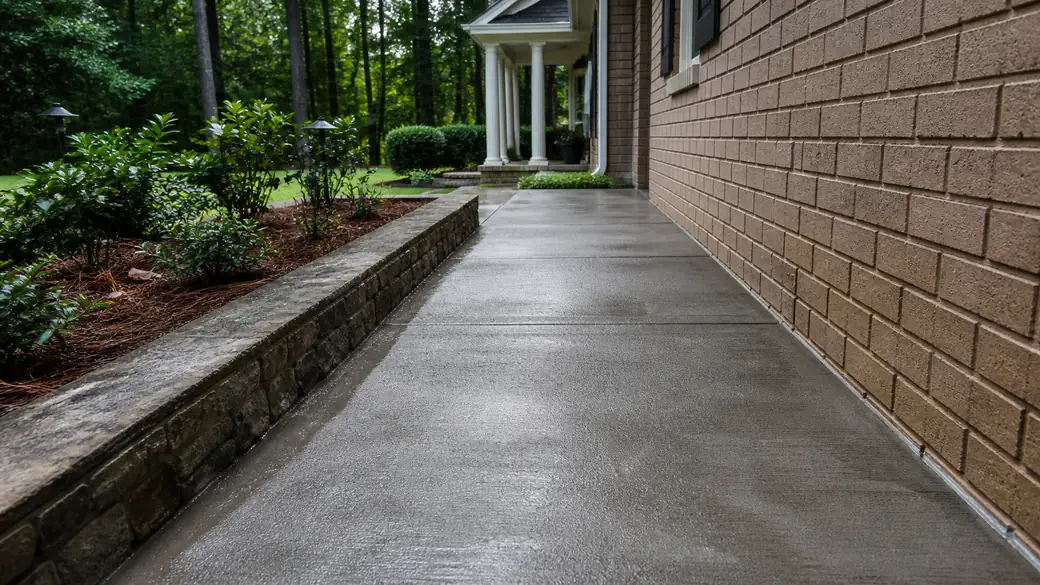
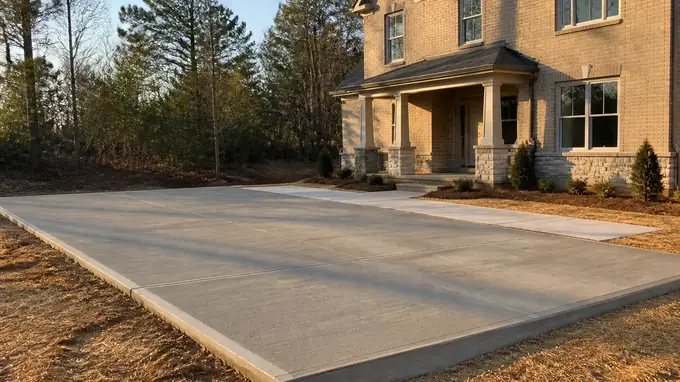
Most of our stamped work in metro Atlanta goes on top of a house that is already decades old. Suburban development here started in the 1950s, ran hard through the early-1960s boom that followed highway construction, and kept filling in lots through the 1980s. A patio poured for the original owner has usually been replaced once already. Stamped concrete is what many people pick the next time around. It reads as brick, slate or wood plank, poured in one piece.
Replacement sets the terms. We are tearing out an old slab, hauling it, and fitting new flatwork to steps, walls and door thresholds that are already fixed in place. Lots here are rolling and wooded, so access matters: what a crew can reach with a buggy versus what moves by wheelbarrow past a fence and around mature plantings. A Dunwoody patio behind a narrow side yard runs on the same method, just with more trips. That is normal here.
Failures start underneath. When we break out a patio that cracked, the base is usually the reason: fill that was never compacted, no wire mesh or rebar, edges poured thin where the forms sagged. Pouring new concrete on that same ground and pressing a pattern into it changes the surface and nothing else. We dig it out, compact it, and put steel in before anything gets stamped. The pattern only holds up as long as what is under it.
Permits go through the City of Sandy Springs, and we handle that filing as part of the job. Beyond that, a stamped patio asks for a few things: full slab thickness at the edges, proper joint layout, color worked in rather than dusted on, and time to cure before furniture comes back out. Sealer gets reapplied every few years. Exposed aggregate and plain colored concrete are there if the pattern is not what you want. Call for a free estimate.